What a roof replacement costs in Tacoma, and what moves the number
Two roofs of the same footprint can be priced far apart. Here is the published regional range and the six things that push a Tacoma bid up or down.
By Kathleen Peabody, Roofing Guides Editor · Updated October 2026
- Answering 24/7
- Puyallup office
- Tacoma and Pierce County
Short answer
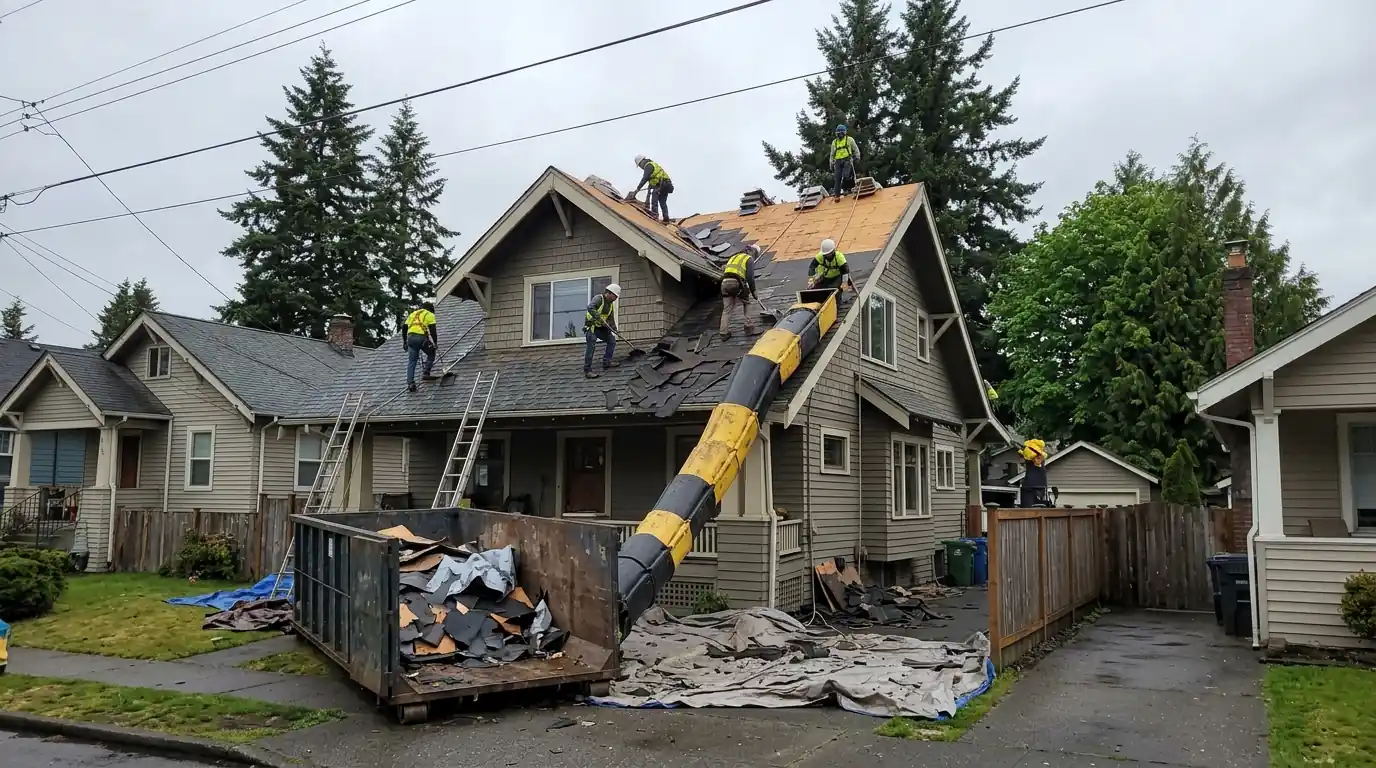
A roof replacement in Tacoma is usually priced against the Seattle-area range Angi publishes, shown in the cost box below. Where your roof lands inside that range depends on six things: total area, pitch, how many old layers come off, how much decking needs repair, whether a permit applies, and the material you choose.
What do published ranges say for the Seattle area?
No source we trust publishes a Tacoma-only figure, so the box below shows Angi's Seattle-area range for a full replacement, the closest regional number with a stated date. Treat it as a reality check, not a quote. It blends small ranch roofs with big two-story houses, and it mixes simple tear-offs with jobs that needed a lot of carpentry.
The useful question is not where the average sits but why your roof would land high or low. Each section below covers one of the factors we price, in the order they usually move the number.
Published range, not a quote and not our price. Source: angi.com, 2026-08. Your number depends on the factors below and is set after we see the roof.
How roof size and pitch change the price
Roofers measure in squares, and one square covers 100 square feet of roof surface. That surface is larger than your floor plan, because the roof overhangs the walls and slopes upward. A steeper roof has more surface over the same footprint, so the square count climbs before anything else changes.
Pitch also changes how we work. A low, walkable roof lets us carry bundles and tear off old shingles quickly. Once a roof gets steep, every installer needs roof jacks, planks and harness anchors, and the work slows down. Two-story eaves add ladder time and make debris harder to control, so tall, steep roofs cost more per square than low, gentle ones.
Complexity counts as well. Every valley, dormer, hip and wall junction means cut shingles, extra flashing and more labor. A plain gable roof with two planes is the cheapest shape to replace; a cut-up roof with three dormers and a turret is the most expensive.
How many old layers have to come off?
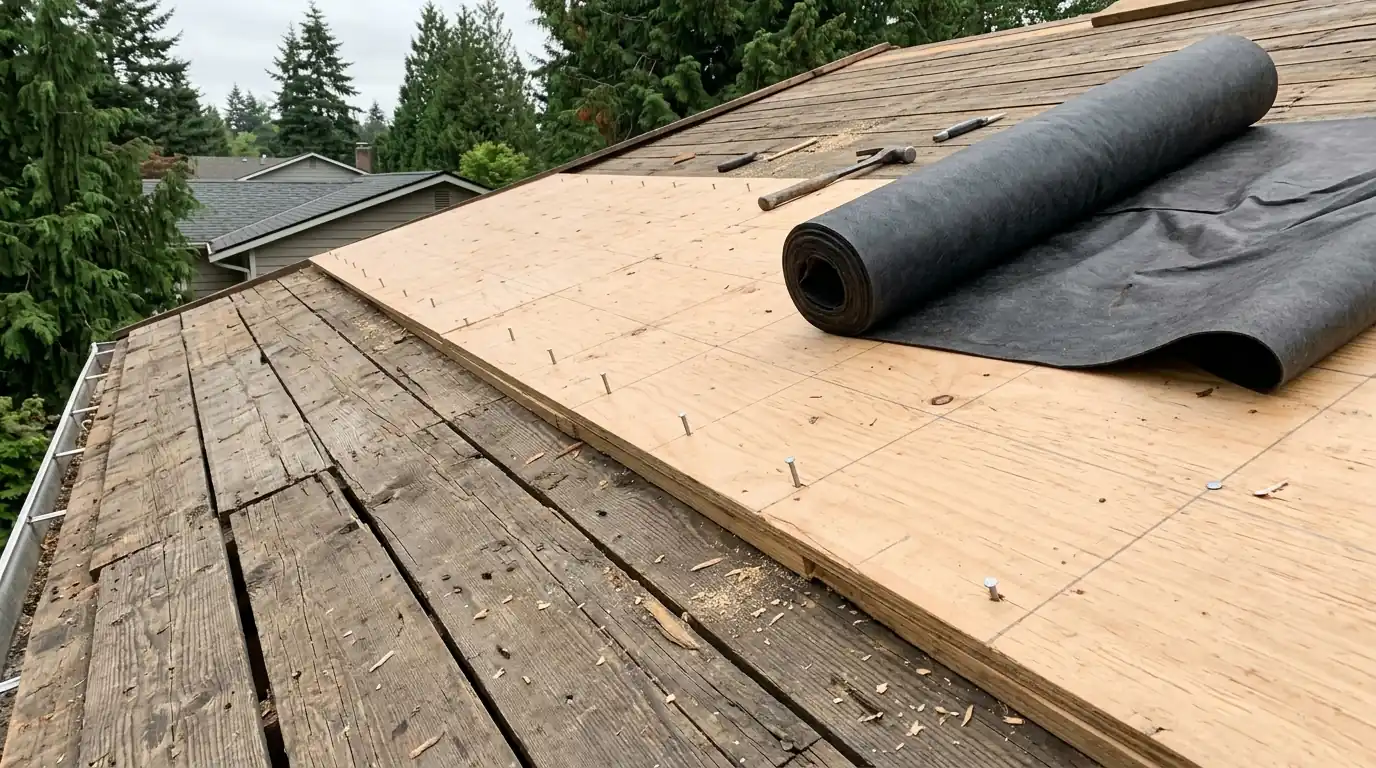
Tear-off is labor plus disposal, and both scale with weight. One layer of composition shingles comes off quickly. Two or three layers, or composition laid over old cedar shakes, means more hours, more dump loads and a closer look at the deck once it is bare.
Some owners ask whether laying new shingles over the old ones saves money. It skips tear-off, but it hides the deck from inspection and adds weight. City of Tacoma rules exempt many single-family reroofs from a permit when the old coverings come off, while a Tacoma permit guide reports that adding a new layer over existing roofing needs a permit and a pre-roof inspection. On most of our jobs a full tear-off is the cleaner choice.
Age matters here. The American Community Survey estimates that about 26.9% of Tacoma's housing units were built in 1939 or earlier, and older houses are the most likely to hide extra layers or shakes under the current roof.
Deck repairs: the number nobody can see from the ground
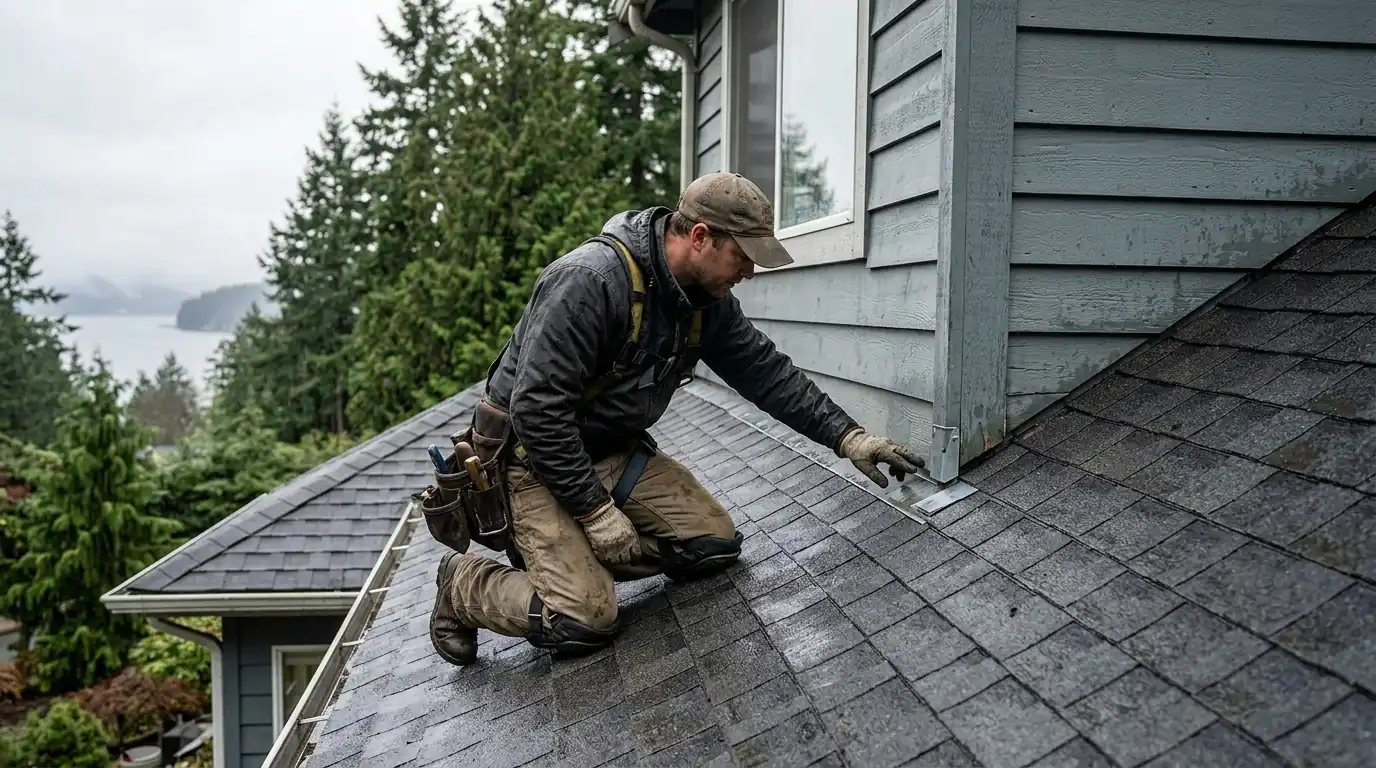
Once the old roof is off, the sheathing tells its own story. Soft spots around chimneys and valleys, delaminated plywood, and rot along the eaves all need new wood before underlayment goes down. Older homes often have spaced plank decking that was built for shakes, and many of those get covered with new sheathing so shingles have a solid nailing surface.
Because no one can measure rot through shingles, a fair bid prices decking per sheet and tells you the rate in writing. Ask how many sheets the bid assumes and what happens if more are needed.
Opening the roof can trigger other rules too. Under the Washington State Energy Code, a reroof that exposes an insulated roof cavity must have that cavity insulated to full depth. That mostly affects vaulted ceilings and roofs without an attic, and it adds insulation cost where it applies.
Asphalt shingles: what the material costs per square foot
Composition shingles are the most common replacement roof around Tacoma, and the per-square-foot range below reflects that spread. The low end is a basic architectural shingle on a simple roof. The high end covers heavier designer shingles, steep pitches and roofs that needed more carpentry.
Within the same brand, shingle lines differ in weight, wind rating and the look of the shadow line. We help you choose a line that matches the exposure of your house, rather than defaulting to the heaviest product on the price sheet.
Published range, not a quote and not our price. Source: angi.com, 2026-08. Your number depends on the factors below and is set after we see the roof.
Want a second pair of eyes?
We answer 24/7. Call (253) 449-1922 and describe what you are seeing.
Metal roofing: why the range is so wide
Metal covers everything from exposed-fastener panels on a shop building to standing seam with concealed clips and custom-bent trim. That is why the published range spans such a gap. Standing seam on a cut-up roof with many penetrations sits at the top of it.
Metal costs more to install, but it holds up well under the long wet season and sheds fir needles more easily than shingles. Our metal versus asphalt guide walks through that choice in detail.
Published range, not a quote and not our price. Source: angi.com, 2026-07. Your number depends on the factors below and is set after we see the roof.
Permits, flashing and other line items to look for
A complete bid lists the parts that sit around the shingles, not just the shingles themselves. These are the line items that most often explain why two numbers differ:
- Permit fees, where your city or the county requires one
- New drip edge at eaves and rakes
- Step and counter flashing at walls and chimneys
- Pipe boots and roof vents, replaced rather than reused
- Ice and water membrane in valleys and at penetrations
- Ridge or other exhaust venting sized to the attic
- Gutter removal and reinstall, or new gutters
How to compare two roof bids fairly
Put the bids side by side and match the scope before you match the totals. One bid may assume a single layer and one sheet of decking while another assumes two layers and ten sheets. The lower number is not cheaper if it leaves out flashing or prices decking at a high rate after the roof is open.
Ask each roofer three questions: how many layers they expect, what the decking rate is, and which flashing gets replaced. If a bid cannot answer those, it is not finished. We are happy to walk through ours line by line on a call.
Questions readers ask
We can talk through a rough range based on size and material, but a real number needs measurements, a look at the layers and a check of the attic.
It saves tear-off cost up front, but a Tacoma permit guide reports overlays need a permit and pre-roof inspection, and the deck stays hidden. Most of our replacements are full tear-offs.
Older roofs often have plank decking or soft spots that need new wood. A fair bid states a per-sheet rate so you know what added sheets cost.
Per square, yes. Steep roofs need roof jacks, planks and harness anchors, and installers move more slowly, so labor rises even when material stays the same.
Material prices do not follow the weather much, but scheduling does. Dry stretches fill up first, and winter tear-offs need careful daily dry-in.
Most single-family tear-offs take a few working days. Extra layers, decking repairs and wet weather add time. See our roof replacement page for the steps.