Storm and wind damage roof repair for Tacoma homes, documented for your claim
Windstorms lift shingles, drop limbs and peel flashing. We repair the damage and record what we find, so you have clear evidence when you file your own claim.
- Answering 24/7
- Puyallup office
- Tacoma and Pierce County
Short answer
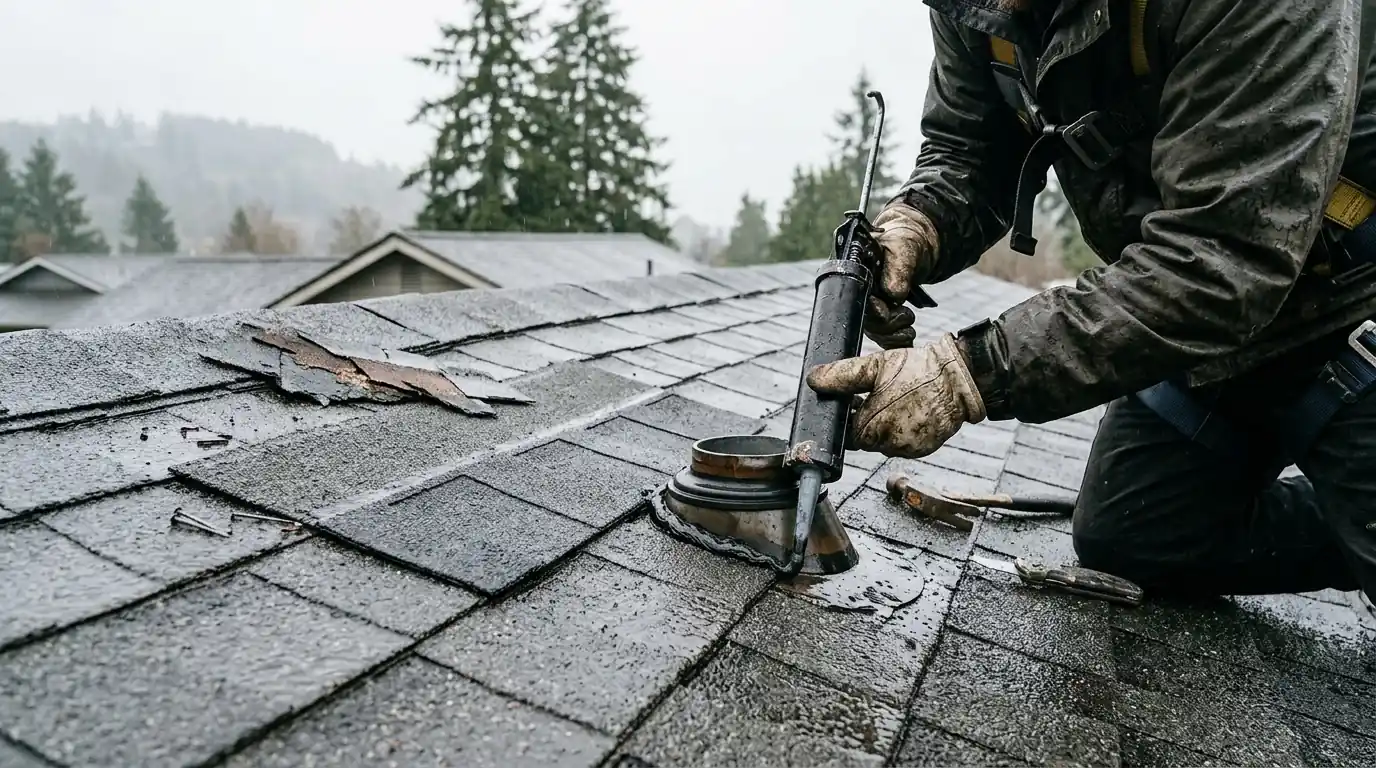
Storm damage on a Tacoma roof usually shows up in three places: creased or missing shingles, holes from falling limbs, and torn flashing or ridge vents. We cover open areas first, photograph and measure every damaged section for your file, then repair with matching material. You file the claim yourself, and the insurer decides what it covers.
Repairing wind damage and recording it properly
Wind damage is easy to miss from the ground. A tab can be lifted and creased without coming off, then lie flat again once the gusts stop. The crease breaks the shingle's mat and its seal, so the next storm finishes the job or water seeps in along the fold. We check the slopes that faced the wind first, then the ridge, rakes and edges.
If your roof carries a line from IKO, GAF or PABCO, we look for the same profile and color first so the repair blends in. Damage spread across several slopes of an aging roof can tip the decision toward replacement, and we will show you the photos behind that call.
Storm damage you can spot from the yard
Walk around once the wind has dropped. Stay off the roof and clear of downed lines.
Shingle pieces or grit on the ground
Torn tabs and granules point to bare spots above.
Lines across tabs
A straight crease near the nail line means a tab folded.
A ridge vent sitting crooked
Gaps along the peak let rain into the attic.
Bent edge metal
Peeled drip edge leaves the roof edge open.
Limbs resting on the roof
Even a small limb can crack the sheathing.
Wind-lifted and creased shingles
Look for shingles sitting slightly proud of the course, or a faint horizontal line across the tab where it bent. That line is a crease, and the shingle has lost its strength along it. We lift the course above, replace every creased and torn piece, and hand-seal the new tabs, because a cold, damp roof will not activate the factory seal strip. Neighboring tabs that have lost their bond get resealed in the same visit. On a roof whose seal strips are failing everywhere, replacing a few tabs only moves the next failure along.
Tree and limb strikes
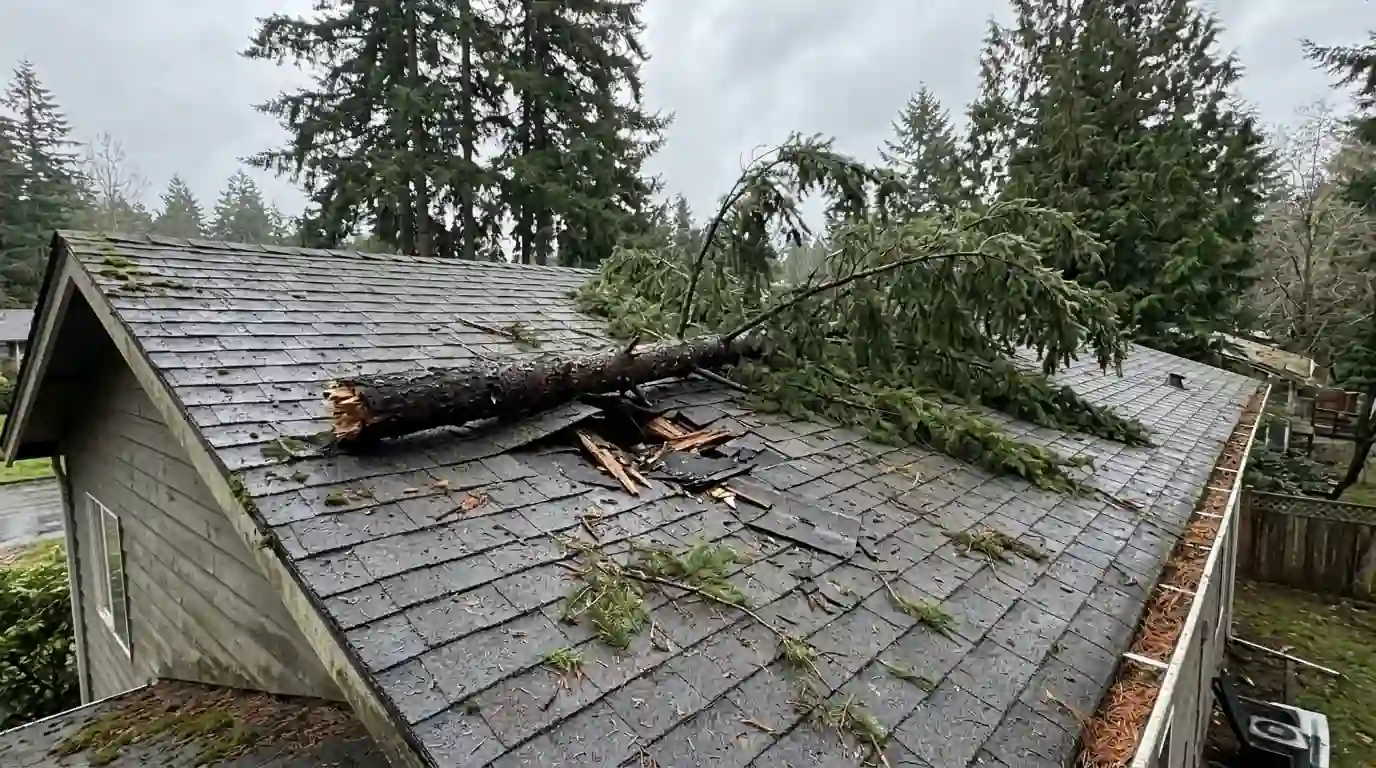
A limb that punches through shingles often cracks the sheathing and sometimes a rafter. Outside it can look like a small hole; inside, splintered boards and wet insulation tell the real story. We cut the limb off in pieces so it does not tear the opening wider, cover the hole, then cut damaged sheathing back to sound rafters. Cracked rafters get sistered with new lumber before the deck goes back on. When a whole tree is on the house, an arborist may need to lift it clear first.
Insurance claim documentation
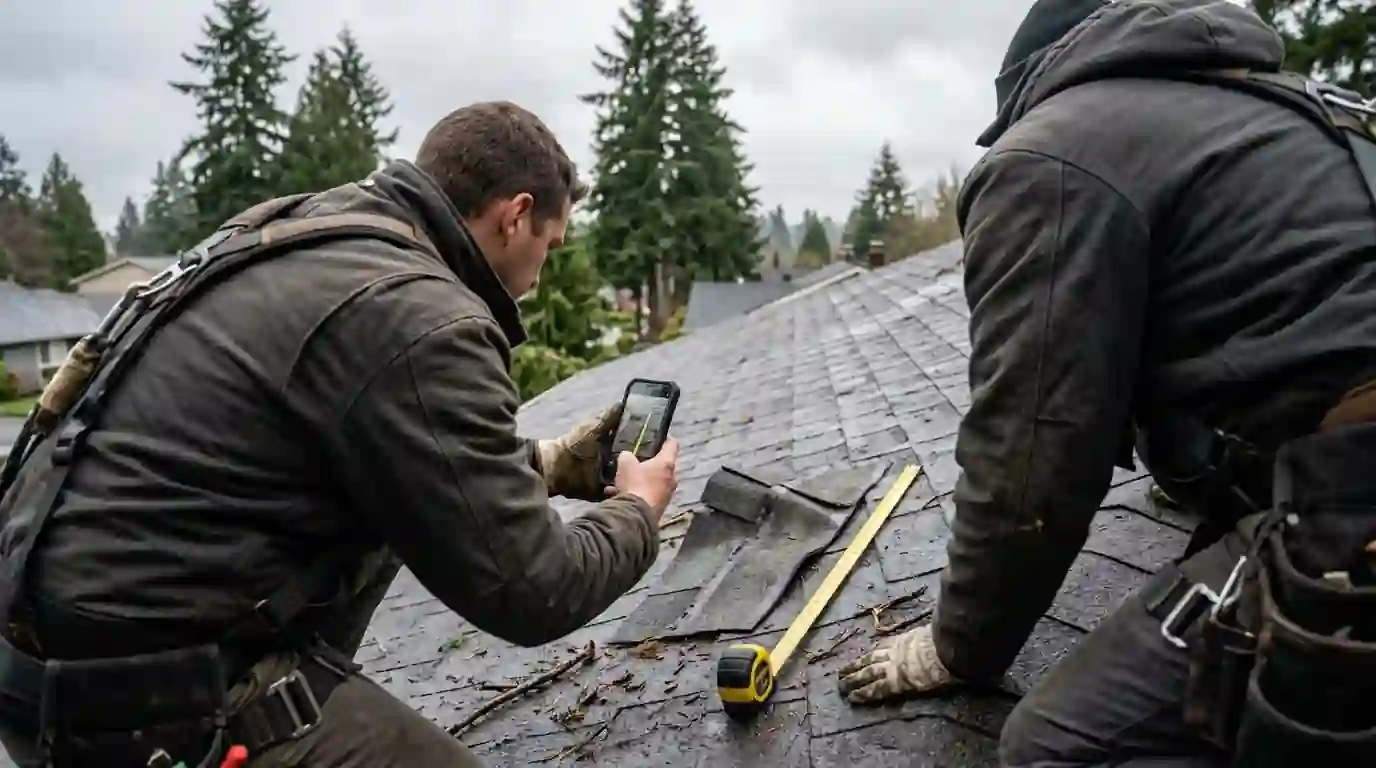
You file your own claim with your insurer, and the adjuster makes the coverage decision. What we give you is a clear record: dated photos of each area, close-ups beside a tape measure, the slopes and directions affected, and a written list of what needs repair and why. We also note anything that looks like older wear rather than storm damage, because a straight record holds up better. If the adjuster wants to meet on the roof, we can walk it together. We never promise what a claim will pay.
Torn flashing and ridge vents
Gusts pull hardest at the edges, so drip edge, rake trim, ridge vents and wall flashing take the hit before the field shingles. A lifted ridge vent lets wind blow rain straight into the attic, and a peeled length of wall flashing can leak for weeks before anyone notices. We refasten or replace bent metal, reseat ridge vents with nails long enough to bite the deck, and swap cap shingles that cracked when the vent lifted. Metal bent past a gentle curve rarely seals again, so it gets replaced.
How we handle a storm-damaged roof
You call after the storm
Tell us what fell, what blew off and where water shows.
We cover open areas
Holes and bare decking get a temporary cover first.
We walk every slope
Windward faces, ridge, rakes and edges, tab by tab.
We photograph and measure
Each damaged area is recorded with dates and close-ups.
You get the written list
What failed, what needs repair and what looks like older wear.
You file your claim
You send the record to your insurer, who handles coverage.
We make the repairs
Shingles, flashing, vents and decking get replaced and sealed.
Around Tacoma
Recent windstorms around Tacoma
In the December 20, 2018 windstorm, the Weather Service logged a 52 mph gust at the airport near Gig Harbor and 51 mph at the base next to Lakewood. The November 2024 bomb cyclone hit harder and left nearly 600,000 western Washington customers without power. Storms on that scale lift tabs across whole slopes at once, so after one we walk the faces that took the gusts first, then the ridge and edges, even where nothing looks wrong from the street.
What changes the price of storm repairs
Storm repairs range from a few tabs to a cracked rafter. The published figure below covers small repairs only.
Published range, not a quote and not our price. Source: homeadvisor.com, 2026-06. Your number depends on the factors below and is set after we see the roof.
How many slopes were hit
Damage on one face is quicker than wind damage on every side.
Structure under the hole
Cracked sheathing or rafters add carpentry before roofing.
Shingle availability
Discontinued lines take time to match or need a close substitute.
Tree removal
A large limb or tree may need an arborist before we start.
Documentation time
Detailed photos and a written list add roof time.
- Owens Corning
- CertainTeed
- GAF
- Malarkey
- IKO
- PABCO
- Atlas
- Tamko
Storm & Wind Damage Repair questions from Tacoma homeowners
That is your insurer's decision under your policy. We record the damage clearly, and the adjuster decides what is covered.
Yes, if you would like. We can walk the roof with the adjuster and point out each damaged area we recorded.
Look for shingle pieces in the yard, lifted edges and bent vents. Our windstorm guide covers what to check safely.
Cover open areas right away and keep photos. Ask your insurer before permanent repairs, since many want the adjuster to see the roof first.
Keep everyone out of the rooms below. A large tree may need an arborist to lift it off before we can cover and repair.