Roof Replacement
Simple postwar roofs are straightforward tear-offs once they reach the end of their life.
DetailsThe South End is mostly postwar houses with simple roofs. They are easy to reroof, but their gutters and attics often need more attention than the shingles.
Short answer
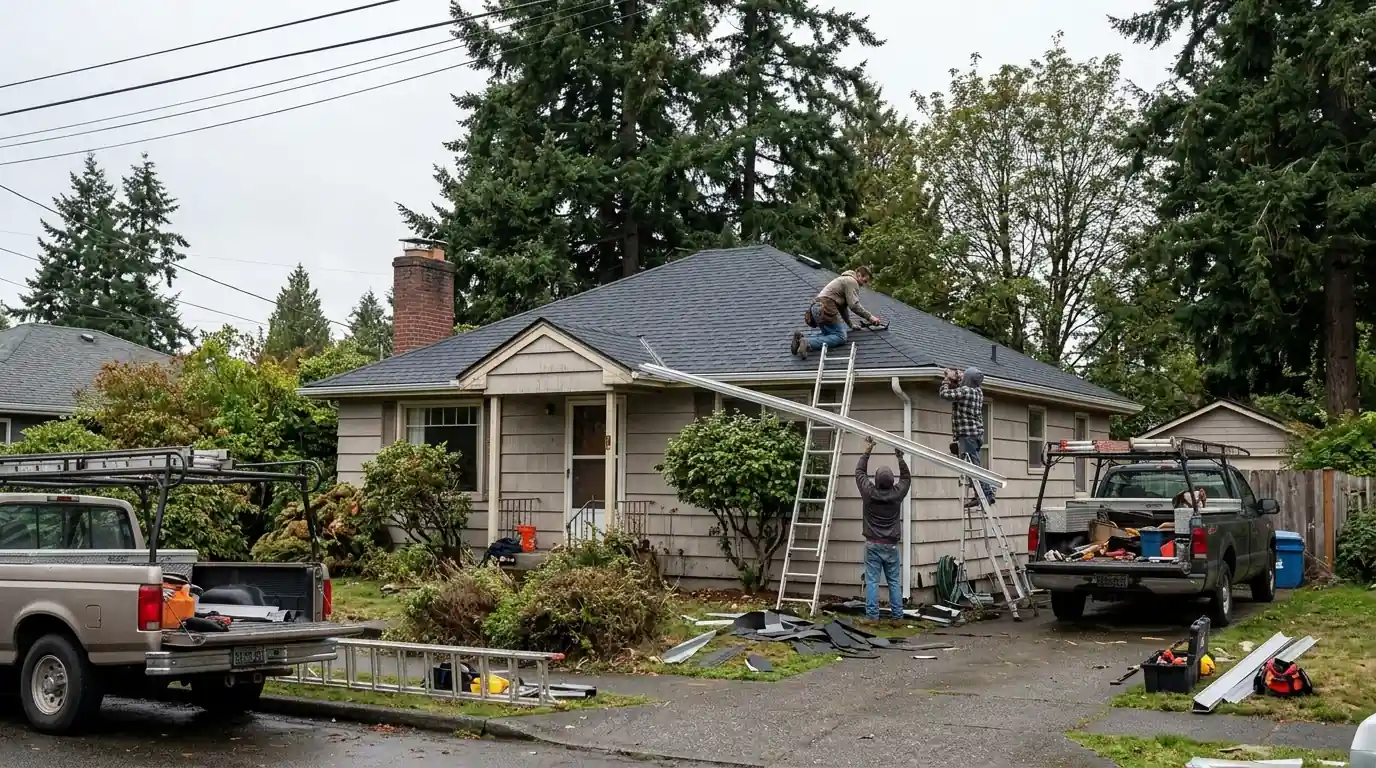
Yes, we work across Tacoma's South End, where NeighborhoodScout describes most housing as built from 1940 to 1969, mostly owner-occupied. Those postwar homes usually have simple gable or hip roofs with modest pitch. The work here is often a full reroof paired with new gutters and better attic venting, since many were built with little of either.
NeighborhoodScout describes South End housing as mostly built between 1940 and 1969, with some pre-1940 homes and a mostly owner-occupied population. Citywide, about 7.9% of Tacoma's homes date from the 1940s alone, and much of that building happened in neighborhoods like this one.
Houses from that era tend to be compact one-story homes with simple gable or hip roofs and low to moderate pitch. That makes the roof itself straightforward to replace. What usually needs more thought is everything around it: short eaves that drop water right at the foundation, little or no soffit venting, and gutters that have been patched more than once.
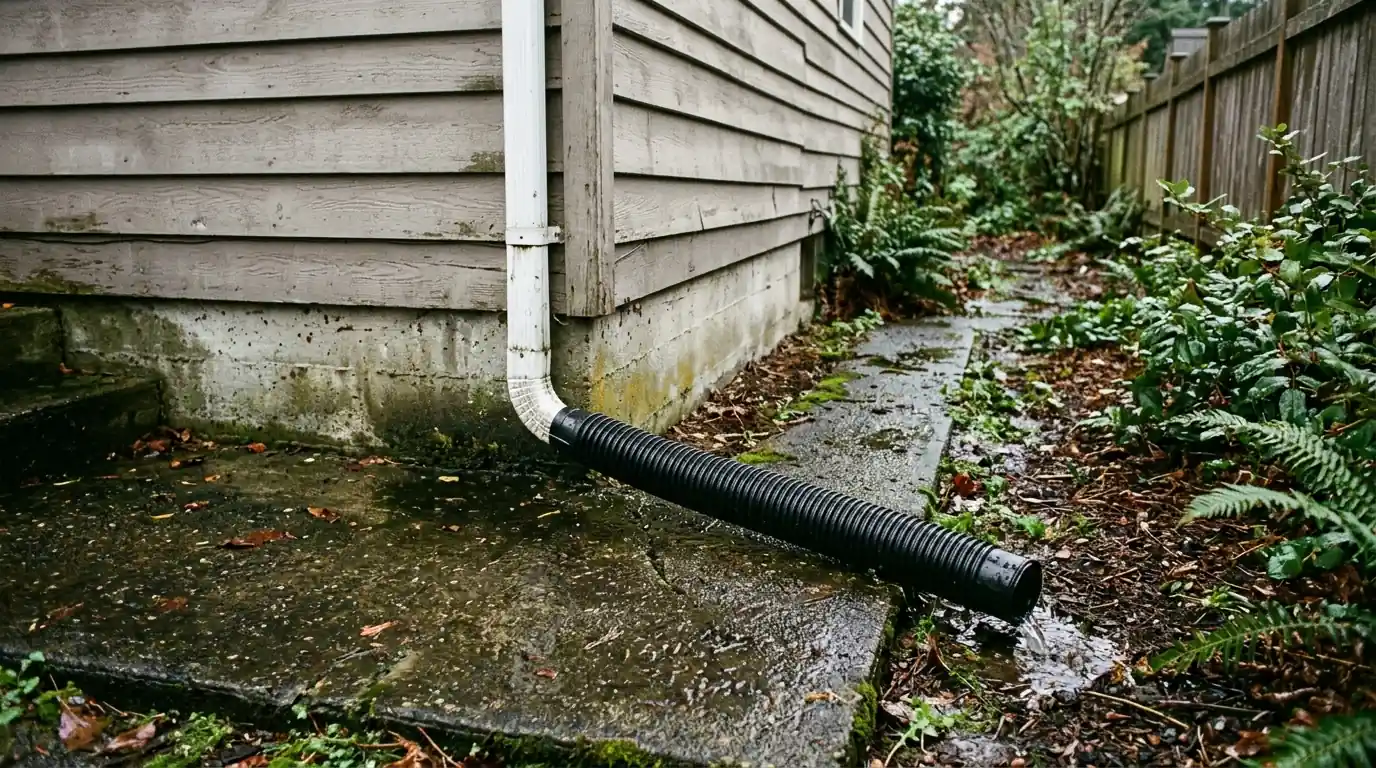
November is the wettest month at Sea-Tac at 6.31 inches, followed by January and December. On a house with short eaves, an overflowing gutter dumps that water against the siding and next to the foundation. Many original gutters here were sectional, with seams every few feet that eventually leak.
When we replace gutters on a South End house, we size them to the roof area, add downspouts where long runs overflow, and carry water away from the house. Our drainage page covers extensions and tightline connections. Where fascia behind the old gutters has softened, we fix it first.
Many midcentury roofs were built with a few small gable vents and no soffit intake. In a wet winter that traps moist air in the attic, and frost on the nails melts into drips that look like leaks. A reroof is the right moment to add ridge venting and open up intake at the eaves. Our attic ventilation page explains the balance.
Tacoma often exempts single-family reroofs from a permit when the old coverings come off and the framing stays the same, so most South End reroofs move quickly from a decision to a start date. We confirm the permit question for each house before ordering material.
Simple postwar roofs are straightforward tear-offs once they reach the end of their life.
DetailsSectional gutters on these houses leak at seams and lose pitch with age.
DetailsShort eaves put roof water right at the foundation unless it is carried away.
DetailsMany midcentury attics have no soffit intake and trap winter moisture.
DetailsFascia behind decades-old gutters often softens and needs replacing.
DetailsThin original insulation is easiest to upgrade while the roof is open.
DetailsNeighborhoodScout describes most South End housing as built from 1940 to 1969, with some pre-1940 homes mixed in.
That is usually condensation from poor venting, common on midcentury houses. Our condensation guide shows how to tell.
Often yes. The drip edge and gutter line up best when both go on together, and old gutters rarely outlast a new roof.
Yes, where the eave framing allows. We cut intake into the soffit and pair it with ridge venting at the reroof.
Often not for a single-family tear-off with no framing changes. Our permit guide lists the conditions.
Or see the full South Sound coverage overview.
Call any hour. Tell us about the roof, the gutters and any winter drips, and we will plan the visit.
Calls are answered around the clock. Tell us what you are seeing and where the house is, and we will set up a visit.
Our office sits in Puyallup, and our crews work across Tacoma and Pierce County. The map loads only when you ask for it.