New TPO roofs for Tacoma garages, additions and low-slope sections
TPO is a heat-welded single-ply membrane for roofs too flat for shingles. We tear off the old covering, fix the slope and weld a new roof from edge to edge.
- Answering 24/7
- Puyallup office
- Tacoma and Pierce County
Short answer
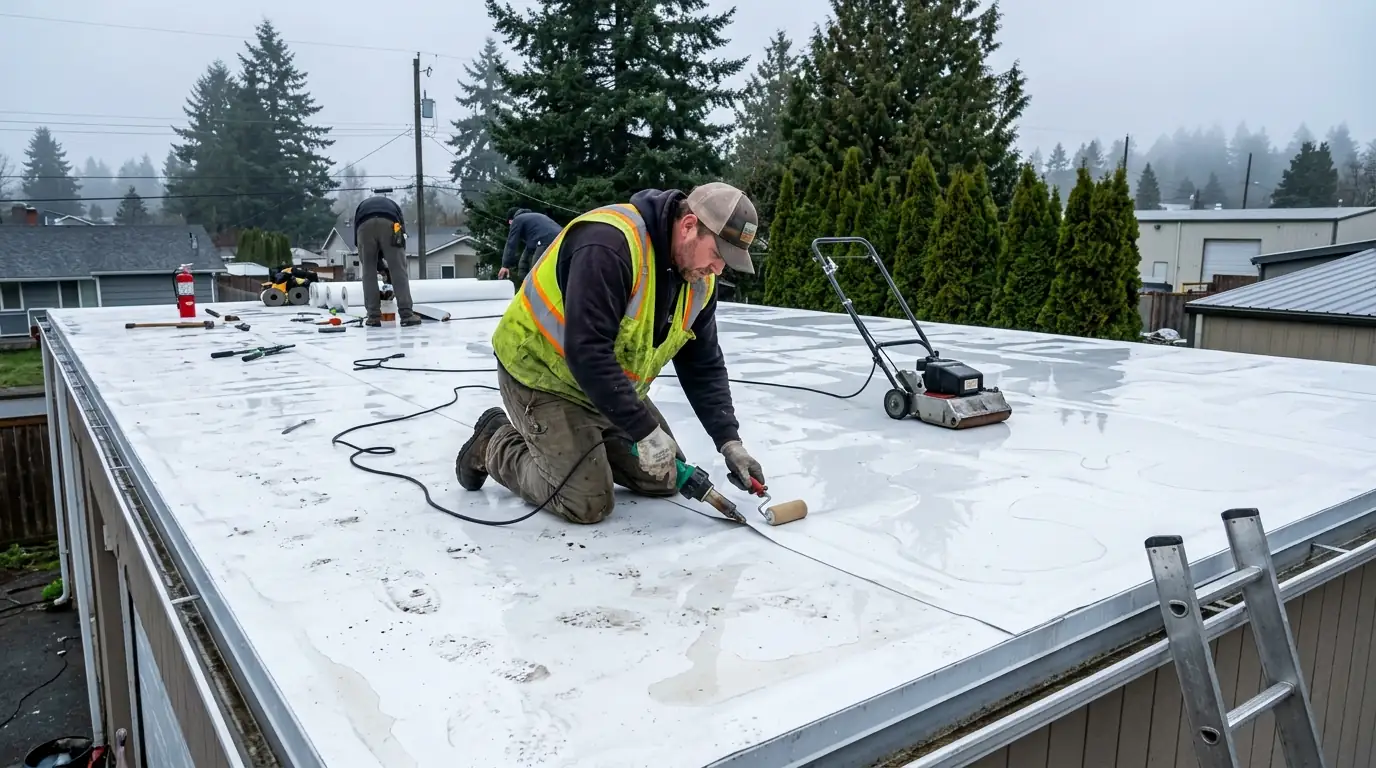
A new TPO roof in Tacoma replaces a worn flat or low-slope covering with one heat-welded membrane, usually 60 mil thick, fastened or fully adhered over new insulation board. It suits roofs under 2:12 pitch, where shingles are not allowed, and performs far better when tapered insulation sends water to the drains instead of letting it pond.
What a TPO install replaces and what goes under it
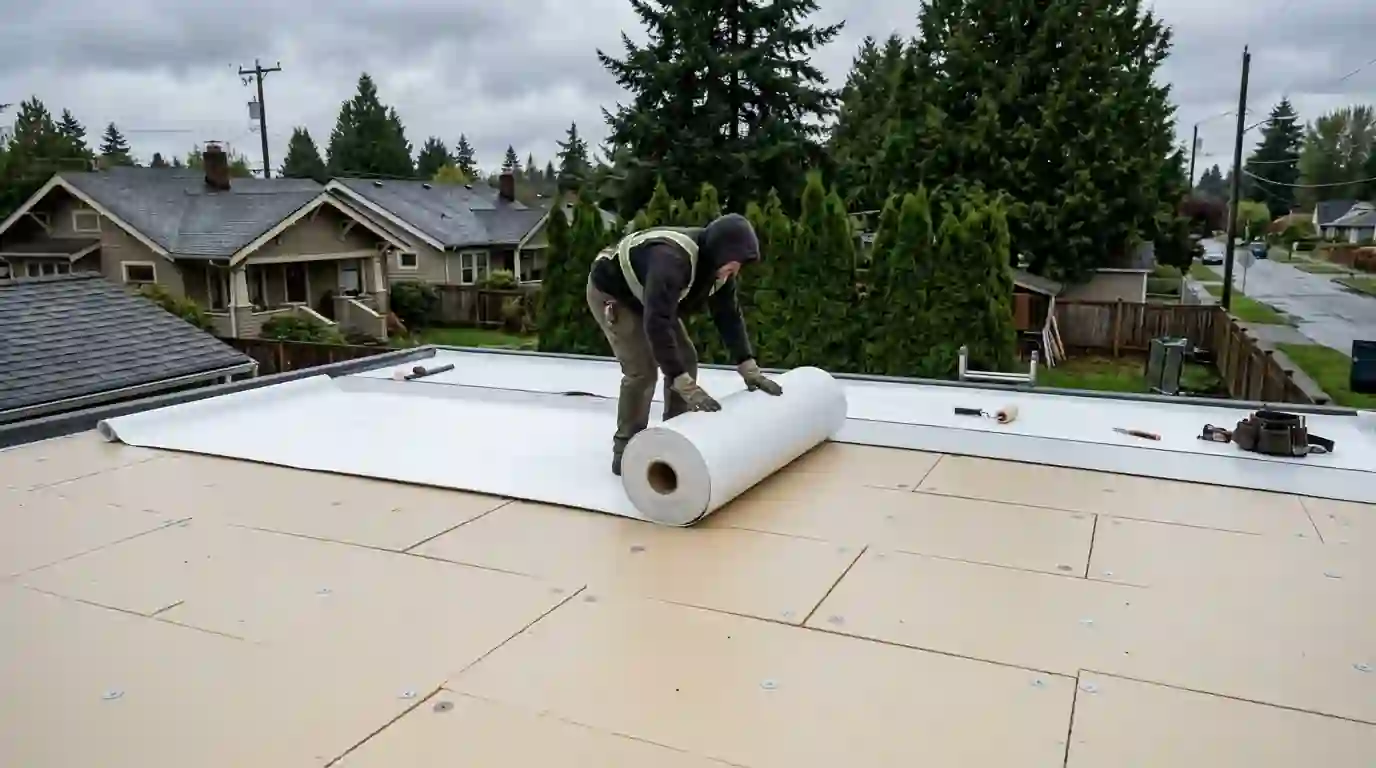
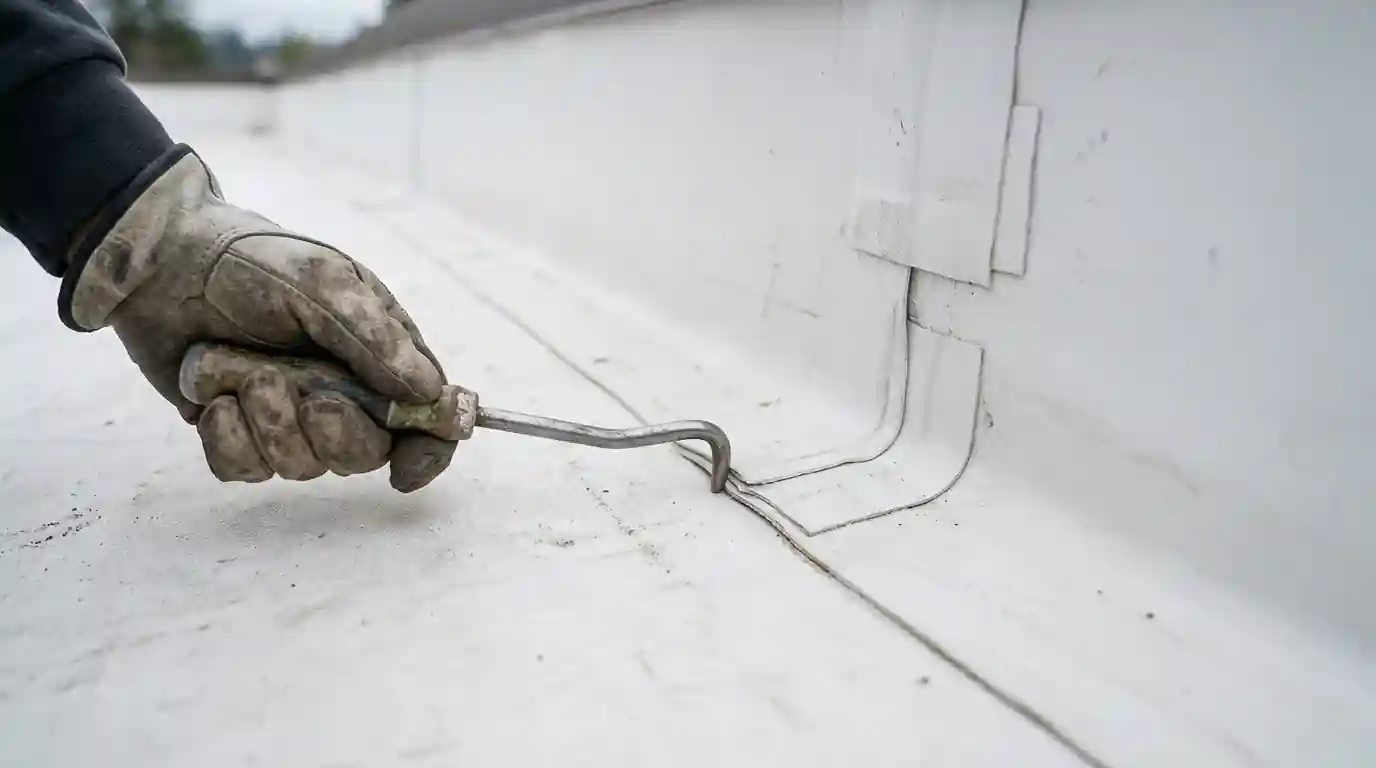
TPO is a thermoplastic sheet sold in wide rolls whose seams are fused with hot air instead of glued. That welded seam is the main reason to choose it over older built-up and rolled roofs, which depend on adhesive and overlap. A new TPO roof starts with a full tear-off, a deck check and fresh insulation board, then the membrane, edge metal and flashings at every wall and pipe.
We install membranes from makers like Carlisle, Versico and GAF, in white for most homes and gray or tan where an upstairs window looks down on the roof. If your flat roof has one bad spot rather than a worn-out field, start with flat roof repair.
What drives the cost of a TPO roof
TPO is priced by the square foot plus edges and details. The published range below covers flat roof replacement, with TPO broken out.
Published range, not a quote and not our price. Source: angi.com, 2026-08. Your number depends on the factors below and is set after we see the roof.
Tear-off layers
Two old roofs stacked up mean more labor and disposal.
Tapered insulation
Built-in slope adds material on roofs that pond.
Edges and walls
Parapets, scuppers and wall transitions take hand work.
Penetrations
Every vent, curb and pipe needs its own flashing.
Attachment method
Fully adhered costs more than fastened and sits quieter in wind.
TPO over garages and additions
Detached garages, flat-roofed additions, porch roofs and the low section behind a dormer are where most homes have TPO. Where the low roof meets a pitched one, we run the membrane up under the shingles and cover the transition with metal, so water from the steep roof lands on membrane rather than in a joint. A small roof still needs the same edge metal and wall flashing as a large one, so per square foot it costs more. White can glare toward upstairs windows, which is why gray exists.
Tapered insulation for drainage
If water sits on your roof after every storm, the cure is slope. Tapered insulation board is cut at the factory to a slight grade and laid so every square foot drains toward a scupper or drain, with small crickets behind chimneys and walls. It adds cost and lifts the roof edge on the high side, which can affect door thresholds onto a roof deck and the height of wall flashing. We work those heights out before ordering, because tapered board cannot be trimmed much on site.
TPO versus PVC
Both are white, single-ply and heat-welded, and from the street they look the same. PVC holds up better against grease and oils, so it suits roofs near a kitchen exhaust or a restaurant vent, and it stays more flexible in the cold. It also costs more. TPO is the usual choice for a house. The two cannot be welded to each other, so whatever goes on now sets what any future repair has to match. EPDM, the black rubber option, is a third path with taped seams.
What is in a TPO roof from us
Low-slope bids differ most at the edges and in the insulation. These are in ours.
- Tear-off of the old roof to the deck
- Deck repair where sheathing is soft
- Insulation board, tapered where water ponds
- TPO membrane fastened or adhered to the board
- Hot-air welded seams probed by hand
- New drip edge, gravel stop or parapet cap
- Flashed curbs, pipes and wall transitions
How a TPO roof goes on
Cut a core
A small sample shows how many layers are under you.
Tear off to the deck
Sections come off only as fast as we can dry them in by evening.
Repair the deck
Soft or delaminated sheathing gets replaced.
Lay the board
Flat or tapered insulation is fastened to direct water.
Roll out the membrane
Sheets are fastened or glued down with laps facing downslope.
Weld the seams
Hot air fuses each lap, then we probe it by hand.
Flash and trim
Edge metal, curbs and wall terminations finish the roof.
In Tacoma
White TPO and the 2021 heat dome
During the June 2021 heat dome, the region's official station recorded 104 F on June 27 and 108 F the following day. A dark flat roof in that sun runs far hotter than the air, and the heat moves straight into a bonus room over the garage or an addition with a low ceiling. White TPO reflects most of that sunlight, which is one practical reason we steer flat roofs over living space toward a light membrane. Heat also stresses seams, so we probe every weld after the sheet cools.
- Carlisle
- Johns Manville
- Polyglass
- Versico
- Mule-Hide
- GAF
- Duro-Last
- Henry
TPO Roofing questions from Tacoma homeowners
Sometimes, with a cover board between, but a recover hides any wet insulation underneath. We cut a core sample first, and on houses we usually recommend tearing off.
Yes, to clear a drain or reach a vent now and then. For regular foot traffic, like a deck above it, add walkway pads or choose a different system.
It does. Pollen, needles and algae dull it over time. A gentle wash with a soft brush keeps it reflective, while a pressure washer can scar the surface.
Yes. The membrane runs up under the shingles with metal over the transition. For new additions, see new construction roofing.
No louder than shingles. With insulation board underneath, rain on a TPO roof sounds like a soft patter rather than a drum.