Siding installation in Tacoma, built over a rainscreen so walls can dry
New siding is only as good as the layers behind it. We strip the old cladding, fix the sheathing, wrap and flash the wall, then hang the siding you choose.
- Answering 24/7
- Puyallup office
- Tacoma and Pierce County
Short answer
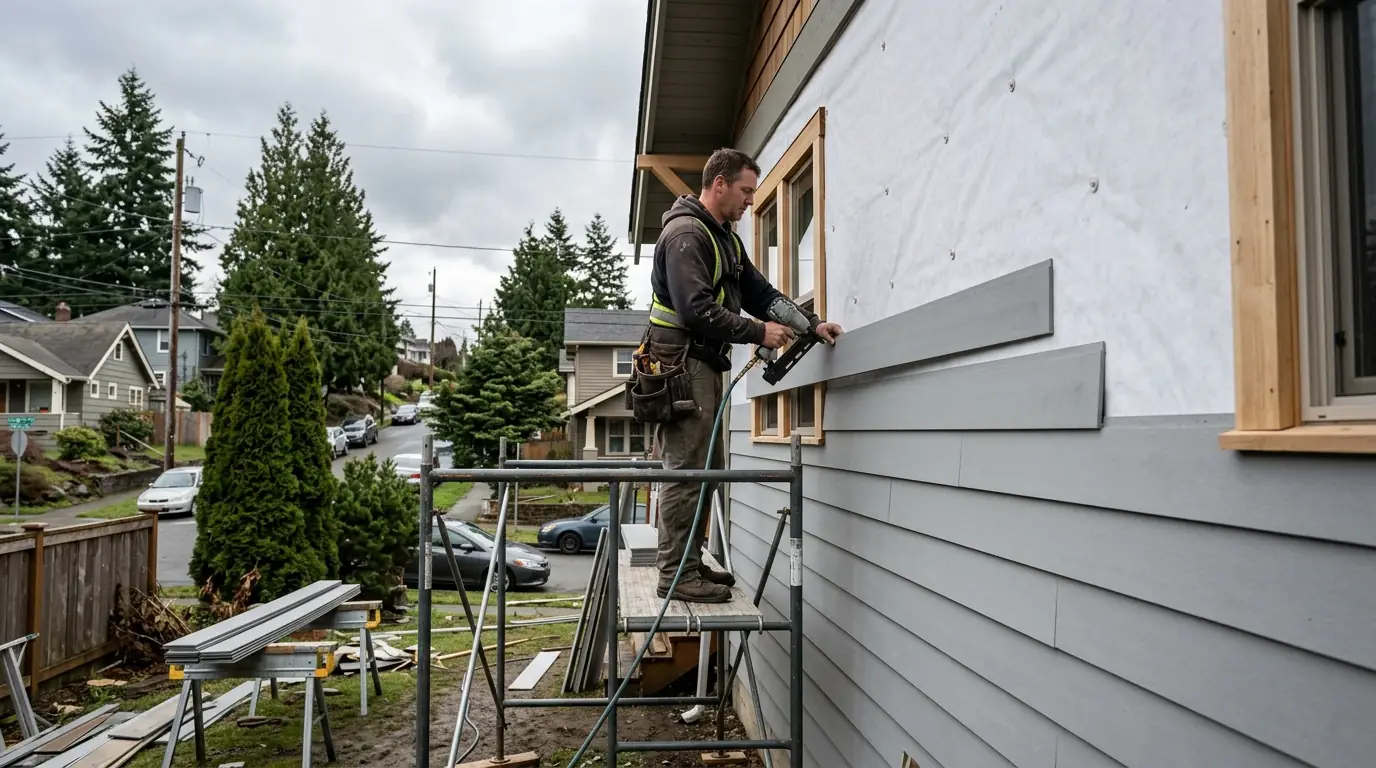
Siding installation on a Tacoma house is a layered job: old siding off, damaged sheathing replaced, house wrap and flashing at every window and door, then fiber cement, vinyl or engineered wood on top. On most walls we add a rainscreen gap so water that gets behind the cladding can drain and dry instead of soaking the sheathing.
The layers behind new siding
Siding sheds most rain, but in a climate this wet some water always gets behind it. What matters is where it goes next. Over the sheathing we lay house wrap, lap it from the bottom up so water runs outward, and flash every window, door and penetration into it.
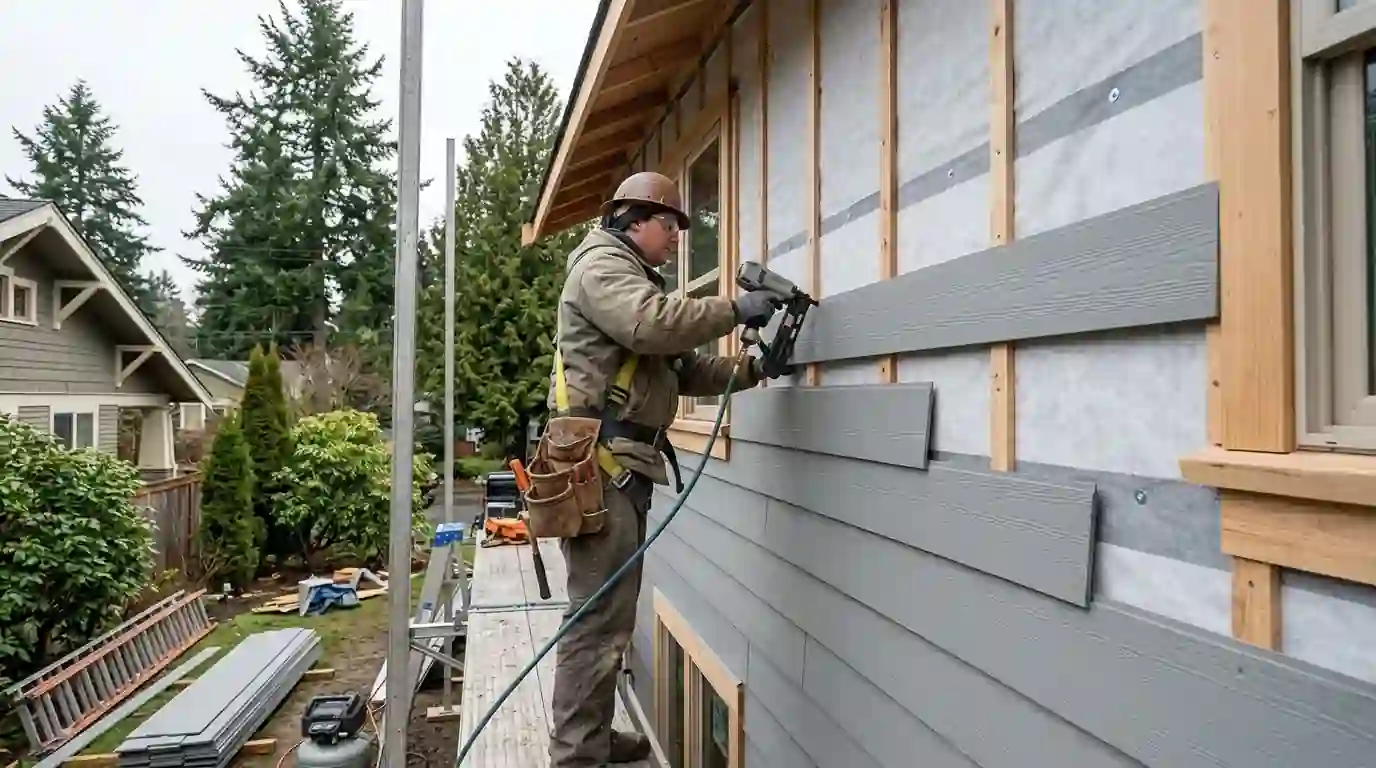
Then comes the cladding. We install fiber cement from James Hardie, engineered wood from LP SmartSide, and vinyl from makers like CertainTeed and Royal. Each carries a real tradeoff in cost, upkeep and impact resistance, and our guide on fiber cement or vinyl siding walks through them.
What shapes the cost of new siding
Below is a published Seattle-area range for planning. A firm number needs a walk around the house and a look behind one board.
Published range, not a quote and not our price. Source: angi.com, 2026-08. Your number depends on the factors below and is set after we see the roof.
Siding material
Vinyl costs least; fiber cement and engineered wood cost more.
Wall area and stories
Tall walls need staging and take longer to reach.
What is behind it
Rotted sheathing found during tear-off adds scope.
Windows and trim
Every opening needs flashing, trim and careful cuts.
Paint and finish
Prefinished boards cost more up front but skip the paint job.
Fiber cement siding
Fiber cement is cement, sand and wood fiber pressed into planks, panels or shingles. It does not rot, burn or attract woodpeckers, and factory-primed or prefinished boards hold paint for a long time. It is also heavy, brittle until nailed, and dusty to cut, so we cut it outdoors with dust-collecting saws. The weak points are butt joints and cut ends, which we seal and back with flashing. It is our usual pick for houses that need to look like painted wood and last.
Vinyl siding
Vinyl is the lowest-cost cladding and never needs paint. It hangs loose on purpose: nails sit in the center of the slots with a little play so panels can expand and shrink with temperature. Nail it tight and it buckles on the first hot afternoon. Thicker panels resist wind and look straighter on the wall. The tradeoffs are impact, since a hard knock can crack it in cold weather, and color, which you cannot easily change later without special vinyl-safe paint.
Engineered wood siding
Engineered wood is wood strands pressed together with resin and wax, then treated against rot and insects. It is lighter than fiber cement and cuts like lumber. Long lengths mean fewer joints, which suits lap siding and board-and-batten. It does need paint upkeep, and it fails when cut edges are left bare or the bottom course sits too close to the ground or a roof. We prime every cut end and keep proper clearance at roof lines, decks and grade.
Rainscreen and house wrap
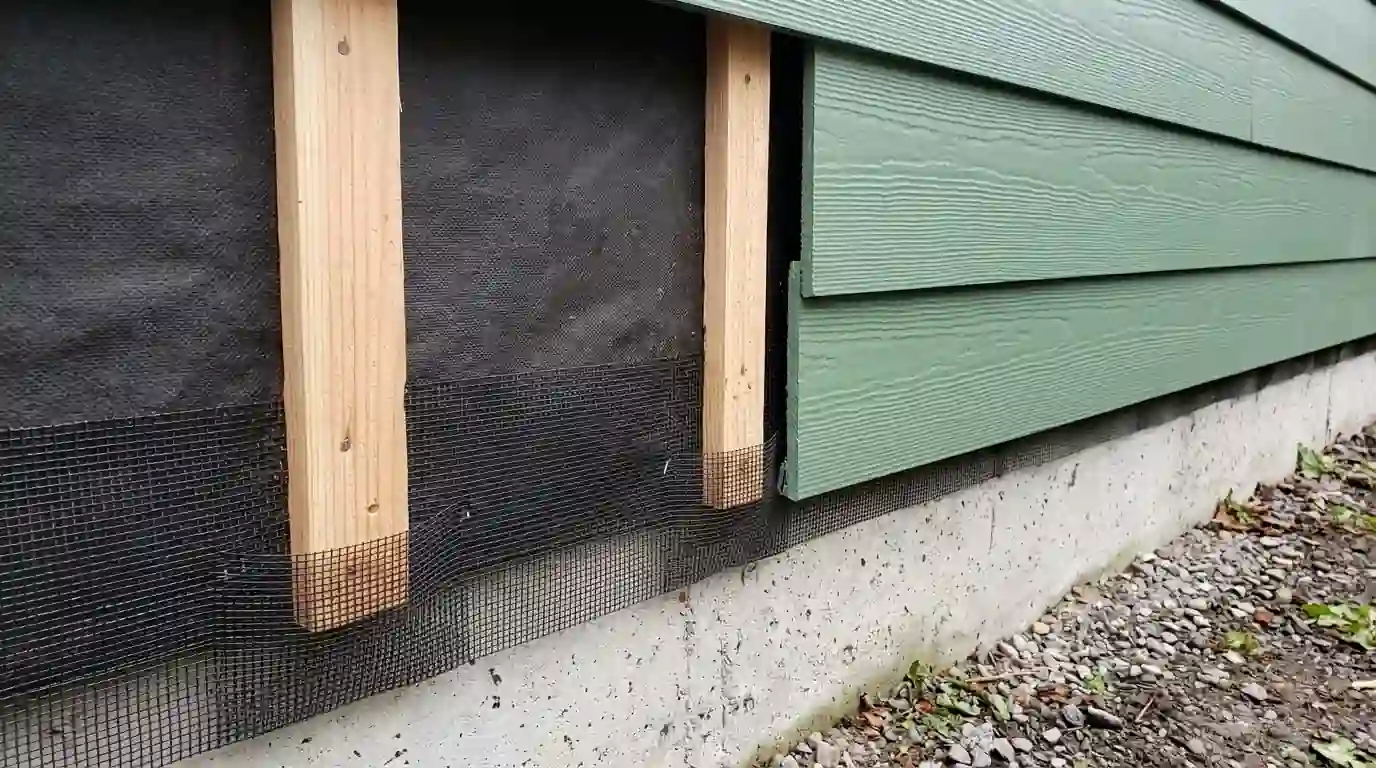
House wrap is the water-resistive barrier behind the siding, lapped from the bottom up so water always runs outward. A rainscreen adds a small air gap, made with thin furring strips or a textured wrap, between that barrier and the siding. The gap lets water drain and air move, so the wall dries out between storms. In a wet climate it adds modest cost and lengthens the life of both siding and sheathing. A bug screen at the bottom keeps the gap from becoming a nesting spot.
What a siding install includes
Siding bids differ most in what happens behind the boards. Ours include these.
- Tear-off and disposal of the old siding
- Sheathing checked and soft areas replaced
- House wrap lapped from the bottom up
- Flashing at every window, door and vent
- A rainscreen gap with a bug screen at the base
- New corner boards and trim
- Sealed butt joints and primed cut ends
From old siding to finished wall
You call about the house
Its age, current siding and what is bothering you.
We walk the walls
Looking for rot at sills, corners and the bottom course.
You choose the material
Fiber cement, vinyl or engineered wood, plus color.
Old siding comes off
One wall at a time, so the house is never left open.
We repair and wrap
Sheathing fixed, house wrap lapped, openings flashed.
The siding goes on
Over a rainscreen gap, with joints and ends sealed.
We trim and clean up
Corners and trim finished, nails swept from the yard.
Around Tacoma
Re-siding the 1970s and 1980s houses around Tacoma
A lot of siding installs in the Tacoma area are on houses from the 1970s and 1980s. University Place had its biggest building decade in the 1970s, with 22.1% of its homes, and Federal Way's came in the 1980s at 24%. Houses from those years often still wear original hardboard or plywood panel siding, which swells at the bottom edges and around windows after decades of rain. Replacing it is also the first real chance to add the house wrap and rainscreen those walls never had.
- James Hardie
- LP SmartSide
- CertainTeed
- Royal
- Trex
- TimberTech
- Milgard
- Pella
Siding Installation questions from Tacoma homeowners
Fiber cement looks like painted wood and resists impact; vinyl costs less and skips paint. Our siding comparison guide covers both in detail.
We do not recommend it. Covering old siding hides rot, skips the house wrap and leaves no clean way to flash the windows.
It can depend on the scope and the address, especially in historic districts. We check the city or county requirements before starting.
Yes, though matching faded color or an old profile can be hard. We show you the closest match before cutting anything off.
We show you, price the repair and fix it before covering it up. See dry rot repair for what that involves.