Asphalt shingle roofs for Tacoma homes, chosen for wind, shade and slope
Asphalt shingles suit most Tacoma houses: they are light, simple to repair and come in lines built for wind and damp. The real decision is which line, and what goes underneath it.
- Answering 24/7
- Puyallup office
- Tacoma and Pierce County
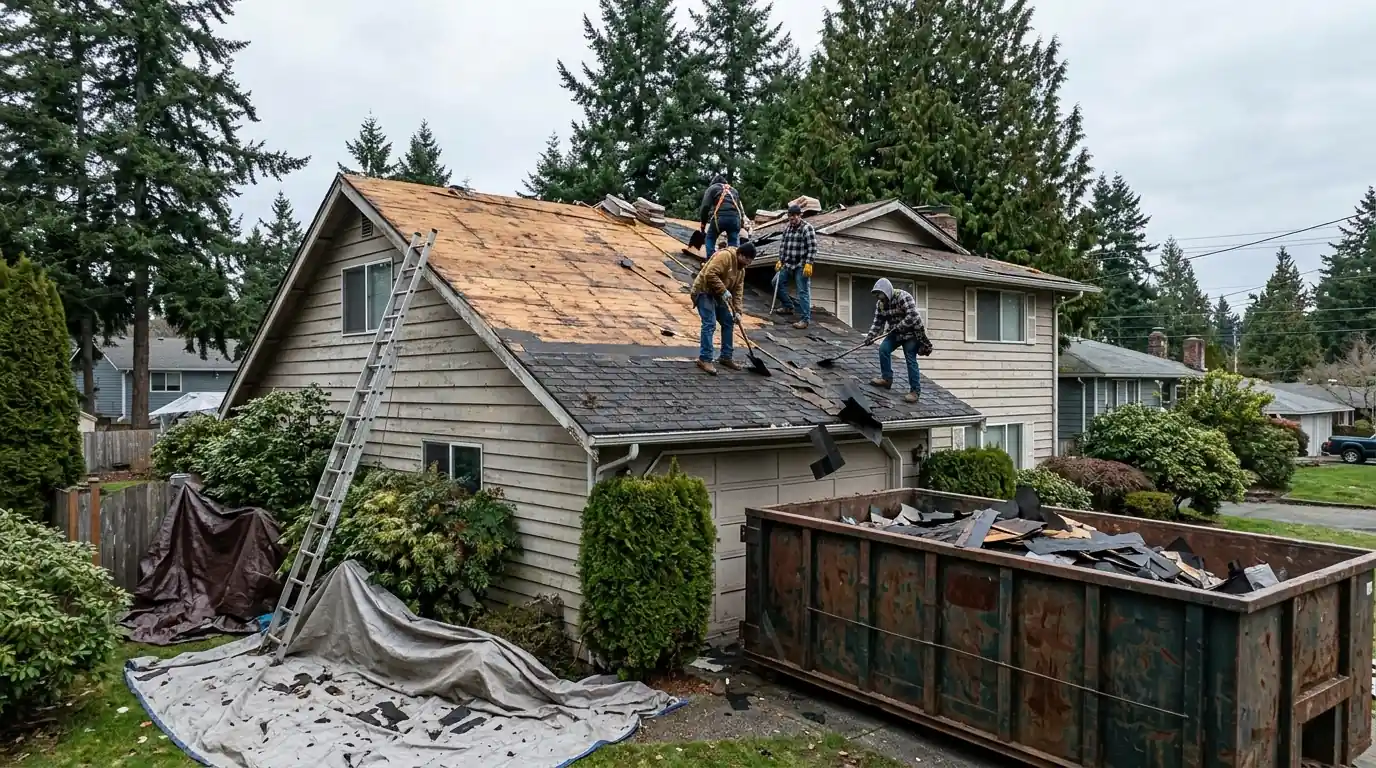
Short answer
For a Tacoma house, an architectural asphalt shingle is the usual choice: two laminated layers, a higher wind class and a longer expected life than three-tab. On a damp, shaded roof, an algae-resistant line with copper granules slows black streaking, and a high-wind nailing pattern helps the edges hold through winter gusts.
Picking a shingle line for a wet, windy climate
Every asphalt shingle shares the same basic build: a fiberglass mat soaked in asphalt and coated in ceramic granules. The differences lie in thickness, how the layers are laminated, the strength of the adhesive strip, and what the granules are treated with. Those details decide how a roof copes with wind, shade and years of rain.
We install lines from Owens Corning, Malarkey, CertainTeed and GAF, most of which come in architectural profiles with algae-resistant options. Matching the line to the house matters more than the logo: a shaded north slope under firs needs different priorities from an exposed south face. For the bigger metal-or-shingle question, read our comparison guide.
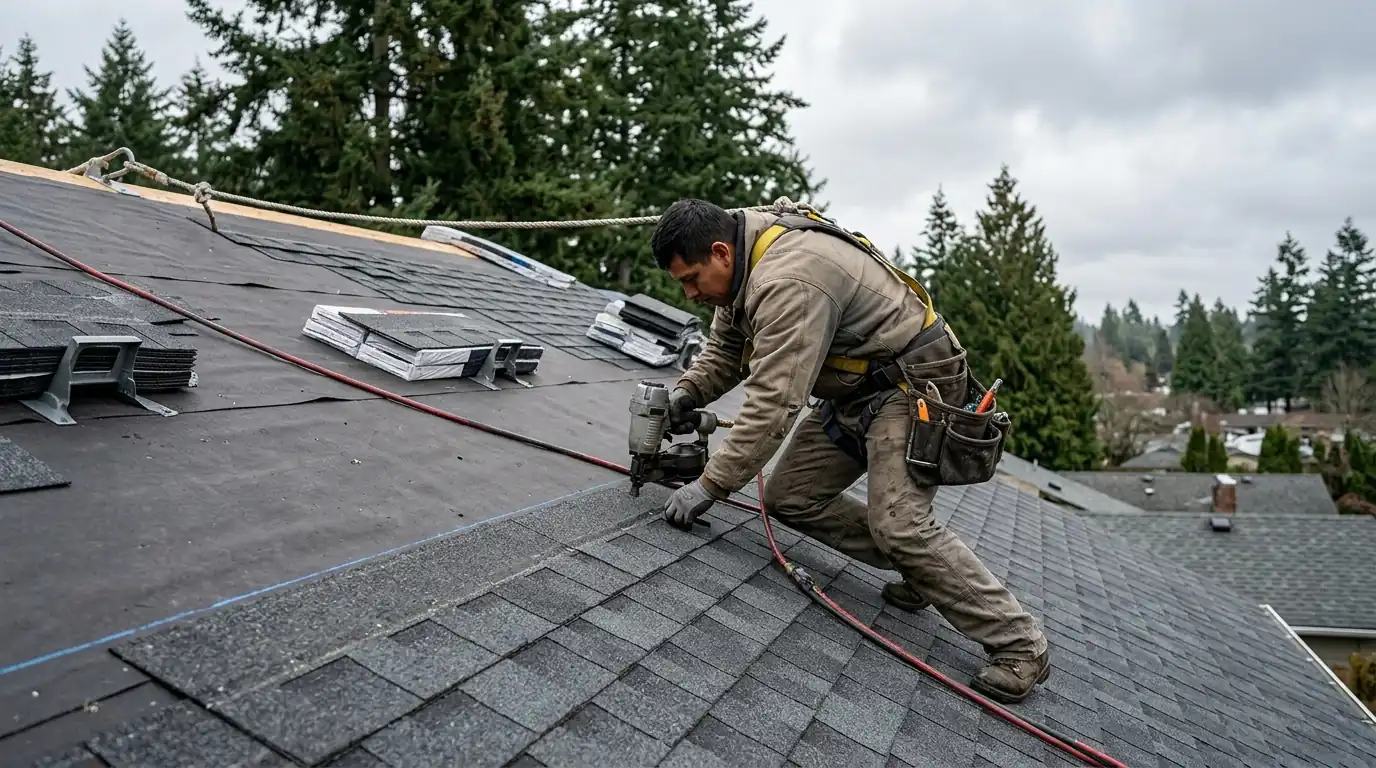
What sets the price of a shingle roof
Shingle roofs are priced by area, then adjusted for the line and the shape of the roof. The per-square-foot range below is a Seattle-area figure.
Published range, not a quote and not our price. Source: angi.com, 2026-08. Your number depends on the factors below and is set after we see the roof.
Shingle line
Architectural, impact-rated and designer lines each step up in price.
Wind and algae options
Higher wind classes and copper granules add cost per bundle.
Roof shape
Hips, valleys and dormers mean more cuts and more waste.
Underlayment and edge metal
Synthetic felt, ice barrier and drip edge belong to the system.
Tear-off and deck
Old layers and bad sheathing are priced on top of the shingles.
Architectural or three-tab, side by side
Both are asphalt shingles. These are the differences that matter on a Tacoma house.
| Item | Architectural | Three-tab |
|---|---|---|
| Build | Two laminated layers | Single flat layer with cutouts |
| Look | Dimensional, with shadow lines | Flat, uniform slots |
| Wind class | Typically higher | Typically lower |
| Expected life | Longer | Shorter |
| Where it fits | Most house reroofs | Repairs, sheds, matching older roofs |
Architectural shingles
Architectural, or laminated, shingles bond two layers together so the roof shows depth and shadow lines instead of flat slots. They are heavier and stiffer than three-tab, which helps them stay down in wind and hide small deck irregularities on older houses. Manufacturers generally give them a longer expected life and a higher wind class than their three-tab lines. The tradeoff is cost and a little more weight, though both stay well within what a typical house frame carries. For nearly every reroof we price, this is the line we put in front of you first.
Three-tab replacement
Three-tab shingles are the older, flat style, with cutouts that make each strip look like three separate tabs. Fewer manufacturers still make them, and the colors are limited. We mostly use them to repair or extend an existing three-tab roof, or on a shed where matching the house does not matter. As a full reroof they cost less up front, but they are lighter, catch wind at the slots and generally carry a shorter expected life. If your three-tab roof is near the end, moving to architectural shingles at replacement is usually worth the difference.
Wind-rated shingle systems
A shingle's wind rating comes from lab testing and is printed on the bundle as a class, with F, G and H among the higher ratings. That rating only holds when the roof is installed the way it was tested: nails placed through the reinforced strip, adhesive starter strips at the eaves and rakes, and enough warmth for the seal strip to bond. On exposed lots we use a six-nail pattern and hand-seal the rake edges. A higher class costs more per bundle, but on a ridge-top or waterfront house it can decide how the roof looks after a big storm.
Algae-resistant shingles
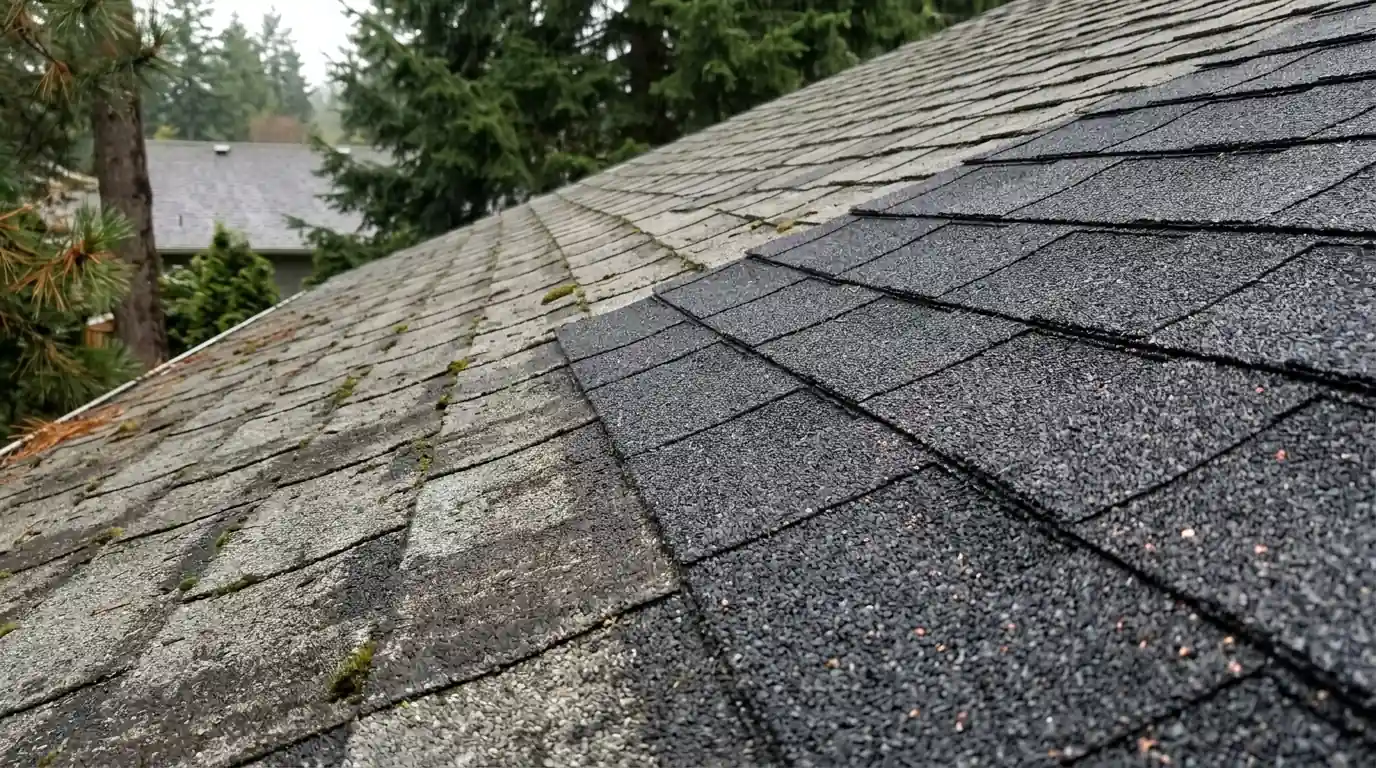
The black streaks that run down shaded slopes are an algae that feeds on the limestone filler in shingles. Algae-resistant lines mix copper-coated granules into the surface, which slows that growth for years. They do not stop moss, which is a separate plant that roots in debris and shade. On a damp roof under trees, the practical answer is algae-resistant shingles, a zinc or copper strip near the ridge and periodic moss removal. These lines cost a little more per bundle and earn it on any slope that stays wet.
Installing shingles the way they were tested
We pick the line with you
Profile, color, wind class and algae resistance.
We prepare the deck
Old roofing off, bad sheathing replaced, nails set.
We set the edges
Drip edge, ice barrier and adhesive starter strips.
We lay the underlayment
Synthetic felt across the field, lapped uphill.
We flash the details
Walls, chimneys, valleys and pipes get new metal.
We nail each course
Nails through the strip, on the maker's pattern.
We cap and vent the ridge
Ridge vent and matching cap shingles finish the top.
In Tacoma
Shingles that suit Tacoma storms and historic streets
The December 2006 Hanukkah Eve windstorm gusted to 69 mph at the airfield next to Lakewood, and Tacoma Power alone lost 60,000 customers. Storms on that scale are why we lean toward a higher wind class and a six-nail pattern on exposed houses. On the North Slope and in the Wedge, the design guidelines accept composition roofing as a substitute for the original shingles on historic homes, so a well-chosen architectural shingle in a muted color can replace a worn roof there without changing the character of the street.
- Owens Corning
- CertainTeed
- GAF
- Malarkey
- IKO
- PABCO
- Atlas
- Tamko
Asphalt Shingle Roofing questions from Tacoma homeowners
Makers rate most architectural lines for decades, but shade, moss and poor ventilation shorten that. A well-vented, open roof gets closest to the rating.
Dark shingles run warmer in summer, which matters more for attic heat than for the shingles. Good ventilation keeps either color healthy.
Often closely for a repair, if the color is still made. For a full roof, switching to architectural is usually the better choice.
Not special nails, but more of them in the right place. A six-nail pattern through the reinforced strip is what the higher wind ratings assume.
Not below the minimum slope the maker allows. Flatter sections need a membrane such as TPO.