Storm & Wind Damage Repair
Winter gusts near the Narrows lift ridge caps and rake edges first.
DetailsUniversity Place sits on Tacoma's west side near the Narrows, and roofs here see more wind than many areas farther inland. We repair storm damage and replace worn roofs across the city.
Short answer
In University Place, the 1970s were the largest building decade at 22.1% of homes, so many roofs here sit on houses about 50 years old. We fix wind damage, worn flashing and leaking valleys, and we check the decking and attic venting before any reroof. University Place handles its own building permits.
In the December 20, 2018 windstorm the Weather Service logged 52 mph at Tacoma Narrows Airport, 51 mph at JBLM and 43 mph in Fircrest. University Place sits between those reporting points, so the readings give a fair picture of what local roofs can face in a strong winter storm.
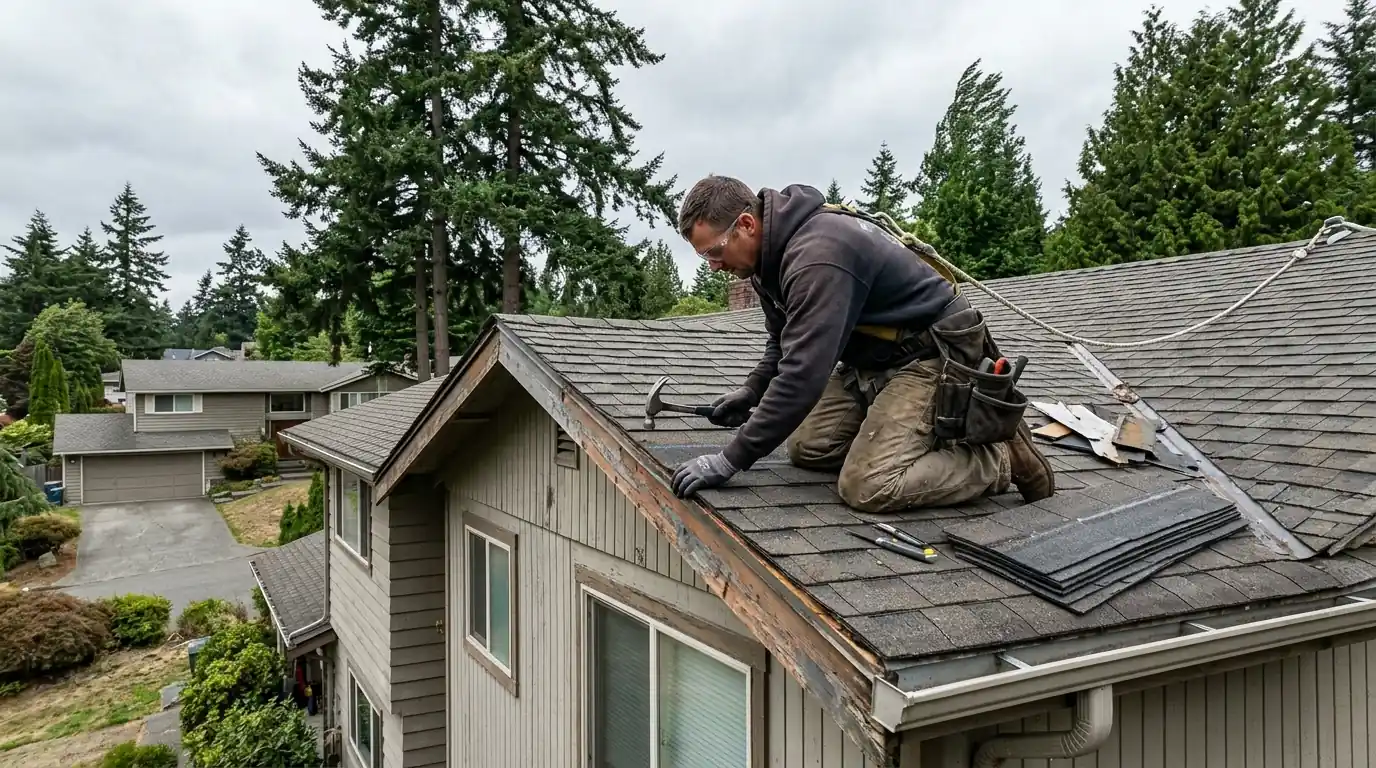
Wind rarely peels a roof off in one sheet. It works on the edges: the first course at the rakes, the ridge cap, and any tab whose adhesive strip never sealed because it went on in cold weather. After a storm we check those first, then the step flashing where a roof plane meets a wall.
When we replace a roof on an exposed lot, the wind details get extra attention. Starter strip goes on at the eaves and rakes, nailing follows the high-wind pattern the shingle maker specifies, and the ridge cap is rated for wind. Our asphalt shingle page explains the wind-rated systems.
A house from the 1970s has usually been reroofed at least once. Before we quote, we want to know whether that roof was torn off or laid over, whether the decking is plywood or older boards, and whether an earlier cedar shake roof left skip sheathing behind. Each answer changes the scope, and it is better found in the attic than halfway through a tear-off.
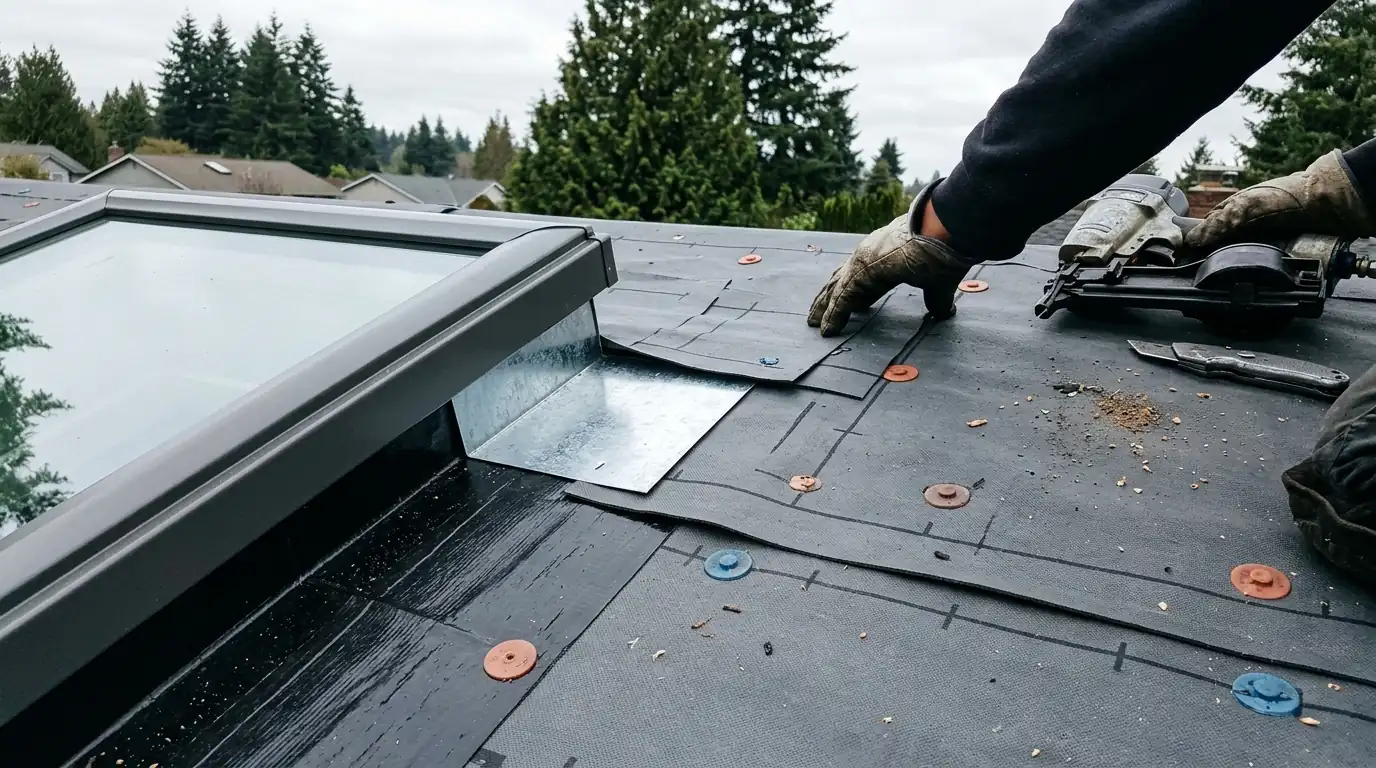
If your house has an older domed skylight, look at it closely. Cracked domes, brittle seals and flashing that relies on roofing cement are common leak sources on roofs of any age. A reroof is the easiest time for skylight replacement, because the opening is already exposed and the new flashing kit can be woven into fresh underlayment.
November is the wettest month at Sea-Tac at 6.31 inches, followed by January and December. A full tear-off can happen in any month, but in the wet season we open only as much roof as we can dry in before dark. If you have a choice, late spring through early fall gives the most flexible schedule.
University Place is an incorporated city, so building permits run through the city rather than Pierce County. We confirm what applies to your roof before the job is booked. If the house has moss on its shaded side, we remove it by hand rather than pressure washing, which can drive water under the shingles.
Winter gusts near the Narrows lift ridge caps and rake edges first.
DetailsWorn pipe boots, nail pops and loose tabs on older roofs are fixable without a full replacement.
DetailsHouses from the 1970s are often ready for a tear-off that reveals what earlier roofs left behind.
DetailsOld domed skylights are worth replacing when the roof around them is already open.
DetailsSkip sheathing from an old shake roof has to be covered before new shingles go on.
DetailsShaded north faces hold moss through the wet half of the year.
DetailsNo. University Place is its own city and issues its own building permits. We confirm the city's current requirements for your roof before work is scheduled.
Look for shingle pieces in the yard, lifted edges at the rakes and missing ridge cap. Creased tabs often show as a straight line across a shingle when the light is low.
Not always. Age matters less than condition: granule loss, curled tabs, failed boots and soft spots. An inspection tells you whether repairs buy several more years.
Yes. We remove the shingles around it, install a new unit with its own flashing kit, and weave new shingles back in. It costs less when done during a reroof.
No. Pressure can force water under shingles and strip granules. We scrape moss by hand and then treat the roof so regrowth is slower.
Or see the full South Sound coverage overview.
Call any hour. Tell us the street and what you are seeing, and we will set up a visit.
Calls are answered around the clock. Tell us what you are seeing and where the house is, and we will set up a visit.
Our office sits in Puyallup, and our crews work across Tacoma and Pierce County. The map loads only when you ask for it.