Gutter Installation
New gutters sized for each roof section stop overflow at inside corners.
DetailsSumner is a small city just east of Puyallup. Most of our work here comes back to water: where it lands, where it runs and what it soaks along the way.
Short answer
Sumner is a small city of 10,621 people just east of Puyallup, and it issues its own building permits. Most of our Sumner work centers on water: gutters that overflow, downspouts that drain against the foundation, siding that stays wet at the bottom and roof leaks where two surfaces meet.
Sea-Tac averages 39.34 inches of rain a year, and November is the wettest month at 6.31 inches. That water has to go somewhere. Gutters catch it, downspouts carry it down, and the ground around the house has to take it away. A failure at any step sends water where it does not belong.
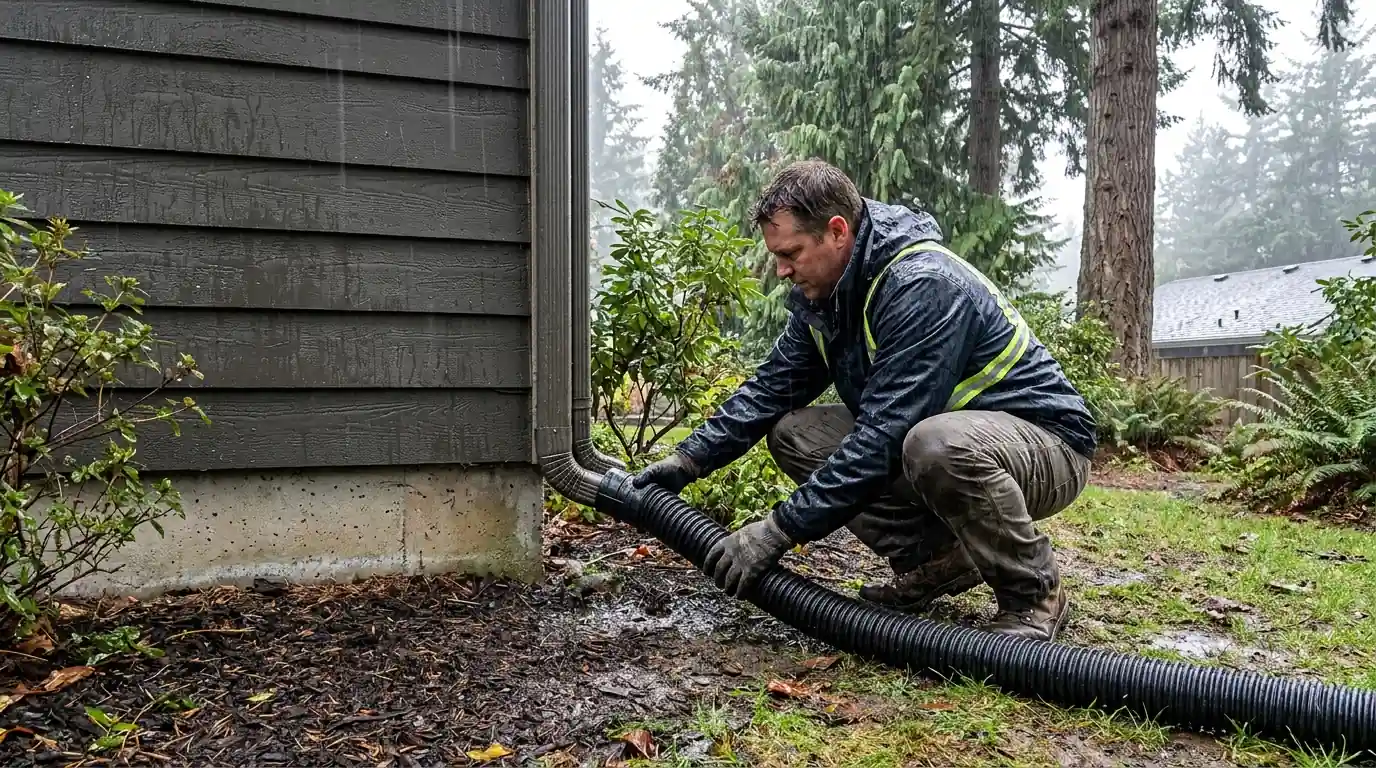
Walk around the house during a heavy rain. Look for water sheeting over the gutter at inside corners, drips at seams and downspouts that empty against the foundation. Those three problems account for most of the water damage we see on siding and trim.
Fixes are usually modest. Re-pitching a run, adding an outlet or extending a downspout carries the water away. Our drainage page covers extensions, splash blocks and tightlines.
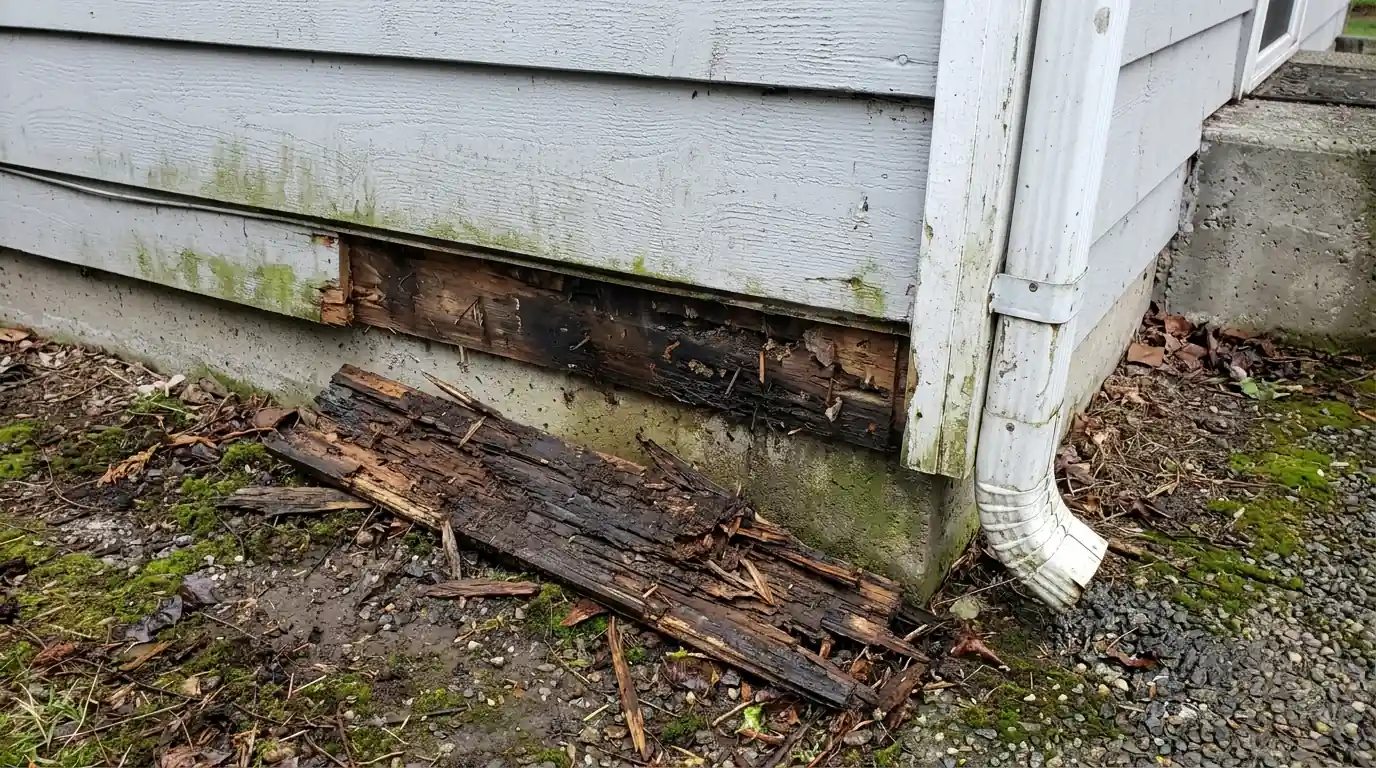
The lowest siding courses and the trim around doors take the most water. Splashback from the ground, overflow from above and plantings that hold moisture against the wall all keep them wet. Over years, wood siding and trim soften at the bottom edge.
Check by pressing a screwdriver into the bottom of trim boards and siding near downspouts. If it sinks in, the wood is rotting. We cut out the soft section, fix the water source and replace the boards. Painting over rot only hides it.
Most roof leaks start where the roof meets something else: a wall, a chimney, a skylight or another roof plane in a valley. Flashing bridges those joints, and when it is bent, rusted or sealed with roofing cement that has cracked, water finds the gap.
We trace the leak from the attic first and then fix the flashing at the source. If a chimney is involved, our chimney flashing page explains counter flashing and crickets. The City of Sumner issues permits inside its limits, and we confirm what applies before work.
New gutters sized for each roof section stop overflow at inside corners.
DetailsExtensions and tightlines carry water away from the foundation.
DetailsThe lowest siding courses take splashback and overflow every winter.
DetailsTrim near doors and downspouts softens first when water lingers.
DetailsLeaks start where roofs meet walls, chimneys and valleys.
DetailsCracked counter flashing lets water run down inside the chimney chase.
DetailsYes. Sumner is just east of Puyallup, where our office is, and is part of our regular coverage.
Press a screwdriver into the bottom edge of siding and trim near downspouts. If it sinks in easily, the wood is soft and needs replacing.
If it empties against the foundation, water soaks the ground and splashes back onto siding. Extensions or a tightline carry it farther away.
The City of Sumner issues building permits inside its limits. We confirm what applies before scheduling.
Usually. Most chimney leaks come from failed counter flashing or a missing cricket, which we can repair without replacing the roof.
Or see the full South Sound coverage overview.
Call any hour. Tell us the street and what you are seeing, and we will set up a visit.
Calls are answered around the clock. Tell us what you are seeing and where the house is, and we will set up a visit.
Our office sits in Puyallup, and our crews work across Tacoma and Pierce County. The map loads only when you ask for it.