Emergency roof repair in Tacoma, with the phone answered all night
Roof emergencies ignore business hours. The phone is answered all night, and we help you limit the damage inside, then plan the temporary cover and the permanent repair.
- Answering 24/7
- Puyallup office
- Tacoma and Pierce County
Short answer
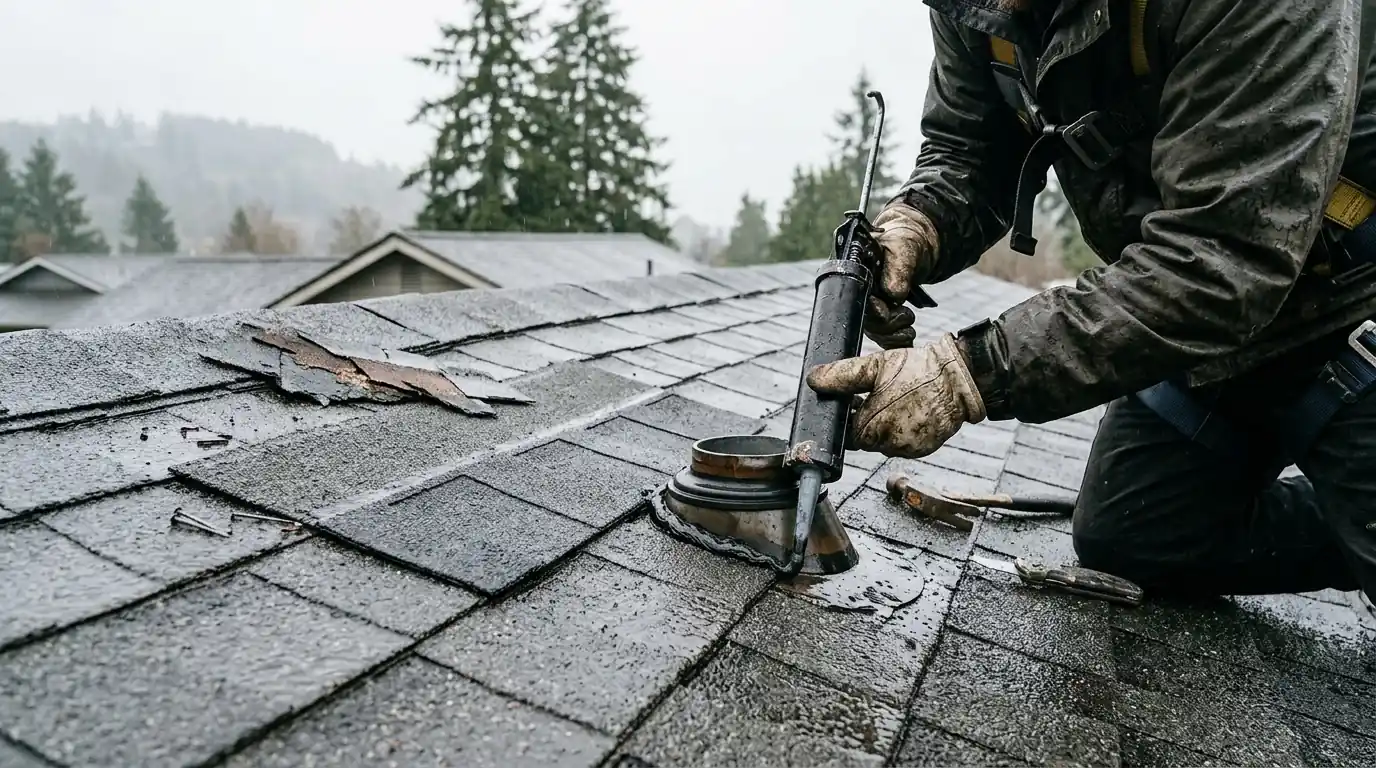
An emergency roof repair in Tacoma happens in two stages: a temporary cover that stops water tonight, and a permanent repair once the roof is dry enough for new material to bond. We answer 24/7, talk you through protecting the room, and decide with you whether anyone should be on the roof before daylight.
What happens after you call tonight
The first minutes of the call are about the inside of the house, not the roof. We ask where the water is showing, whether it is near lights or outlets, and whether a ceiling is bulging. Then we walk you through the steps that limit damage while the cause gets dealt with.
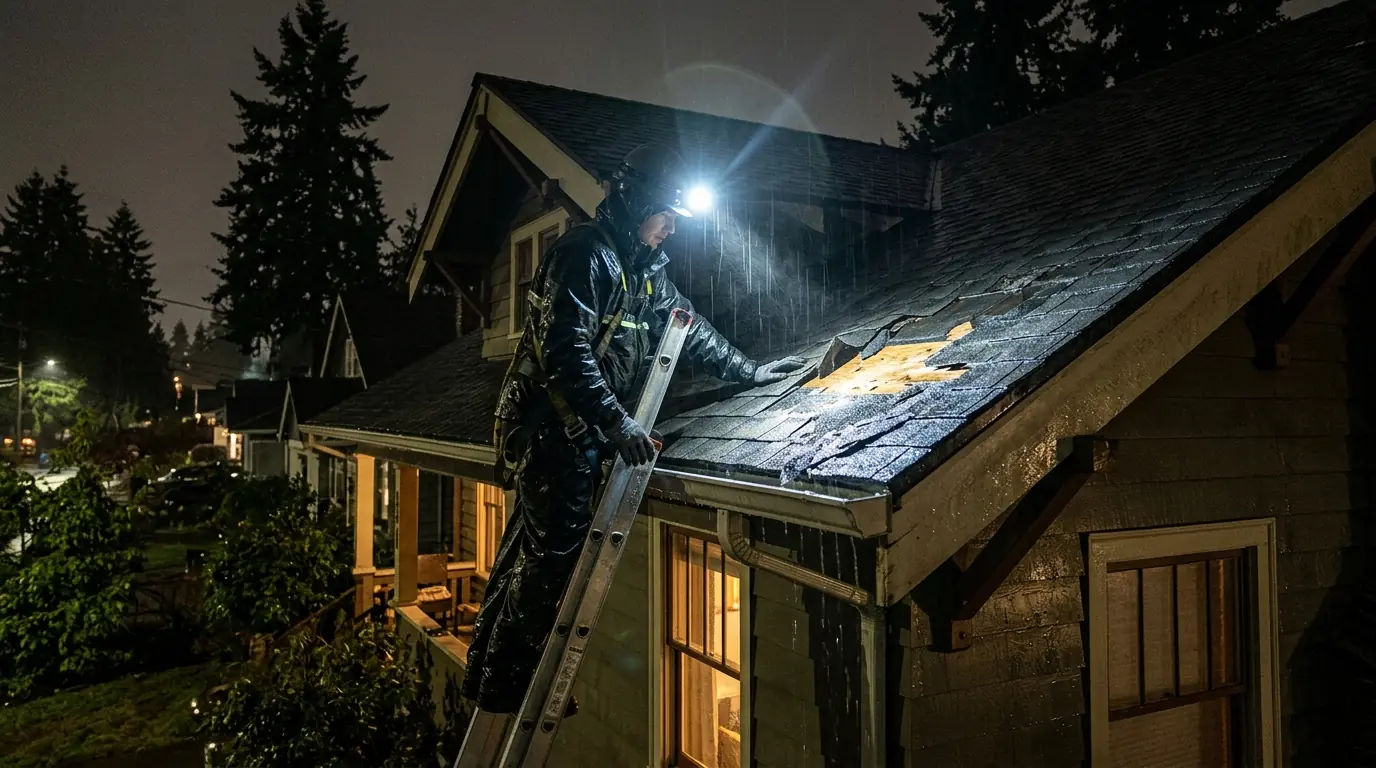
Whether someone climbs up in the dark depends on wind, pitch and how wet the surface is. A slick roof in a gale is dangerous, and a tarp set in those conditions can tear loose before morning. When it is safe, the temporary cover goes on first. When it isn't, we plan the first safe window and tell you what to watch until then.
After-hours leak calls
The first big storms of fall are when wind finds a lifted shingle and a clogged valley spills under the roof edge. On the phone we want three answers: where water is appearing, how fast it is coming, and whether anything electrical is near it. A slow drip into a pot can wait for first light. Water running down a wall or pooling above a ceiling cannot. We plan the visit around that answer, and we would rather say plainly that dawn is safer than send anyone onto a wet roof in the dark.
Water through a ceiling fixture
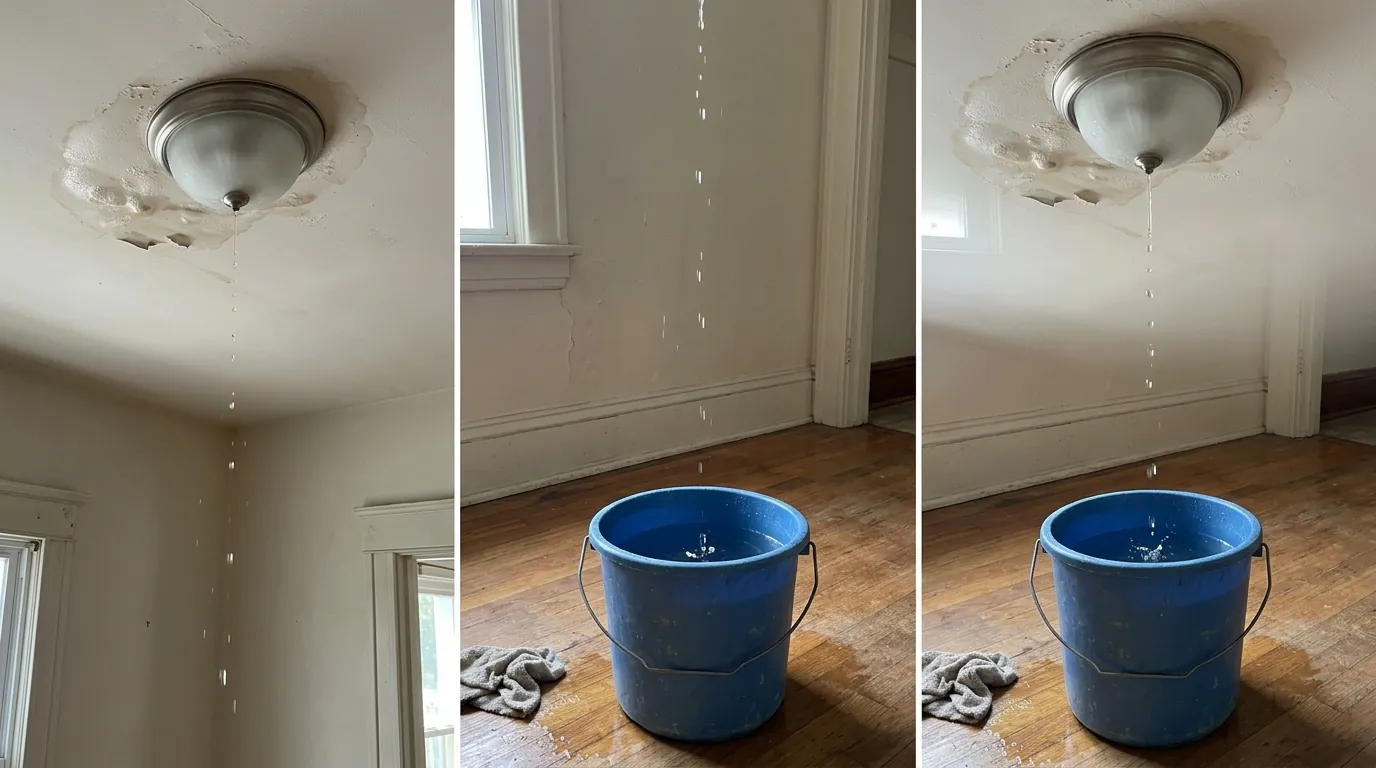
Water dripping from a light or a smoke detector has found a hole in the drywall and is following the wiring. Switch that circuit off at the breaker panel first, and keep people away from the fixture. If the ceiling around it is sagging, a small hole poked at the lowest point lets water drain into a bucket instead of bringing the drywall down. Once the roof is covered, the fixture, box and insulation above need to dry out fully. Have an electrician check any fixture that held water before the circuit goes back on.
Temporary versus permanent fixes
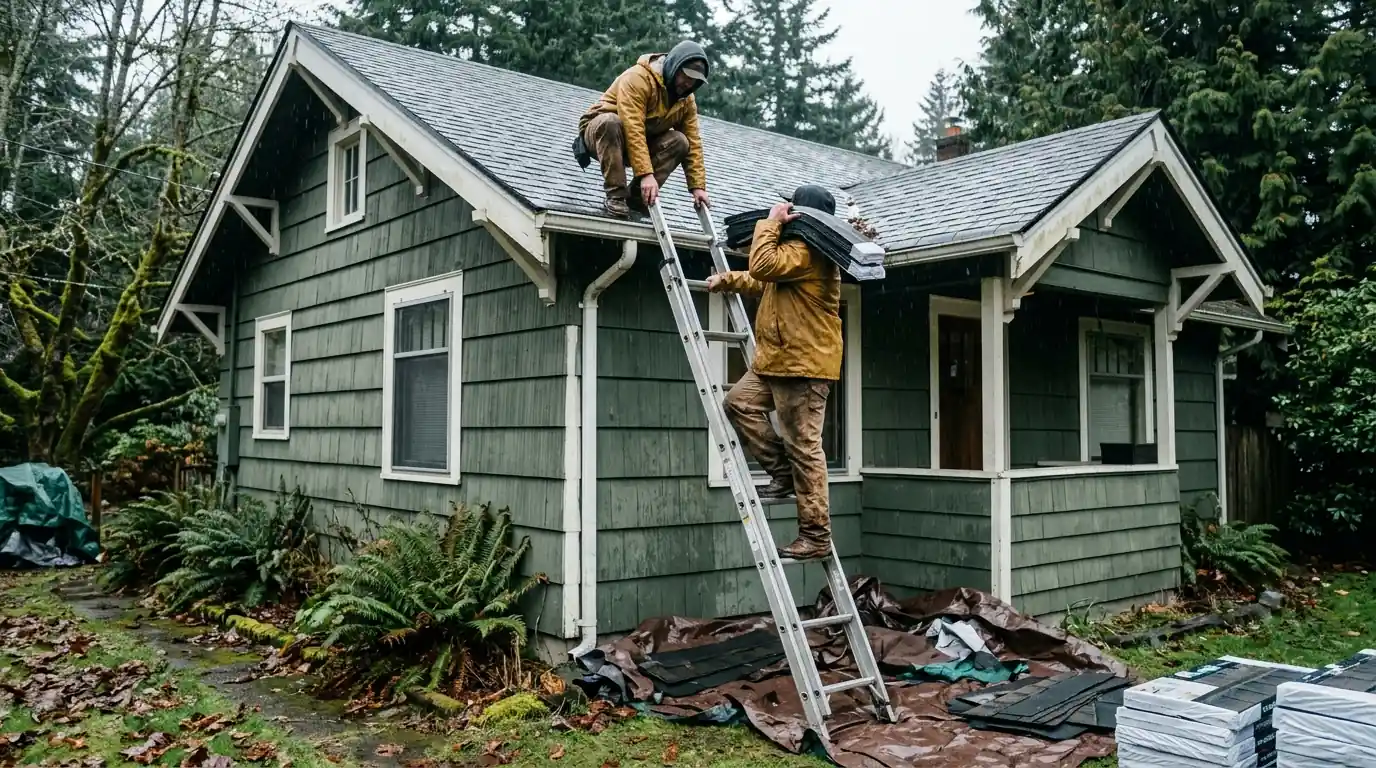
A temporary fix buys time; it does not repair anything. Tarps, peel-and-stick patches and roof cement applied in the rain slow or stop water for days to weeks, but none of them bond properly to a wet surface. The permanent repair waits until the deck and shingles are dry enough for seal strips, underlayment and flashing to stick. In winter the roof might dry by the next afternoon, or it might take a stretch of drier days. We book the permanent work for the first workable window and tell you which parts of the cover to watch meanwhile.
From the phone call to a dry house
You call, any hour
The phone is answered and we ask where the water is.
Safety comes first
Power to wet fixtures goes off and people move clear.
You protect the room
Buckets, plastic and moved furniture limit the damage.
We judge the conditions
Wind, rain and pitch decide whether the roof is safe tonight.
The temporary cover goes on
A tarp or patch holds water out until the roof dries.
We assess in daylight
The full cause gets found once the whole roof is visible.
The permanent repair follows
New material goes in when the surface can bond.
Storm still going and the ceiling is wet?
Call now. We answer 24/7 and will help you decide what happens tonight.
Call (253) 449-1922In Tacoma
When a storm takes the power out across Tacoma
During the December 2006 Hanukkah Eve windstorm, Tacoma Power lost 60,000 customers and PSE another 80,000 in Pierce County. Roof emergencies like that arrive with the lights out, so keep a flashlight, a charged phone and a bucket near the stairs through winter. February 2019 was the snowiest February at the regional airport since 1949, and fallen trees had to be cleared around Tacoma. A limb through a roof under snow is a different job from a wind leak, so tell us about any snow or tree when you call.
Safe steps you can take tonight
A few things are safe to do before anyone arrives. Climbing a wet roof at night is not one of them.
| Item | Doing it yourself | When to call a roofer |
|---|---|---|
| A tree limb lying on the roof | Leave it in place and keep people out of the rooms beneath. | Call right away. Pulling a limb off can tear the hole wider. |
| Shingles blown into the yard | Gather them and photograph the roof from the ground. | Call if you can see bare wood or felt. |
| Water spilling over a gutter at the wall | Clear a downspout outlet you can reach from the ground. | Call if water is getting inside at that wall. |
What shapes the cost of an emergency call
Most night calls end with a temporary cover, so the published tarping range below is the closer guide. The permanent repair is priced in daylight.
Published range, not a quote and not our price. Source: homeadvisor.com, 2026-06. Your number depends on the factors below and is set after we see the roof.
Size of the opening
A lifted tab needs a patch; a limb hole needs a full cover.
Conditions at the time
Wind, snow and darkness add setup and safety work.
Roof height and pitch
Tall and steep roofs need more anchoring and fall protection.
Debris to clear
Branches and loose material come off before anything is covered.
The permanent repair
Shingles, flashing or decking replaced later are priced on their own.
Emergency Roof Repair questions from Tacoma homeowners
Yes. The phone is answered 24/7, including weekends and holidays, so you can describe what is happening right away.
No. Wet roofing is slick and wind makes ladders unstable. Protect the inside, take photos from the ground, and call.
Usually, if it runs over the ridge and well past the damage. Our tarping page explains how it is anchored.
That depends on the weather. Seal strips, underlayment and flashing need a dry surface, so the permanent work waits for a dry window.
Storm damage often involves an insurance claim and careful records. Our storm damage page explains that side.