Attic insulation in Tacoma: blown-in depth, air sealing and clear eaves
Insulation only works if air is not leaking past it and the eaves stay open. We seal the attic floor, set baffles, then blow in to an even, measured depth.
- Answering 24/7
- Puyallup office
- Tacoma and Pierce County
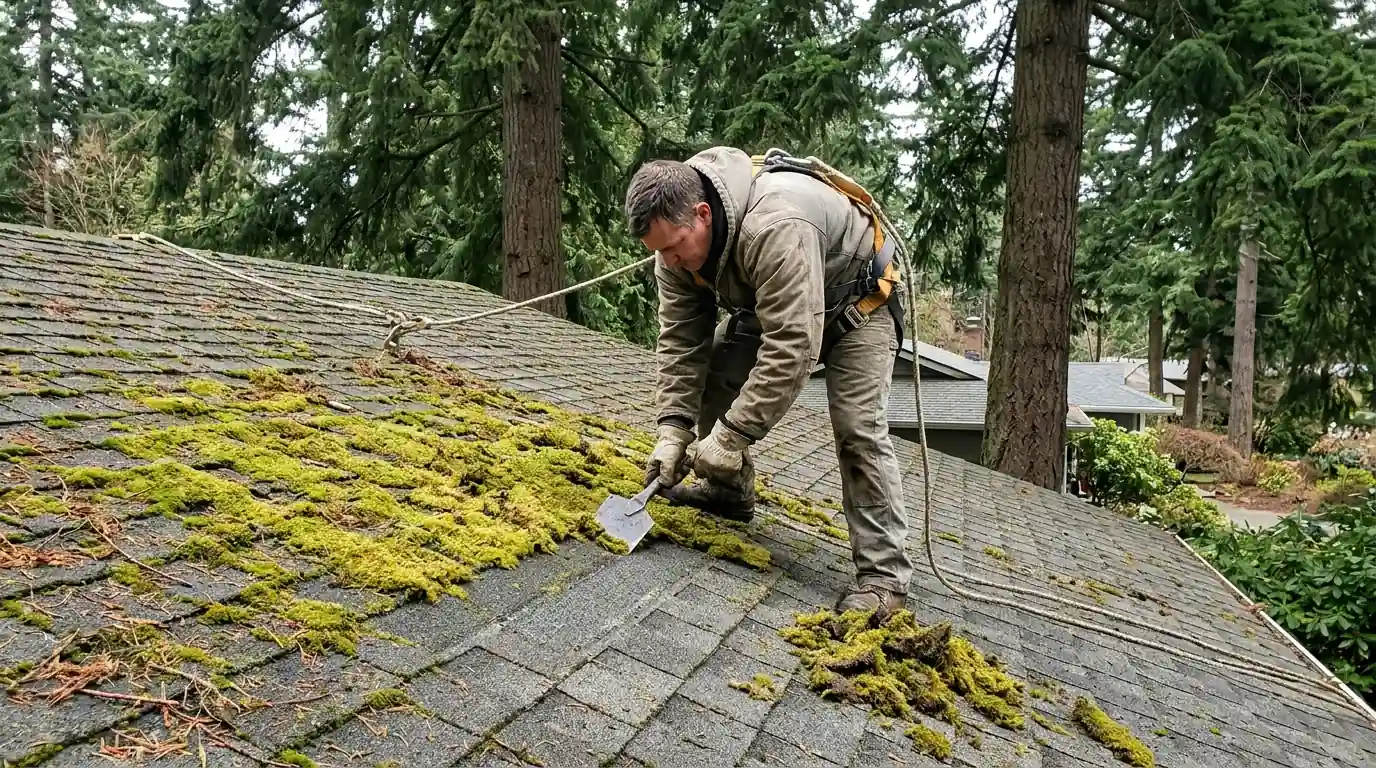
Short answer
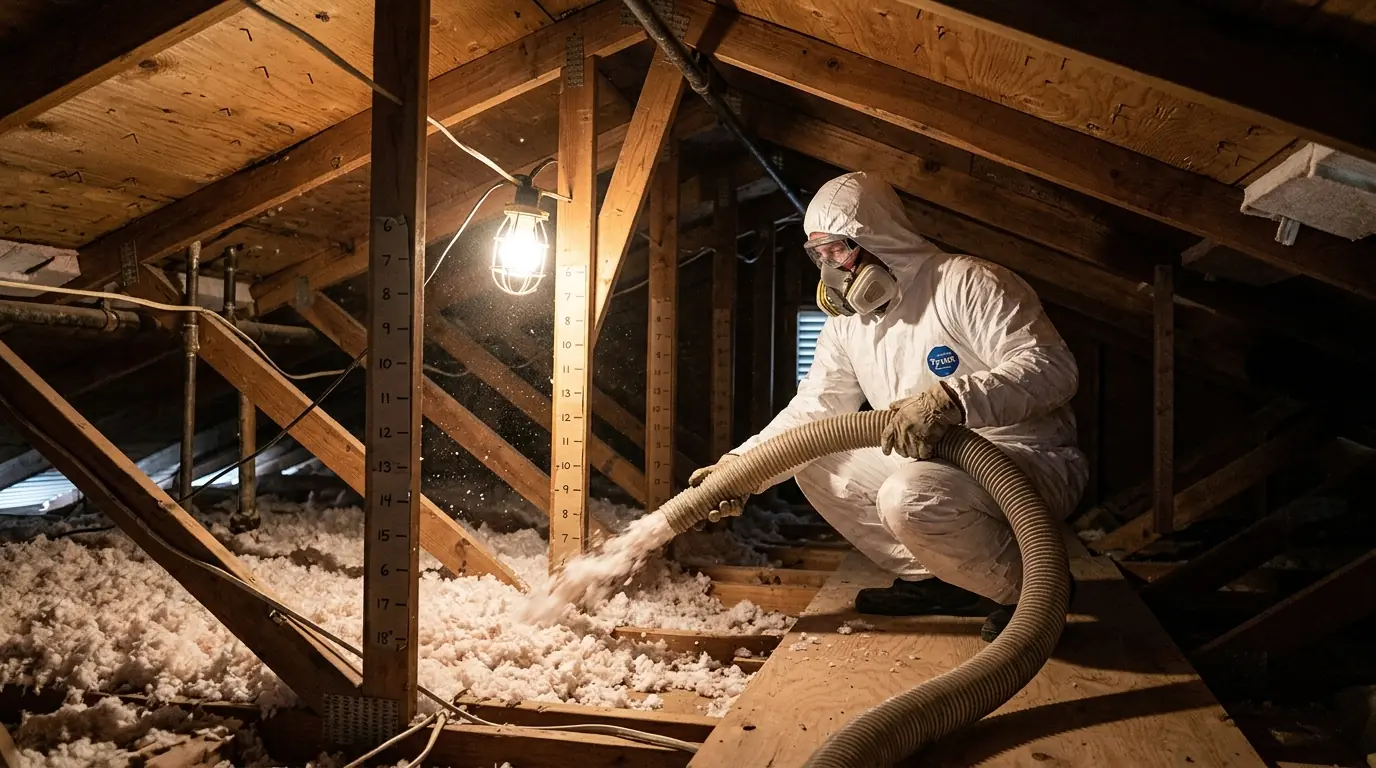
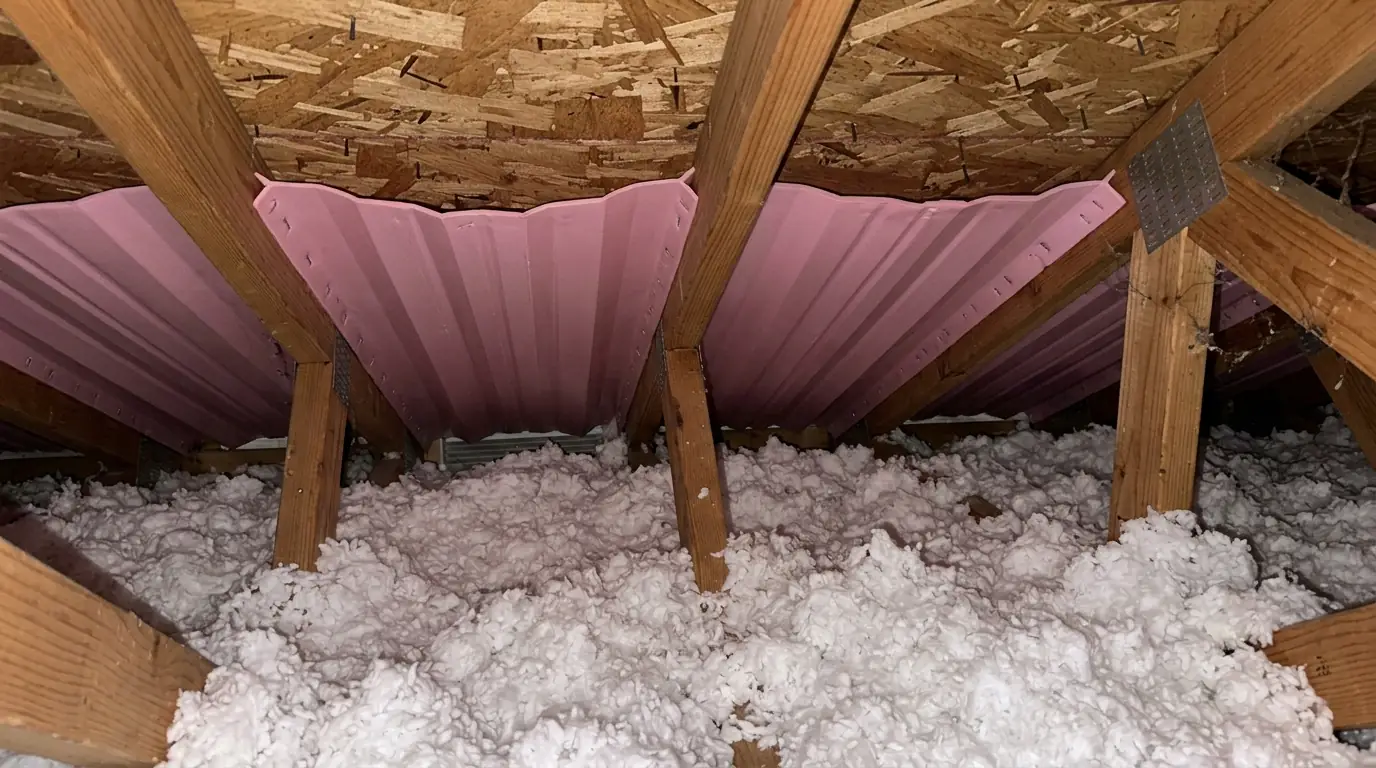
Attic insulation in Tacoma usually means blowing loose-fill fiberglass or cellulose over the existing layer, but only after sealing the gaps where house air leaks into the attic. We set a baffle in every vented bay at the eaves so the new insulation cannot block the soffits, and staple depth rulers to the framing so you can see the depth you paid for.
Why depth alone does not make a warm attic
Many older attics have some insulation, just not enough, and much of it is crushed, blown thin at the eaves by wind or pushed aside by past wiring and duct work. Meanwhile warm house air rises through gaps around light fixtures, plumbing stacks and wall top plates, carrying moisture into the attic and slipping straight past the insulation.
We blow in loose-fill from makers like Owens Corning, Johns Manville and Knauf, and we seal first, because air leaks undo depth. If the attic already shows moisture trouble, read about attic ventilation before adding a single bag.
What sets the cost of attic insulation
Insulation is priced by attic area and depth, plus prep. The published range below is a planning figure for attic jobs.
Published range, not a quote and not our price. Source: angi.com, 2026-06. Your number depends on the factors below and is set after we see the roof.
Attic area
Square footage and target depth set the material count.
Air sealing
More gaps and recessed lights mean more prep time.
Old insulation
Wet, moldy or rodent-soiled material comes out first.
Access
Low-pitch attics and small hatches slow the work.
Baffles and dams
Every vented bay and the hatch need them before blowing.
Blown fiberglass, cellulose or batts
All three can work. They differ in how they fill, settle and handle moisture.
| Item | Blown fiberglass | Blown cellulose | Batts |
|---|---|---|---|
| Fills around wires and framing | Well | Well | Leaves gaps |
| Settling | Slight | More, so it goes in deeper | None |
| After a wet spot | Dries out | Holds water, may need removal | Dries out |
| Dust during install | Moderate | Heavy | Light |
| Suits | Most open attics | Attics with many small gaps | Open bays with easy access |
Blown-in insulation
Loose-fill is blown through a hose from a machine parked outside, so it flows around joists, wires and blocking and leaves fewer gaps than batts. Dry existing insulation can usually stay underneath. Anything wet, moldy or soiled by rodents comes out first. Cellulose settles more than fiberglass, so we blow it a little deeper to finish at the target. The downside is the attic itself: walking or storing things up there afterward packs the insulation down, and any future attic work gets dustier.
Energy code at reroof
Some roofs carry their insulation right under the deck, in vaulted ceilings, cathedral rooms and low-slope sections. When a reroof opens one of those cavities, the state energy code requires it to be insulated to full depth before the roof closes. That can mean dense-packed insulation between rafters, or rigid board above the deck that raises the roof edge and changes the fascia detail. We check for those cavities before quoting a roof so the insulation is in the price, not a surprise at tear-off.
Air sealing the attic floor
Before any insulation goes in, we seal the openings between the house and the attic. Foam and caulk go around top plates, pipes and wires. Older recessed light cans that are not rated for insulation contact get airtight covers, the hatch gets weatherstripping and a rigid dam, and chimney chases get metal flashing with fire-rated sealant. It is slow, unglamorous work that nobody sees afterward. Skip it and the new insulation acts like a filter, with damp house air still reaching the cold deck above.
Baffles at the eaves
A baffle, or rafter vent, is a stiff channel stapled to the roof deck in each bay above a soffit vent. It holds the insulation back so outside air can still flow up from the eaves, and it lets us insulate to full depth over the wall plate where attics are usually thinnest. Reaching the low eaves is cramped work, and every vented bay needs one. Leave them out and the new insulation slumps into the soffits, choking the intake and inviting condensation.
How we insulate an attic
Measure what is there
Depth, type and condition of the current insulation.
Check ventilation
Intake and exhaust have to work before we add depth.
Seal the floor
Top plates, pipes, wires and the hatch get sealed.
Install baffles
Every vented bay at the eaves gets a rafter vent.
Dam the hatch and fixtures
Boxes keep insulation off flues and out of the opening.
Blow to depth
Even coverage up to the depth rulers across the attic.
Leave a record
Depth and material written on a card at the hatch.
In Tacoma
The reroof rule and West End vaulted rooms
Under the Washington State Energy Code, a reroof that exposes an insulated roof cavity must have that cavity insulated to full depth. It matters most on vaulted ceilings and low-slope sections, where insulation sits right under the deck. In the West End, where most houses were built between 1970 and 1999, a reroof over a vaulted room or a bonus room is a likely place for that rule to apply. We check the ceilings before quoting and price the insulation with the roof, not as a mid-job change.
- Air Vent
- Lomanco
- GAF
- Owens Corning
- CertainTeed
- Johns Manville
- Knauf
- Broan
Attic Insulation questions from Tacoma homeowners
Only when it is wet, moldy or soiled by rodents. Dry, clean insulation stays in place, and the new loose-fill goes right over it.
Not if the attic floor is sealed and the eaves stay open. Insulating without sealing, or burying the soffit vents, is what causes trouble.
Only fixtures rated for insulation contact. Older cans get an airtight cover or a dam so insulation stays clear and air cannot leak around them.
If the reroof opens an insulated roof cavity, such as a vaulted ceiling, yes. Our reroof permit guide covers the other rules.
Not on top of loose-fill, since boxes pack it down. If you need storage, plan a raised platform over a few joists before the insulation is blown.