New skylights and domed-skylight swaps on Tacoma roofs
Most skylight leaks start at the flashing, not the glass. We set new units with kit flashing and replace crazed plastic domes.
- Answering 24/7
- Puyallup office
- Tacoma and Pierce County
Short answer
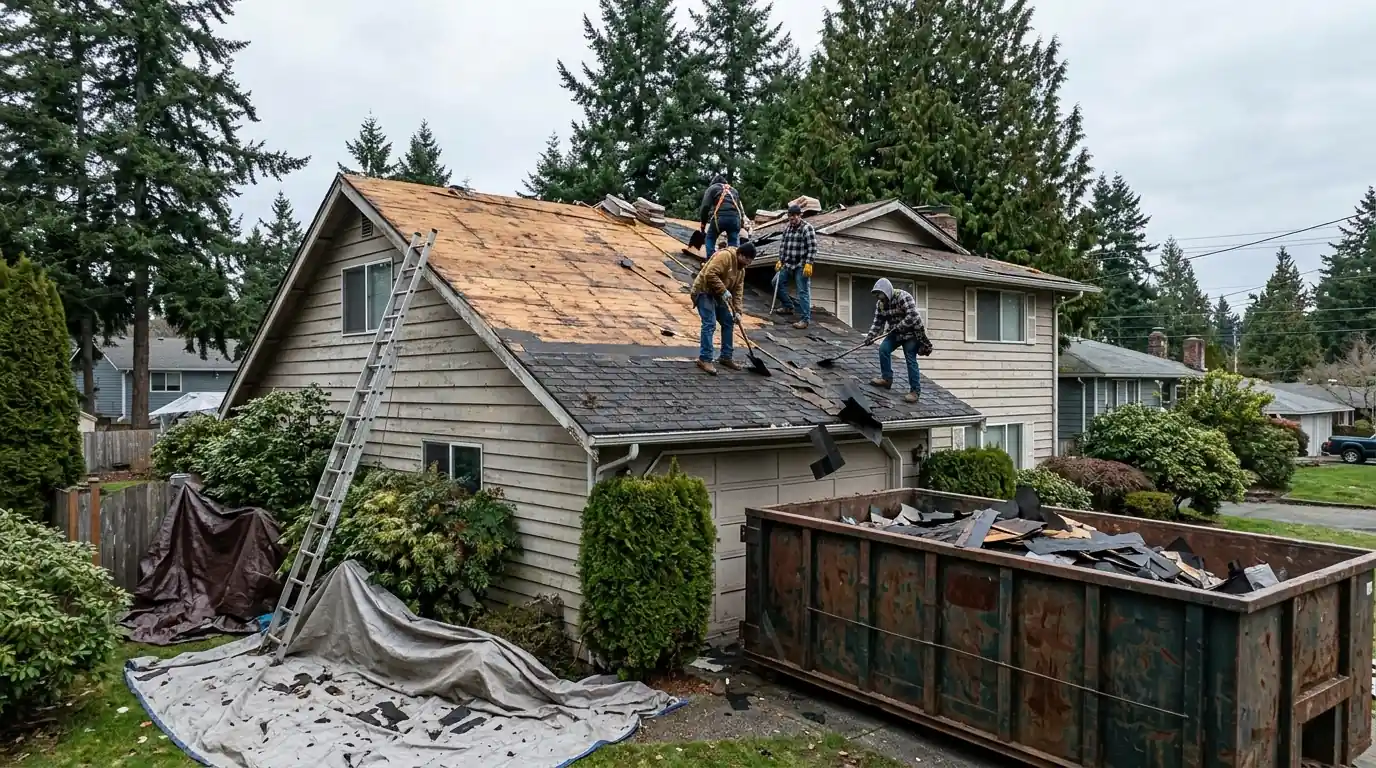
A skylight job on a Tacoma roof usually takes one of three paths: reflashing a unit that leaks, swapping an old plastic dome for a deck-mounted glass skylight, or cutting in a 10 or 14 inch tubular light. Each one needs step flashing and underlayment woven into the shingle courses, because sealant alone gives out within a few winters.
Where skylights leak and how a new one goes in
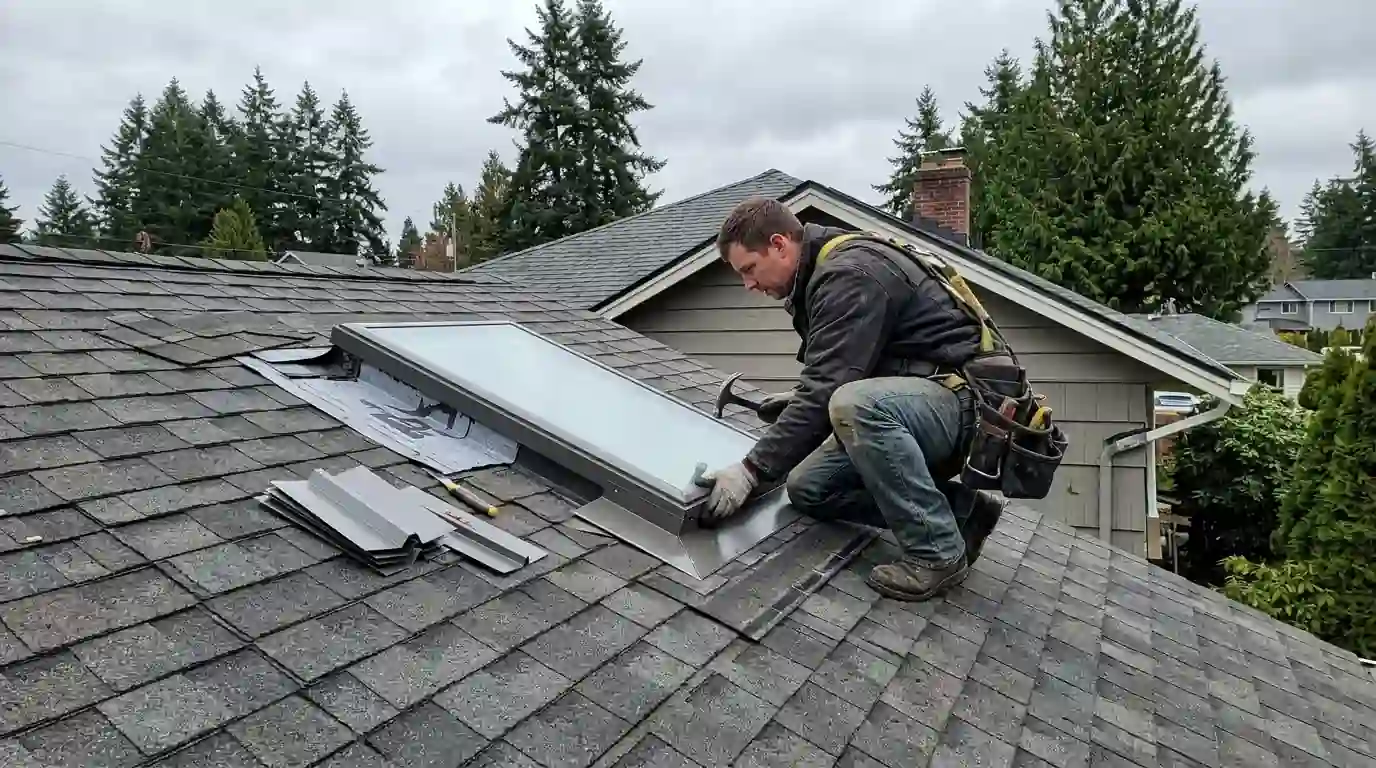
Glass is rarely the culprit. Water gets in where the frame meets the roof: dried sealant on a curb, a step flashing piece that was face-nailed, or underlayment that stops short of the opening. A new skylight is only as dry as the roofing around it, so we treat the job as roof work first and window work second.
We install deck-mounted units from makers like Velux and Fakro with their matching flashing kits, and tubular lights from Solatube where a hallway or bath needs daylight without framing changes. If your shingles are close to the end, setting the skylight during a roof replacement costs less than cutting into a new roof later.
What sets the price of a skylight job
Skylight pricing depends on the unit and the roof around it. The range below is a published planning figure for installs.
Published range, not a quote and not our price. Source: angi.com, 2026-09. Your number depends on the factors below and is set after we see the roof.
Unit type
Fixed, manual venting and solar venting units sit at different price points.
Curb or deck mount
Converting a curb to a deck mount adds framing and drywall.
New opening
Cutting a new hole means a header and a finished light well.
Roof condition
Brittle shingles around the opening may need a wider patch.
Attic depth
A tall attic means a deeper well or a longer tube.
Skylight leak repair
The usual complaint is a drip on the drywall of the light well during hard rain, or brown stains spreading from the corners. We pull the shingles back around the frame and look at the head flashing, the step pieces down each side and the underlayment beneath them. Failed pieces get replaced and the courses relaid. If the glass is fogged between panes, the unit's seal has already failed, and reflashing it only buys time. In that case, replacing the unit is usually the better spend.
Replacing old domed skylights
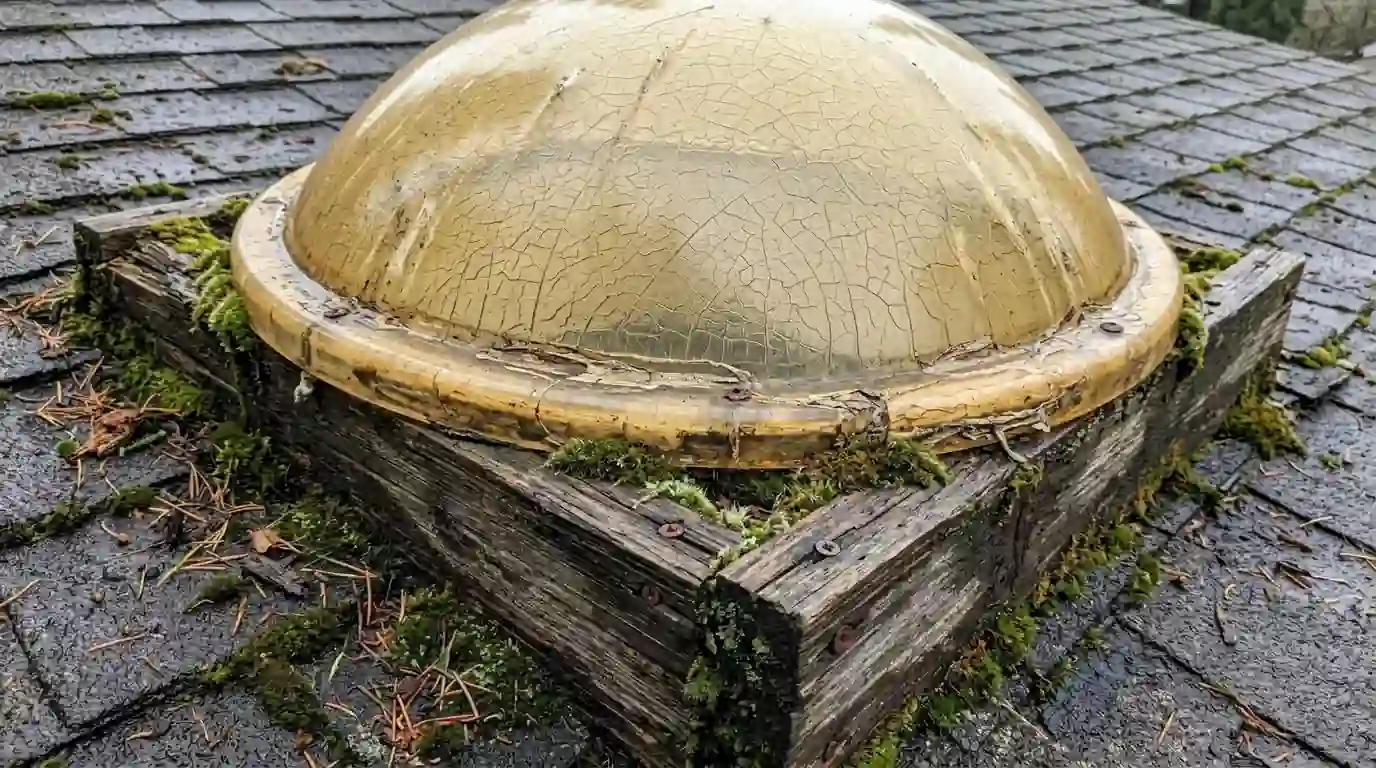
Acrylic bubble domes on wooden curbs turn yellow, craze into fine cracks and drip condensation on cold mornings, since a single plastic layer barely insulates. You have two ways out. A curb-mounted replacement sits on the existing curb, keeps the ceiling opening and avoids drywall work. Converting to a deck-mounted unit means removing the curb and reframing the top of the well, which costs more but gives a lower profile and a cleaner flashing detail with fewer joints for water to find.
Tubular skylights
A tubular skylight is a small dome on the roof, a mirrored tube through the attic and a round diffuser in the ceiling. It lights a hall, bath or closet without cutting rafters, and a straight run goes in far faster than a framed skylight. The honest limits: you get light but no view and no ventilation, and every bend in a long run dims the output. On a wide, flat attic with a short path, a 14 inch tube lights a surprising amount of floor.
Flashing kits
A flashing kit is the set of metal pieces made for one skylight model: a sill piece at the bottom, step flashing up the sides, a head piece across the top, and often a membrane collar that wraps the frame first. Kits cost more than flashing bent on site, but each piece fits the frame exactly and laps the way water runs. We match the kit to the roof profile, since a low composition roof needs different pieces than a high-profile tile or shake roof.
What a skylight install from us includes
Skylight bids vary a lot in what they cover. Ours spell out each of these.
- Removing the old unit or cutting a new opening
- Header and framing changes where rafters are cut
- Self-adhered membrane around the frame
- A matched flashing kit instead of sealant
- Shingles replaced around the opening
- Light well drywall finished and ready for paint
- Hauling away the old unit and debris
How a skylight goes into your roof
Measure the framing
Rafter spacing and the room below set the unit size.
Tent the room
Drop cloths and plastic keep dust off the floor and furniture.
Open the roof
Shingles come up far enough for the flashing to lace in.
Set and square the unit
The frame sits true on the deck or curb before fastening.
Wrap the frame
A self-adhered membrane collar goes on under the flashing.
Install the kit
Sill, step and head pieces lap with each shingle course.
Finish the well
Drywall and trim, then a hose test before we leave.
In the West End
Skylights on West End roofs built from the 1970s on
NeighborhoodScout describes West End housing as mostly built between 1970 and 1999, the decades when acrylic bubble domes on site-built curbs were a common choice. Plenty of those domes are crazed now, and their curb flashing has often been patched more than once. Regional climate normals put precipitation on about 156 days a year, so a curb seal that fails in October can drip all winter. On those roofs we price both a curb-mounted swap and a deck-mounted conversion so you can weigh the ceiling work against the cleaner detail.
- Velux
- Solatube
- Fakro
- Wasco
- Owens Corning
- GAF
- CertainTeed
- Malarkey
Skylight Installation & Replacement questions from Tacoma homeowners
That is almost always condensation. Warm, damp room air hits cold glass or plastic and runs down the frame, and single-layer domes are the worst offenders.
Yes. We weave the flashing into the existing shingles and relay the cut courses, so the roof around the opening goes back together rather than being patched over.
Often. A venting unit lets steam out, and many close themselves when a rain sensor gets wet. You still need a bath fan ducted outdoors.
They gather diffuse daylight, so a hall or closet stays brighter on overcast days, just less than under summer sun. Expect light only, with no view.
If it is a plastic dome or the glass has fogged, usually yes. Reflashing an aging unit means opening the new roof again later. See roof replacement.