Dry rot repair in Tacoma, from soft window sills to rafter tails
Dry rot is wood decay that has had time to spread. We remove the decayed wood, rebuild the structure, and track down the water that started it.
- Answering 24/7
- Puyallup office
- Tacoma and Pierce County
Short answer
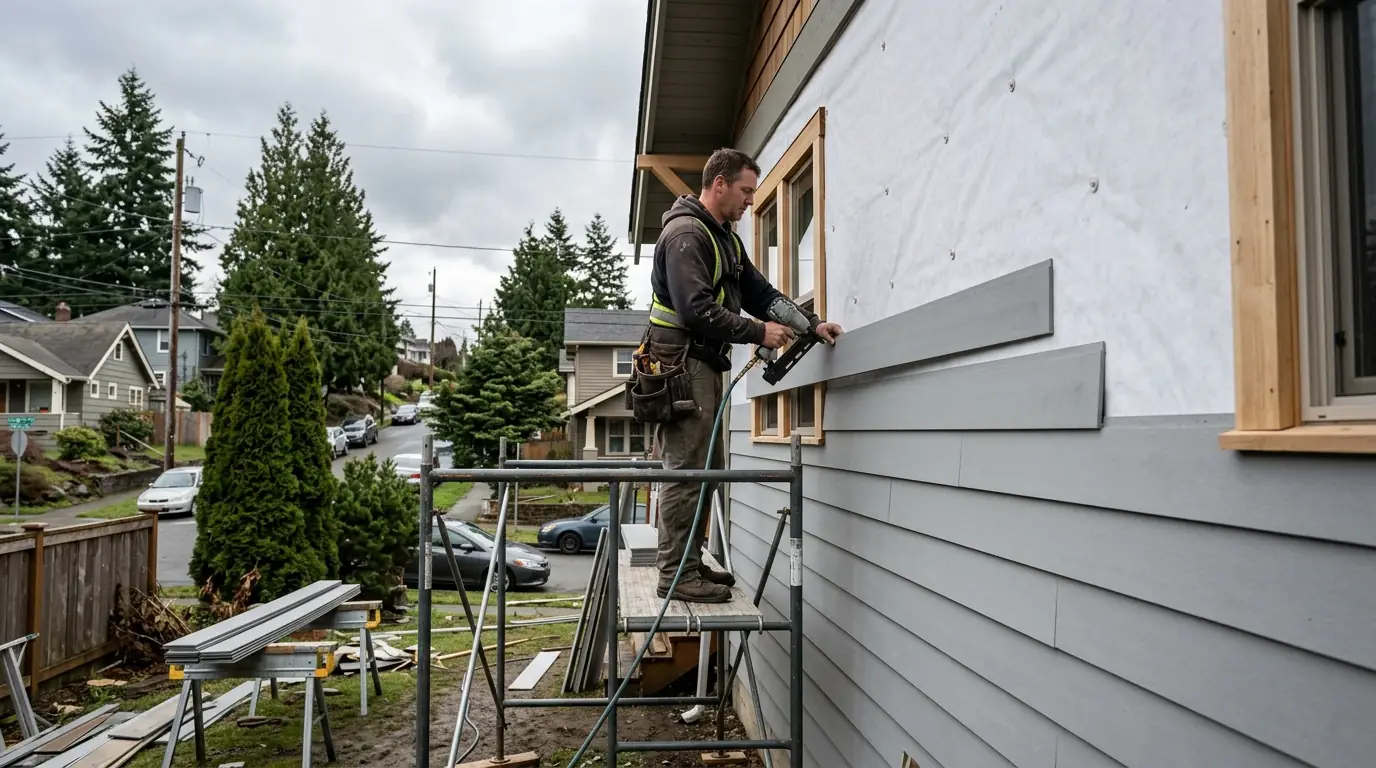
Dry rot repair on a Tacoma house means cutting decayed wood back to sound fiber and splicing in new lumber. It also means stopping the water that caused it. The usual spots are window sills, rafter tails at the eaves, wall sheathing below leaks and deck ledgers. Shallow rot can be consolidated with epoxy; anything structural gets replaced.
Finding the leak behind the rot
Wood-decay fungi need wood that stays damp for long stretches. In this climate that happens wherever water reaches wood faster than it can dry. Think of a sill under a failed window seal, a rafter tail below an overflowing gutter, or a ledger with no flashing above it.
So our first job is detective work. We probe with an awl to map the soft wood, then trace the path water takes to reach it. The repair includes fixing that path, whether it is flashing, caulk, a gutter or grading, because new lumber set into the same leak will rot again.
What shapes the cost of rot repair
The published national range below is wide because rot runs from one sill to a whole wall. These factors decide where yours falls.
Published range, not a quote and not our price. Source: angi.com, 2026-07. Your number depends on the factors below and is set after we see the roof.
How far it spread
Rot is often larger than the visible soft spot.
Structural or trim
Framing and ledgers cost more than trim and sills.
What has to come off
Siding, gutters or decking removed to reach the rot.
Fixing the water source
Flashing, gutters or caulk added to stop repeat rot.
Paint and finish
New wood primed, painted and matched to the house.
Small rot you can handle, and when to stop
Some rot is a weekend fix. Some is structural.
| Item | Doing it yourself | When to call a roofer |
|---|---|---|
| Shallow rot in trim | Dig out soft wood and fill with two-part epoxy. | If the soft wood goes deeper than the trim board. |
| A soft window sill | Epoxy can save a sill with surface rot. | When the sill flexes or the window frame is soft too. |
| Rot near a deck ledger | Not a DIY job. | Right away, since the ledger holds the deck up. |
Window sills and trim
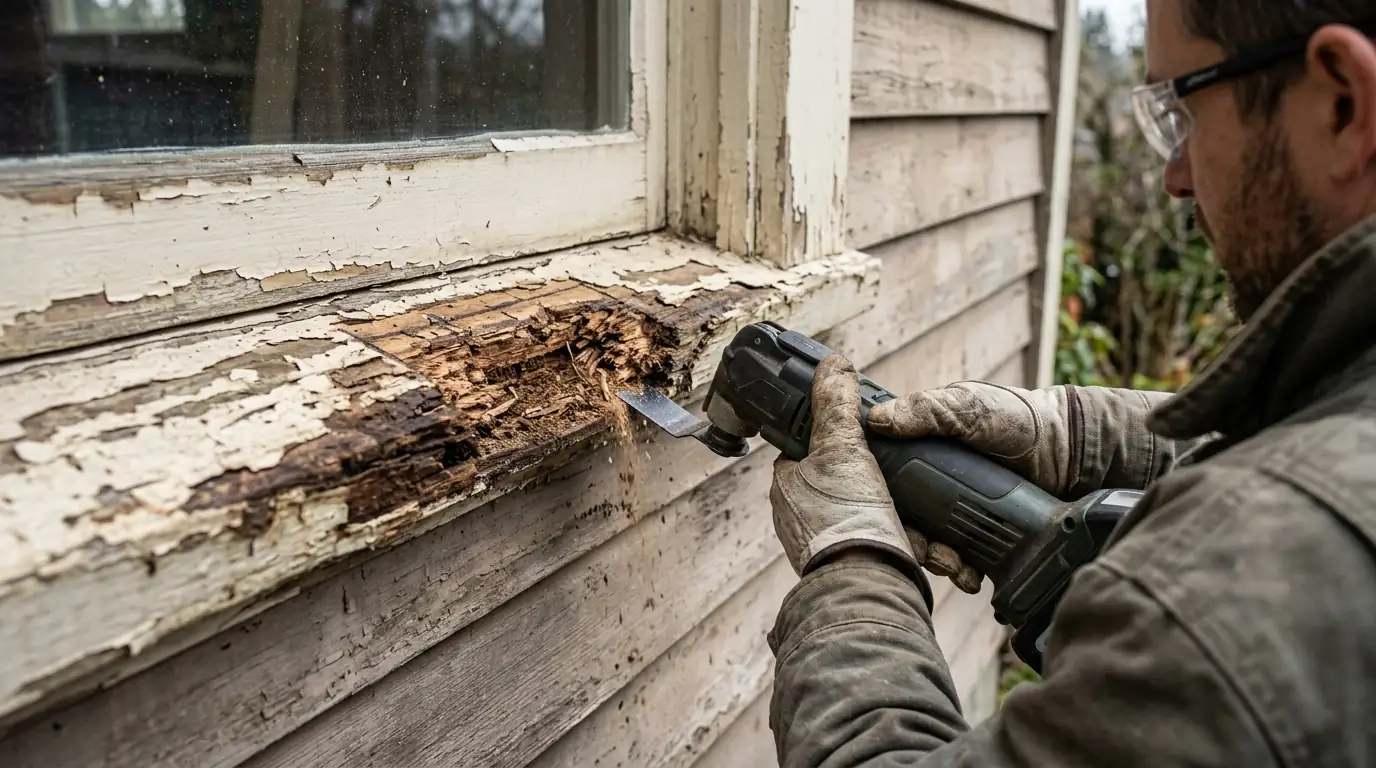
Sills sit flat at the bottom of the window and catch every drop that runs down the glass. When the paint cracks or the joint at the sill end opens, water soaks into the end grain and the sill softens from inside. We cut out the bad section and splice in rot-resistant wood, or rebuild with epoxy if the rot is shallow, then flash and seal the joint. If the window frame itself leaks, we will tell you whether replacement makes more sense.
Rafter tails
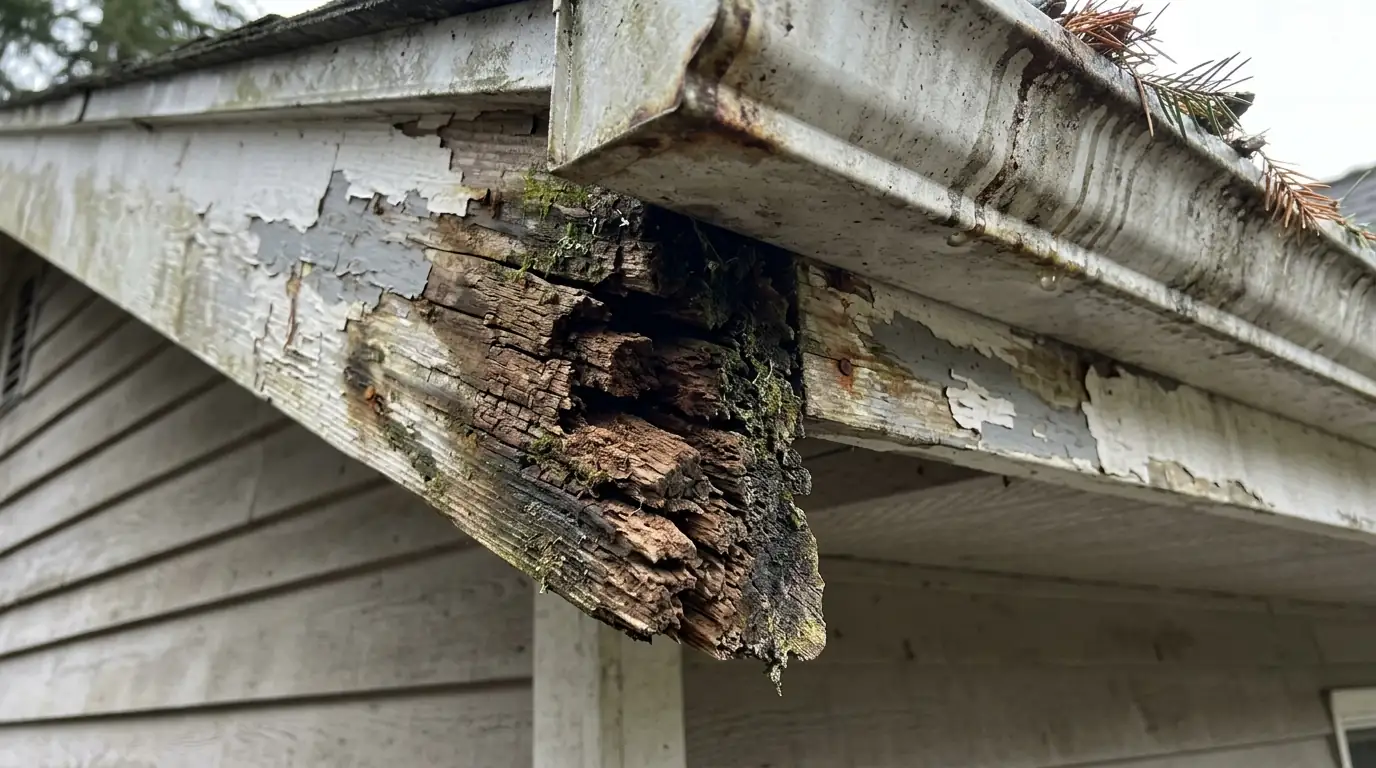
Rafter tails are the ends of the roof framing that stick out past the wall to form the eave. Behind a leaking gutter or under a roof edge with no drip edge, they stay wet and rot from the end back. We expose the tail, cut out the decayed wood and sister new lumber alongside the sound part of the rafter, fastened well past the damage. Badly rotted tails may need a strip of roof sheathing above them replaced too, which we handle along with the roof edge.
Wall sheathing
Sheathing rot hides behind siding and only shows as soft spots, bulges or a musty smell indoors. It usually sits below a leaking window, a roof-to-wall junction missing its kick-out flashing, or a penetration that was never sealed. We remove the siding over the damage, cut back to solid sheathing, check the studs and replace what is soft. New sheathing gets house wrap lapped into the existing layers, plus flashing at the leak point, before the siding goes back up.
Deck ledgers
Where a deck meets the house, the ledger carries the whole house side of the structure. Water running down the siding collects behind an unflashed ledger and rots both it and the rim joist of the house. Because the ledger holds the deck up, rot here is a safety problem, not a cosmetic one. We shore the deck, remove the ledger, repair the rim joist, flash the wall and bolt a new ledger in place. Our deck repair page covers the rest of the structure.
How we take out rot and keep it out
You call about soft wood
Where you found it and what it sits near.
We probe and map it
An awl shows where decay stops and sound wood begins.
We trace the water
Flashing, gutters, windows and grading are checked.
You see the scope
Photos and a plain list of what needs replacing.
We cut out the rot
Back to solid wood, with temporary support if needed.
We rebuild and flash
New lumber or epoxy, then flashing at the leak point.
We prime and paint
All new wood sealed so it does not wick water.
Around Tacoma
Rot patterns on mid-century houses
Much of our rot repair is on houses from the middle of the last century. NeighborhoodScout describes Tacoma's South End as mostly built between 1940 and 1969, and 51.5% of Lakewood's homes date from 1950 to 1979. Houses from those decades often have shallow eaves, wood windows with flat sills, and decks added later without ledger flashing. After decades of wet winters, those details turn up again and again as soft sills, rotted rafter ends and ledgers that need replacing.
How rot shows itself on the outside of a house
These are easy to check with a screwdriver and a slow walk around the house.
Wood that gives under pressure
A screwdriver sinks in easily where decay has started.
Paint bubbling or flaking
Moisture under paint often means wet wood beneath.
Cracked, cube-shaped grain
Brown rot breaks wood into small blocks as it dries.
Fungus or a musty smell
Growth on wood or a damp odor near walls.
Gaps at sill and trim joints
Open joints let water into end grain.
Dry Rot Repair questions from Tacoma homeowners
In trim it is cosmetic at first. In rafters, sheathing or a ledger it weakens the structure.
Shallow rot in trim or sills can be consolidated with epoxy and filled. Structural members with deep rot need to be replaced.
Not if the water source is fixed and the new wood is primed and flashed. Rot returns when the leak behind it is left alone.
Probing with an awl finds soft wood. Rot behind siding or paint usually runs farther than it looks.
Yes. An overflowing gutter is a common cause of eave rot. See gutter repair and fascia repair.