Downspout and roof drainage work in Tacoma that keeps rainwater off the foundation
A gutter only collects water. Where the downspout puts it decides whether your crawlspace stays dry, so that is the part we plan carefully.
- Answering 24/7
- Puyallup office
- Tacoma and Pierce County
Short answer
Downspout and drainage work on a Tacoma house moves roof water away from the foundation. It travels across the ground or through a buried tightline that carries it farther. We add or move downspouts so no single outlet is overloaded and connect them to existing drains or new solid pipe. Splash blocks or extensions cover spots where a buried line is not practical.
Where the water goes after the downspout
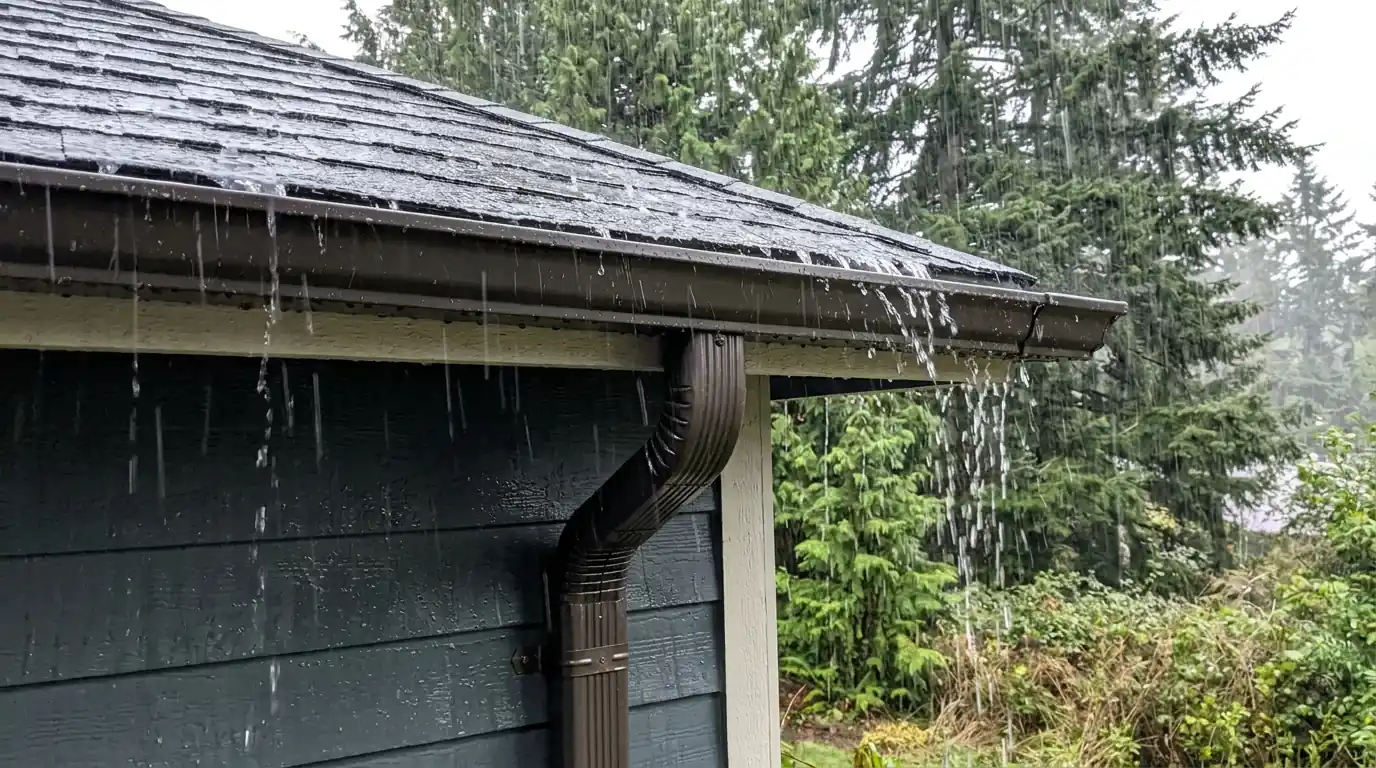
Every square foot of roof sends its rain to a handful of outlets, so each downspout concentrates a lot of water in one spot. Dumped at the base of the wall, it soaks the soil against the foundation and finds cracks. It shows up later as a damp crawlspace or a wet basement corner.
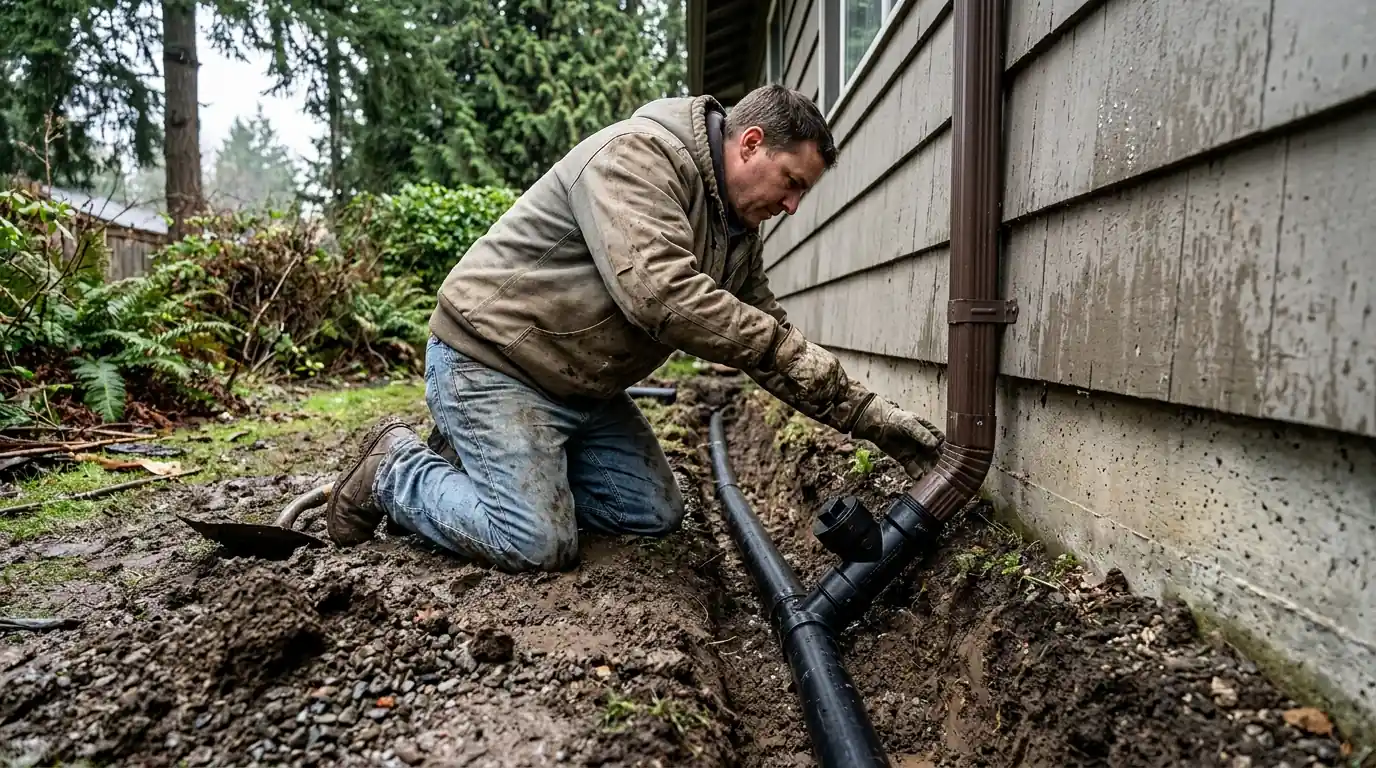
We look at the whole path: how many outlets the roof needs, where they can run down the wall, and where the water can safely end up. Underground, that means tightlines to a drain or dry well. Above ground, it is splash blocks and extensions. We check what the lot and local stormwater rules allow before burying any pipe.
What moves the cost of drainage work
Drainage jobs vary widely, so we price after walking the lot. These are the main drivers.
Number of outlets
Each added or moved downspout means a new outlet and patch.
Buried or above ground
Trenching for tightlines costs more than extensions.
Distance and slope
Longer runs and flat yards take more pipe and grading.
Existing lines
Clearing a silted line can cost less than replacing it.
Surfaces in the way
Digging around walks, patios and beds adds labor.
Drainage fixes you can try first
Some drainage fixes suit a homeowner. Others need a shovel, a plan and pipe sized for the job.
| Item | Doing it yourself | When to call a roofer |
|---|---|---|
| Short extensions | Snap-on extensions and splash blocks are an easy weekend fix. | When water still flows back toward the house. |
| A clogged downspout | A hose from the top often flushes loose debris. | When water backs up from below ground. |
| A failed tightline | Hard to diagnose without digging blind. | As soon as water bubbles up at the downspout. |
Downspout placement
Most drainage problems start with too few downspouts or ones in the wrong spots. A long eave with one outlet at the far end overflows in heavy rain. A downspout dropped beside a walkway or a crawl vent puts water exactly where you do not want it. We add outlets so each carries a fair share of the roof and move them to corners that drain away. Larger 3x4 pipe goes where a valley or big roof plane feeds one spot. Moving an outlet means a new hole and a patch.
Tightline connections
A tightline is solid pipe buried from the base of the downspout to somewhere the water can go. Many houses have them already, and they fail quietly. Roots get in, a joint separates, or the line silts up and backs water out at the downspout. We test existing lines by running a hose down the downspout and watching where water surfaces. New connections use solid pipe, not perforated drain tile, with a cleanout at the base so the next clog can be cleared without digging. Roof water and footing drains stay in separate lines.
Splash blocks and extensions
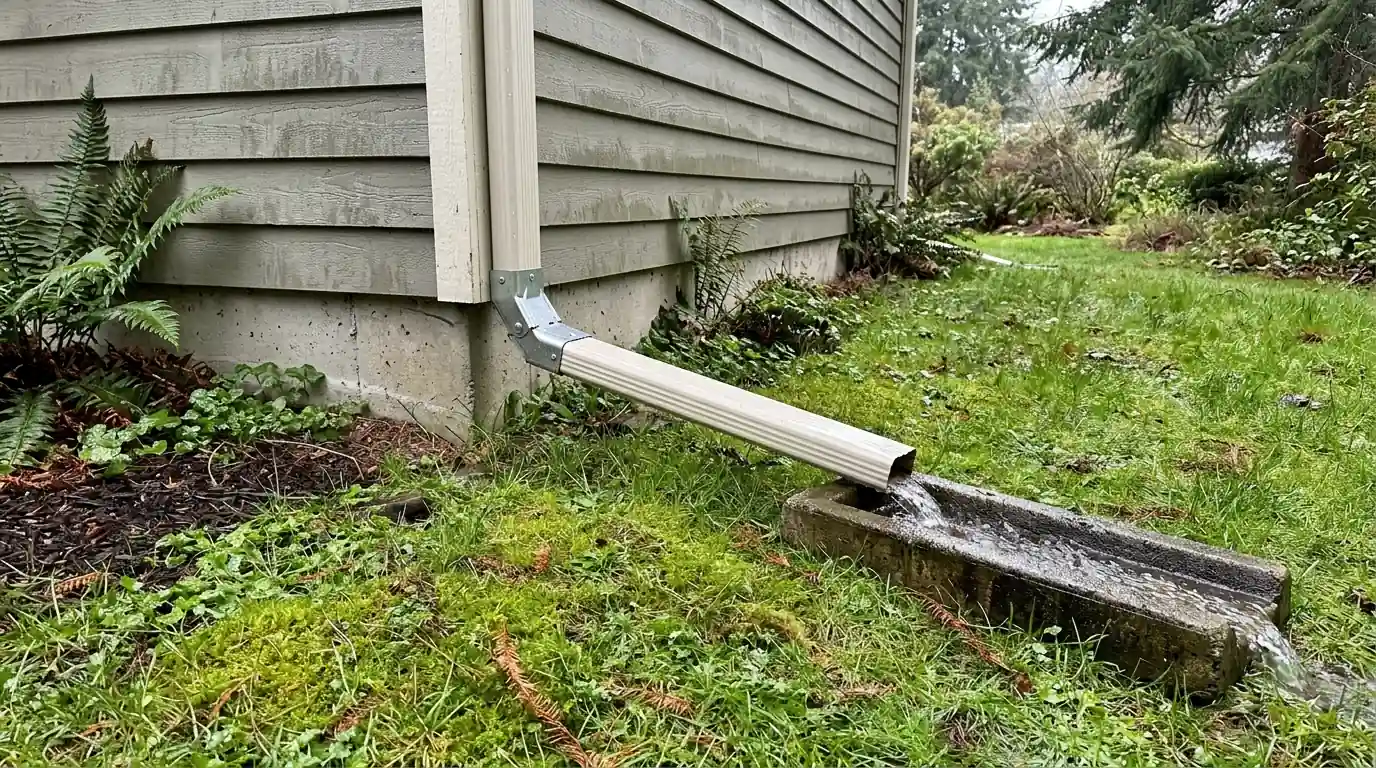
Where a buried line is not practical, a splash block or extension carries the water out across the ground. Concrete splash blocks are cheap and durable but only spread water a short distance, and they tip back toward the wall as soil settles. Hinged or flip-up extensions reach farther and lift out of the way for mowing. We set them sloping away from the house. Then we check that the landing spot drains toward the yard, not toward a neighbor's lot or back to the foundation.
How we sort out a drainage problem
You call about the water
Where it pools, and whether the crawlspace gets wet.
We watch it rain
Or run a hose to see how each outlet behaves.
We test the tightlines
Water down each pipe shows where it surfaces.
You choose the fix
Added outlets, new lines or extensions, with tradeoffs.
We set the downspouts
Moved or added, strapped and sealed at the outlet.
We connect the drainage
Lines buried with fall, or extensions sloped away.
We flood-test it
Running water shows it reaching the end of the line.
Around Tacoma
Drainage on new and established lots
Tacoma's wettest stretch runs November through January, and November alone averages 6.31 inches in the regional record. A downspout that drains fine in October can be backing up by midwinter. Newer lots have their own version of the problem. Bonney Lake added more than a thousand housing units in the 2010s, reaching 7,605 by 2020. Under houses that new, we find tightlines buried during construction and never tested, some crushed or disconnected by later landscaping.
Signs your downspouts dump water in the wrong place
Look for these after a long rain, when drainage problems show up clearly.
Puddles at the wall
Water standing at the foundation a day after rain.
A damp crawlspace
Wet soil or standing water under the house after storms.
Water at the base of the spout
Bubbling up from the buried line instead of draining.
Washed-out beds
Mulch and soil carried away below a downspout.
Overflow at the outlet
Gutter spilling over right where the downspout drops.
Downspouts & Roof Drainage questions from Tacoma homeowners
Far enough that the water keeps moving away instead of soaking back toward the wall. On most lots that means several feet, or a buried line.
They should not. Roof water can overload the footing drain and push water into the crawlspace. Roof water belongs in solid pipe.
The buried line below is blocked, crushed or separated. We test it with a hose and clear or replace the section that failed.
It can depend on your address and where the line discharges. We check the city or county rules before any digging starts.
Yes. Overflow often starts up at the gutter. See gutter repair and gutter cleaning.