Gutter repair in Tacoma for sags, dripping seams and runs that hold water
Most gutters we are called to are not worn out. A hanger let go, a corner seal cracked or the run lost its slope, and the fix can be targeted.
- Answering 24/7
- Puyallup office
- Tacoma and Pierce County
Short answer
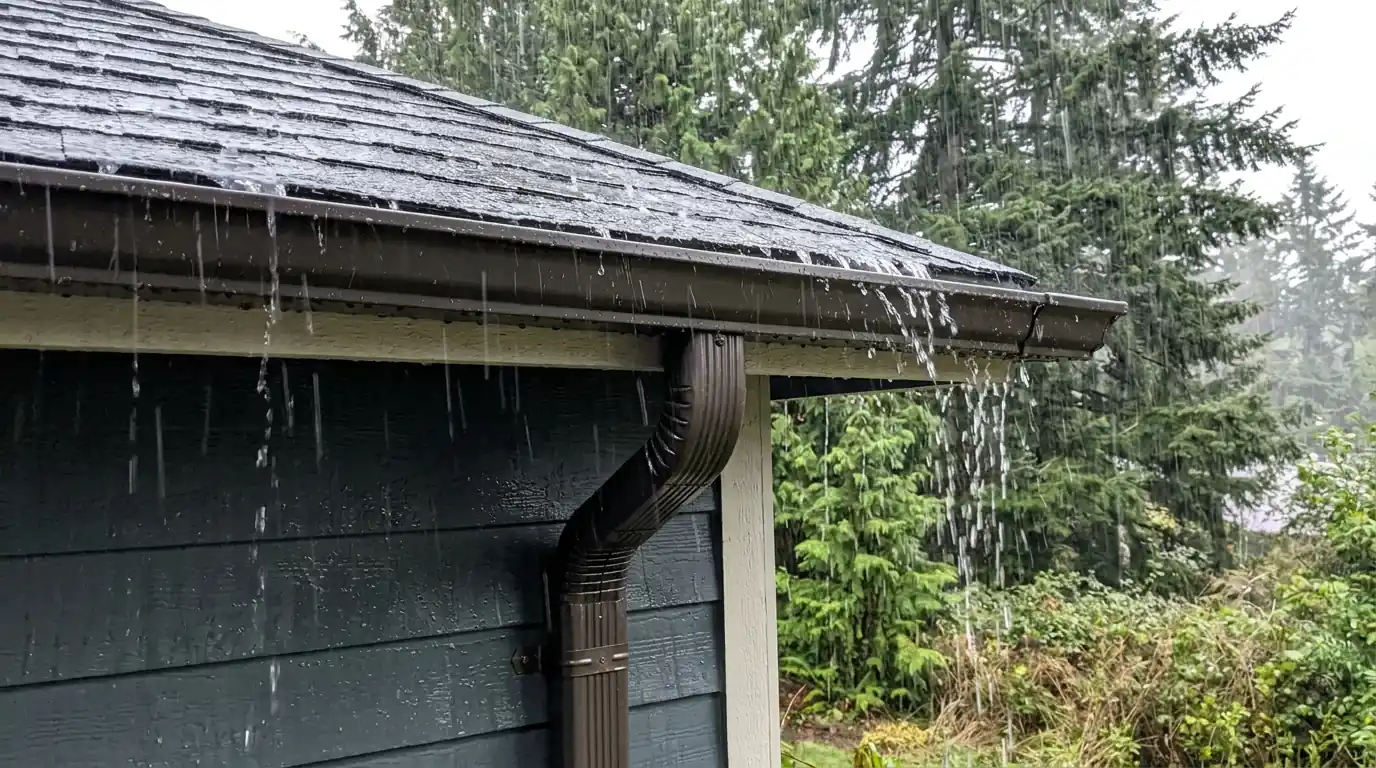
Gutter repair on a Tacoma house usually comes down to four faults. A run sags, a seam or corner drips, lost pitch leaves water standing, or hangers pull out of the fascia. We rehang and re-slope the run, reseal or replace leaking joints, and check the board behind it. Repair makes sense while the gutter metal is still sound.
Repair or replace: how we decide on a gutter
Aluminum gutters rarely wear through. What fails is everything holding them: spikes that work loose, corner sealant that cracks after years of sun, and fascia that softens behind a long-term drip. Those parts are cheap to fix next to a new system, so repair comes first when the trough is straight and undented.
Replacement wins when a run is badly kinked or old sectional gutters leak at every joint. It also wins when the gutter is too small for the roof above. In those cases we price new gutters next to the repair so you can compare.
What changes the cost of a gutter repair
Repairs are priced after we see the run. These are the things that move the number most.
Length of the fix
One corner reseal is short work; rehanging a long run takes longer.
Height and roof pitch
Second-story runs and steep eaves need more ladder setup.
Fascia behind the gutter
Rotted boards must be replaced before new hangers will hold.
Gutter type
Copper joints are soldered, which takes more time than sealant.
Matching parts
An old profile or color can mean ordering corner pieces.
Sagging runs
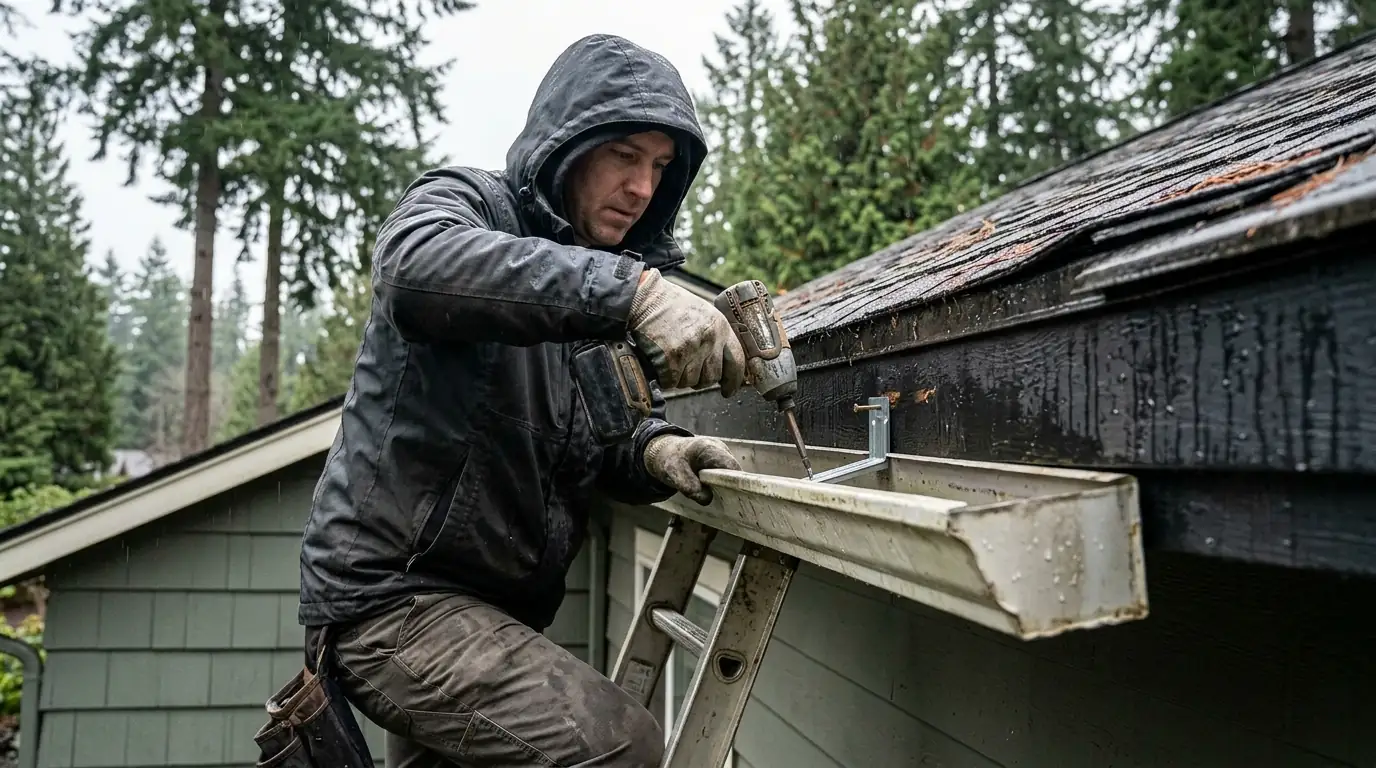
A sag shows as a dip you can see from the yard, often with a waterfall over the low spot in heavy rain. The usual cause is old spike-and-ferrule fastening: the spike backs out of the fascia a little each winter until the run droops. We pull the spikes, screw hidden hangers into the rafter tails or solid fascia, and lift the run back to a straight line. If the fascia behind it is soft, a new hanger will not hold, so that board gets replaced first.
Leaking seams and corners
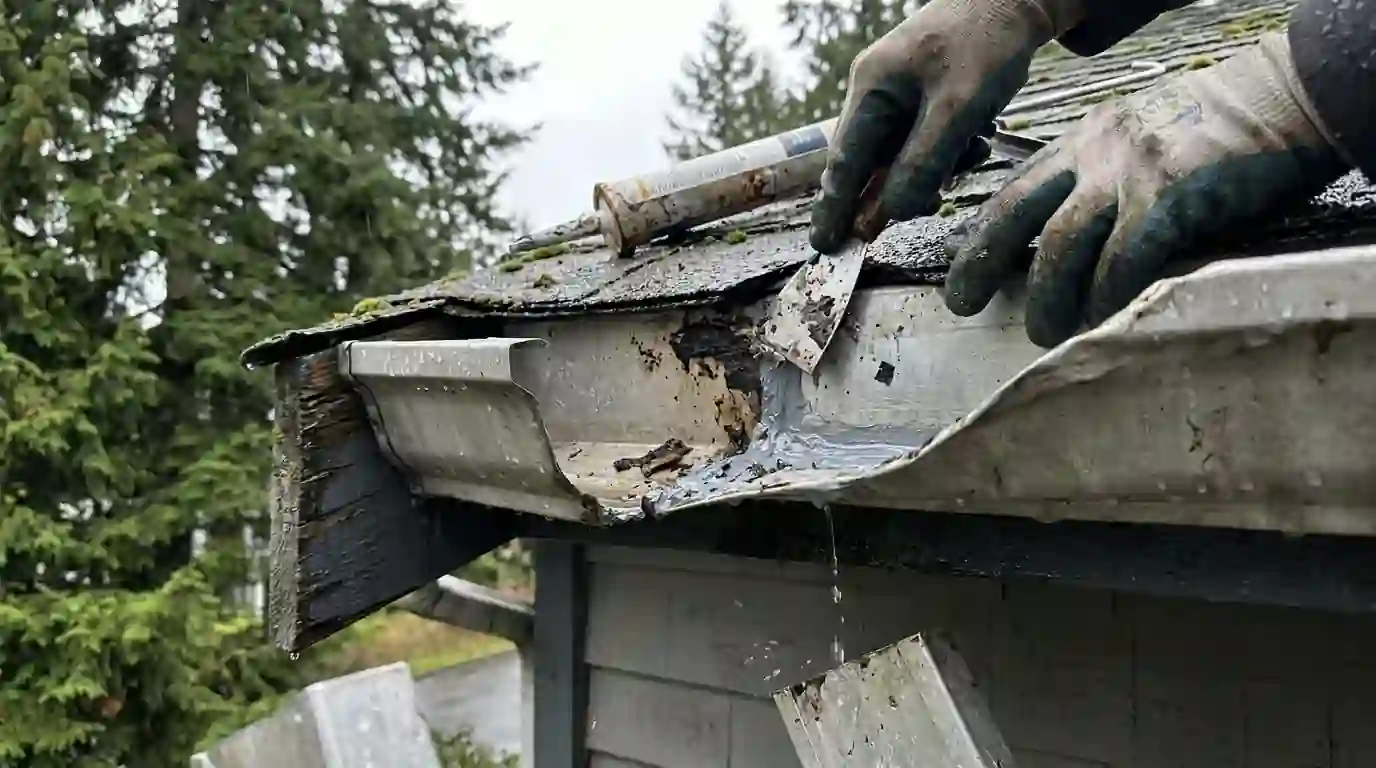
Drips at a corner or a mid-run joint mean the sealant has dried, shrunk and pulled away from the metal. Fresh caulk smeared over the old bead rarely lasts a season. Where we can, we take the joint apart, scrape it to bare metal and reseal it. A cracked miter gets a new corner piece, riveted and sealed, instead. Sectional gutters that leak at every joint are the exception; at that point new seamless gutters cost less than chasing each seam.
Lost pitch
Water standing in the trough a day after rain means the run has flattened or tilted the wrong way. Standing water breeds mosquitoes, grows sludge and adds weight that pulls hangers loose. We string a line, reset the run with a steady fall toward the outlet, and move hangers as needed. Long runs sometimes get a second downspout in the middle, which halves the drop each end needs. Both halves then slope outward, and neither end drops far below the roof edge.
Loose hangers
You may hear a run rattle in the wind, or see a gap opening between the gutter and the fascia. Loose hangers are the early stage of a sag, and catching them is the cheapest gutter repair there is. We drive new structural screws into solid wood, add hangers where the spacing is too wide, and swap out bent ones that ladders have crushed. Where hangers pull out of crumbling wood, we probe the fascia and tell you how far the rot runs before refastening anything.
What happens on a gutter repair visit
You describe the problem
Where it drips, sags or spills, and when you notice it.
We look from the ground
Overflow stains and sag lines show where to start.
We check from the ladder
Hangers, seams, pitch and the fascia behind the run.
You hear the options
The repair scope, and when replacement would cost less.
We fix the run
Rehang, reseal and re-slope the sections that failed.
We flush it
A hose test proves the water now reaches the outlet.
We clear the debris
Old spikes, sealant scraps and sludge leave with us.
Around Tacoma
Older gutter hardware we see across the area
In Tacoma's South End, most houses went up between 1940 and 1969, and most are owner-occupied. Plenty still wear gutters fastened the old way, with long spikes through ferrules. Puyallup's biggest building decades were the 1990s at 17.2% and the 1980s at 16.4%. Gutters hung in those years are now old enough for corner seals to crack and hangers to loosen. On both, we often find a sound trough on tired fastening, which calls for a repair rather than a replacement.
A gutter pulling away from the house?
Call any hour. A loose run gets worse with every storm, and rehanging it early can spare the fascia.
Call (253) 449-1922What a failing gutter looks like from the yard
You can spot all of these from the ground, ideally during a steady rain.
Water spilling over the front
Overflow at one spot often marks a sag or a clog.
Drips at the corners
A steady drip after rain stops points to a failed seal.
Stripes on the siding
Dirty streaks below a run show where water escapes.
A gap at the fascia
Daylight between gutter and board means loose hangers.
A trench below the eave
A groove in the bed shows where water lands instead.
Gutter Repair questions from Tacoma homeowners
Usually. If the metal is straight and the fascia is solid, new hidden hangers lift it back into line for far less than a new run costs.
Corner sealant dries and shrinks over time, and miters can crack. We reseal the joint to bare metal or replace the corner piece outright.
Caulk over an old bead usually peels within a season. The joint has to be cleaned to bare metal before new sealant will bond to it.
It may be undersized, short an outlet or out of pitch. Our gutter installation page explains how we size runs.
Yes. Rot behind a gutter is common, and we replace it before rehanging. See fascia and soffit repair for that work.