Roof inspections in Tacoma with a written findings report you can use
An inspection tells you what condition the roof is in and what it needs next. You get photos, findings and plain priorities, whether you are buying, filing a claim or planning ahead.
- Answering 24/7
- Puyallup office
- Tacoma and Pierce County
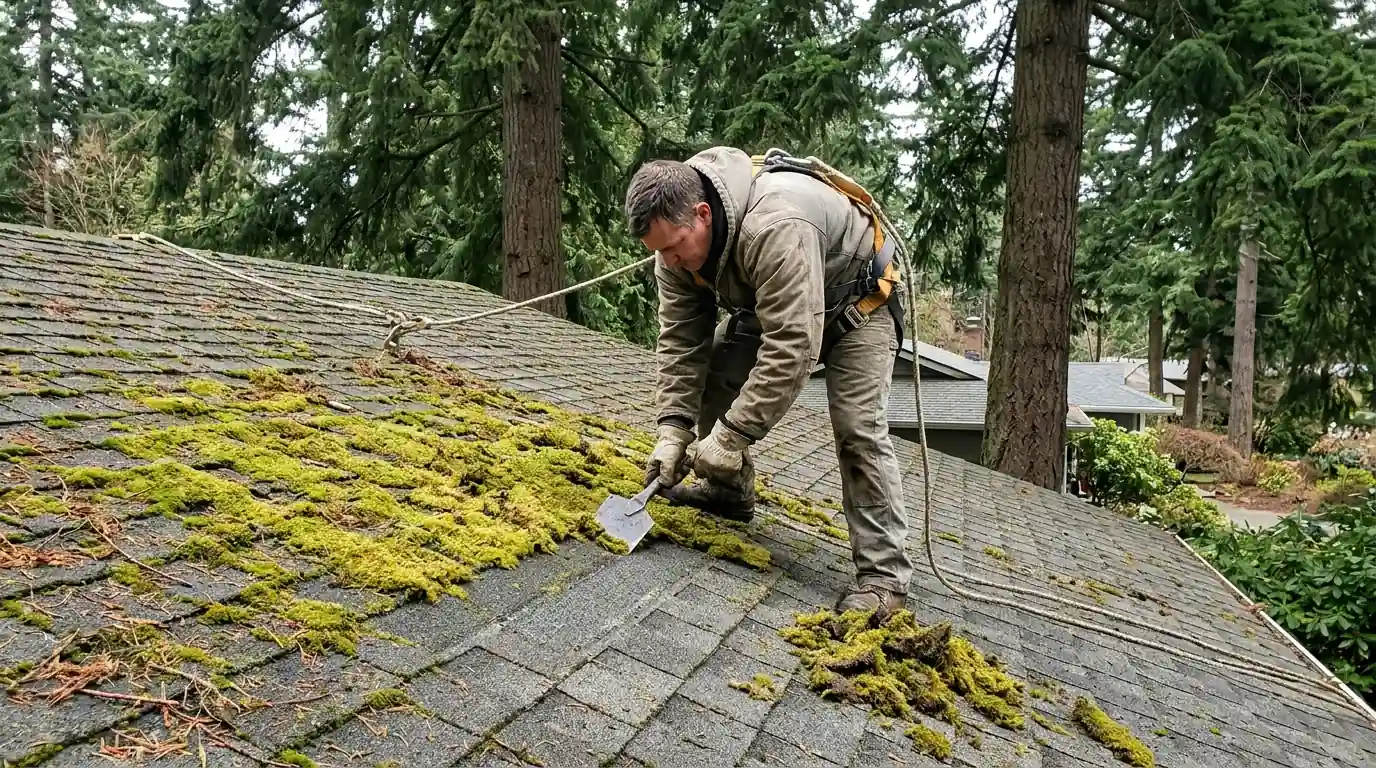
Short answer
A roof inspection in Tacoma ends with a written findings report: photos of the surface, flashings, vents, gutters and attic, with each issue marked urgent, soon or watch. Buyers use it to negotiate, owners use it after a storm or for an insurance claim, and nothing in it obliges you to hire us for the repairs.
What a roof inspection covers and what you get back
An inspection is a look, not a fix. We walk the roof where it is safe to walk, check every penetration, valley and edge, and go into the attic to see the underside of the deck, the ventilation and any staining. Where a roof is too steep or fragile to walk, we inspect from ladders at each eave and take close photos instead.
The report lists what we found, where it is and how soon it matters. Repairs are a separate decision. If you would rather have recurring upkeep than a one-time report, see roof maintenance.
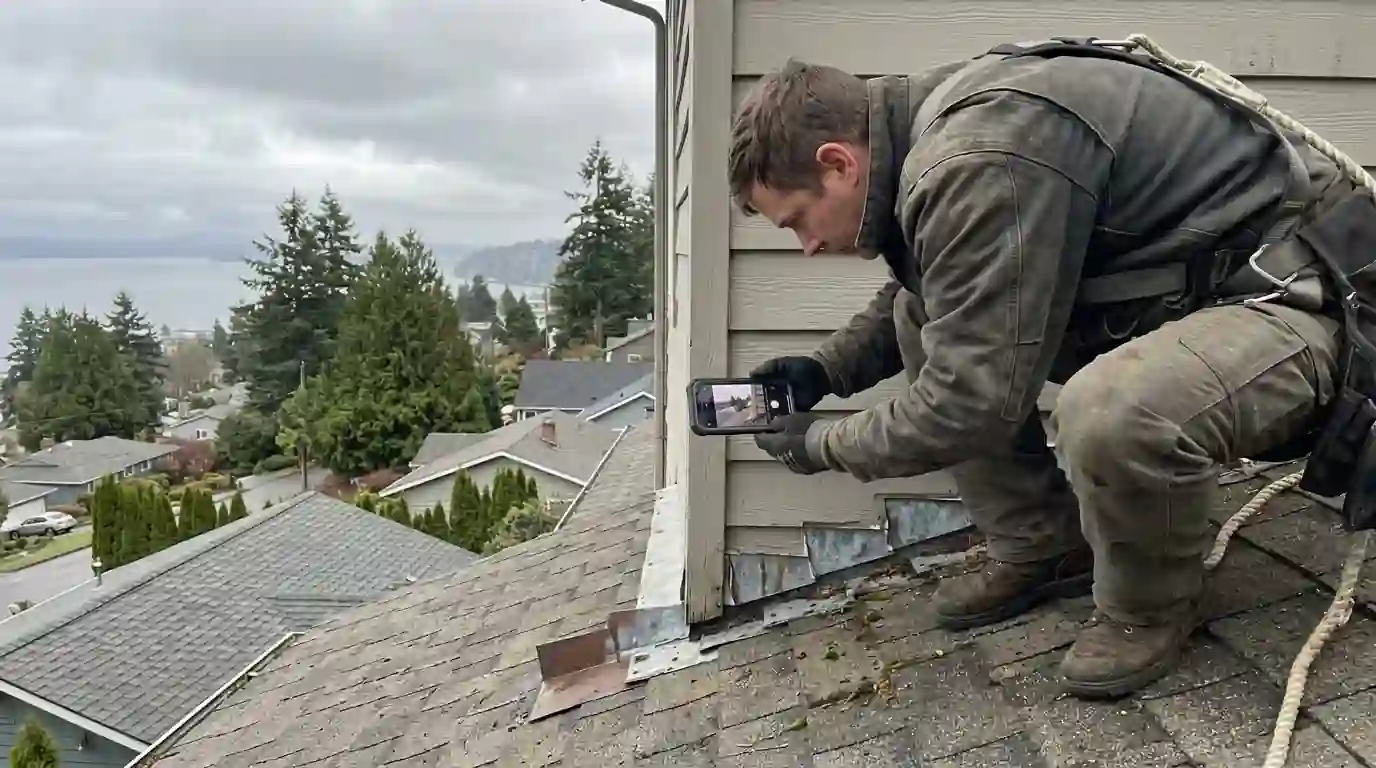
What goes into the findings report
Reports vary a lot between companies. Ours always contain these.
- Photos of each slope, ridge and valley
- Flashing at walls, chimneys and skylights
- Vents, pipe boots and other penetrations
- Gutters, downspouts and drip edge
- Attic deck, ventilation and any staining
- Number of roofing layers where visible
- Findings ranked urgent, soon or watch
Pre-purchase inspections
General home inspectors cover the whole house and often view the roof from the ground or a ladder. We walk it and look closer: how many layers are on, the condition of flashings at walls and chimneys, signs of earlier repairs, and what the attic deck shows from below. You get a remaining-life range you can take to negotiations. That range is an estimate, not a promise, and areas hidden under solar panels or heavy moss limit what anyone can see.
After a storm
Wind lifts tabs and creases them without tearing them off, and a creased shingle looks normal from the yard while leaking along the fold. After a storm we look for creases, missing ridge caps, limb strikes, dented vents and torn flashing, and photograph everything, even without a leak yet. If water is getting in, we can tarp before writing anything up. Wait until the wind drops before anyone climbs; our windstorm guide covers what to check from the ground first.
For an insurance claim
Claims hinge on documentation. We take dated photos, measure damaged areas and separate storm damage from ordinary wear, since adjusters treat those differently. If you ask, we will meet the adjuster on the roof and walk through what we found. We report what is there, including age-related wear the policy may exclude, because a report that overstates damage hurts your credibility. Decisions about coverage stay with your carrier; our job is a clear, accurate record. Photos and measurements arrive in one file you can forward to the carrier.
Annual checkups
A yearly look before the wet season suits older roofs, roofs under heavy trees and owners who want to budget for replacement instead of being surprised by it. Each checkup compares this year's photos with last year's, so slow changes like granule loss or a curling ridge show up as a trend. A checkup reports only. Clearing valleys, resealing fasteners and swapping a cracked boot belong to a maintenance visit, which you can book on top of the report. Late summer, before the first big rains, is a good time for one.
In Northeast Tacoma
Inspecting hillside roofs in Northeast Tacoma
Northeast Tacoma sits on hilly ground with hills rising to 530 feet, and nearly 17,000 people live there. Most of its homes were built between 1970 and 1999, some after 2000, and it has Tacoma's highest owner-occupancy at 75.2%. For buyers there, the question is usually how much life the current roof has left. On those exposed slopes we pay close attention to ridge caps and the edges that face the weather, where wear tends to show first.
How an inspection visit goes
You tell us why
Purchase, storm, claim or a routine look changes our focus.
Ground walk
Every slope and the gutters are viewed from the yard first.
Roof walk
Surface, flashings, vents and edges, photographed as we go.
Attic check
Deck underside, ventilation, insulation and any stains.
Measurements
Slopes, layers and damaged areas noted for the report.
Written findings
Photos and notes ranked urgent, soon or watch.
Phone walkthrough
We go over the report with you and answer questions.
Closing on a house soon?
Mention your contingency date when you phone, day or night, so the visit is planned around it.
Call (253) 449-1922What affects the cost of an inspection
Inspection fees depend on the roof and the report you need. The published range below is a national planning figure.
Published range, not a quote and not our price. Source: cost-guide-ssr.homeadvisor.com, 2022-08. Your number depends on the factors below and is set after we see the roof.
Roof size and pitch
Steep, tall roofs take longer to inspect safely.
Attic access
Tight or blocked hatches add time.
Report depth
Claim documentation takes more photos and measuring.
Roof type
Fragile cedar or tile may be inspected from ladders.
Extra structures
Garages, shops and ADUs each get their own section.
Roof Inspection questions from Tacoma homeowners
A home inspector covers the whole house and often views the roof from the ground. We walk it, check flashings closely and look at the deck from the attic.
We give a range based on material, condition and wear. It is an estimate, and we explain what would shorten or stretch it.
If you ask, yes. We point out the damage we documented and explain which items are storm-related and which are ordinary wear.
We tell you before we leave, and if water is getting in we can tarp or patch it. See emergency roof tarping.
Yes. Send it to your agent, the seller, your insurer or another roofer. It is written so someone who never saw the roof can follow it.