Two-ply torch-down roofs and repairs for flat Tacoma roofs
Torch-down is modified bitumen fused in layers with heat. Laid as two plies over a sound deck, it takes foot traffic and ponding better than most single-ply sheets.
- Answering 24/7
- Puyallup office
- Tacoma and Pierce County
Short answer
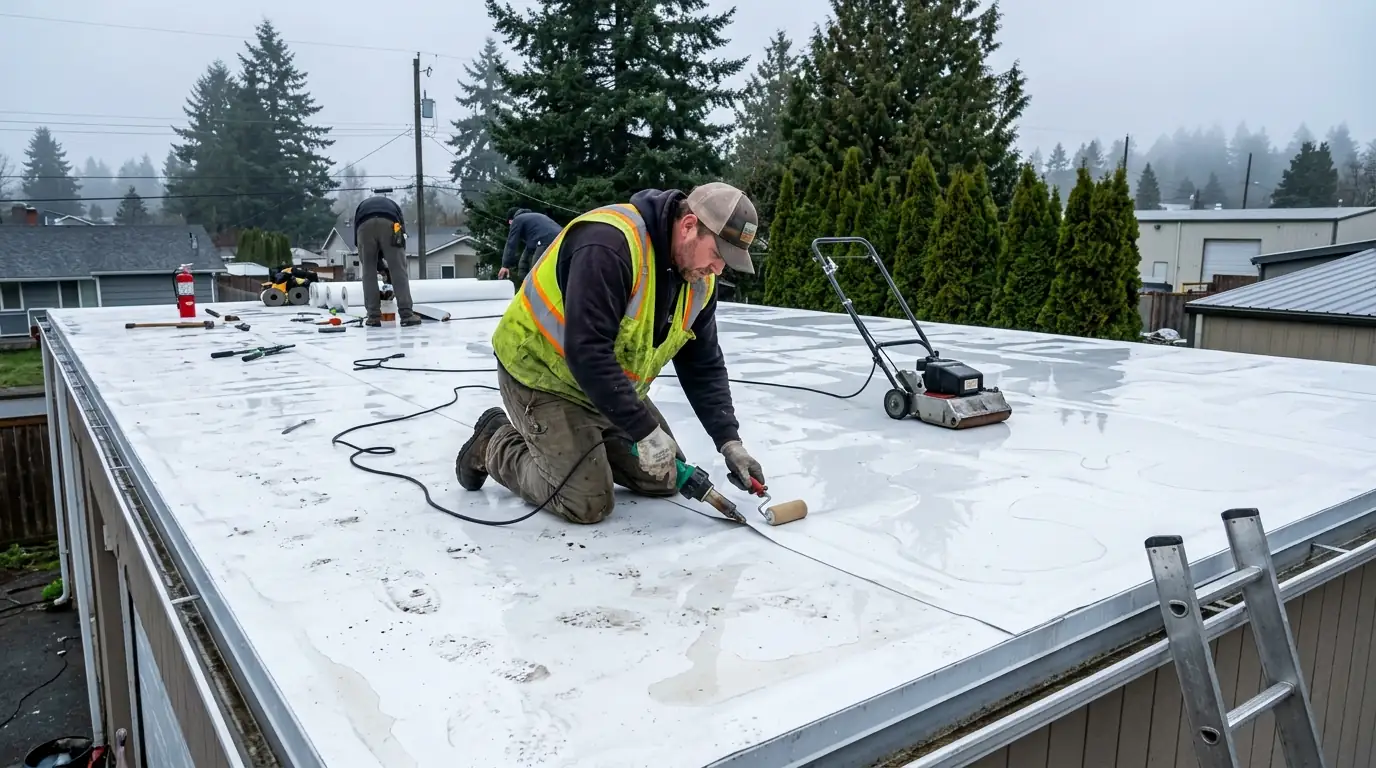
Torch-down roofing on a Tacoma flat roof is two plies of modified bitumen: a base sheet, then a granulated cap sheet fused over it with a propane torch. The second ply covers every seam in the first. Torching needs a dry surface, so the work is scheduled around rain, and someone stays on the roof watching for heat after the last torch goes out.
How a two-ply torch-down roof is built
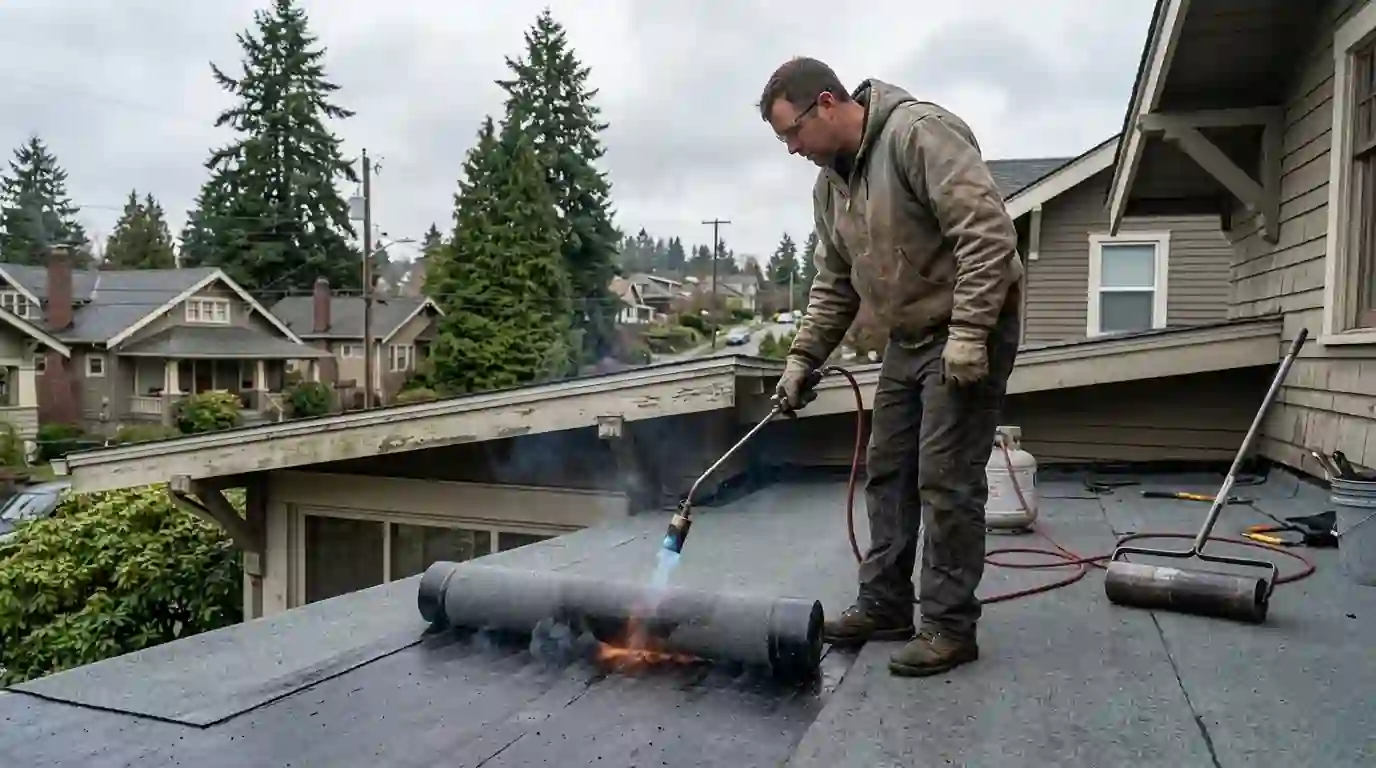
Modified bitumen is asphalt blended with rubbery or plastic polymers and reinforced with polyester or fiberglass. In a torch-down system the underside of each roll is heated until it flows, then rolled into the layer below so the two fuse into one mass. The base ply goes down first with offset laps, and the cap ply is staggered over it so no seam lands on another.
We use base and cap sheets from makers like Polyglass, GAF and Johns Manville. Near wood walls, eaves and anything else that can catch, we switch to self-adhered plies instead of an open flame, which is the main safety tradeoff with this roof type.
What moves the price of torch-down
Torch-down is priced per square foot plus the details. The published range below lists modified bitumen next to other flat roof types.
Published range, not a quote and not our price. Source: angi.com, 2026-08. Your number depends on the factors below and is set after we see the roof.
Plies
Two plies cost more than one and earn it at the seams.
Tear-off depth
Old gravel built-up layers under the torch-down add disposal.
Fire-safe details
Self-adhered plies near wood edges cost more than torched ones.
Walls and curbs
Each wall, chimney and vent needs base and cap flashing.
Drainage fixes
Crickets or new scuppers add material and time.
Torch-down work to leave alone
An open flame on a roof is the hazard here. A few tasks are still safe for you.
| Item | Doing it yourself | When to call a roofer |
|---|---|---|
| Granules in the gutter | Normal in small amounts, just keep the gutter clear. | When bare black bitumen shows across the cap. |
| A lifted lap edge | Keep foot traffic off it and note where it is. | Before the next storm, since wind can peel it back. |
| A small leak | Use a weighted tarp, never a hardware-store torch. | Right away. Torching near wood framing takes training and a fire watch. |
Two-ply modified bitumen
Some flat roofs get a single torched cap over a nailed base, and that saves money. A true two-ply system fuses both layers, so a cut or a bad lap in the cap still has a fused ply beneath it. The granulated surface shields the bitumen from sun and stands up to foot traffic. The tradeoffs are weight, a dark surface that soaks up heat unless you choose a light cap, and raised lap edges where needles and grit tend to collect.
Torch-down repair
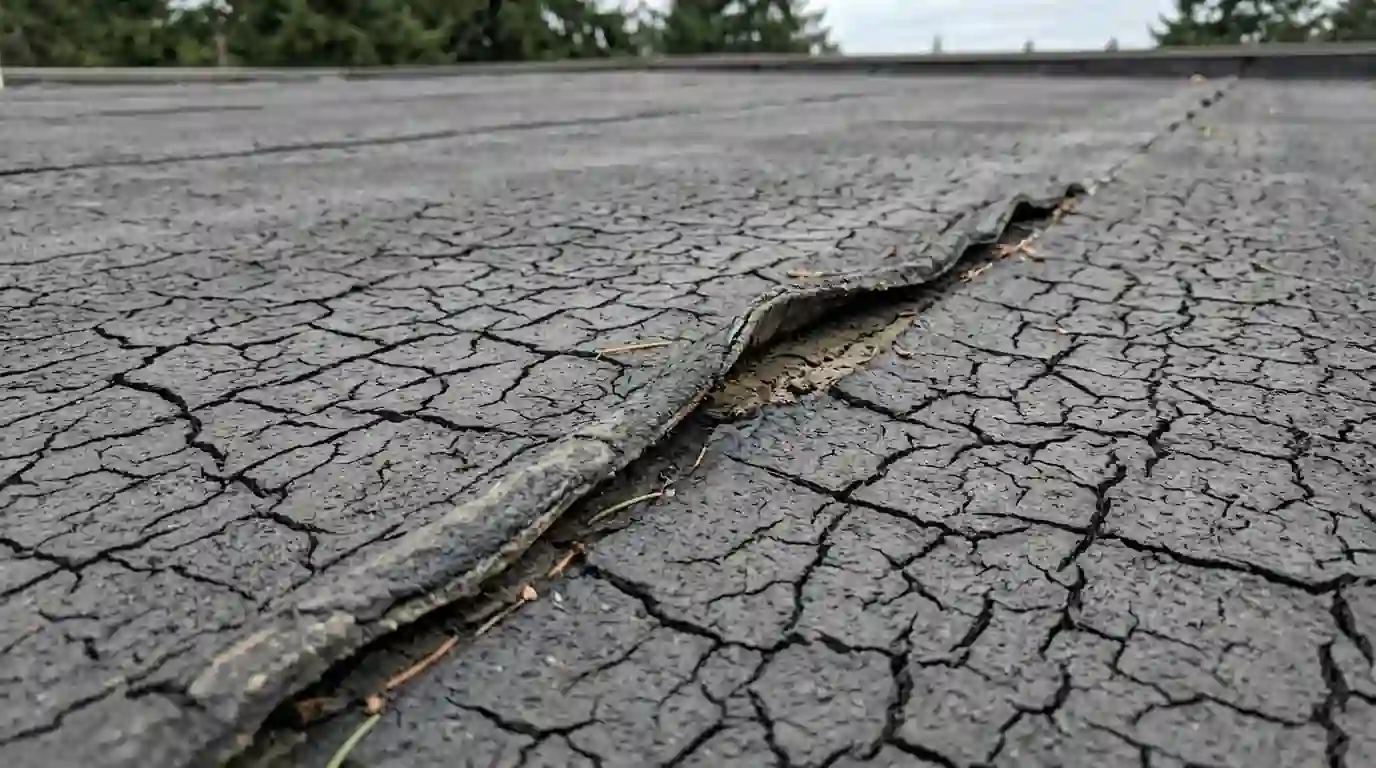
Worn torch-down shows itself as bare black patches where granules have washed off, a surface cracked like alligator skin, lap edges curling up, or splits where the roof turns up a wall. We clean and prime the area, then torch a cap patch that reaches well past the damage. Curled laps get reheated and rolled down, and failed wall flashings are rebuilt. Patches bond poorly to dried-out bitumen, though. If cracking runs across the whole cap, repairs start chasing leaks around the roof.
Converting torch-down to TPO
Owners convert when the torch-down is worn out and they want a white surface with welded seams. TPO can go over the old granulated roof only with a cover board between, and only if a core shows dry insulation underneath. A full tear-off costs more but exposes any wet deck. The new roof is lighter and cooler in summer. On the other hand, TPO tolerates heavy foot traffic less well than a granulated cap, so roofs used as decks may be better staying modified bitumen.
How we lay a torch-down roof
Read the forecast
Torch work is booked for a dry stretch, not one dry morning.
Strip and inspect
Old roofing comes off and the deck is probed for soft spots.
Prime and base ply
Primer on the deck, then the base sheet with offset laps.
Fuse the cap
The granulated cap is torched on, seams staggered from the base.
Flash walls and curbs
Plies run up walls and get capped with metal.
Seal the laps
Each lap edge gets a bead of flowed bitumen and loose granules.
Fire watch
Someone stays on the roof checking for heat after torching ends.
In Tacoma
Torching between Tacoma rain days
Regional climate normals average 39.34 inches of precipitation over about 156 days a year, and torch-down cannot go onto a damp deck. Moisture sealed under a fused ply turns to vapor on the next warm afternoon and lifts a blister. So we watch the forecast closely, open only as much roof as we can close by evening, and save full tear-offs for summer and early fall dry spells. Winter torch-down work in Tacoma is mostly patching on days when the surface has properly dried.
- Carlisle
- Johns Manville
- Polyglass
- Versico
- Mule-Hide
- GAF
- Duro-Last
- Henry
Torch-Down Roofing questions from Tacoma homeowners
It is when the flame stays away from wood edges, self-adhered sheets go near anything combustible, and someone watches the roof afterward. Those steps are standard on our jobs.
Rolled roofing is a single nailed or cemented sheet. Torch-down fuses two reinforced plies of modified bitumen, so the laps are fused together rather than just overlapped.
With walkway pads or pavers on pedestals, yes. The granulated cap takes foot traffic better than most single-ply sheets, but furniture legs still need pads.
One leaking lap or blister is a repair. Cracking across the whole cap means weighing flat roof repair against a new TPO roof.
Some shedding is normal as the cap ages. Large bare patches mean sunlight is reaching the bitumen, which dries and cracks it faster.