Taking solar panels off a Tacoma roof for a reroof, then putting them back
Solar arrays tend to outlast the shingles under them. When the roof is due first, the panels come off, wait somewhere safe and go back on new, flashed mounts.
- Answering 24/7
- Puyallup office
- Tacoma and Pierce County
Short answer
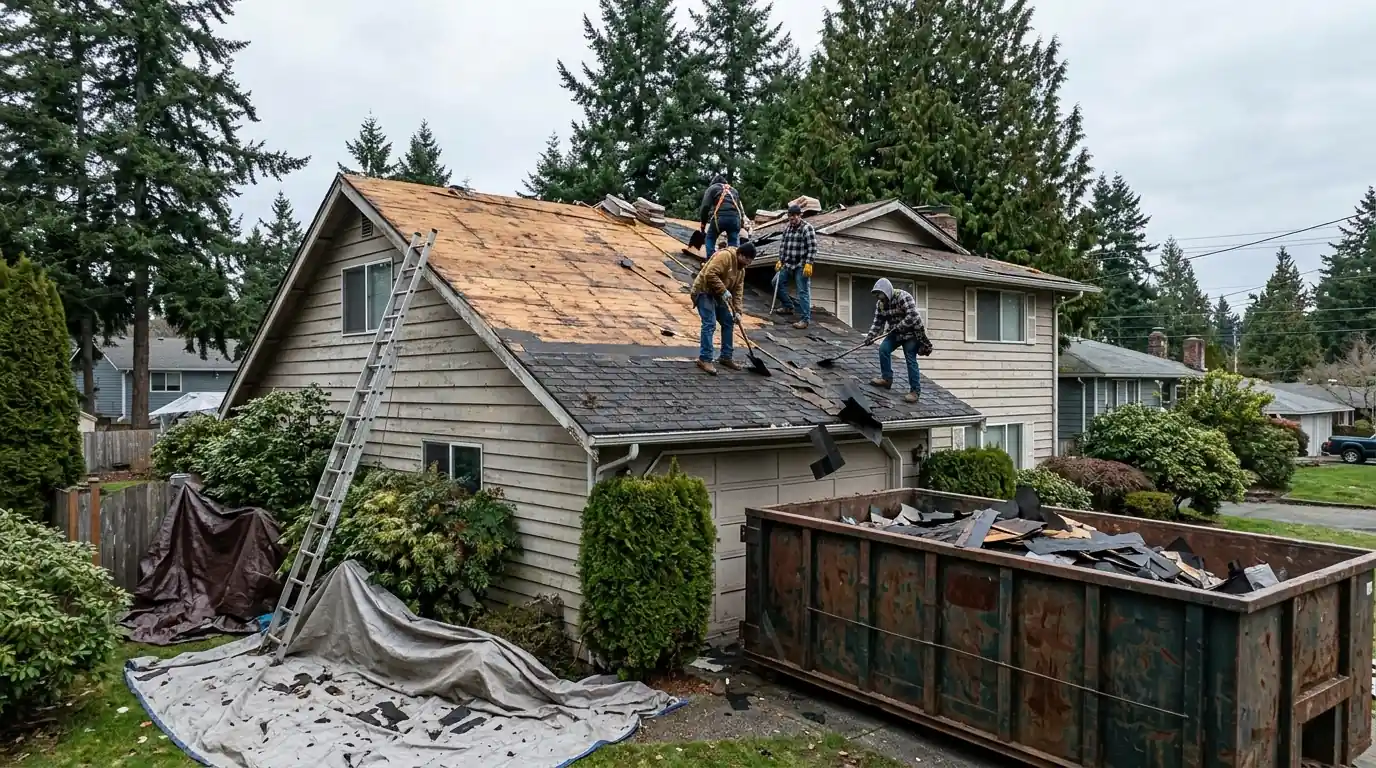
On a Tacoma reroof with solar, the array comes off before tear-off and goes back after the new roof is on, with every roof attachment replaced and flashed into the new shingles. Plan for the system to sit idle for the roofing job plus the remount, and for your solar company to handle the electrical shutdown and restart.
Why the roof under your panels comes first
Panels and racking are built to run for decades, while the composition roof under them may be halfway through its life on the day they go up. When the shingles wear out first, nobody can replace them properly around live mounts. The array has to come off, the old feet get pulled, and the new roof runs clean under where the panels will sit.
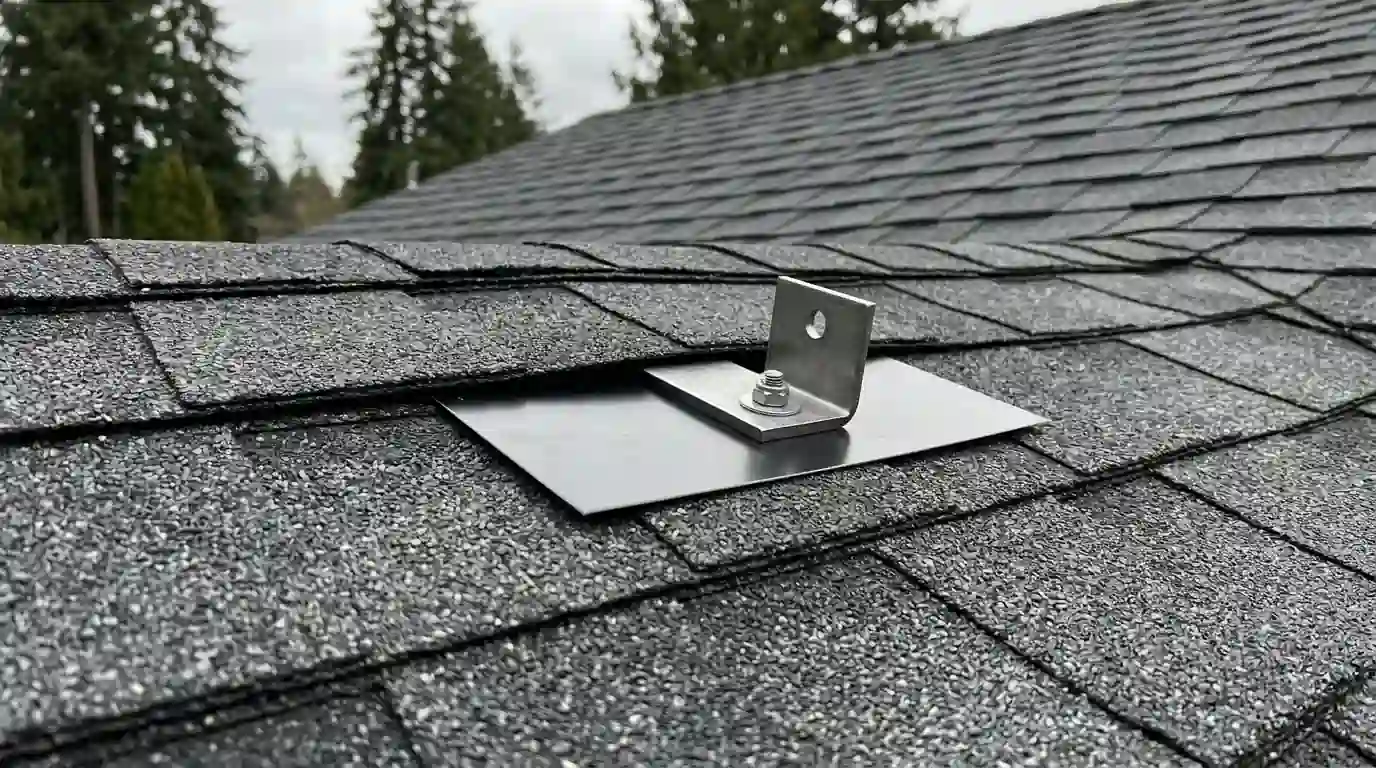
The roofing side decides whether the job leaks later. Each racking foot is a hole through the new roof, so we set new flashed mounts into the fresh shingles instead of reusing old feet bedded in sealant. If decking under the array turns out soft, we replace it while the roof is open; see roof decking replacement.
What drives the cost of panel removal and reinstall
We price this per job once we know the array and the roof under it. No published range fits it well, so here is what moves the number.
Number of panels
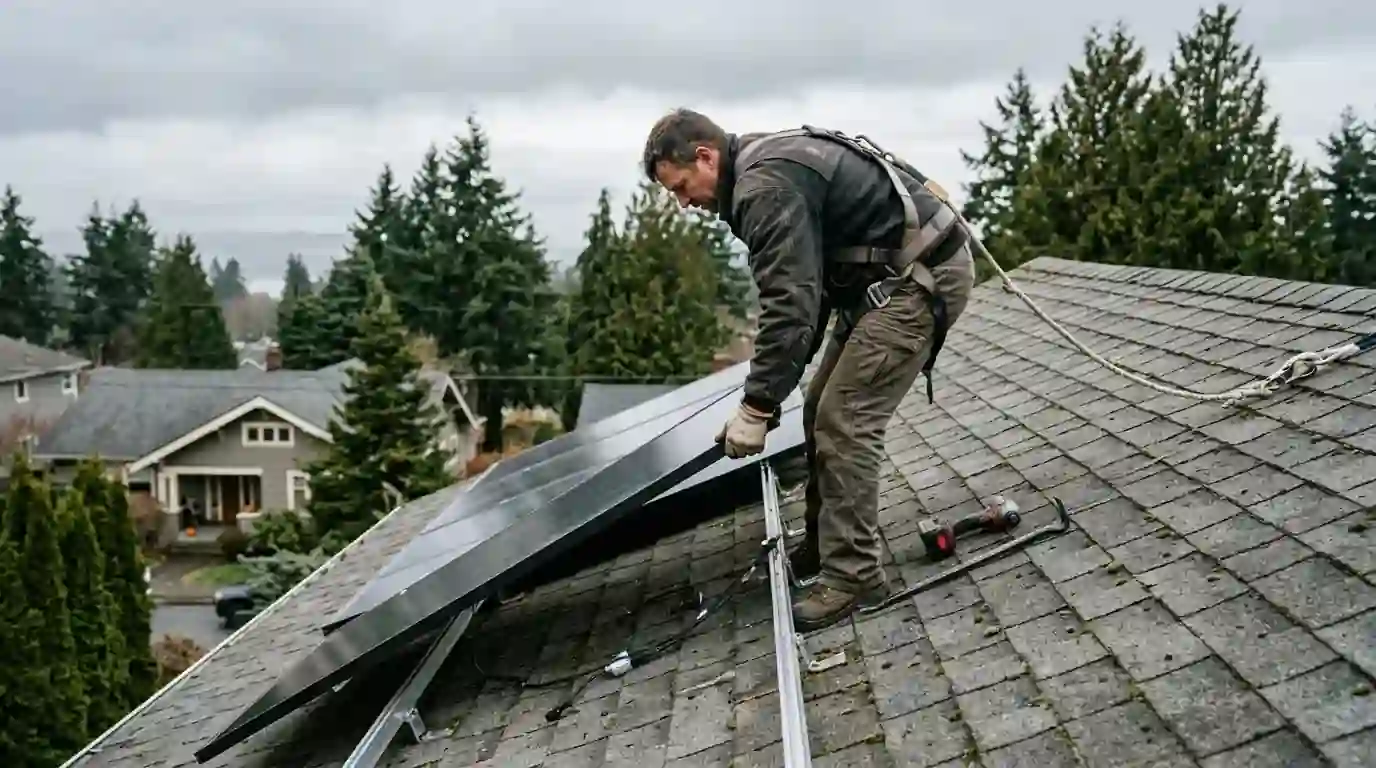
Each panel and its mounts are handled twice, off and back on.
Racking type
Rail and rail-less systems strip and reset differently.
Pitch and height
Steep or tall roofs need more staging to move panels safely.
New attachments
Fresh flashed mounts cost more than reused feet and leak less.
Storage and timing
Covered storage and the solar company's visits shape the schedule.
Detaching panels before a reroof
Before anything is unbolted, we photograph the array and number each panel and string on a layout map. Once the system is shut down, panels come off one at a time, carried by the frame and never by the junction box, and go onto padded racks in a garage or a dry, covered spot on site. Rails and feet follow, and every old lag hole is marked for repair. Storing on site saves trips, but it needs a secure, dry space the panels can occupy for the whole job.
Remounting and flashing the attachments
With the new roof on, we locate rafters and set fresh attachments, each with a metal flashing that slides under the shingle course above and over the course below. Lag screws go into framing, not just sheathing, and sealant is a backup rather than the seal. Rails go back on, panels return to their numbered spots and the wire management is tidied. New mounts cost more than reusing old feet, but old feet carry holes sized for a deck that no longer exists.
Working with your solar company
We call your solar company before scheduling. Many prefer that their technician powers the system down and brings it back online, so the coverage terms on the panels and inverter stay intact, and some want photos of the remounted attachments. Lining up two schedules can add a few days at each end of the job. The alternative, skipping the solar company, can leave you arguing about coverage the first time an inverter faults. We share the layout map and photos with them so the restart goes smoothly.
What our removal and reinstall covers
Bids for this work differ most in what happens to the mounts. Ours include:
- Photos and a numbered layout of the array
- Removal of panels, rails and feet
- Padded storage on site, under cover
- Repair of every old mount hole
- New flashed attachments in the new roof
- Remounting rails and panels to the layout
- Scheduling the shutdown and restart with your solar company
From shutdown to switched back on
Photos and a layout map
Every panel position and wire path is recorded first.
System shutdown
Your solar company powers the array down.
Panels come off
Carried by the frame to padded storage.
Rails and feet removed
Old lag holes are marked for repair.
New roof goes on
Decking checked, then underlayment and shingles.
Flashed mounts set
Attachments land in rafters and lap under the course above.
Panels remounted
Back to the map, ready for the restart.
In Northeast Tacoma
Reroofing under solar in Northeast Tacoma
Northeast Tacoma has the city's highest owner-occupancy at 75.2%, and most of its homes were built between 1970 and 1999, with some added after 2000. Owners who put solar on an older roof there often find the shingles due long before the panels. Regional climate normals show precipitation on about 156 days a year, so we keep the gap between detach and remount tight and dry the open roof in every evening, rather than leaving bare decking under tarps while the panels wait in the garage.
Shingles wearing out under a working array?
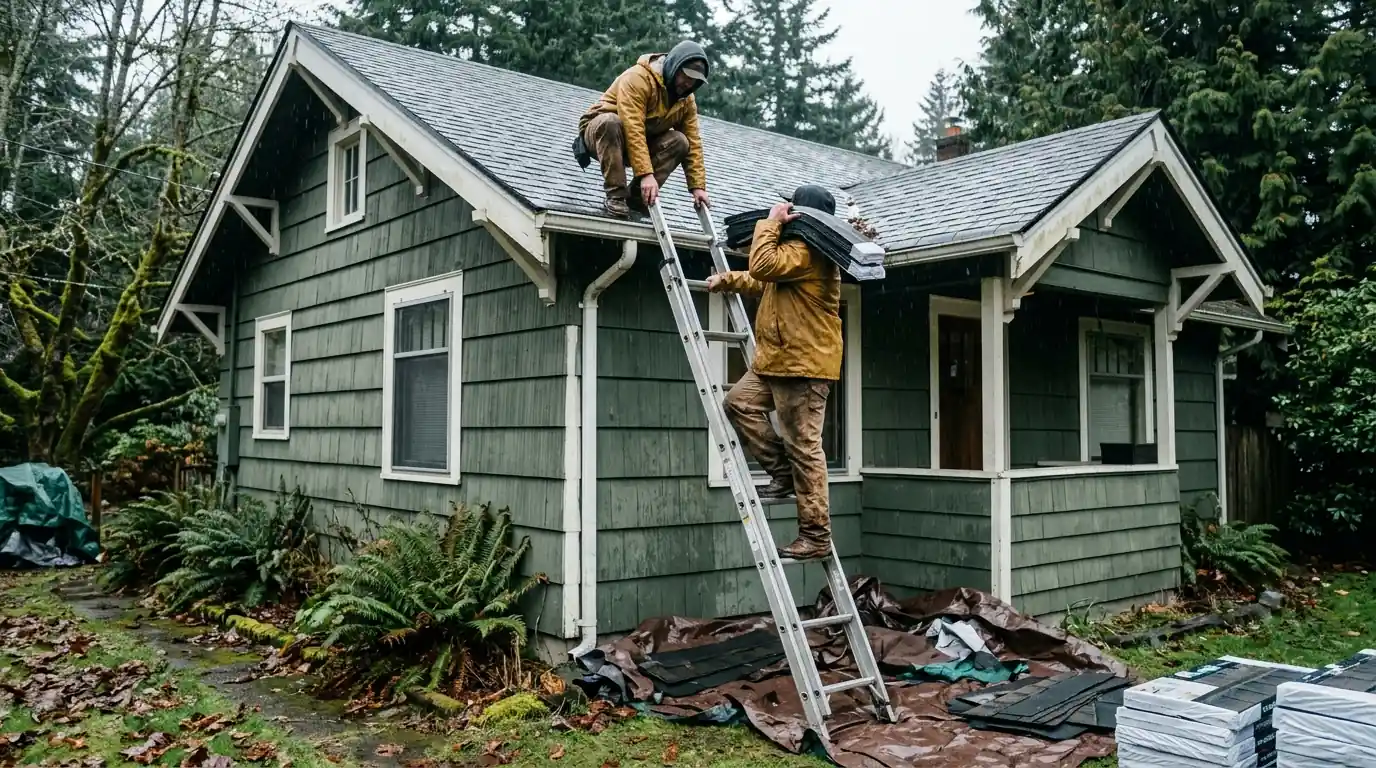
Phone us any hour. We'll sort out the sequence with you and your solar company before a single bolt comes loose.
Call (253) 449-1922Solar Panel Removal & Reinstall questions from Tacoma homeowners
Only partly. Mounts and rails sit on the shingles, so a patch around them leaves old roofing trapped under the array. Full removal lets the new roof run continuously beneath it.
For the roofing job plus the remount and restart. Wet weather and the solar company's schedule are the usual reasons that window stretches.
Panels handled by the frame and stored on padding rarely suffer. Damage usually comes from lifting by the junction box or stacking glass on glass, so we avoid both.
It is the cheapest moment, since the roof is open and the attachments are new anyway. Layout and electrical changes go through your solar company.
It helps. A roof inspection tells you whether the shingles truly need replacing before you book anyone's time around the panels.