Commercial roofing for Tacoma retail, office and warehouse buildings
Business roofs leak at rooftop units, curbs and drains while tenants are open. We repair, replace and maintain low-slope commercial roofs with as little disruption as we can plan.
- Answering 24/7
- Puyallup office
- Tacoma and Pierce County
Short answer
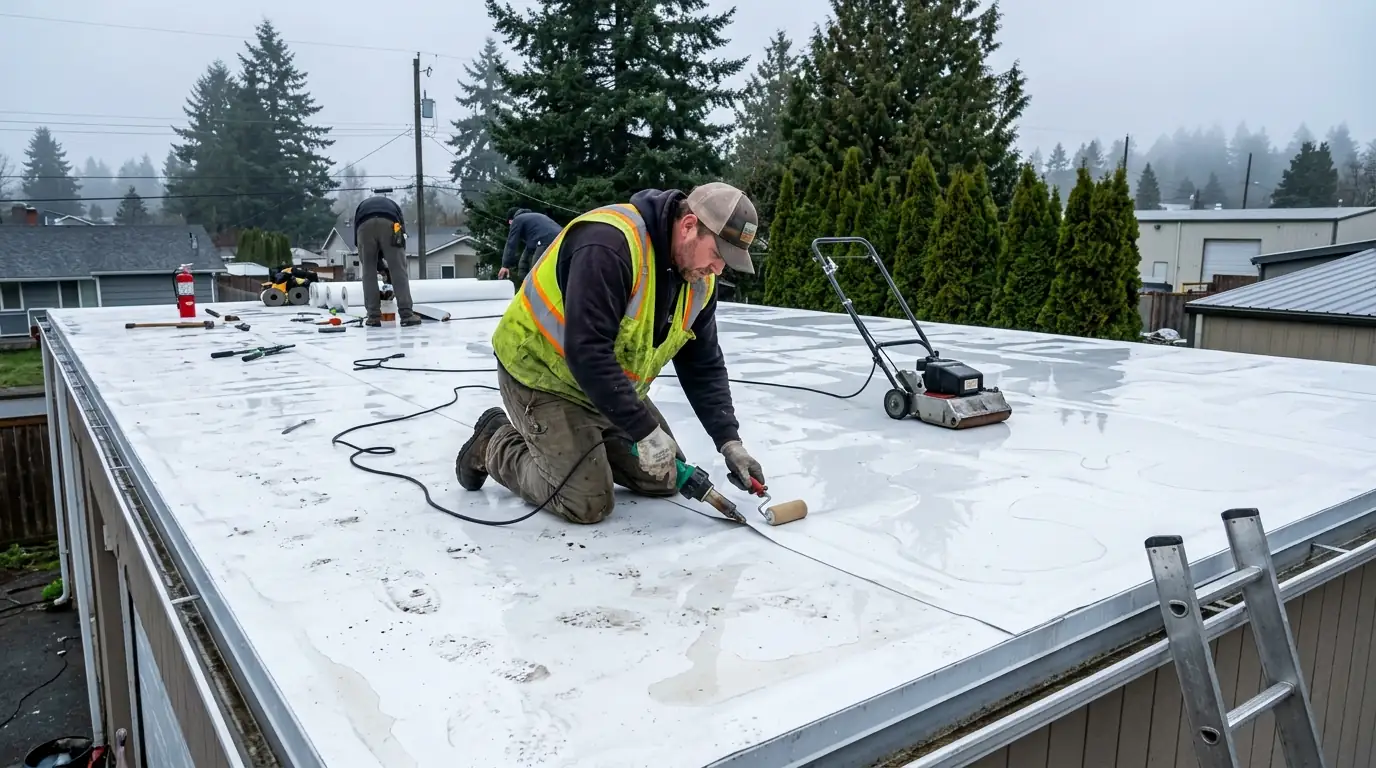
Commercial roofing in Tacoma covers the low-slope membranes on retail, office and warehouse buildings, plus the curbs and flashings around rooftop units. For owners and managers the work is usually one of three jobs: a leak repair while tenants stay open, a replacement planned around operations, or a maintenance schedule that walks the roof twice a year.
Roofs that tenants, inventory and equipment sit under
A leak on a commercial roof costs more than the repair. Wet ceiling tile, damaged stock and a taped-off aisle add up quickly, so we start where the water lands and work back to the source: a curb flashing, a drain, a seam, or a penetration another trade added after the roof went in.
For replacements we install single-ply and modified bitumen systems from makers like Carlisle, Johns Manville and Duro-Last, chosen for the deck, the drainage and how much foot traffic the roof sees. Scopes are written so a property manager can pass them to ownership without translating.
What moves the cost of commercial roof work
Commercial pricing comes from a survey and a written scope. These factors move it most.
Roof area and system
Larger roofs lower the cost per square foot; the system sets the base.
Tear-off or recover
Recovering a dry roof can avoid tear-off and disposal.
Rooftop equipment
Units that need lifting or curb changes add coordination.
Working hours
Night or weekend work around tenants adds labor.
Drainage changes
New drains, crickets or tapered board add material.
Retail and office roofs
These buildings stay occupied, so the roof work has to fit around customers and staff. Tear-off is loud, and adhesive odors can drift into air intakes. We schedule noisy work before opening or on closed days, cover intakes while adhesives cure, and protect entrances from falling debris. Off-hours work costs more per hour, which is the tradeoff against closing a store or moving an office for a day. Small leaks over a sales floor usually get a quick temporary fix first, then a permanent repair.
Warehouses and shops
Large open roofs over metal deck or panelized wood hide leaks well, because water can run along a deck flute or a purlin and drip far from where it entered. Racking makes the ceiling hard to see from below. We map the roof, core it to find wet insulation and repair by section. Plastic skylights and smoke vents crack and leak on these roofs too, so we check each one. On big roofs a recover over a dry existing system can avoid tear-off, while phasing the work by bay keeps forklifts moving underneath.
Rooftop units and curbs
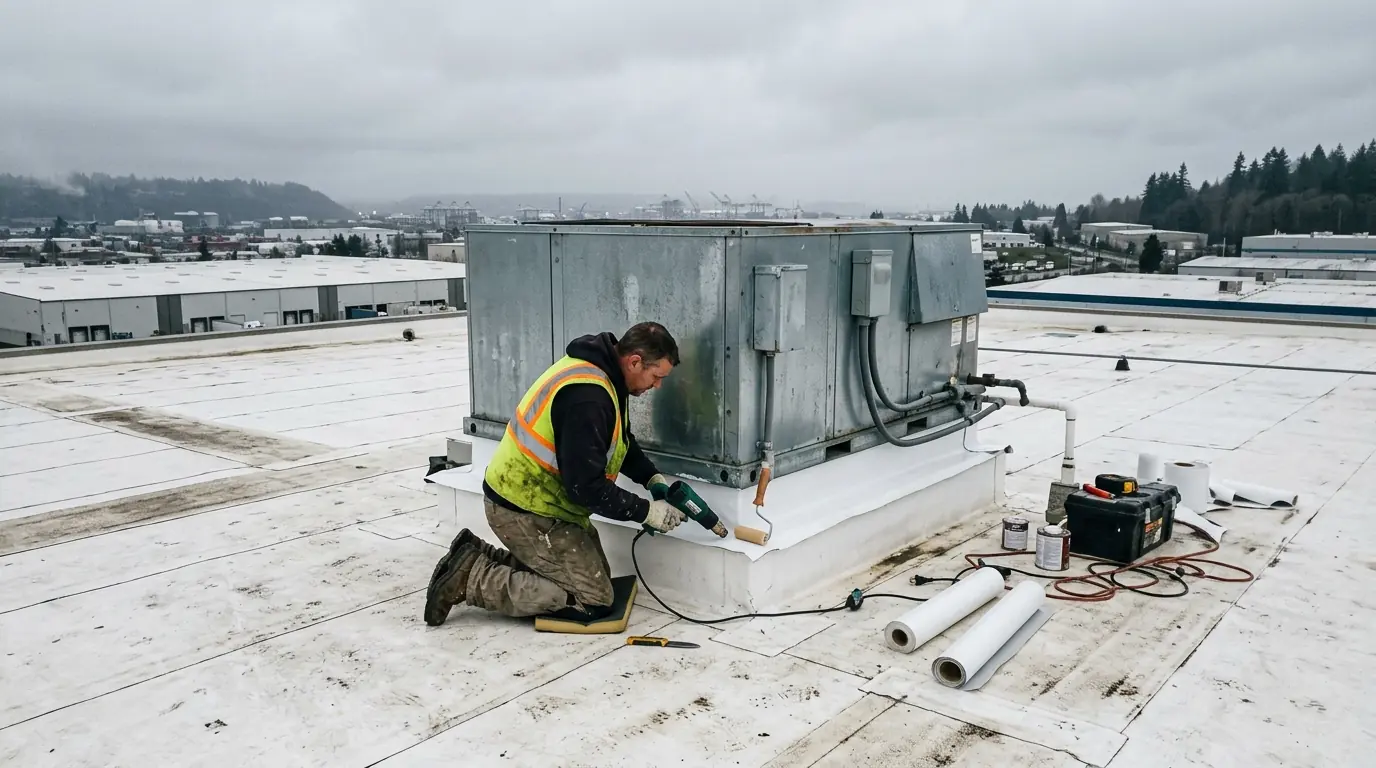
HVAC units sit on curbs that pierce the roof, and most commercial leaks start there. Base flashing set too low, condensate lines dripping onto the membrane and service techs dragging panels across it all take a toll. When a unit is replaced, the new one may need a different curb or an adapter. We set the curb flashing before the lift and finish it after, timed with your mechanical contractor. Raising a low curb adds cost, but it puts the flashing above standing water.
Planned maintenance for owners
A scheduled spring and fall walk catches clogged drains, open seams, loose edge metal and damage left by other trades before tenants report a stain. Each visit ends with a photo report and a short list of items to budget for, which helps with capital planning. The cost is a predictable fee every year, including years when the roof looks fine. Reactive repairs, by contrast, tend to arrive during the wettest months, when materials and scheduling are hardest. The reports also give you a dated record if a tenant disputes when a leak began.
How a commercial roof project runs
Site walk with the manager
Roof, access, tenants and any active leaks.
Survey and cores
We map the roof, the layers and any wet areas.
Written scope
System, details, phasing and what tenants will notice.
Schedule around operations
Noise and odors are timed to the building's hours.
Protect and stage
Intakes covered, interiors protected, materials lifted safely.
Install and dry in daily
Each section is closed and checked before we leave.
Closeout package
Photos, notes and a maintenance plan for your files.
In Tacoma
Moving 40 inches of rain off a big flat roof
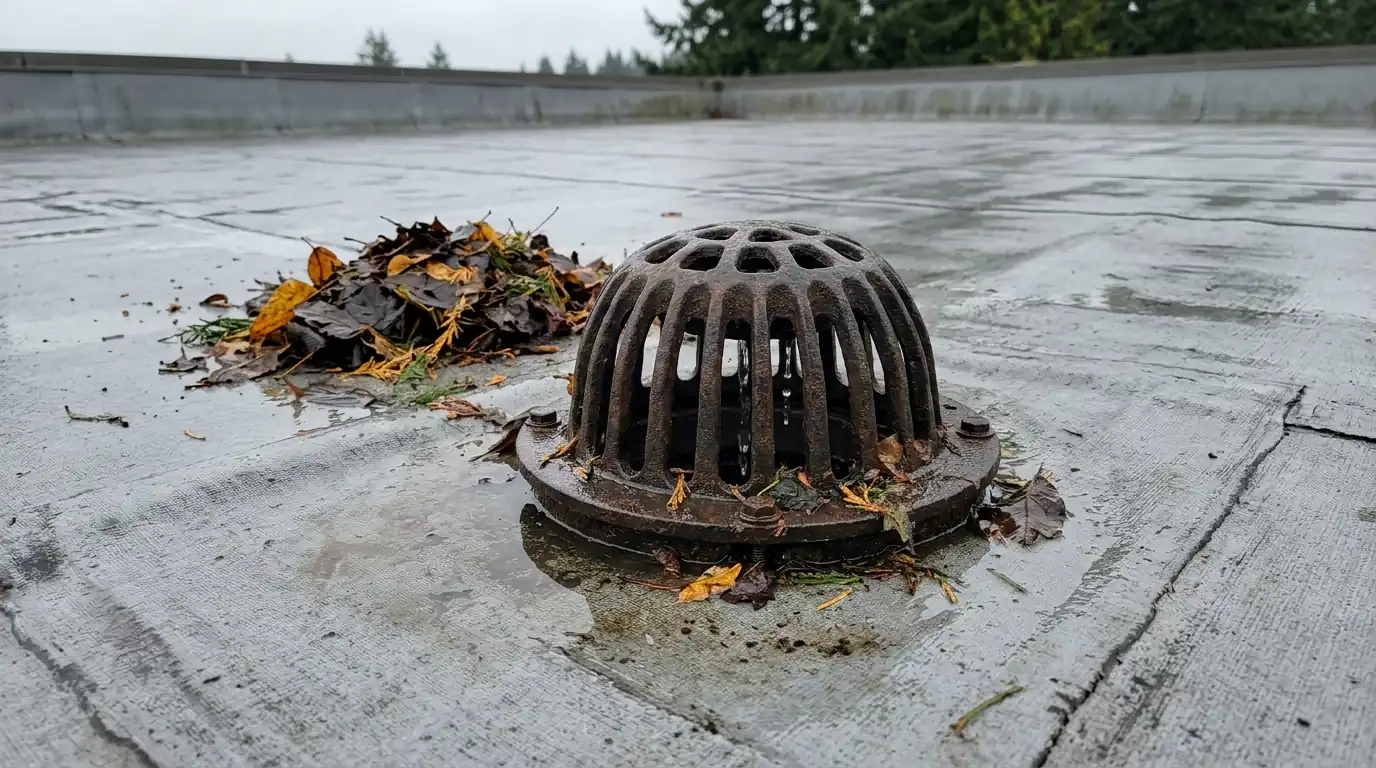
Tacoma's climate table shows about 40.81 inches of precipitation over roughly 155 days a year. On a large flat roof that is a great deal of water to push through a handful of drains, and drains rarely fail all at once. One clogged strainer behind a rooftop unit can hold back a pond until it finds the weakest seam. That is why our maintenance visits on Tacoma commercial roofs spend most of their time at drains, scuppers and the low spots around equipment.
Water dripping onto the sales floor?
Phones are answered around the clock, weekends included. We'll help you contain it first, then trace it once the roof is safe to walk.
Call (253) 449-1922- Carlisle
- Johns Manville
- Polyglass
- Versico
- Mule-Hide
- GAF
- Duro-Last
- Henry
Commercial Roofing questions from Tacoma homeowners
Most repairs, yes. Tear-offs are louder, so we schedule them for early hours or closed days and cover intakes to keep adhesive odors out of the building.
Yes. When a unit is replaced, the curb may change too. We flash before and after the lift so the roof stays watertight through the swap.
Often, if a moisture survey shows the existing roof is dry and code allows another layer. Recovering saves disposal but needs a sound deck.
Drain and scupper clearing, seam and flashing checks, sealant touch-ups and a photo report each visit. Our roof maintenance page covers the residential version.
Yes. Multifamily and HOA roofs bring resident notices and phasing, so they have their own page: apartment and HOA roofing.