Apartment and HOA roofing in Tacoma, planned building by building
Multifamily roofs are as much a planning job as a roofing job. We phase the work, keep residents informed and write scopes a board can compare line by line.
- Answering 24/7
- Puyallup office
- Tacoma and Pierce County
Short answer
Apartment and HOA roofing in Tacoma is usually a phased replacement, one building or one roof section at a time, so residents keep parking, access and a dry roof throughout. We write a scope boards can compare, give notice before work reaches each unit, and treat shared townhome rooflines as one continuous roof rather than separate owners' patches.
Reroofing where dozens of households live underneath
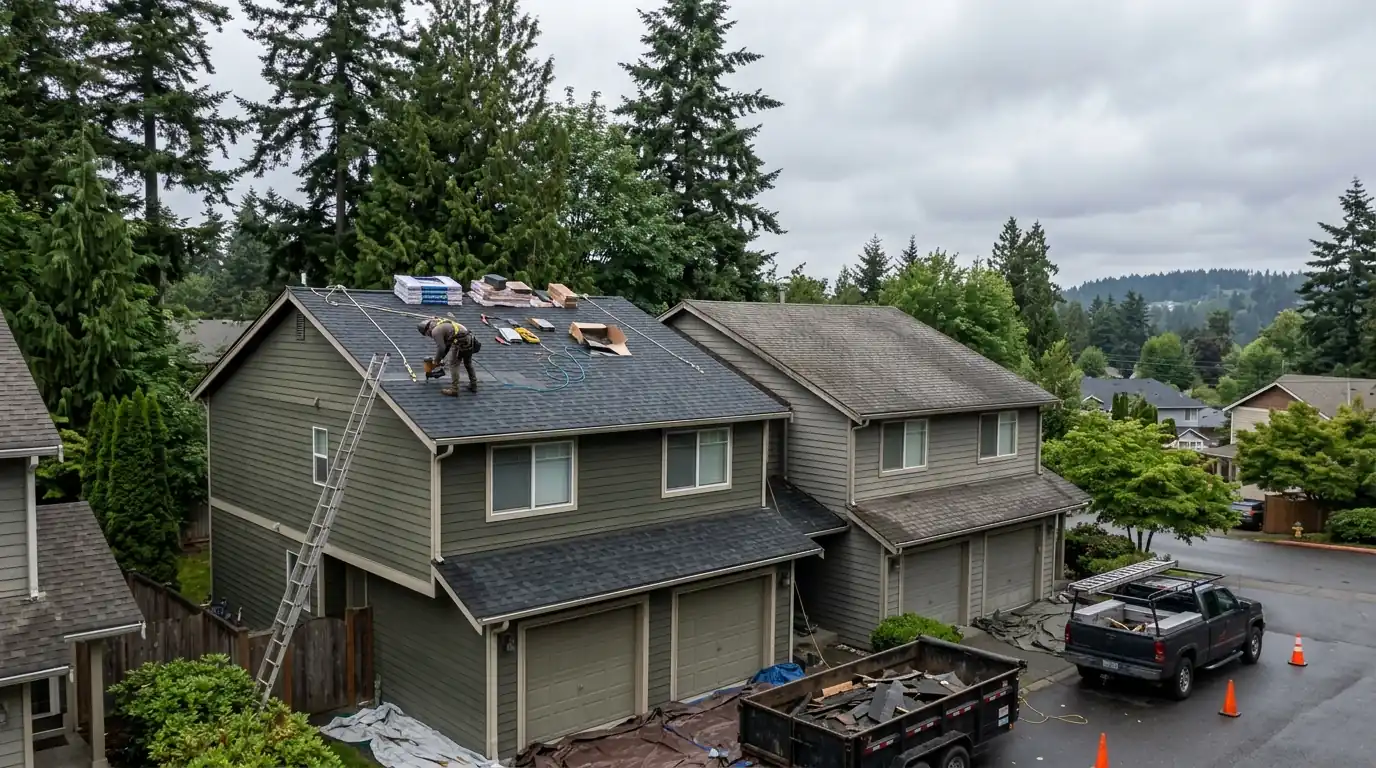
On a complex, the roofing itself matches a house, but the logistics multiply. Dumpsters need spots that do not block parking, tear-off noise lands in someone's living room, and every unit has gutters, vents and skylights that come out of the same budget. We plan the sequence before quoting, because the sequence drives the cost.
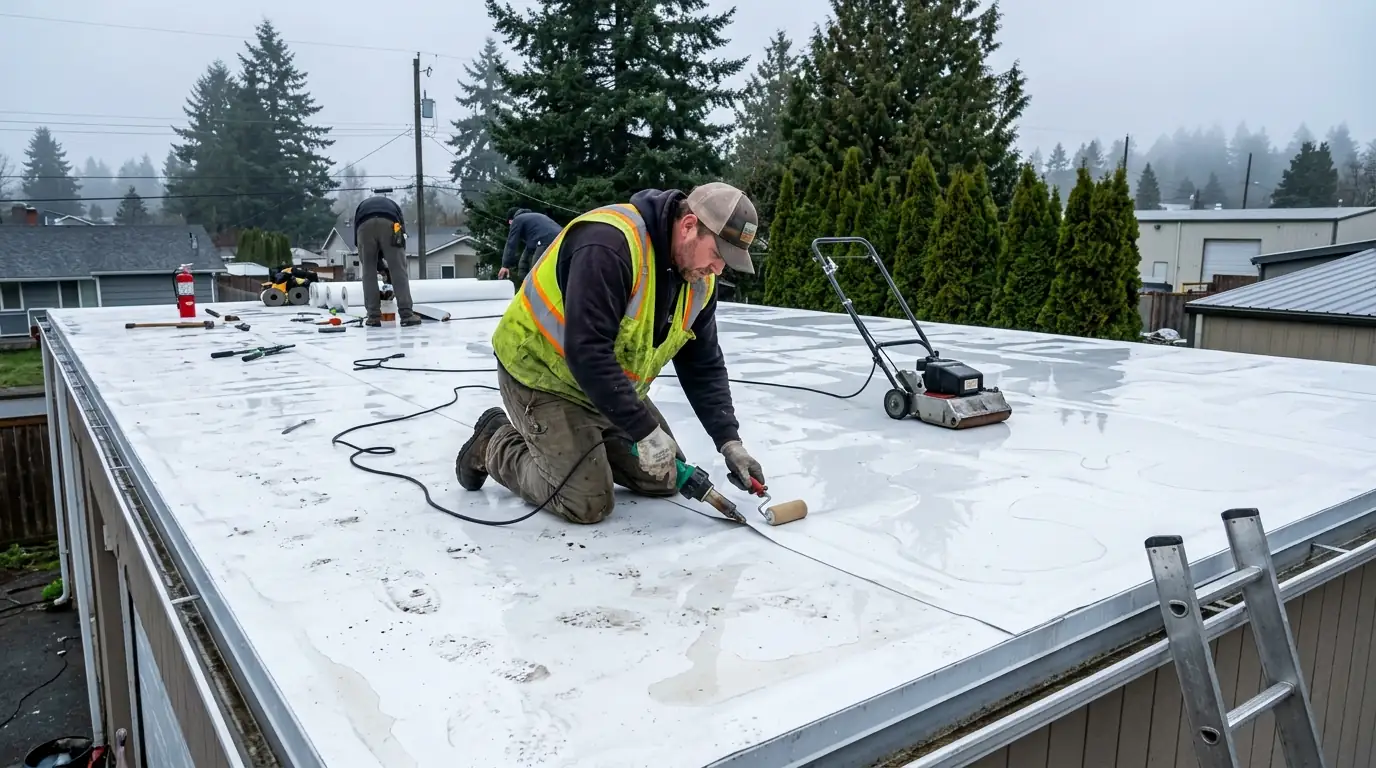
Many complexes pair pitched composition roofs with flat sections over breezeways, carports or mechanical rooms. We price both in one scope, using TPO on the low-slope pieces, so the board has a single roofing contract to manage.
What drives cost on a multifamily roof
Complexes are priced from a roof survey. No single published range fits, so here is what moves it.
Number of buildings
Setup repeats per building, so layout matters as much as area.
Phasing
Spreading work over years adds a remobilization each phase.
Decking allowance
Rot found at tear-off is priced per sheet in the scope.
Mixed roof types
Flat breezeways and carports need a second system.
Access and parking
Tight sites need smaller dumpsters and more hauling trips.
Phased replacement
Most associations fund roofs from reserves, so the work is split across seasons or budget years, worst buildings first. Each building is torn off and dried in before nightfall, and nobody sleeps under open decking. The catch with multi-year phasing is matching: shingle colors drift between production runs and products get discontinued. Ordering enough for later phases in one run solves it, if the board has somewhere dry to store the bundles. The alternative is accepting a slight shade shift from building to building.
Resident notices and access
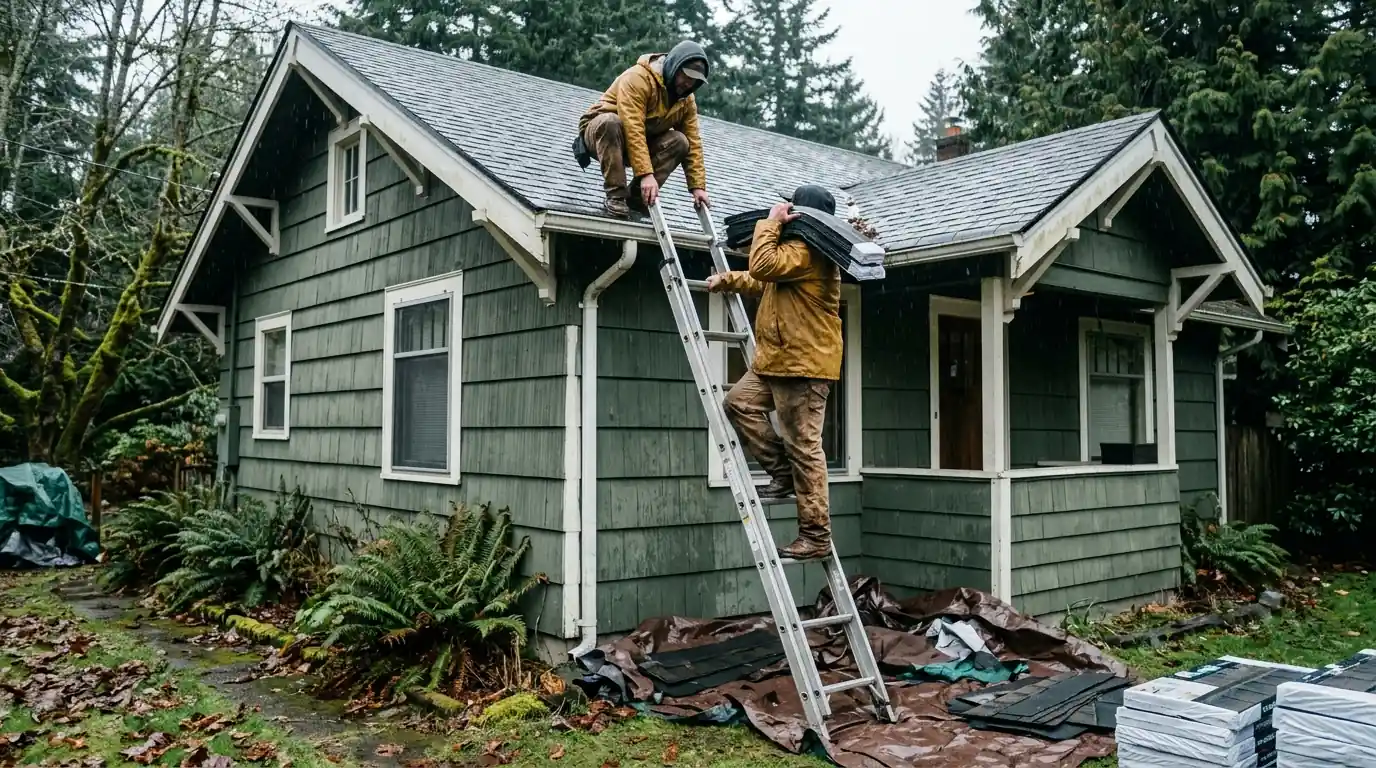
Residents need to know when work reaches their building, where to park, and what to move off patios and away from walls. We write notice text for the manager covering dates, noise hours, pets, vehicles parked under eaves and any units where we need attic or skylight access. Weather moves dates, so notices say so plainly and get updated rather than left stale. We also warn residents that tear-off can shake dust loose from ceiling fixtures. Clear notices cut complaints to the board, and they keep cars out from under the tear-off.
Board bids and scopes
Boards compare bids, and vague bids look cheaper until change orders arrive. Our scope lists tear-off layers, a per-sheet price for rotted decking, underlayment type, ventilation changes, flashing details, gutters and what is excluded. That level of detail can make a bid look higher at first glance. It also lets the board line ours up against anyone else's and see where a lower number simply leaves something out, which protects board members when owners ask questions later. We can also walk the board through the scope at a meeting.
Shared rooflines on townhomes
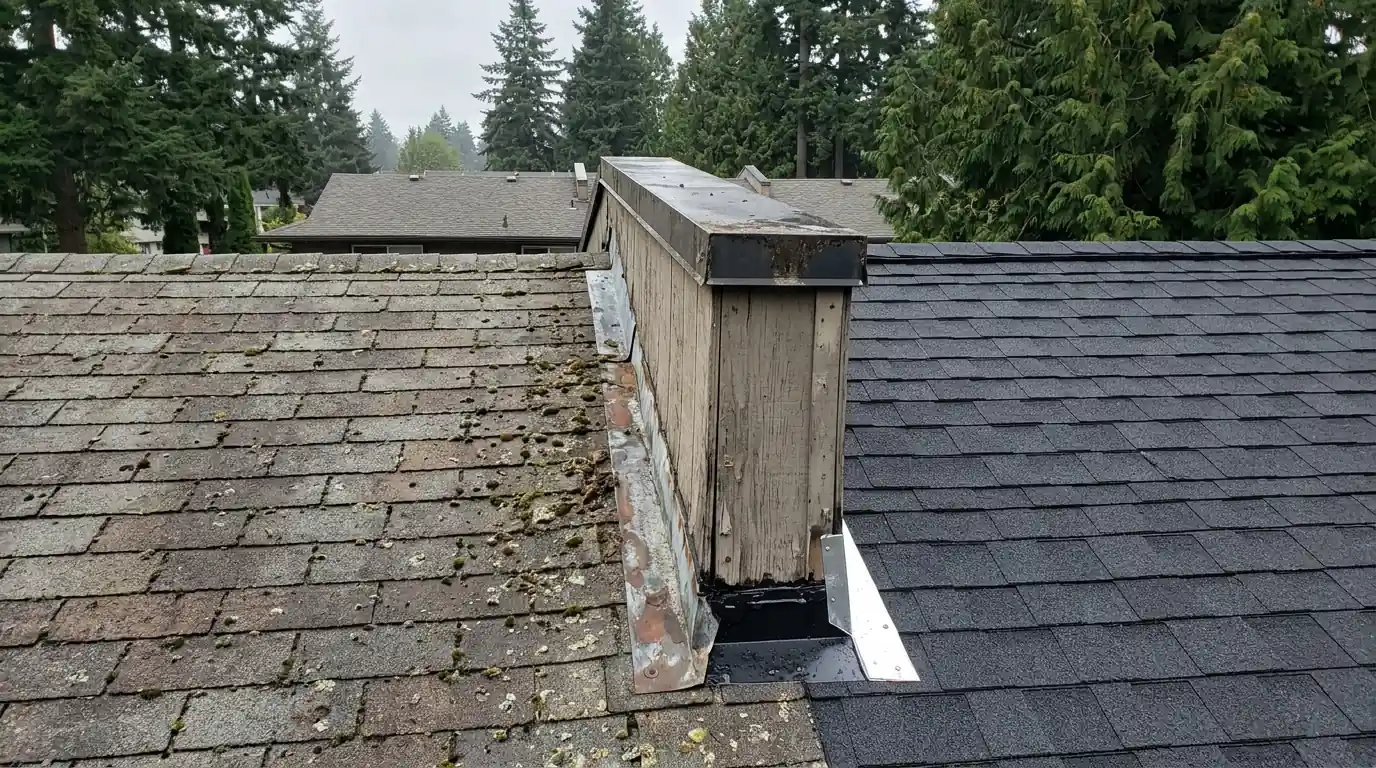
A row of townhomes often shares one continuous roof plane split by party walls. When owners reroof their own slice in different years, the joints between sections become leak lines, and colors never match. We treat the row as one roof wherever the association allows it. When only one owner is ready, we tie that section in at the party wall with a proper transition and flashing, so the neighbors' future reroof can lap into it cleanly. Doing the whole row costs more up front and avoids joints.
What our multifamily roof scope spells out
Bids for complexes differ most in what they leave out. Ours list these items.
- A building-by-building phase schedule
- Notice text for residents and the manager
- Tear-off layers and a disposal plan
- Per-sheet pricing for rotted decking
- Underlayment, ventilation and flashing details
- Flat sections over breezeways and carports
- Gutters, downspouts and daily cleanup
How a phased complex reroof runs
Property walk
Every roof, attic hatch and drainage path, with the manager.
Condition map
Buildings ranked by roof condition and leak history.
Scope for the board
Line items, unit prices, phases and exclusions.
Resident notices
Dates, parking and prep sent before each building starts.
One building at a time
Each roof is dried in nightly before we move on.
Daily cleanup
Magnets sweep walkways and parking for nails.
Phase closeout
Photos and notes for the board's records.
On the Eastside
Renters, boards and Salishan on the Eastside
Tacoma's owner-occupancy rate is 55.8%, so a large share of the city's homes are rented and a landlord, manager or board decides when the roof gets done. On the Eastside, Salishan began as a WWII housing project, and a 2001 HOPE VI grant funded demolition from 2002 and about 1,400 new homes. A community rebuilt on that scale over a few years tends to age as a group, which is exactly the situation phased replacement is meant for.
Board meeting coming up?
We can walk the property before the meeting and hand you a scope the board can read in one sitting. Calls are answered 24/7.
Call (253) 449-1922Apartment & HOA Roofing questions from Tacoma homeowners
Yes. We rank buildings by condition so the board can fund the worst first, and we flag which ones can safely wait another season.
Usually not. Some units need attic or skylight access and clear patios under the eaves. The notices list what each unit should do.
We tie that section in at the party wall with a proper transition so neighbors are not left with a leak line. The HOA's rules decide whether it is allowed.
Yes, and we will point out gaps such as a missing decking allowance or ventilation work, so the board compares like with like.
Yes. Retail, office and warehouse roofs with rooftop units are covered on our commercial roofing page.