Fascia and soffit repair in Tacoma for rotted eaves, blocked vents and critter holes
The eave is where gutters hang, the attic breathes and animals look for a way in. We repair the boards, reopen the vents and seal the gaps.
- Answering 24/7
- Puyallup office
- Tacoma and Pierce County
Short answer
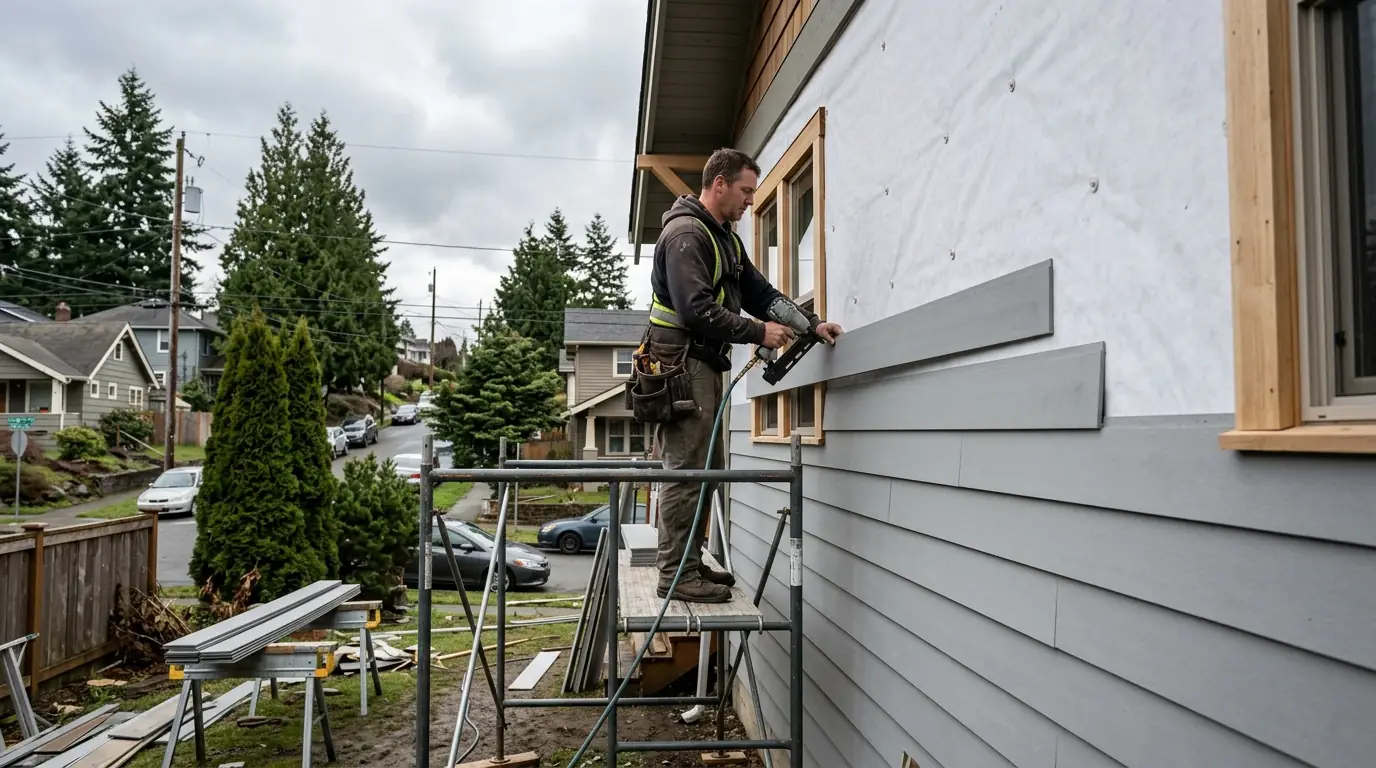
Fascia and soffit repair on a Tacoma house fixes the two boards that close off the eave. Fascia carries the gutter, and the soffit underneath holds the attic intake vents. We replace rotted fascia, rebuild sagging soffits, clear or add vents, seal animal entry holes, and can wrap new fascia in aluminum.
Why eaves fail first
Fascia takes water from the roof edge and the gutter on its face and carries the gutter's weight. When the drip edge is missing or the gutter overflows, the top edge of the board stays wet and rots. Soffits fail more slowly, usually from the same leak running back along the eave or from animals pushing their way in.
A repair here is never only cosmetic. Soft fascia cannot hold gutter hangers, and a blocked or broken soffit starves the attic of the intake air it needs. Where rot runs into the rafter ends, the job grows into dry rot repair.
What moves the cost of eave repair
The national range below covers typical fascia and soffit jobs. Where yours lands depends on these.
Published range, not a quote and not our price. Source: homeadvisor.com, 2026-06. Your number depends on the factors below and is set after we see the roof.
Linear feet of damage
A corner costs less than a full side of the house.
Gutter removal
Gutters come down and go back up over new fascia.
Rafter tail damage
Rot in the framing behind the fascia adds carpentry.
Venting upgrades
Adding continuous soffit vents and baffles adds scope.
Wrap or paint
Aluminum wraps cost more up front but skip repainting.
Fascia boards
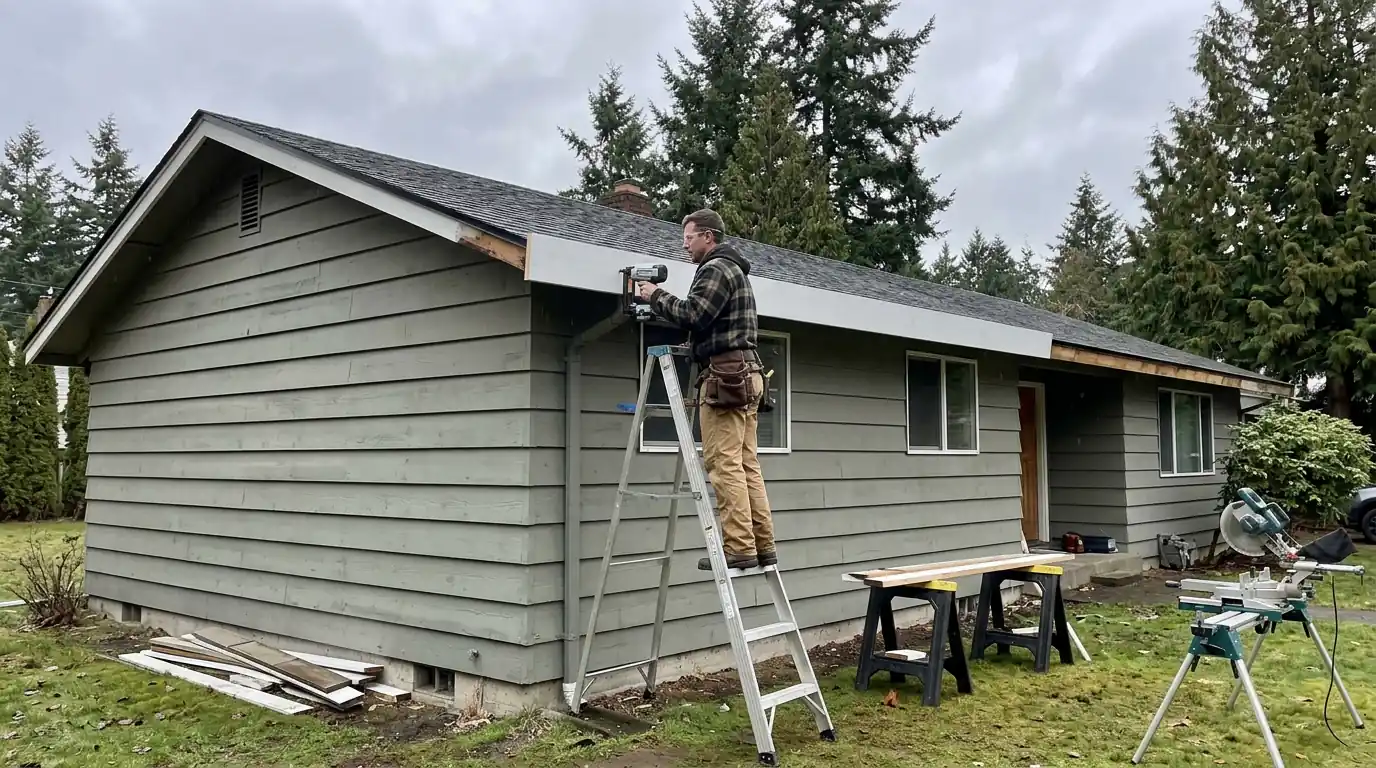
Rotted fascia shows as peeling paint along the top edge, a gutter pulling away, or wood that crumbles when a hanger screw goes in. We take down the gutter and cut the soft run back to sound wood at a rafter. Primed lumber or fiber cement fascia, sized to match, goes in its place. A drip edge goes in above so water clears the new board, and the gutter goes back up on fresh hangers. Every cut end is primed before installation so it does not wick water.
Soffit vents
Soffit vents are the intake half of attic ventilation: air comes in low at the eaves and leaves high at the ridge. Many older soffits have too few vents, vents painted shut, or insulation packed against them from inside. A starved attic runs damp in winter and grows frost on the nails. We clear blocked vents, add continuous or strip vents to solid soffits, and install baffles from the attic side so insulation cannot slump back over them. See attic ventilation for the full picture.
Animal entry points
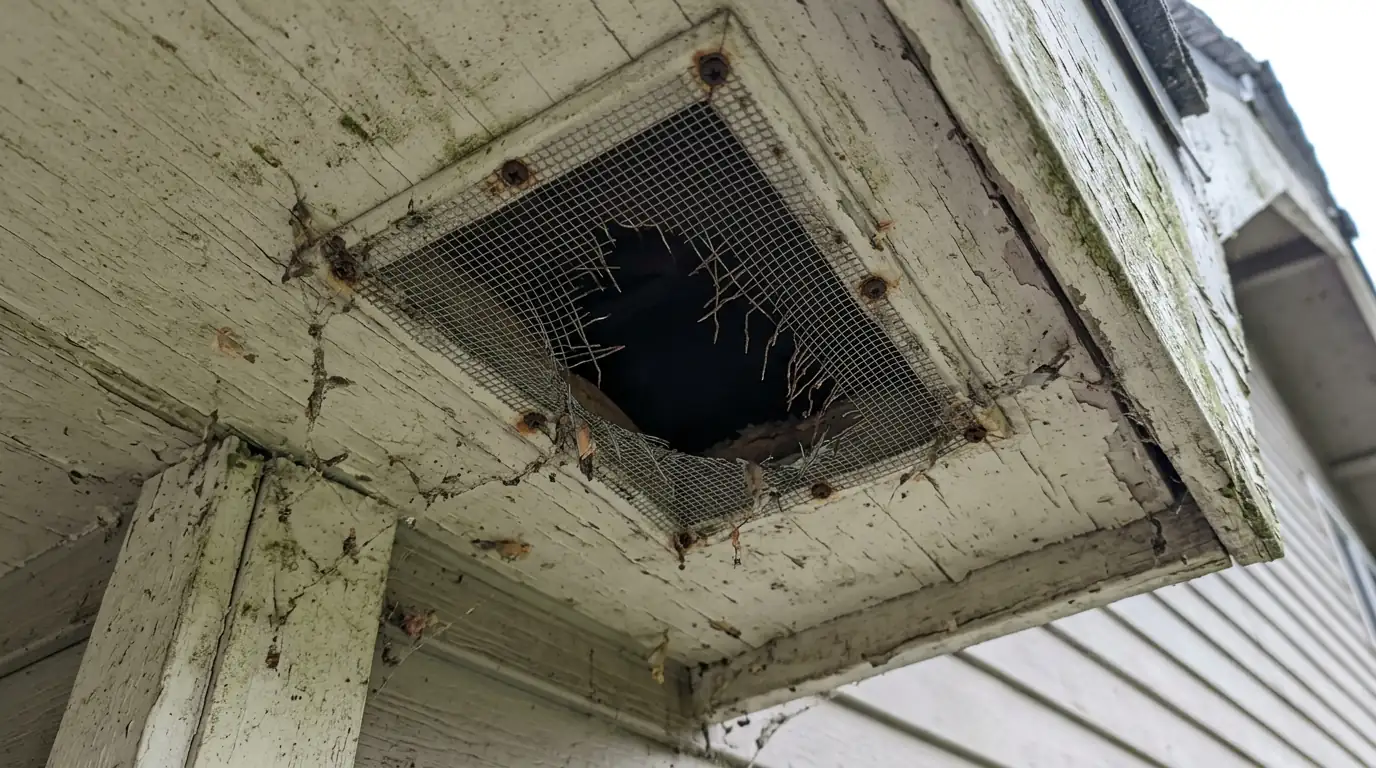
Squirrels, rats, birds and raccoons all use the eave as a door. They find a soft corner, a gap where soffit meets fascia, or a torn vent screen, and chew or push their way into the attic. We confirm the animals are out before sealing anything. Then chewed sections get replaced, gaps get solid wood or metal flashing, and flimsy vent screens give way to heavy-gauge metal. If animals are still active inside, a trapper should finish before we close up the eave.
Aluminum fascia wraps
An aluminum wrap is prepainted coil stock bent on a brake to cover the fascia, so the board never needs paint again. It works well over sound wood and looks crisp. It can also hide rot that keeps spreading underneath, so we wrap fascia only after every soft section is replaced. We leave the bottom edge open slightly so moisture can escape rather than sit against the wood. A wrapped fascia pairs naturally with new aluminum gutters in a matching color.
How we rebuild an eave
You call about the eave
Peeling paint, a sagging soffit or noises in the attic.
We inspect from the ladder
Probing the fascia and checking vents and gaps.
We check the attic side
Insulation at the vents and signs of animals.
You approve the plan
Boards to replace, vents to add, finish to apply.
We remove the gutter
Then cut out every soft board back to sound wood.
We rebuild and vent
New fascia, soffit and vents, with drip edge above.
We rehang and seal
Gutter back on fresh hangers, gaps closed.
Around Tacoma
Eaves on 1970s through 1990s houses
Eave calls come from all over the Tacoma area, and the age of the house shapes what we find. The 1970s were University Place's biggest building decade, covering 22.1% of its homes, while Puyallup's peaks came in the 1990s and 1980s at 17.2% and 16.4%. Eaves from that era tend to have painted fascia with no drip edge behind the gutter and plywood soffits with only a few small vents. Animals have often worked the screens loose already.
Something living in the eaves?
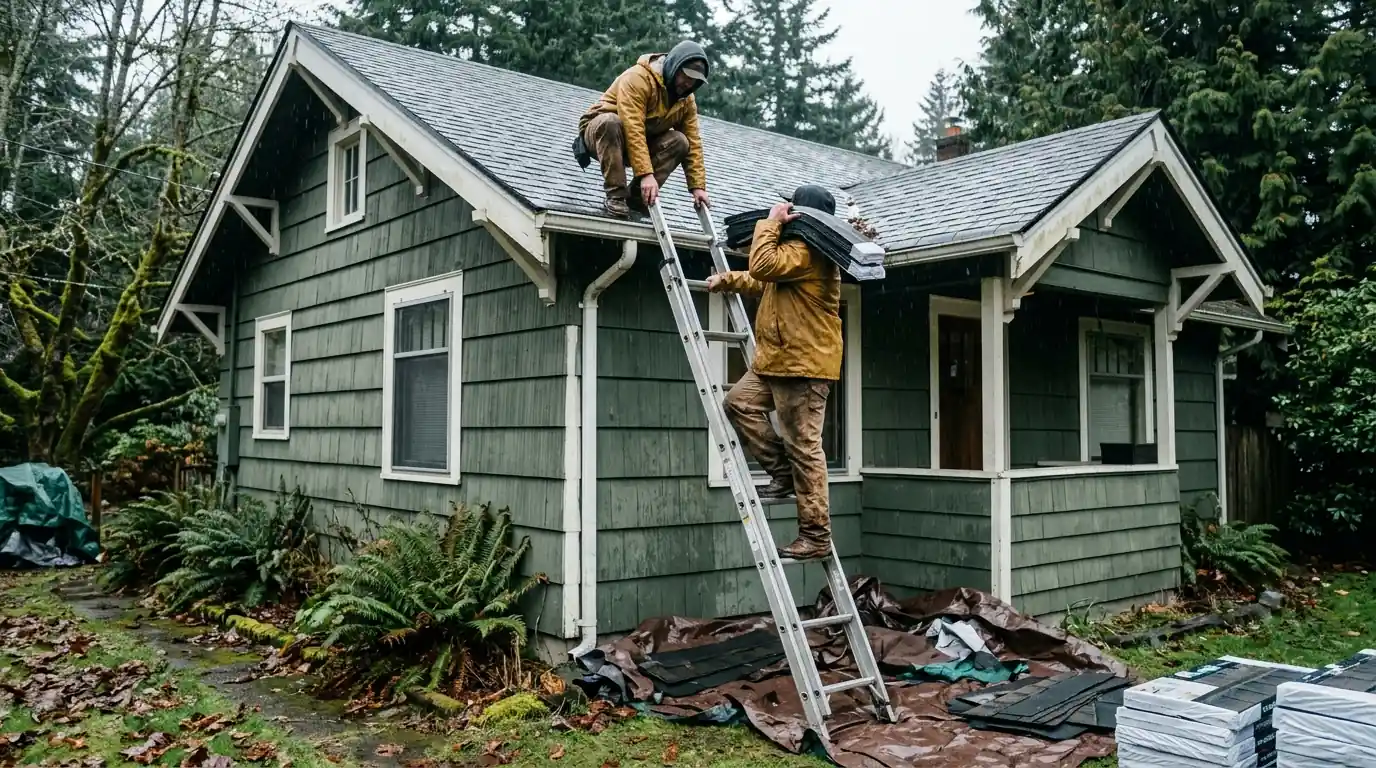
Call any hour. Entry points get found and closed once the animals are out.
Call (253) 449-1922Warning signs at the eaves
Stand back from the house and look along the roof edge and under the overhang.
Peeling paint on the fascia
Bare, flaking wood at the top edge is soaking up water.
A wavy roof edge
Sagging fascia shows as a dip in the gutter line.
Stains on the soffit
Dark marks under the overhang trace a leak above.
Chewed or torn vent screens
Animals have found, or made, a way in.
Noises in the attic
Scratching near the eaves means something got inside.
Fascia & Soffit Repair questions from Tacoma homeowners
Fascia is the vertical board along the roof edge that carries the gutter. Soffit is the underside of the overhang, where the attic intake vents sit.
Rarely. The gutter hangs on the fascia, so it comes off for the repair and goes back up on new hangers.
Over sound wood, a wrap ends painting at the eave. Over rotted wood it hides a problem, so we replace soft boards first.
Scratching at dawn or dusk, droppings near the eave, or chewed and torn vent screens are the usual clues.
Yes. Without intake air, attics stay damp in winter and shingles age faster. Clear vents and baffles keep air moving to the ridge.