Roof moss removal in Tacoma by hand, never with a pressure washer
Moss holds water against shingles and lifts their edges. We scrape it off by hand and treat the roots, without forcing water under the courses.
- Answering 24/7
- Puyallup office
- Tacoma and Pierce County
Short answer
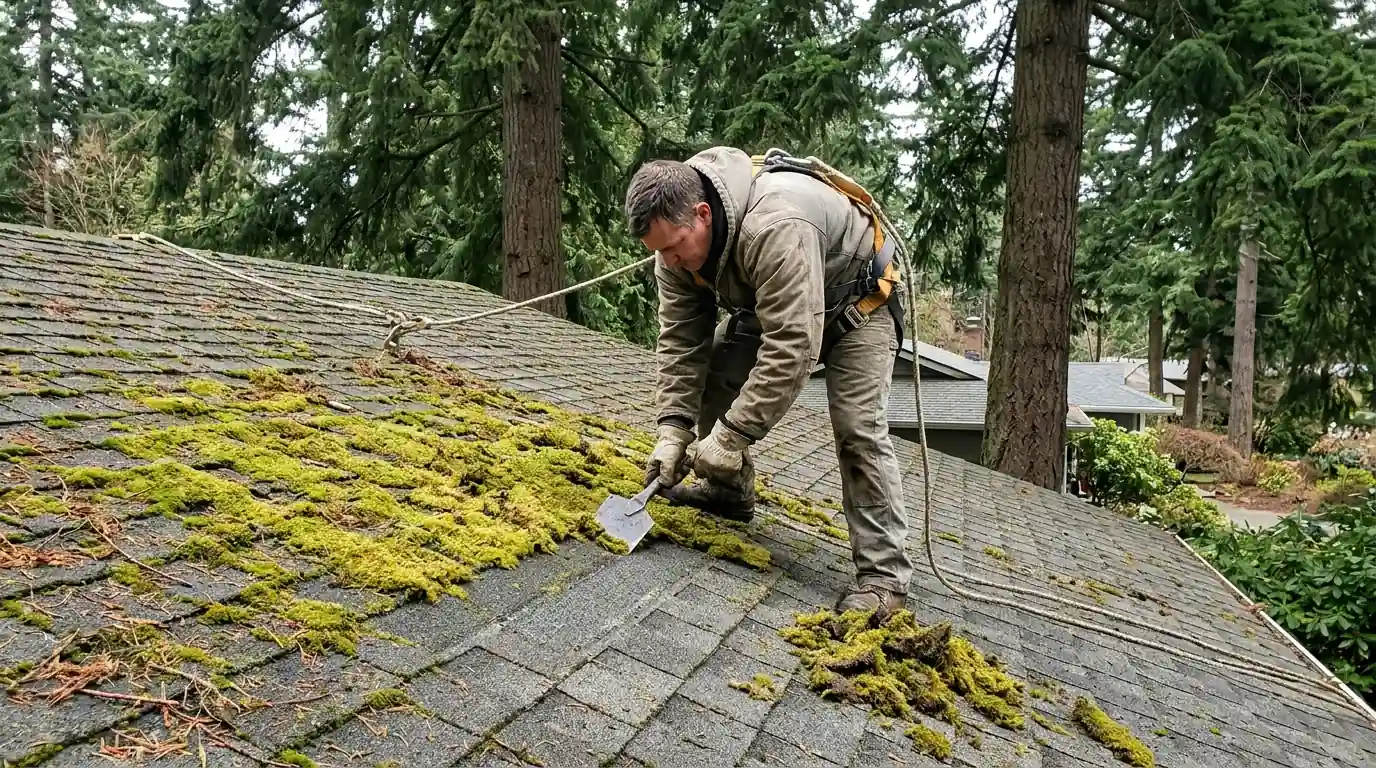
Roof moss removal in Tacoma means brushing and scraping moss off by hand, working from the ridge down, then treating the roof so the roots die back. We never pressure wash shingles, because the spray drives water under the courses and strips granules. Shaded roofs will regrow moss eventually unless the trees overhead are thinned.
Why moss is a roof problem, not just a look
Moss roots into the gaps between shingles and soaks up water like a sponge. As clumps thicken they lift shingle edges, hold rain against the mat and push water sideways under the course above. Granules under the moss also wear away faster than on the rest of the roof.
Removal is half the job. The other half is slowing the return: treatment after cleaning, zinc where it suits the roof and gutters, and trimming the trees that shade the roof. If the moss has already rotted the shingles underneath, our moss guide covers when replacement is the better spend.
Hand removal
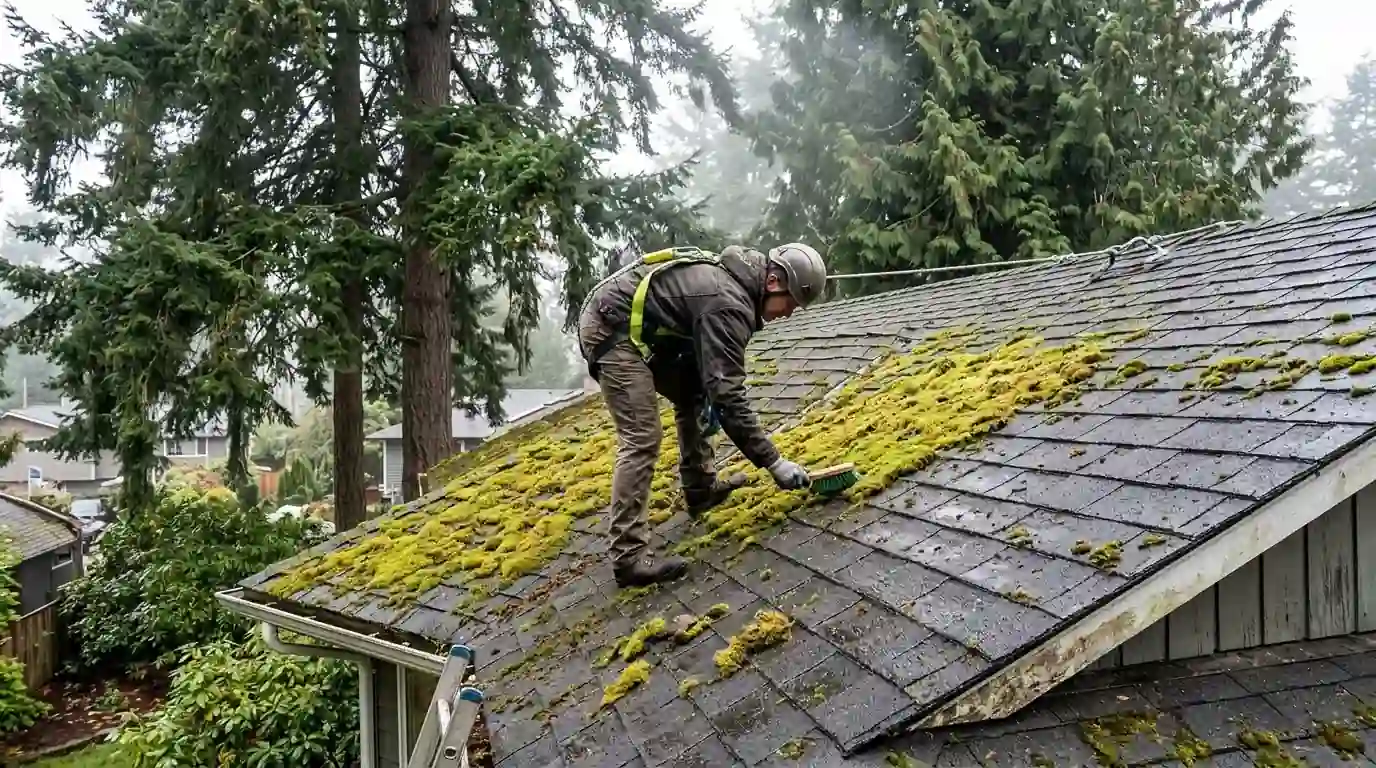
We tie off to an anchor, then work down the slope with stiff brushes and plastic scrapers, moving with the shingle laps and never against them so the tabs are not pried up. Clumps get bagged rather than swept into the gutters, and gutters and downspouts are cleared at the end. Hand work is slower than spraying something off, and it leaves roots in the gaps that only treatment will kill. Expect some green or gray staining until a few rains carry it away.
Zinc strips
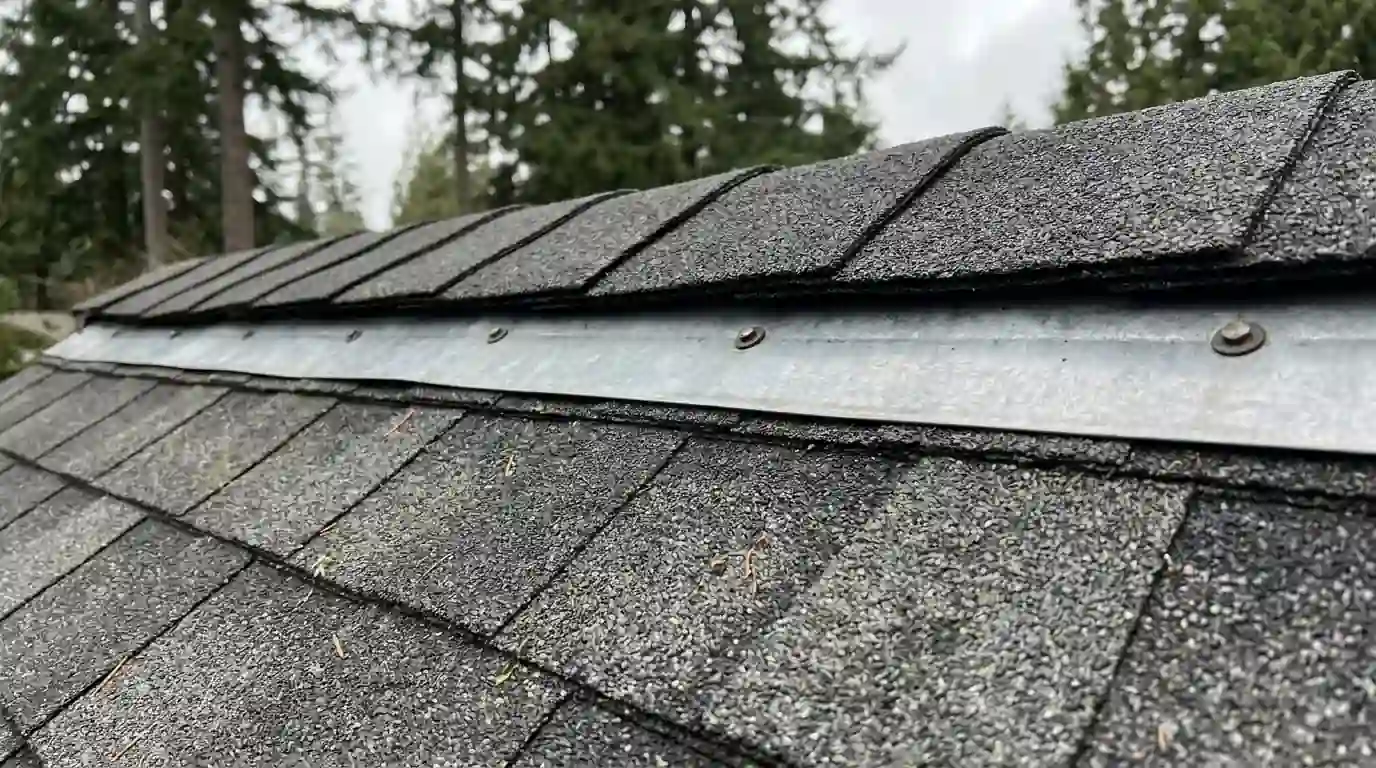
A zinc strip fastened just below the ridge releases small amounts of zinc every time it rains, and that runoff slows moss on the slope beneath it. It works strongest on the first several feet below the strip and fades further down, so long slopes may need a second row. The catch is your gutters. Zinc corrodes copper, so on a house with copper gutters or downspouts we use a different treatment and leave the zinc off. Strips also show from the street as a bright line near the peak, which some owners dislike.
Soft wash for algae streaks
The black streaks running down many north-facing roofs are algae, not moss, and scrubbing will not lift them. A soft wash applies a cleaning solution at garden-hose pressure, lets it work and rinses lightly. We wet or cover plants below first, since runoff can scorch foliage. The streaks fade over days or weeks rather than vanishing on the spot. Higher pressure would lift the stains faster and the granules with them, so we never use it. The long-term answer is algae-resistant shingles at your next reroof, which carry copper-coated granules for exactly this.
Moss on cedar versus composition
On cedar, moss keeps the wood wet and speeds rot, and weathered shakes split easily under a scraper, so removal is slower and gentler, often just brushing and treatment. On composition shingles, moss mainly lifts tabs and strips granules, and the shingles tolerate firmer scraping. Cleaning sometimes reveals that old shakes are thinner and more split than they looked under the moss. When that happens we tell you before treating, because money spent preserving a roof near its end is better put toward the next one.
In Tacoma
Shade, rain and moss on Tacoma roofs
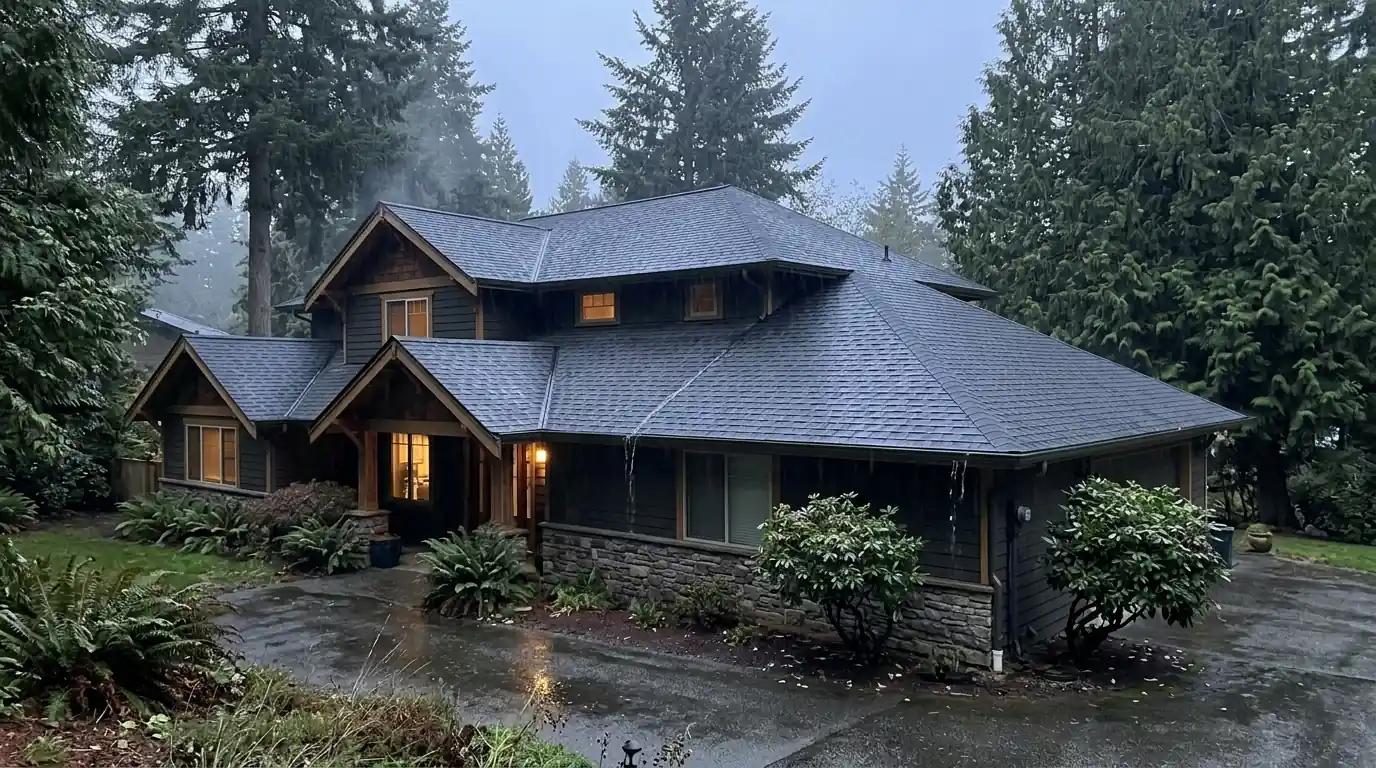
Tree canopy covers about 20% of Tacoma, but some census blocks reach 64%, and OSU Extension notes that roof moss follows shade, holds moisture and can lift shingles. A Western Washington utility's moss fact sheet warns that pressure washing can force water under shingles or damage them, and that moss revives with the rains and shows most from early winter to late spring. We plan removal for drier spells and treat afterward instead of blasting it off.
How we clear a mossy roof
Read the shade
We note which trees feed the moss and what trimming would help.
Protect the beds
Plants and paths below are covered or wetted down.
Tie off
Fall protection goes on before anyone steps onto wet growth.
Brush downhill
Moss comes off with the shingle laps, never against them.
Treat the roots
A roof-labeled treatment goes onto the cleaned surface.
Empty the gutters
Moss chunks come out so the next rain drains freely.
Add zinc if it fits
Strips go near the ridge on roofs without copper gutters.
Green roof and gutters full of moss?
We answer 24/7, and we look at the shade and gutters before choosing a treatment.
Call (253) 449-1922What changes the price of moss removal
Moss work is priced by roof area and how much is growing on it. The published range below covers cleaning and a prevention treatment.
Published range, not a quote and not our price. Source: thisoldhouse.com, 2026-03. Your number depends on the factors below and is set after we see the roof.
Roof size and pitch
Steep roofs need harnesses and slow the work.
Moss thickness
Thin film brushes off fast, while deep mats need scraping.
Roof material
Old cedar shakes take gentler, slower cleaning.
Zinc or treatment
Strips and follow-up treatment add material.
Gutter cleanout
Moss chunks in gutters and downspouts get cleared too.
Moss you can handle, and when to stop
Plenty of homeowners clear moss safely from a ladder. Trouble starts with pressure washers and wet roofs.
| Item | Doing it yourself | When to call a roofer |
|---|---|---|
| Moss on a low eave | Brush it off from a ladder with a soft brush, working downhill. | If you would have to stand on the roof, especially when wet. |
| Thick mats across the roof | Apply a roof-labeled treatment and let rain work it in. | When mats are lifting shingles or granules fill the gutters. |
| Tempted by a pressure washer | Don't. It drives water under shingles and strips granules. | Any time the roof needs more than a light brushing. |
Roof Moss Removal & Treatment questions from Tacoma homeowners
On a shaded roof, eventually yes. Treatment and zinc slow it down, but trimming the trees that shade the roof is the fix that lasts.
Some products harm plants and metals. We use a roof-labeled product, wet or cover the beds below, and keep runoff away from ponds.
Moss shows most from early winter to late spring, but we prefer a dry spell, so the roof is safer to walk and treatment stays put.
Yes, and faster than on shingles, because it keeps the wood wet and speeds rot. See cedar shake roofing for when shakes are past saving.
Zinc runoff can leave faint light streaks below the strips on dark shingles. That is mild next to moss, but it corrodes copper gutters, so we skip zinc there.