Tacoma roof maintenance: the upkeep that keeps a roof dry through winter
Maintenance is work done on the roof, not just a look at it. We clear, reseal and fasten the small things that turn into winter leaks.
- Answering 24/7
- Puyallup office
- Tacoma and Pierce County
Short answer
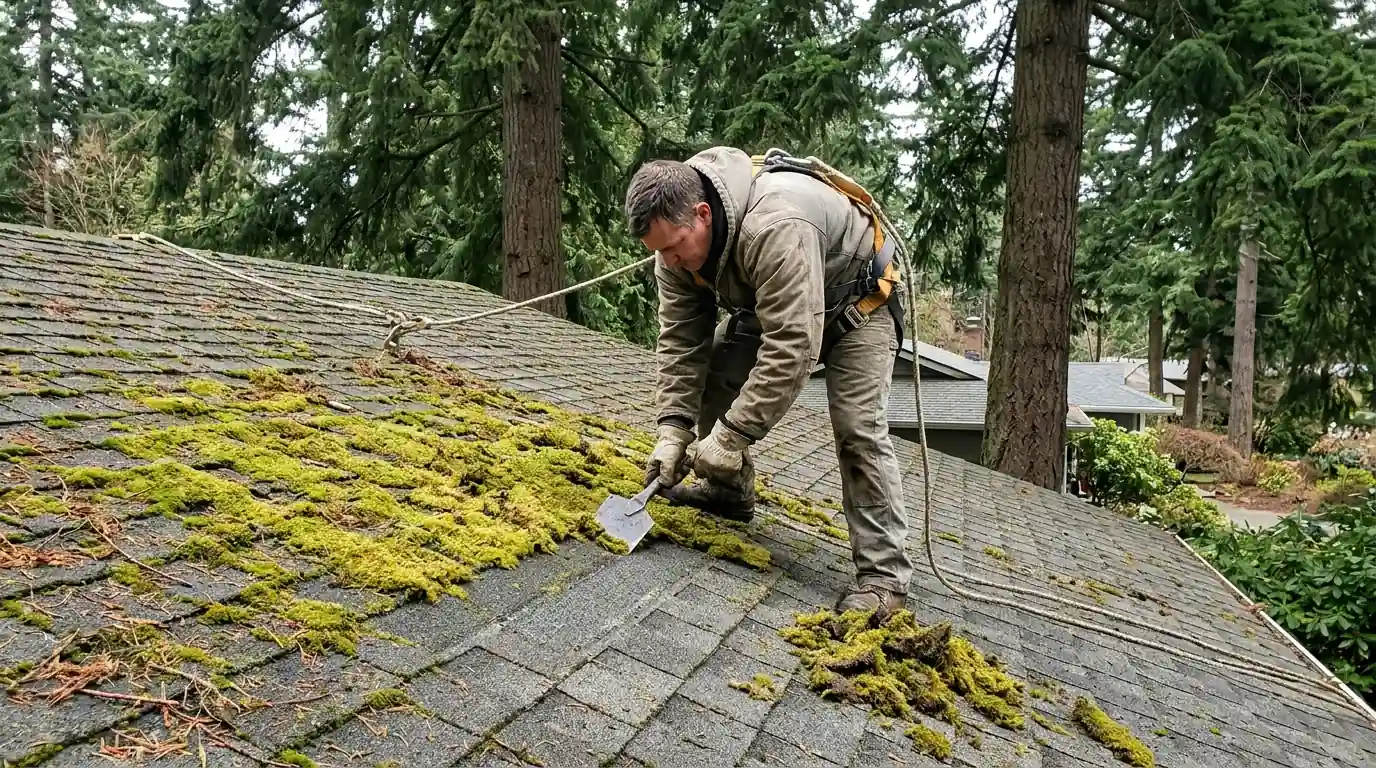
Roof maintenance in Tacoma is a set of hands-on tasks done once a year, ideally in early fall: clearing valleys and gutters, resealing exposed fasteners, checking pipe boots, and resetting loose shingles and ridge caps. It costs far less than chasing leaks in December, and it keeps small wear from turning into water damage.
Upkeep tasks, done on the roof, before the rain sets in
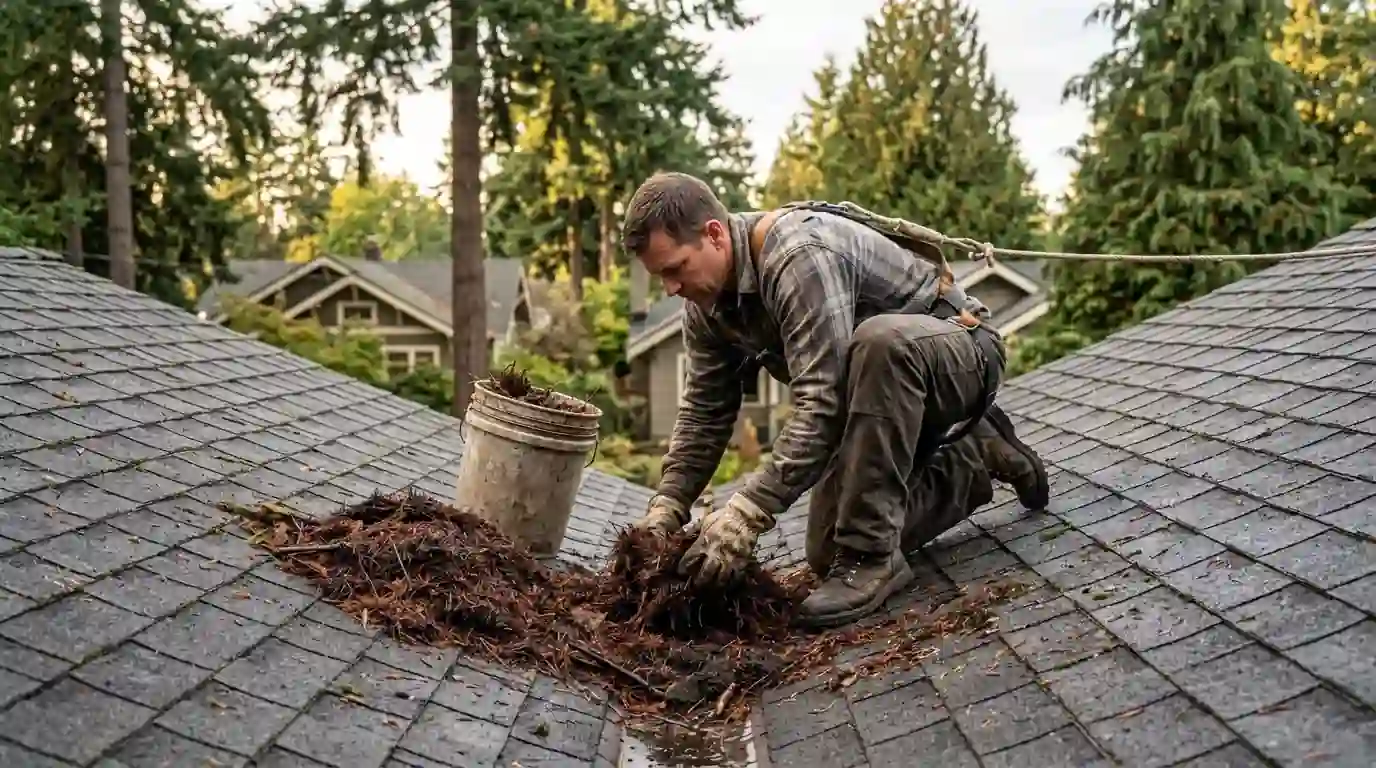
An inspection reports what it finds. Maintenance fixes the small stuff while we are up there: needles packed into a valley, dried caulk on a vent flange, a boot starting to crack, a ridge cap with a nail backing out. Each is a few minutes of work in September and a ceiling stain in January if it waits.
We keep notes from each visit, so next year's tune-up starts where this one ended. If you need a full findings report for a sale or a claim, book a roof inspection instead.
What a tune-up visit includes
Maintenance can mean anything from a gutter scoop to a full reseal. Ours covers these every time.
- Clearing valleys, crickets and roof debris
- Flushing gutters and testing downspouts
- Resealing exposed fasteners and flanges
- Replacing cracked pipe boots
- Resetting loose shingles and ridge caps
- Checking flashing at chimneys, walls and skylights
- Photo notes kept for next year
Fall prep before November
The goal is a roof that drains cleanly before the wettest months arrive. We clear debris from valleys, crickets and the high side of chimneys, flush gutters and run water down each downspout, secure loose tabs and check that flashing at walls and chimneys is still tight. On lots with heavy tree cover, needles keep falling after the visit, so some roofs need a second clearing in midwinter. That is worth knowing before you set a budget. A September or October visit also leaves time to fix anything we find before the storms.
Sealant and boot checks
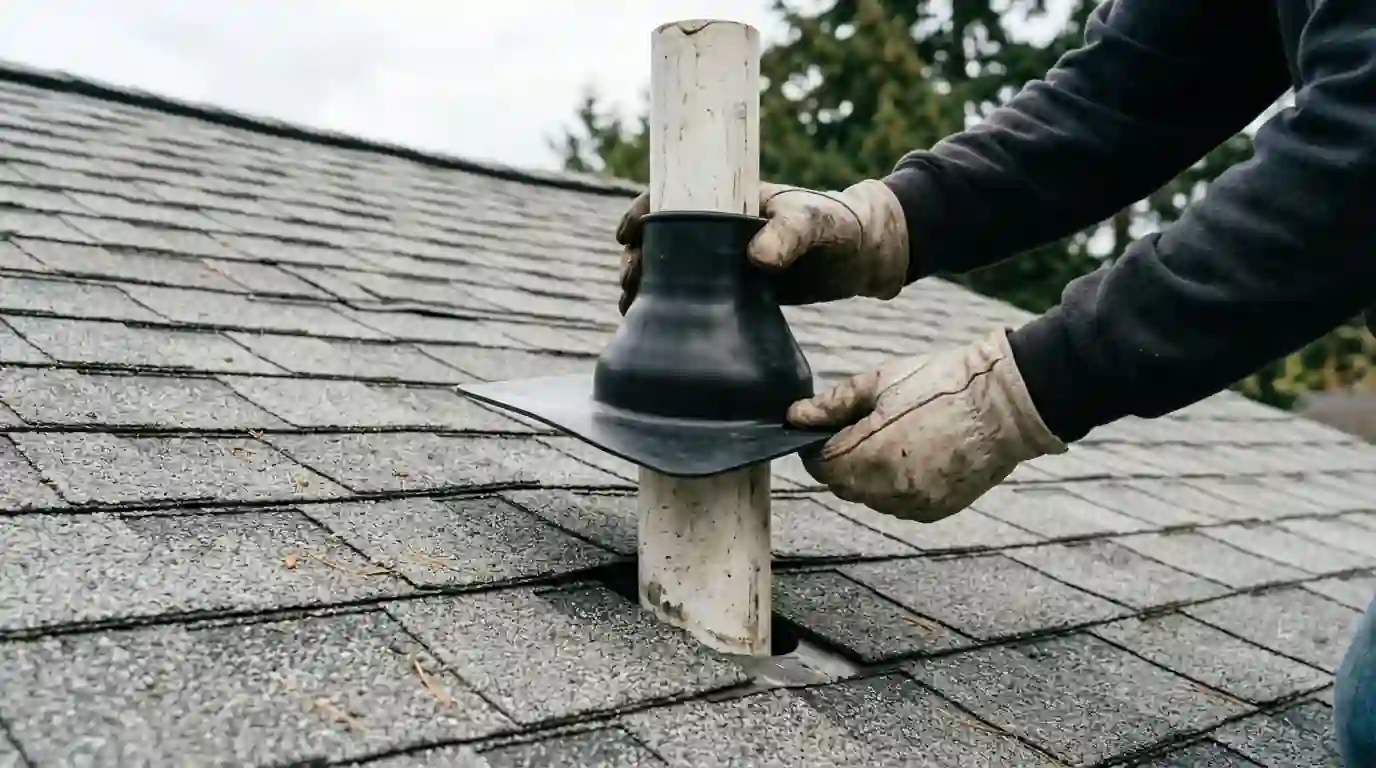
Sealant around storm collars, flange edges and exposed nail heads dries and cracks after a few summers, and rubber pipe boots split where the sun hits them hardest. We cut out failed sealant and reapply a compatible product, and we replace boots that show cracks rather than caulking over them. Lead boots chewed by squirrels and plastic vent caps cracked by sun get swapped on the same visit. Sealant is upkeep, not a permanent fix. Where a flashing depends on sealant alone to stay dry, we note it for a proper repair.
Valley and debris clearing
Valleys carry water from two roof planes, and they collect needles, cones and leaves faster than anywhere else. Once debris dams a valley, water spreads sideways under the shingles at the edges. We clear valleys by hand and with low-pressure air, then look at the valley itself: metal for rust or splits, woven or cut shingles for granule loss. Needles left in a valley also feed moss, so clearing slows that as well. Clearing will not save a worn valley, though. If the shingles there are bald, the valley needs repair.
Maintenance for rentals
Tenants rarely look at a roof, and by the time they report a stain the damage is done. For landlords and property managers we set a yearly visit per address, coordinate access with tenants and send a photo report you can file with the property records. Tenants get a heads-up before anyone climbs a ladder outside their windows. The tradeoff is paying for visits on roofs that turn out fine. In exchange you get fewer surprise calls from tenants and a written history that helps when you sell or refinance.
In the West End
Needles, owners and renters in the West End
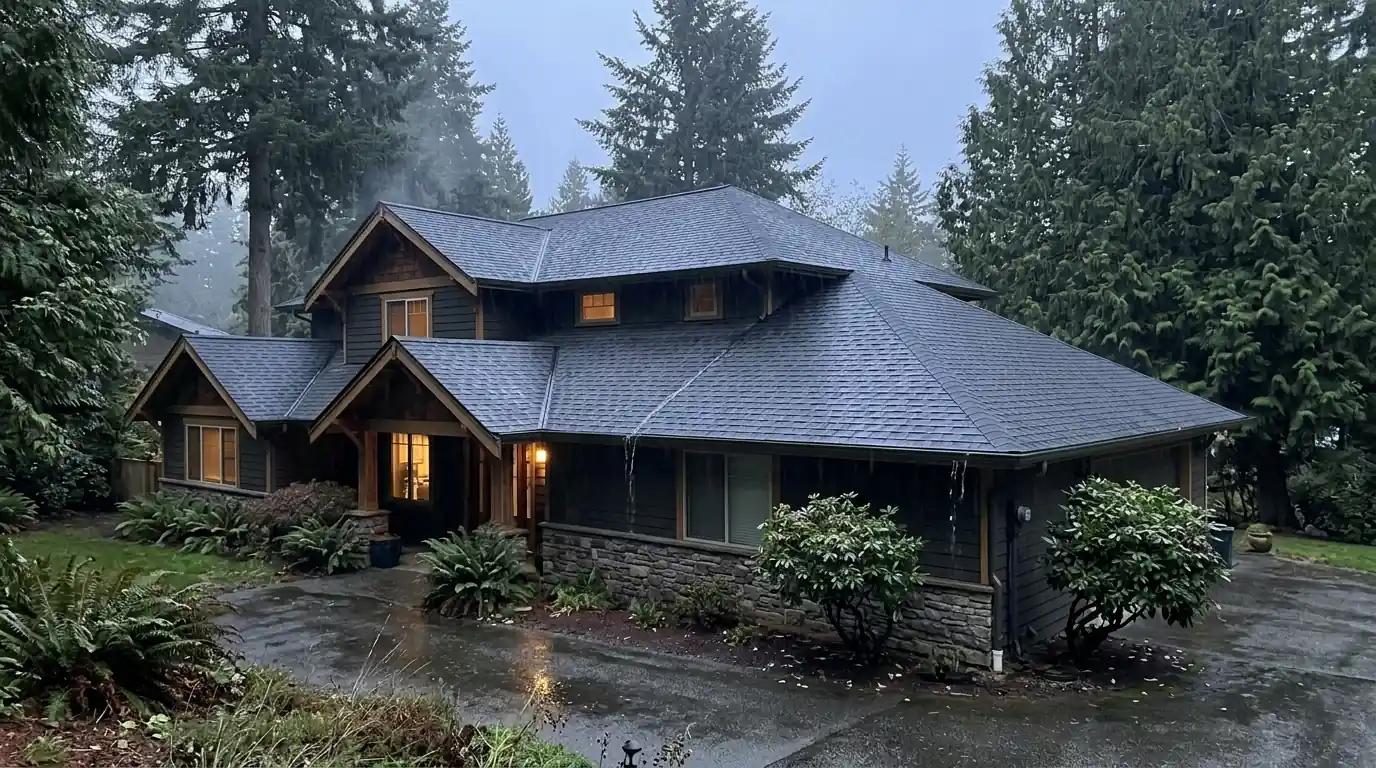
Residential property holds 44% of Tacoma's tree canopy, and the city's urban forest plan aims for 30% canopy by 2030, so more needles and leaves are headed for home roofs, not fewer. In the West End, where most houses were built between 1970 and 1999 and owners live alongside renters, maintenance looks different from house to house. Owners usually want a fall visit; landlords want a photo report they can file. We do both, and we flag branches overhanging the roof every time.
How a tune-up visit runs
Book before the wet months
Early fall visits suit most roofs.
Review last year's notes
We start with anything flagged on the previous visit.
Clear the roof
Valleys, crickets and the uphill side of chimneys first.
Reseal and fasten
Exposed nails, flanges and lifted tabs get attention.
Check boots and flashing
Cracked boots are replaced and loose flashing secured.
Flush the gutters
Downspouts are tested with water so we see them drain.
Send the notes
Photos and anything to plan for, kept for next year.
Last winter's leak started in a valley?
Book a fall tune-up by phone, any hour. Clearing a valley in September beats drying a ceiling in January.
Call (253) 449-1922What sets the price of a maintenance visit
Maintenance is priced per visit once we know the roof. These are the factors.
Roof size and pitch
Bigger, steeper roofs take longer to clear safely.
Tree cover
Heavy needle drop means more clearing and gutter work.
Penetrations
More vents, boots and skylights mean more to check.
Parts used
Replacement boots and fasteners are added when needed.
Visit frequency
Some lots need a midwinter clearing on top of the fall visit.
Roof Maintenance & Tune-Ups questions from Tacoma homeowners
Once a year for most roofs here, in early fall. Roofs under heavy trees may also need a midwinter clearing.
Yes, lightly. A new roof still collects needles in valleys and gutters. Early visits are short and keep it in the condition it was installed.
Yes, gutters and downspouts are part of every visit. For gutter-only service between visits, see gutter cleaning.
Yes. We set a schedule across the properties and send photo notes for each address, so you see every roof without climbing one.
Light moss near valleys gets brushed off during a tune-up. Heavy growth is its own job; see roof moss removal.