Siding repair in Tacoma that matches the boards you already have
Most siding problems are a few bad boards, not a whole wall. We replace what failed, find why it failed, and match the profile and paint as closely as the house allows.
- Answering 24/7
- Puyallup office
- Tacoma and Pierce County
Short answer
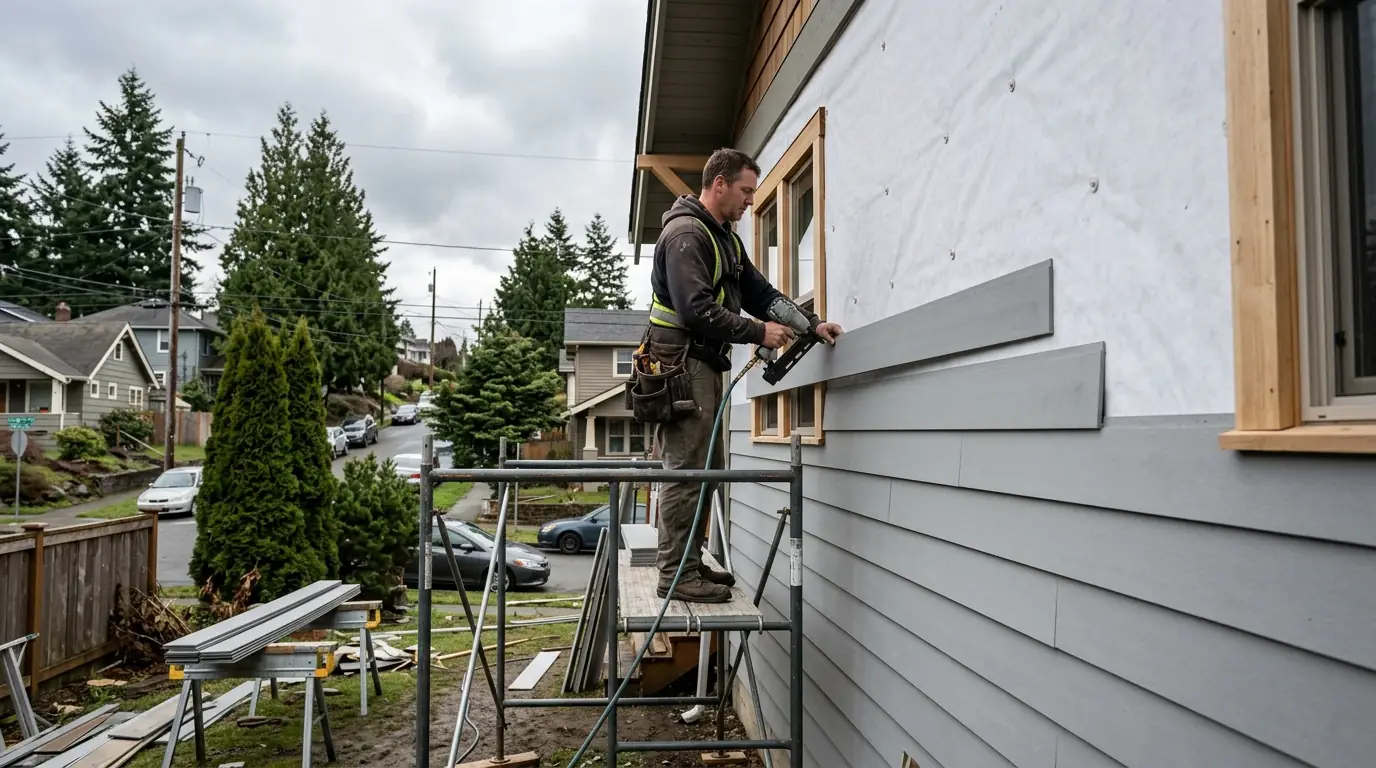
Siding repair on a Tacoma house usually means cutting out a few rotted, cracked or storm-damaged boards and weaving in new ones that match the profile. We check the wrap and sheathing behind each opening, fix the water source that caused the rot, and prime and paint the new boards. Repair beats re-siding when damage stays within one or two walls.
Fixing the damage and the reason for it
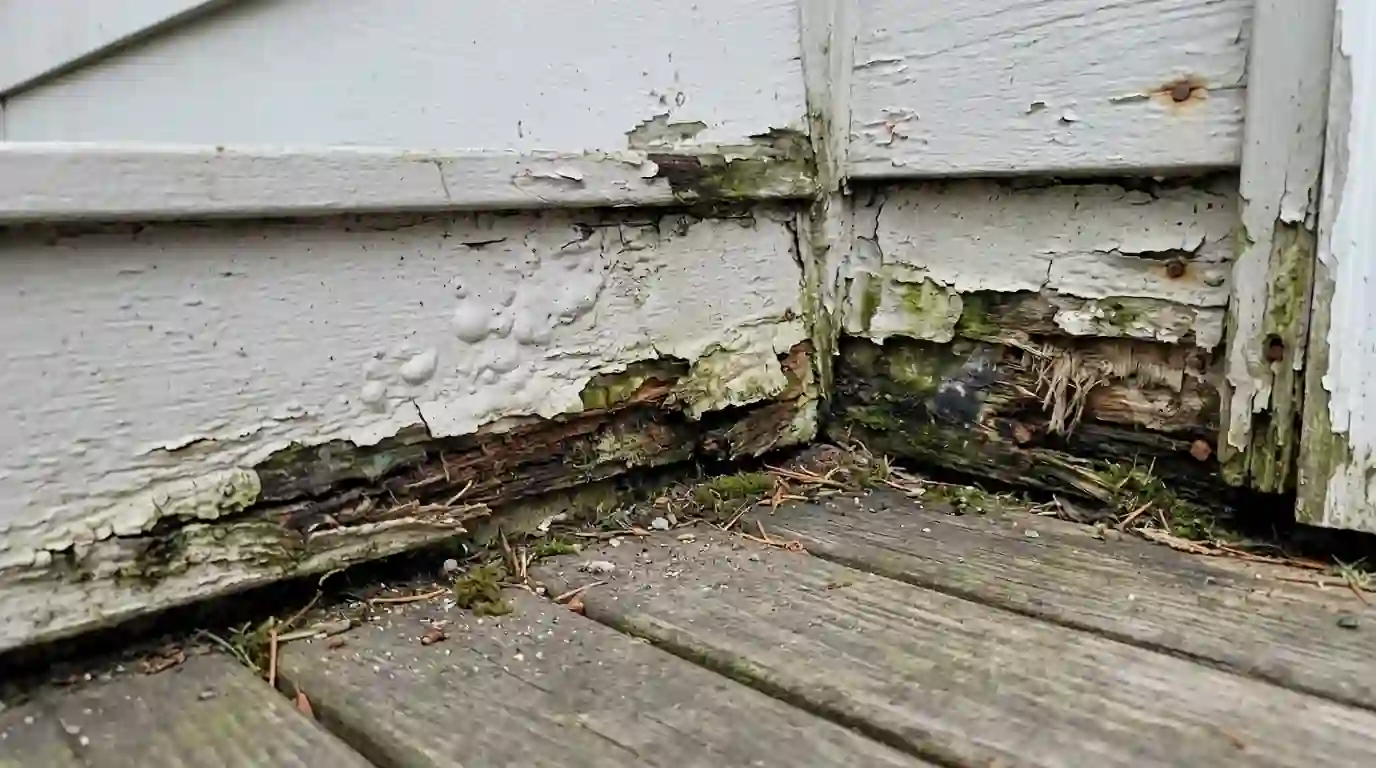
Siding rarely rots at random. Boards fail where water is fed to them: below a missing kick-out flashing, along the bottom course near a deck or roof, under a leaking window, or behind a sprinkler head. Swap only the board, and the new one fails in the same spot.
So each repair starts by finding the water source and ends with the board woven into its neighbors, joints offset and nailed into solid framing. When damage keeps turning up wall after wall, we will say so and price new siding as the alternative.
What sets the cost of a siding repair
Repairs are priced after we open up the damaged area. These factors move the price most.
Number of boards
A handful is quick; a full wall section takes longer.
Profile and material
Discontinued or custom profiles may need milling.
Damage behind it
Wet sheathing or framing adds to the scope.
Paint matching
Repainting a whole wall section costs more than spot paint.
Height and access
Upper walls need ladders or staging.
Repair a section or re-side the house?
Where the damage stops decides the right scope.
| Item | Board repair | Full wall | Whole house |
|---|---|---|---|
| Fits when | A few boards failed | One wall takes the weather | Damage on most walls |
| Matching | Hardest, the patch must blend | Easier, corner to corner | Not an issue |
| House wrap | Patched behind each board | Renewed on that wall | Renewed everywhere |
| Historic homes | Usually preferred | Case by case | Often discouraged |
Rotted boards
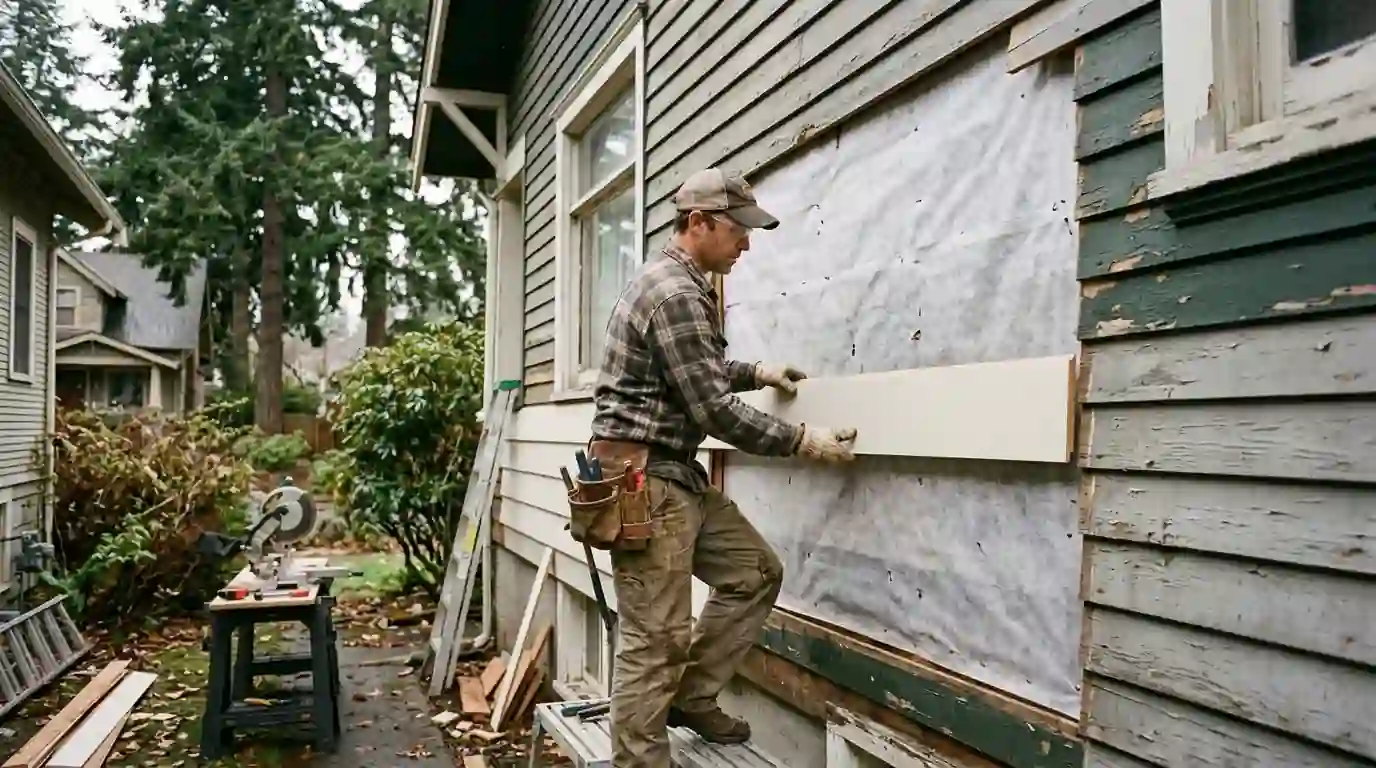
A rotted board feels soft under a thumb, sheds paint in sheets, or crumbles along its bottom edge. We cut it out back to sound wood, check the house wrap and sheathing behind it, and replace any wet sheathing before the new board goes on. Replacement boards are primed on all six sides, cut ends included, so they do not wick water. If rot has reached the framing, the job becomes dry rot repair, and we show you before going further.
Storm-damaged panels
Wind pries vinyl panels loose and throws branches at lap siding. A falling limb can crack fiber cement or punch a hole straight through vinyl. Loose vinyl usually pops free of the panel below and can be snapped back with a siding zip tool if the locking edge is intact. Cracked or holed panels get replaced. With fiber cement and wood, we cut out the broken board and weave in a new one. If you plan to file an insurance claim, we photograph the damage before touching it.
Matching older siding
The hardest part of a siding repair is often the match. Older houses wear profiles no longer stocked: narrow cedar bevel, drop siding, or hardboard with a particular texture. We look for salvage from a hidden wall such as a garage side, check suppliers for the profile, or have boards milled to match. Paint is the other half. Even the right color looks newer on fresh wood, so we usually suggest repainting the full wall section, corner to corner, rather than one patch.
Repairs on historic homes
On a historic house the first goal is keeping original material in place. That means treating small areas of rot with consolidant and wood filler, or splicing in new wood, rather than stripping whole walls. Replacement boards are cut from matching wood to the original profile and exposure. If the house sits in a local historic district, visible exterior work may need review, so we confirm the requirements before starting. Paint colors may fall under the same review. Our historic district guide explains how review works.
How a siding repair goes
You call about it
Where the damage is and how long you have seen it.
We find the water source
Flashing, window, roof line or ground contact.
We probe the area
To find where sound wood starts again.
You approve the scope
Boards, sheathing and the match we can get.
We cut out and rebuild
Damaged boards out, wrap repaired, new boards woven in.
We seal and prime
Joints sealed and every face of the new wood primed.
We paint the section
Matched to the wall, corner to corner where needed.
In Tacoma
Siding on Tacoma's older homes and historic districts
Design guidelines for Tacoma's North Slope and Wedge historic districts ask owners to repair small siding failures rather than strip large areas of original siding. That matches how we approach old siding anyway: save what is sound, replace only what has failed. On the Eastside, NeighborhoodScout counts both pre-1939 houses and homes from 1970 to 1999. We can meet original cedar on one house and 1980s hardboard on the next, each with its own repair method and match.
Siding problems you can spot from the yard
Walk the house after a rain and look low, near the ground, decks and roof lines.
Soft or crumbling bottoms
Board ends that give under a thumb are rotting.
Paint peeling in sheets
Moisture behind the board pushes paint off.
Swollen or buckled panels
Hardboard swells; vinyl buckles when nailed too tight.
Gaps at trim and corners
Open joints let rain run behind the siding.
Cracked or missing pieces
Impact damage leaves the wrap exposed to rain.
Siding Repair questions from Tacoma homeowners
Often close, sometimes exact. Old profiles may need salvaged or milled boards, and fresh paint always looks a little newer at first.
Usually, if the damage is confined to a few areas. Original old-growth cedar often outlasts its replacements when it is kept painted.
Splash-back from the ground, mulch piled against the wall, or no gap above a roof or deck. We fix the clearance along with the boards.
Yes. Loose panels can often be snapped back into place and cracked ones replaced, though faded colors are hard to match exactly.
That depends on your policy. We document the damage with photos you can submit. See storm damage repair for the roof.