Emergency roof tarping in Tacoma, anchored to stay put through the next storm
A loose tarp flaps, tears shingles and funnels water inside. Ours run over the ridge, get battened to the deck and stay sealed until the permanent repair.
- Answering 24/7
- Puyallup office
- Tacoma and Pierce County
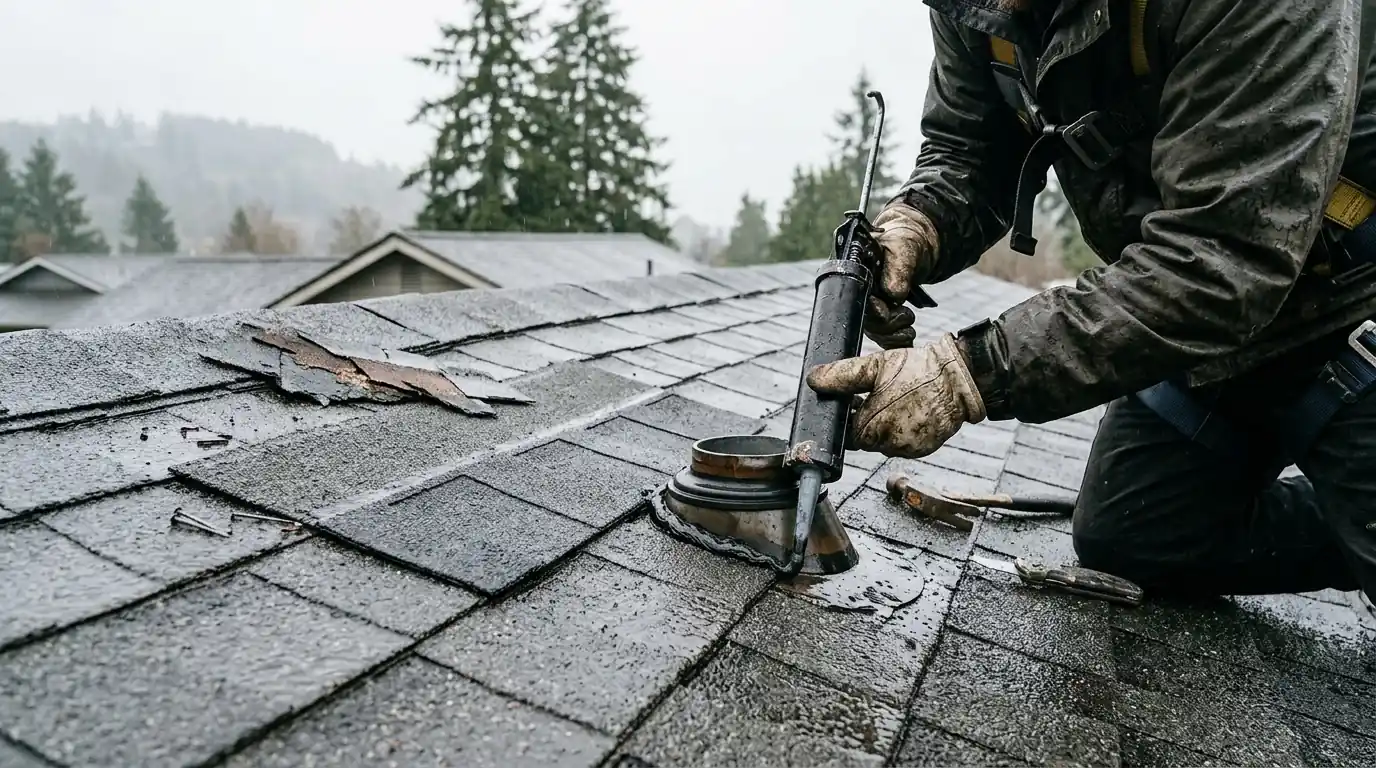
Short answer
A properly set emergency tarp on a Tacoma roof runs from below the damage up and over the ridge, so water cannot get under its top edge. We fasten it with wood battens rather than sandbags, seal every screw, and treat it as a cover for weeks to a few months, never as the repair itself.
What makes a roof tarp hold
Wind is the enemy of a tarp. Any edge left loose acts like a sail, and a flapping tarp will lift the very shingles it is meant to protect. The top edge has to wrap over the ridge onto the far slope so water sheds across it, never under it. The sides and bottom get rolled around wood battens and screwed through to the deck.
We use heavy, reinforced tarps sized to reach well past the damage, and where we can, we keep fasteners out of shingles worth reusing. Sandbags and bricks have no place on a roof in a windstorm: they slide, scuff the granules off, and can fall on someone below.
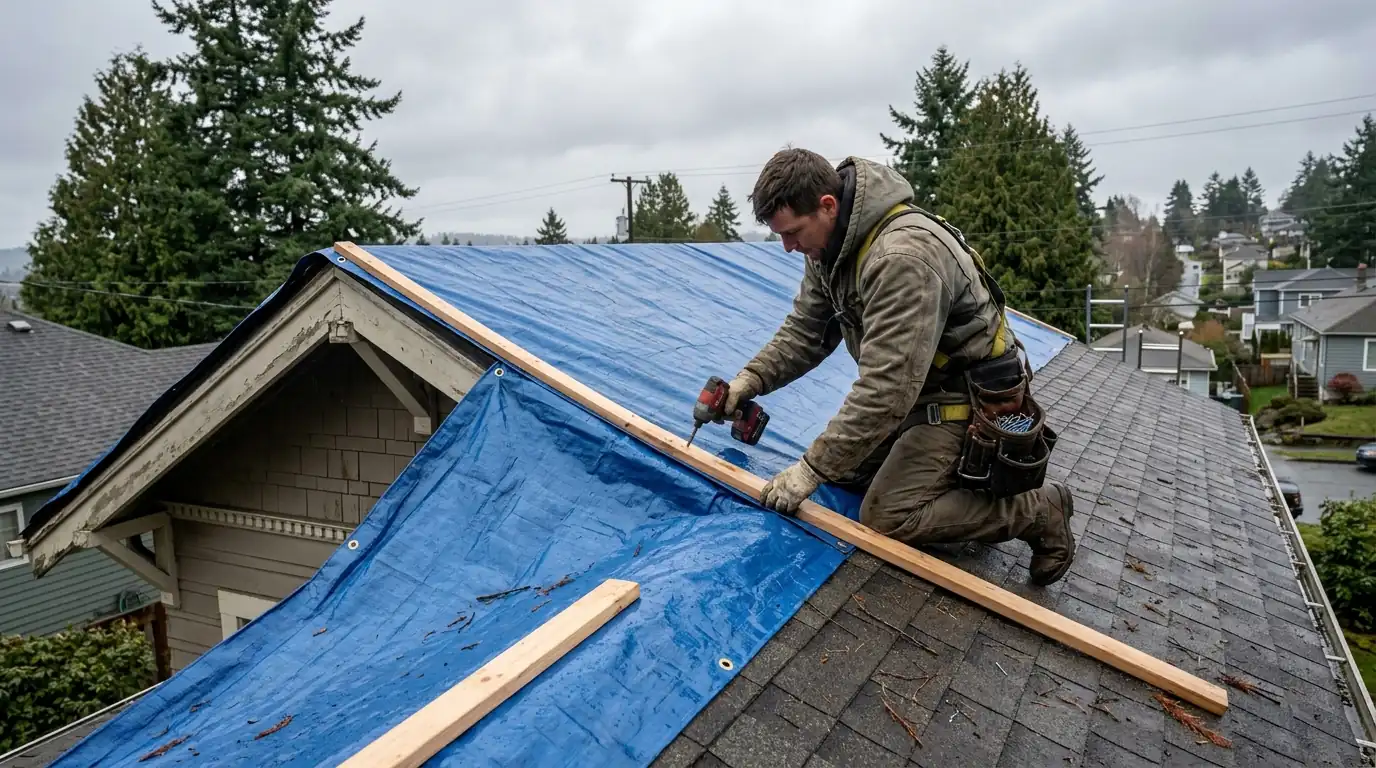
Storm tarping
After a windstorm the damage is often scattered: a missing patch here, a lifted ridge there, a hole where a limb came through. Debris comes off first, because a tarp laid over branches or loose shingles will chafe through in the first gusts. Small openings may get a peel-and-stick patch instead of a full tarp. Larger areas get a tarp that runs over the ridge and down past the damage, battened along every edge. Where the deck is cracked, we screw plywood over it first so the tarp cannot sag into a pond.
Tarping around chimneys and skylights
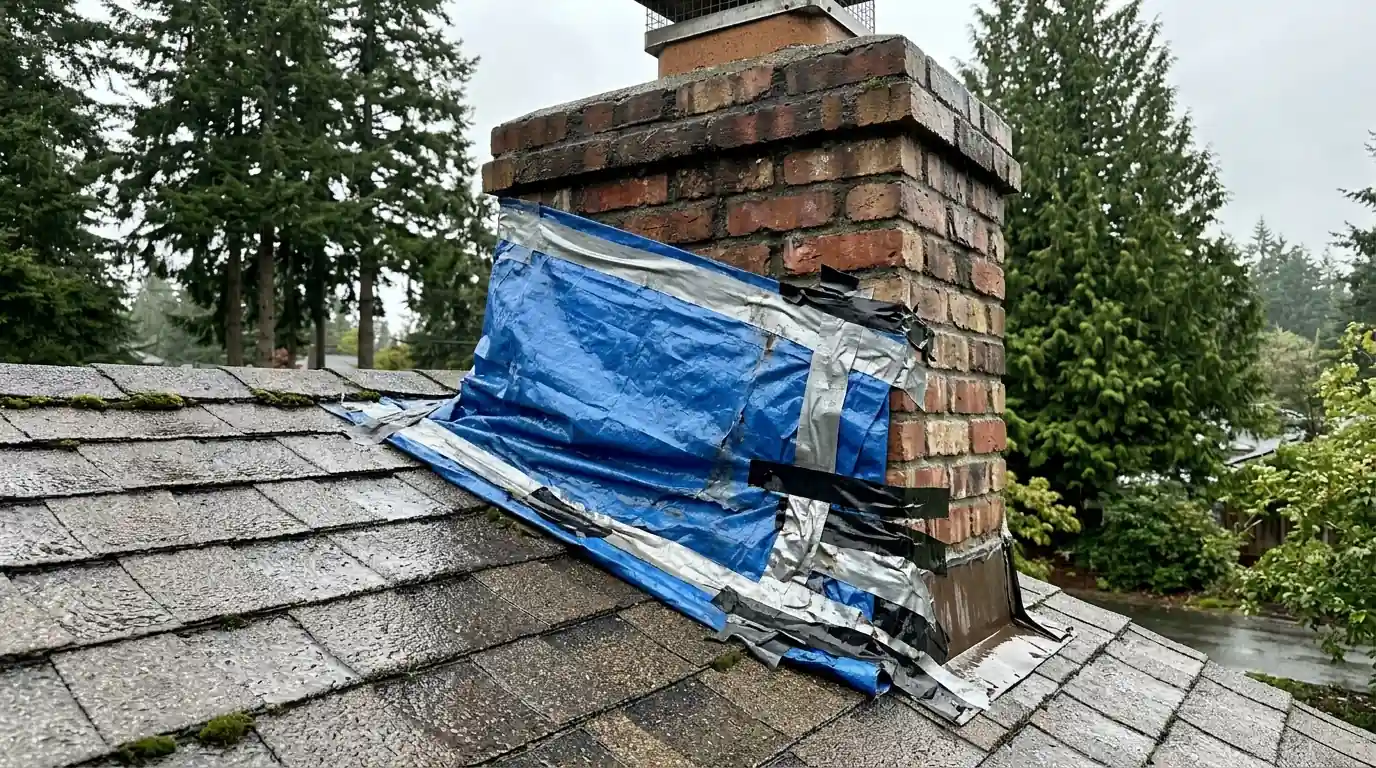
Anything that sticks up through the roof makes tarping harder, because water piles against its uphill side and the tarp cannot lie flat. Around a chimney we cut and fold the tarp so it laps up the masonry on the high side and continues over the slope above, then seal the lap with tape made for wet surfaces. A cracked skylight gets a rigid plywood cover first so nothing falls through, then the tarp over that. We avoid fastening into brick or a skylight frame, and these covers need checking after every wind.
How long a tarp holds
A well-anchored tarp can keep a roof dry for weeks to a few months, but sun, wind and freezing nights wear it down. Polyethylene turns brittle in UV, grommets tear, and battens loosen as the deck swells and dries. We plan the permanent repair for the first workable dry window rather than leaning on the tarp. Meanwhile, look at it from the ground after every windy night. A corner lifting, water collecting in a fold, or a batten pulled loose all mean it needs attention before the next rain.
How a tarp goes on
We check it is safe
Wind, ice and the deck's condition decide when we go up.
We clear the area
Branches, loose shingles and standing snow come off.
We bridge any holes
Plywood goes over cracked or open decking.
We size the tarp
It must reach past the damage and over the ridge.
We wrap the battens
Tarp edges roll around lumber strips screwed to the deck.
We seal the fasteners
Every screw through a batten gets sealant.
You check it after wind
A lifted corner or a pooled fold means call us.
In Tacoma
Snow, freezes and tarps in a Tacoma winter
In February 2019 nearly 8 inches of snow fell at the regional airport, and trees came down around Tacoma. A limb hole under snow is one of the hardest roofs to cover: the snow comes off the damaged area first, and the tarp then carries any new snowfall as weight. In the December 2008 freeze, Tacoma dropped to 10 F and Pierce County declared a local emergency. At temperatures like that, tarps stiffen and tape will not stick, so battens and sealed screws do the holding.
Tarping it yourself, and where it goes wrong
Homeowners do put tarps up, and on a low, dry roof it can work for a while. These are the usual traps.
| Item | Doing it yourself | When to call a roofer |
|---|---|---|
| Small hole on a low porch roof | A tarp over the high edge with battens can hold briefly. | Call if it will not lie flat or water keeps getting in. |
| Steep or two-story roof | Not worth the risk on a wet surface or in wind. | Call. This needs fall protection and roof anchors. |
| Holding it down with sandbags | They slide off in wind and can damage shingles. | Call to have it re-anchored with battens. |
What a proper tarp job includes
Tarping quality varies widely. Ours covers each of these.
- Debris cleared before covering
- Plywood over any open or cracked deck
- A reinforced tarp sized past the damage
- Top edge wrapped over the ridge
- Every edge rolled around a wood batten
- Sealed screws into the deck
- Photos of the damage before it is covered
What goes into the price of a tarp
Tarping cost depends on how big the cover is and how hard the roof is to work on. The range below is a published national figure, not our price.
Published range, not a quote and not our price. Source: homeadvisor.com, 2026-06. Your number depends on the factors below and is set after we see the roof.
Size of the cover
A small patch and a full-slope tarp are very different jobs.
Obstacles in the way
Chimneys, skylights and vents need cut and folded laps.
Pitch and height
Steep or tall roofs need more safety setup.
Damage under the tarp
Cracked decking may need plywood before the tarp goes on.
Debris removal
Limbs and loose material have to come off first.
Emergency Roof Tarping questions from Tacoma homeowners
On a low, dry roof it is possible. If the roof is steep, wet or two stories up, call instead, since that is where most falls happen.
The screws go through battens into the deck and get sealed. The permanent repair replaces the shingles they went through.
Big enough to run from below the damage, over the ridge and down the far side. An undersized tarp leaks at its top edge.
Limiting further damage is something policies generally expect of homeowners. Keep photos and the invoice, and see storm damage repair for the records side.
It comes off when the permanent repair is made. We pull the battens and seal or replace anything the screws went through.