Gutter guards for Tacoma roofs under fir, pine and maple
Fir and pine needles slip through screens that stop maple leaves. We fit stainless micro-mesh guards sized to your gutter and tell you plainly what upkeep remains.
- Answering 24/7
- Puyallup office
- Tacoma and Pierce County
Short answer
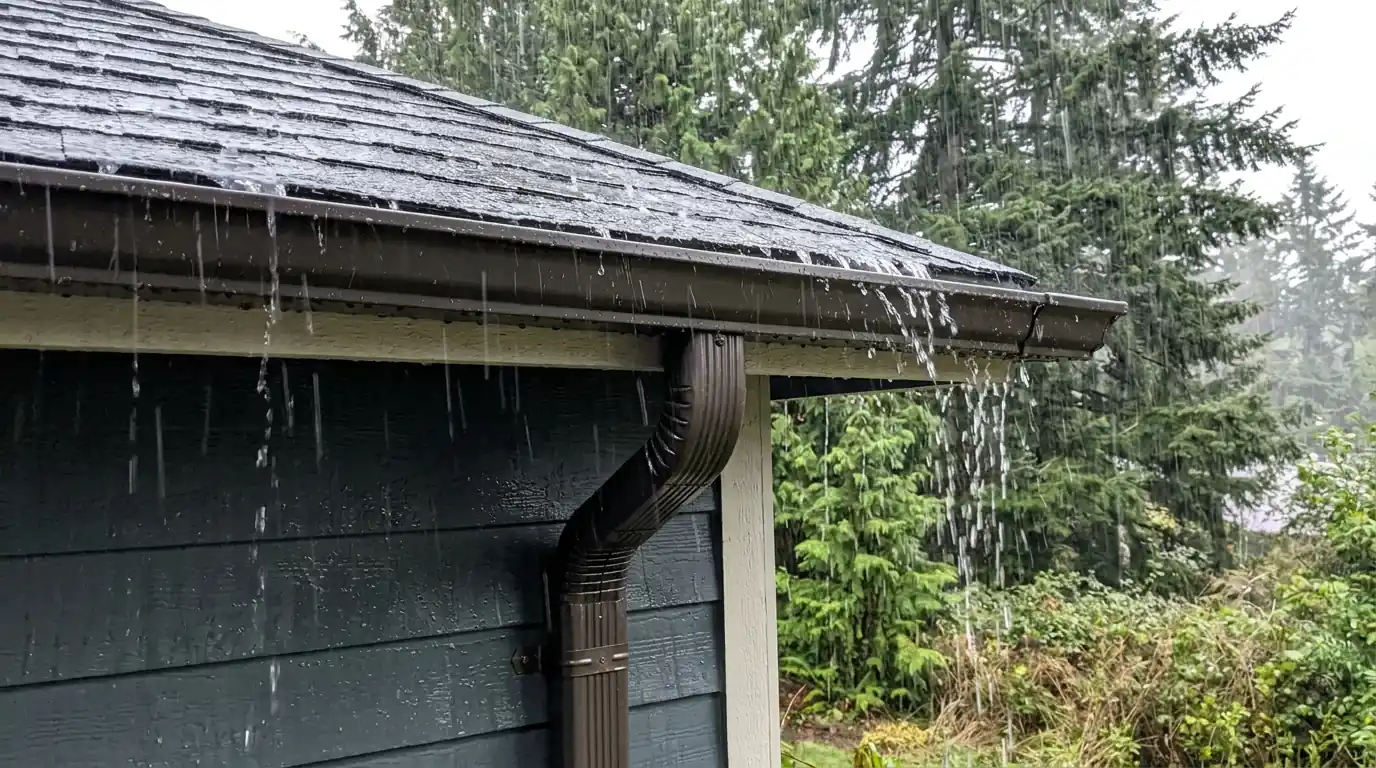
Gutter guards in Tacoma need to stop fir and pine needles, not just leaves, which rules out most wide-hole screens and foam inserts. We fit stainless micro-mesh guards that screw to the gutter lip and fasten along the drip edge without lifting shingles. They cut cleaning to an occasional brush-off of the top, but no guard makes gutters maintenance-free.
Why needles beat most gutter guards
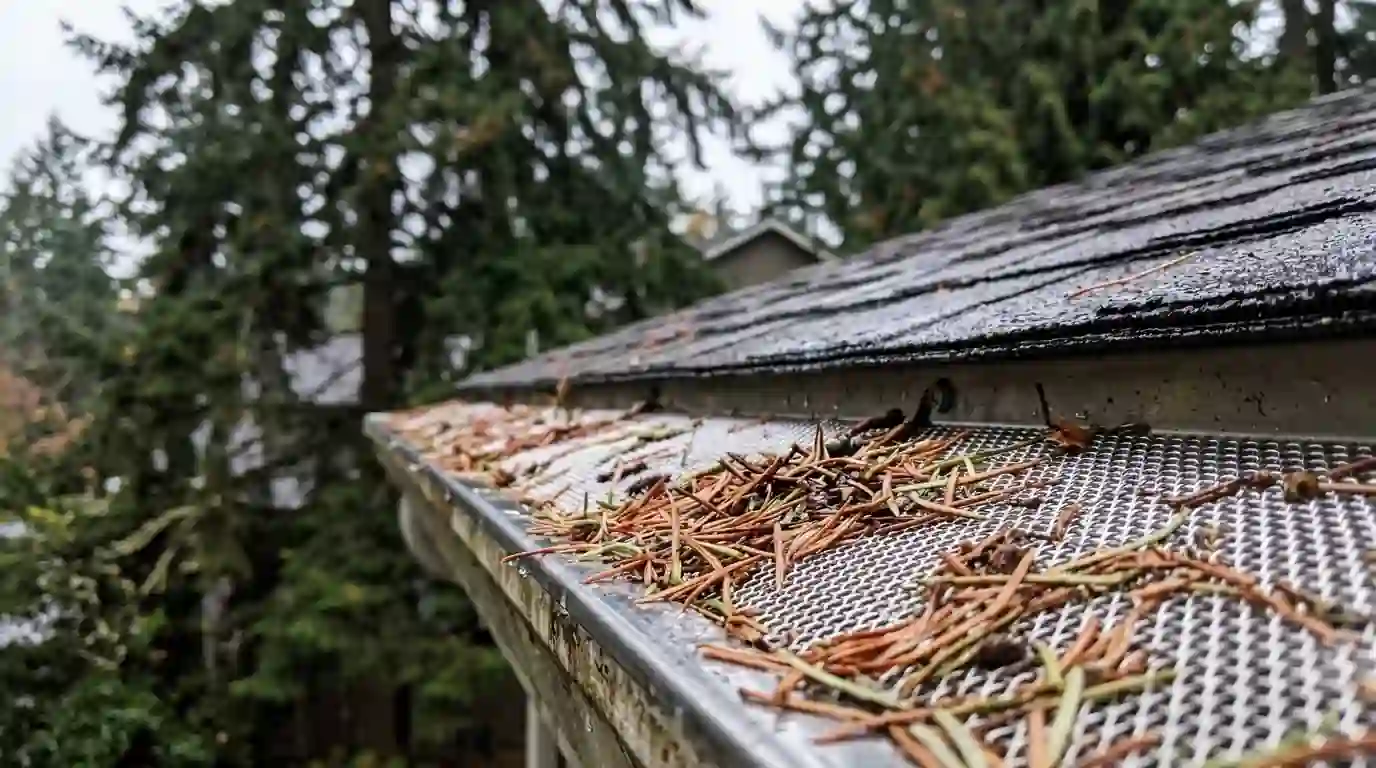
A fir needle is thin and stiff, so it threads through perforated aluminum screens and lodges standing up. Pine needles bridge the lip of reverse-curve hoods. Foam inserts fill with fine debris and grow moss. A fine stainless mesh over a rigid frame is the style that keeps both out while still taking heavy rain.
We install guards from makers like Gutterglove, Raptor and Alu-Rex, chosen to fit the gutter profile you have. If the gutters sag or leak, we fix that first, because a guard closes the trough over whatever problem is inside. Our guide on gutter guards under fir trees goes deeper.
What drives the cost of gutter guards
The published range below is a Seattle-area planning figure per linear foot. Your total depends on these factors.
Published range, not a quote and not our price. Source: angi.com, 2026-08. Your number depends on the factors below and is set after we see the roof.
Guard style
Stainless micro-mesh costs more than aluminum screens or hoods.
Gutter length
Guards are priced by the foot, so long eaves add up.
Gutter condition
Sags and leaks get fixed before guards go on.
Roof height
Second-story eaves need more ladder setup and time.
Cleaning first
Packed gutters need a full clean and flush before install.
Micro-mesh against the other guard styles
How common guard types handle the needles and rain we get here.
| Item | Micro-mesh | Perforated screen | Reverse-curve hood | Foam insert |
|---|---|---|---|---|
| Fir needles | Stopped | Slip through | Mostly shed | Stick in the foam |
| Pine needles | Stopped | Partly stopped | Bridge the lip | Stick in the foam |
| Heavy rain | Takes it in | Takes it in | Can overshoot | Slows it down |
| Upkeep | Brush the top | Clean the trough | Clean the slot | Replace inserts |
Micro-mesh guards
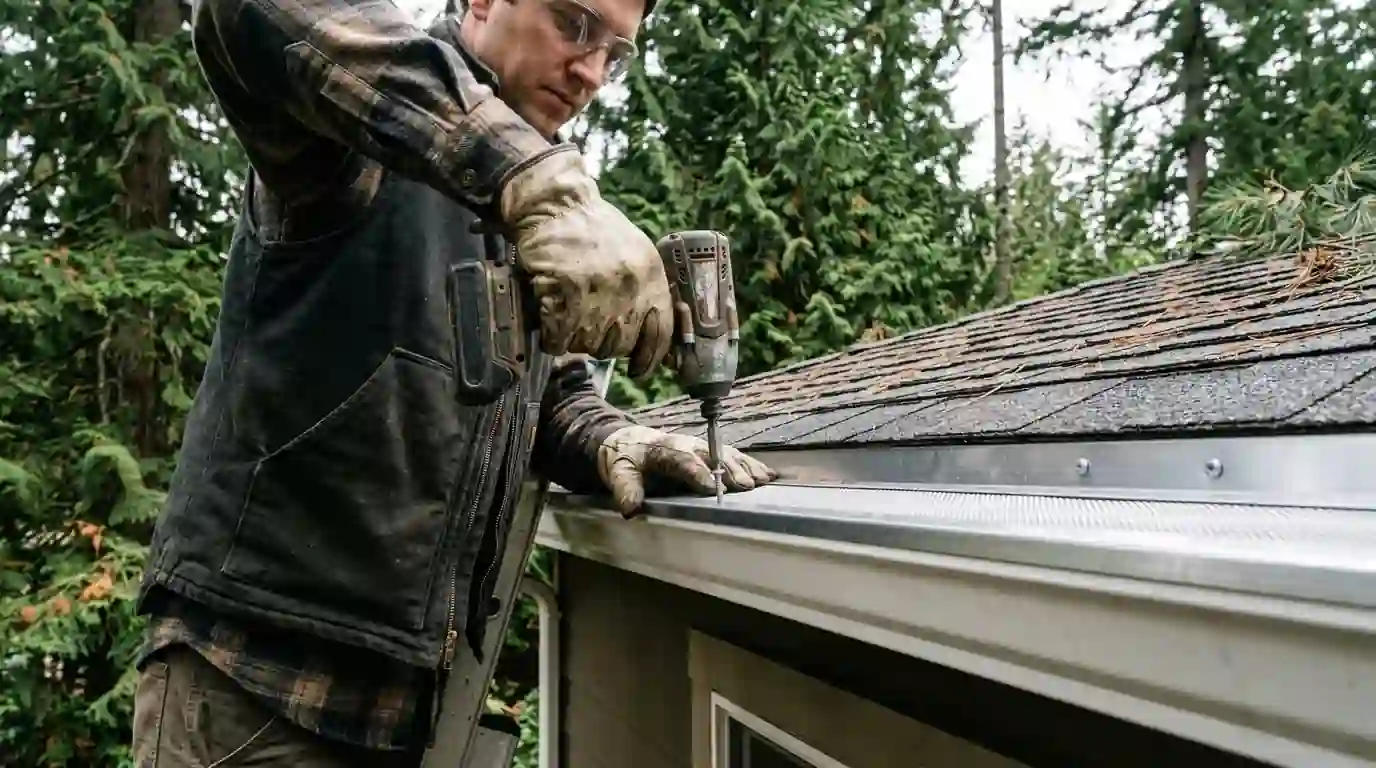
Micro-mesh is a fine stainless steel screen stretched over an aluminum frame that screws to the front lip of the gutter and fastens at the back along the drip edge. The openings are small enough to stop needles and shingle grit, while surface tension pulls rainwater through. It is the most effective style here and also the priciest. The tradeoff is the top surface: pollen, seed husks and fine fir litter can mat on it, and a matted screen sheds water over the edge instead of into the gutter.
Guards under fir and pine
Under tall Douglas fir the debris never really stops. Needles, cones, twigs and pollen fall most of the year, with the heaviest drop in fall. That is where a guard earns its cost and where it gets tested hardest. We choose mesh with a stiff frame so needles do not press it down into the trough, and set the angle so the front edge sits slightly lower and debris slides off in the wind. Pine adds sap, which can glue needles to the mesh, so pine-shaded runs need a closer eye.
Cleaning guarded gutters
A guard changes what cleaning means rather than ending it. Instead of scooping sludge out of the trough, you are brushing a mat of needles off the mesh, usually once or twice a year under heavy trees. Some fine silt still gets through and settles in the trough over several years, so a guarded gutter needs an occasional flush too. The guards we install come off section by section for that. If someone says a guard means never touching your gutters again, ask what happens under a fir.
How we fit guards on an existing gutter
You call about the trees
Tell us what overhangs the roof: fir, pine, maple or a mix.
We inspect the gutters
Pitch, hangers, seams and the fascia under them.
We recommend a guard
Matched to your profile and the debris you get.
We clean and flush
Every run emptied and each downspout cleared.
We repair what is loose
Hangers tightened and leaking joints resealed.
We fit the mesh
Screwed to the lip and fastened at the back edge.
We test with water
A hose on the mesh shows water going in, not over.
In Tacoma
Timing guards around the fall drop and November rain
November is the wettest month in the regional climate record, averaging 6.31 inches, with January at 5.78 and December at 5.72 close behind. In Tacoma, that rain follows right behind the autumn shed of needles and leaves, so open gutters clog just as the heaviest water arrives. Fitting guards in late summer or early fall puts the mesh in place before the first big storms of the season. If your gutters are already packed when we arrive, we clean and flush them before a single guard goes on.
- Englert
- Amerimax
- Raptor
- Senox
- Gutterglove
- Alu-Rex
- Spectra
- Berger
Gutter Guards questions from Tacoma homeowners
Fine stainless micro-mesh does. Perforated screens, hoods and foam inserts either let fir needles through or clog on top of them.
Yes, less often and more easily. Expect to brush needles off the mesh once or twice a year. See gutter cleaning for the rest.
Usually, if the gutters are straight, sound and pitched correctly. We repair sags and leaks first so the guard is not covering a problem.
A clean micro-mesh guard takes heavy rain well. A matted one can shed water over the edge, which is why the top needs brushing.
Less so. Roof grit and windblown leaves still collect, but one cleaning a year may cost less than guards over the life of the gutter.