Gutter installation in Tacoma, sized for the water your roof actually sheds
We measure the roof area that drains to each eave, then hang seamless aluminum gutters, half-round or copper sized to carry it without spilling over the front.
- Answering 24/7
- Puyallup office
- Tacoma and Pierce County
Short answer
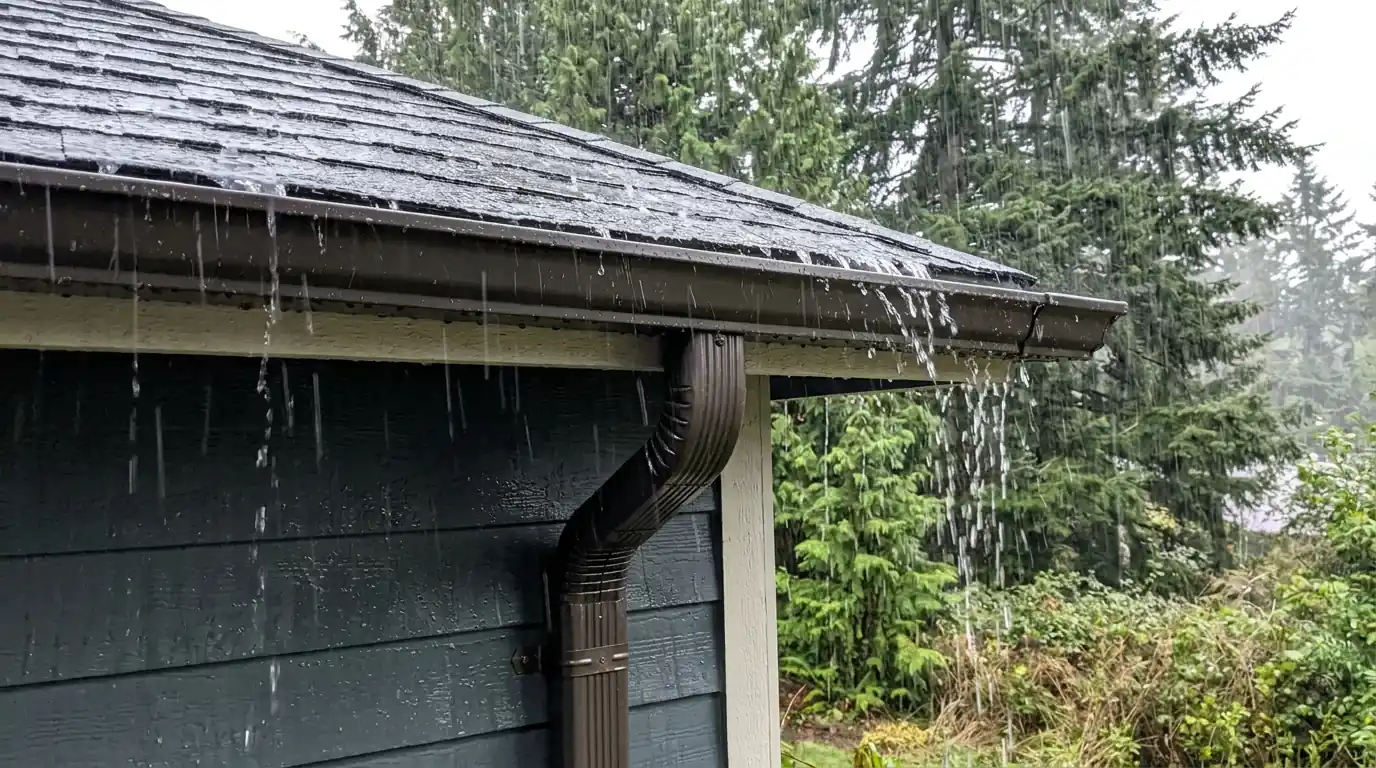
Gutter installation on a Tacoma house usually means 5-inch or 6-inch seamless aluminum gutters cut to the exact length of each eave. We size each run to the roof area that drains into it, hang it on hidden hangers screwed into the fascia, and place downspouts where the water can leave. Copper and half-round suit some older homes.
What goes into a new gutter system
A new install starts with the roof, not the gutter. We measure how much roof surface drains to each eave, note where valleys dump water into a corner, and check the fascia the gutter will hang on. Soft fascia gets replaced first, because a hanger screwed into rot pulls loose in the first heavy storm.
Old gutters come down, the drip edge gets checked, and the downspouts are planned around where water can actually go. If your yard drains poorly, downspout and drainage work belongs in the same visit.
What sets the price of new gutters
The range below is a published Seattle-area planning figure. Your number comes from measuring the eaves.
Published range, not a quote and not our price. Source: angi.com, 2026-08. Your number depends on the factors below and is set after we see the roof.
Linear feet and corners
Every inside and outside corner adds a miter, sealant and labor.
Profile and metal
Aluminum K-style costs least; half-round and copper climb from there.
Stories and access
Second-story and three-story eaves need taller ladders and more setup.
Fascia condition
Rotted fascia has to be replaced before anything can hang on it.
Downspouts and drainage
Extra outlets, long drops and tightline tie-ins add to the total.
Seamless aluminum gutters
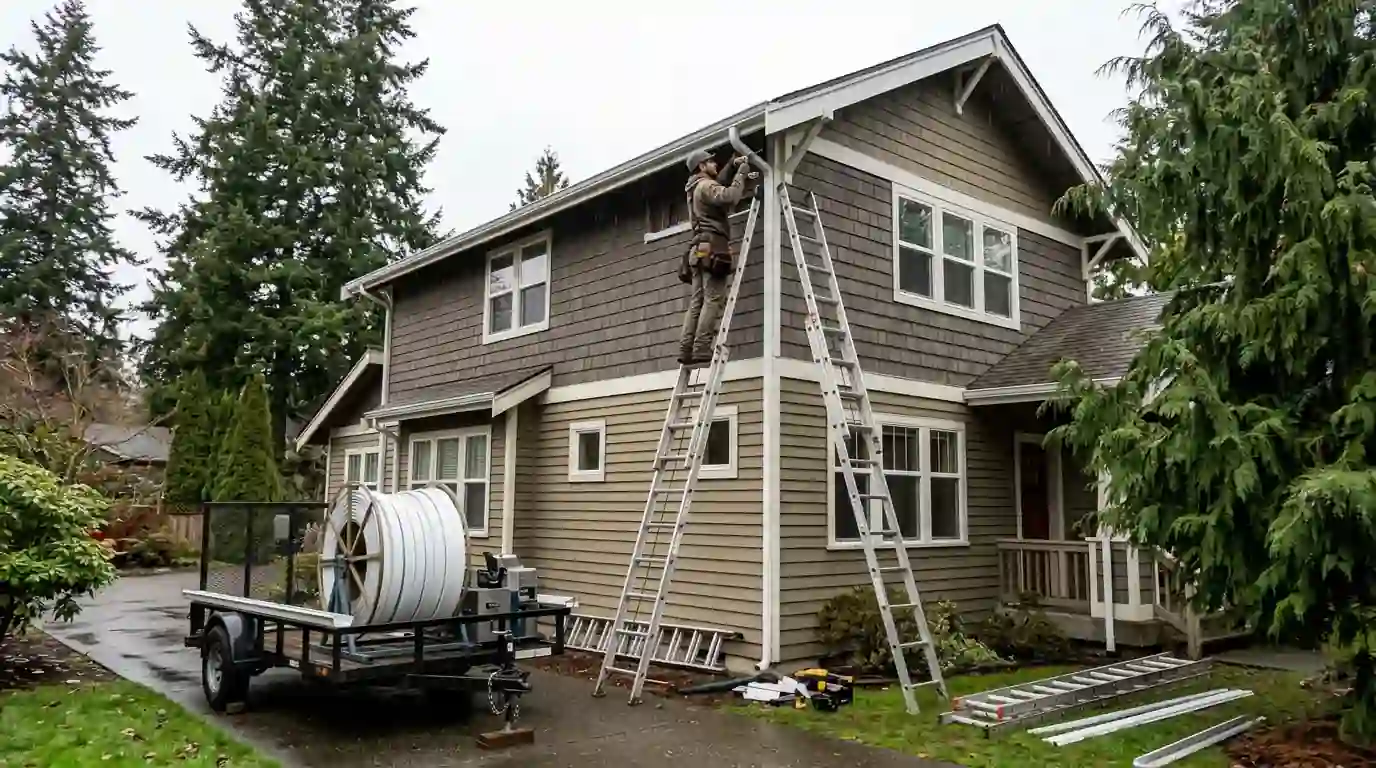
Seamless aluminum gutters are rolled from a coil at the house and cut to the length of each eave, so the only joints sit at corners and end caps. Fewer joints means fewer places for sealant to fail after a few wet winters. Aluminum does not rust, takes paint well and comes in a long list of factory colors to match trim. The tradeoff is dents. A ladder leaned on a thin run will crease it, so we use a heavier gauge along eaves where you set a ladder to wash windows.
K-style versus half-round
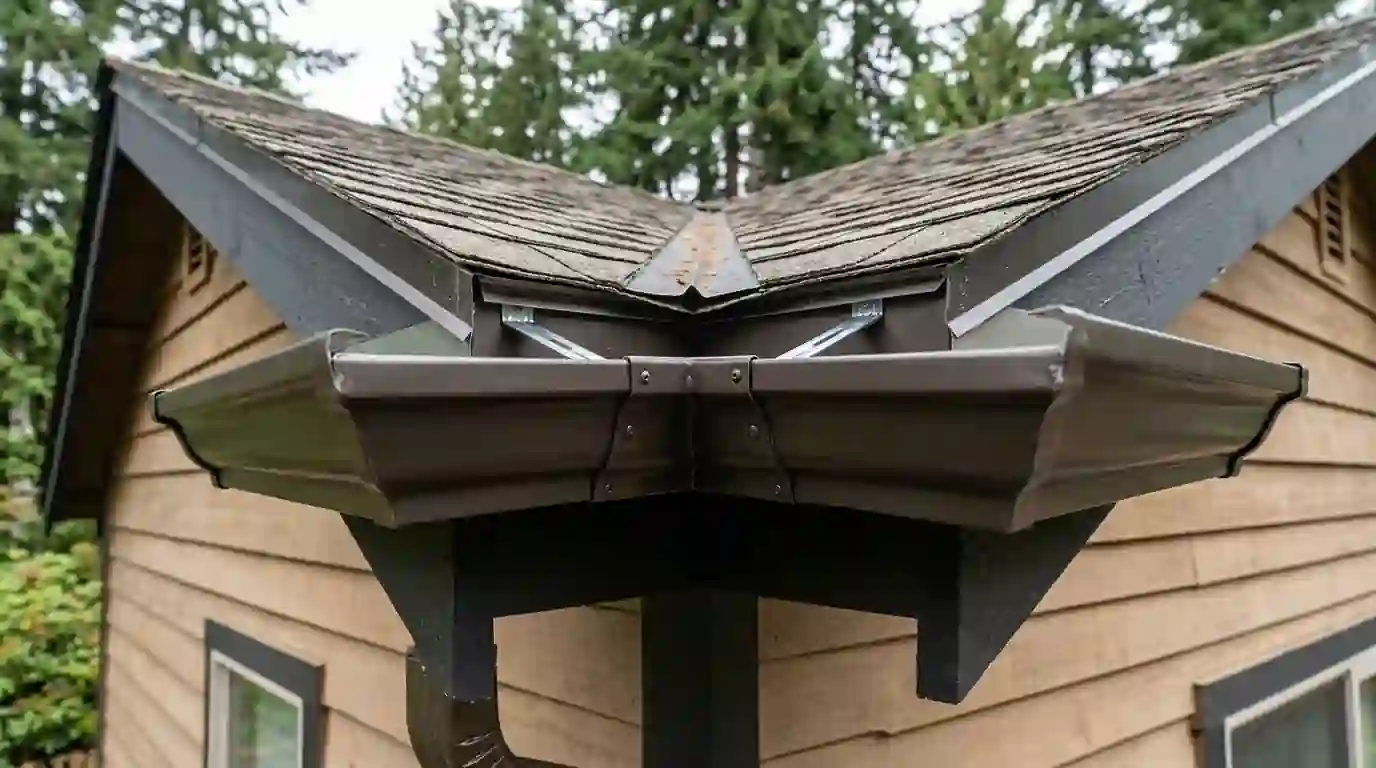
K-style gutters have a flat back and a front shaped like crown molding, and they carry more water than a half-round of the same width. That is why most houses get them. Half-round is a rounded trough hung on exposed brackets, and it suits Craftsman and older homes where a K-style face looks out of period. It drains cleaner and holds less debris in the corners. It also takes longer to hang, since the brackets show and must be spaced evenly, and it needs round downspouts to look right.
Copper gutters
Copper makes sense where the gutter is part of the look, usually half-round on an older home or over a showpiece entry. It turns brown and then green with age instead of needing paint, and soldered joints hold for a very long time. Two cautions come with it. Copper costs several times what aluminum does, and zinc moss strips on the roof above will slowly corrode it, so a copper install means switching to a different moss treatment. We solder the corners and outlets rather than relying on sealant.
Sizing gutters for heavy rain
A gutter overflows when the roof sends it more water than it can carry to the outlet, which happens most during long fall storms and short cloudbursts. We size for the worst hour, not the average day. Five-inch K-style handles most single-story eaves. Six-inch fits long runs, steep roofs and eaves below a valley, where two roof planes pour into one corner. Downspout size matters as much as gutter width: a 3x4 pipe drains far faster than the older 2x3, and one more outlet often cures overflow better than a bigger gutter.
What a gutter install includes with us
Gutter bids vary a lot in what they leave out. Ours cover all of this.
- Removal and haul-away of old gutters and spikes
- Sizing for each eave and the valleys above it
- Hidden hangers screwed into solid fascia
- Mitered and sealed corners and end caps
- Downspouts placed and strapped to the wall
- Drip edge checked behind the gutter
- A hose test of every run before we leave
How a gutter install goes, start to finish
You call us
Tell us about the house and what the old gutters are doing.
We measure the roof
Roof area per eave, valleys, pitch and fascia condition.
You choose the profile
K-style or half-round, aluminum or copper, and a color.
Old gutters come down
We remove and haul away the old runs and spikes.
Fascia and drip edge
Soft boards are replaced and the drip edge checked first.
Gutters go up
Each run is cut, pitched and screwed to the fascia.
We water-test it
Water poured in at each high end has to reach the outlet.
Around Tacoma
Replacing builder gutters on newer homes
Not every Tacoma-area gutter job is on an old house. In South Hill, 25.5% of homes went up between 2000 and 2009, the area's largest building decade, and 70.6% are owner-occupied, so a lot of first-owner gutters are now wearing out. Bonney Lake kept building after that, with its housing count rising from 6,394 in 2010 to 7,605 in 2020. Those builder installs tend to pair 5-inch gutters with 2x3 downspouts under big, steep roofs. The overflow shows up at inside corners where valleys pour in.
Water pouring over the gutter instead of into it?
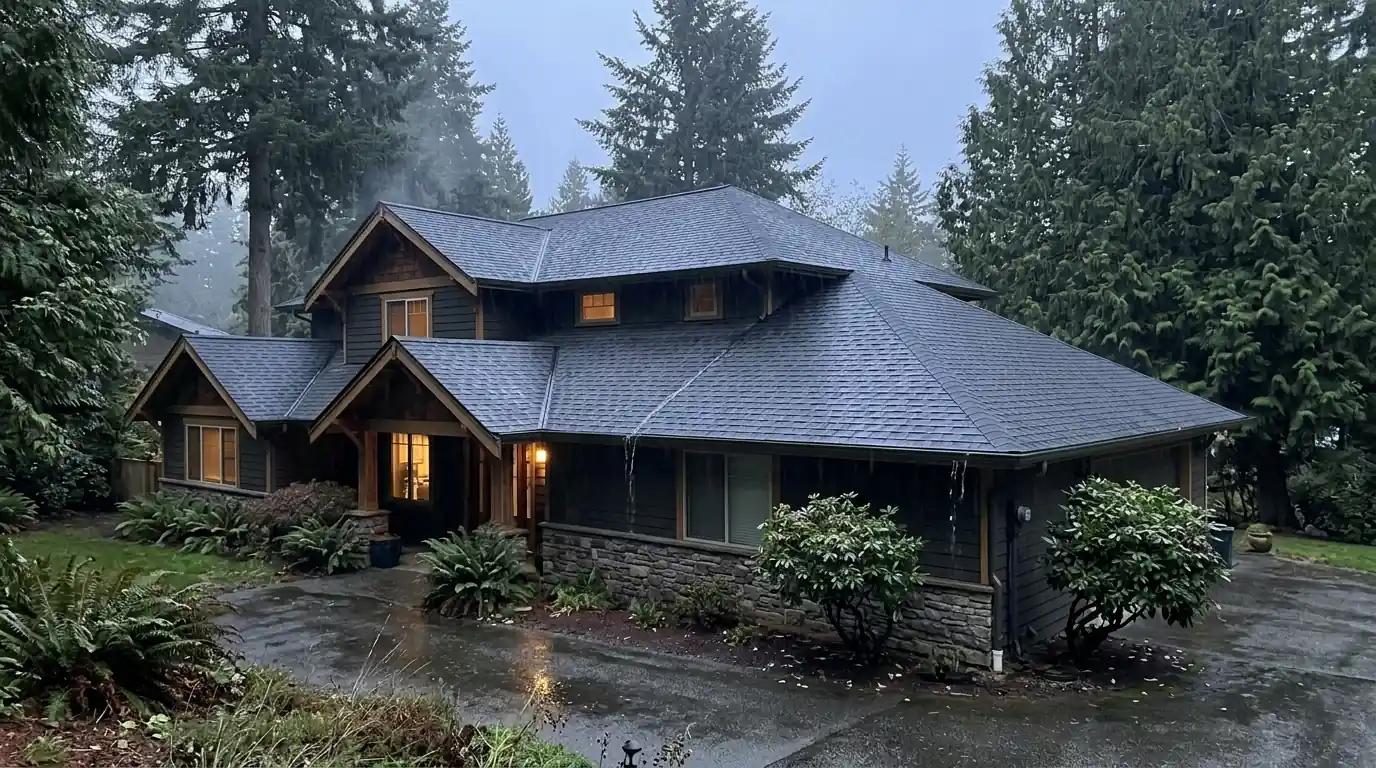
Call any hour. We can look at the gutters, the downspouts and the roof above them in one visit.
Call (253) 449-1922Gutter Installation questions from Tacoma homeowners
Decades, when they are hung well and kept clear. Most of the failed gutters we replace lost their hangers or corner seals, not the metal itself.
Five-inch suits most single-story eaves. Long runs, steep roofs and eaves below a valley often need 6-inch, or simply another downspout.
Light rain, yes, though sealant at corners and end caps needs a dry window to cure. A heavy downpour pushes the install to the next dry day.
If fir or pine hangs over the roof, install day is the easiest time to add them. See gutter guards for what holds up under needles.
Downspouts are. Where the water goes after that, tightlines or splash blocks, is covered on our drainage page.