Roof Replacement
Houses from the 1970s to 1990s are often on a second roof that is reaching its end.
DetailsMost houses up here went up between 1970 and 1999, so many are on their second roof or due for one. We plan replacements around the slopes, views and runoff these lots deal with.
Short answer
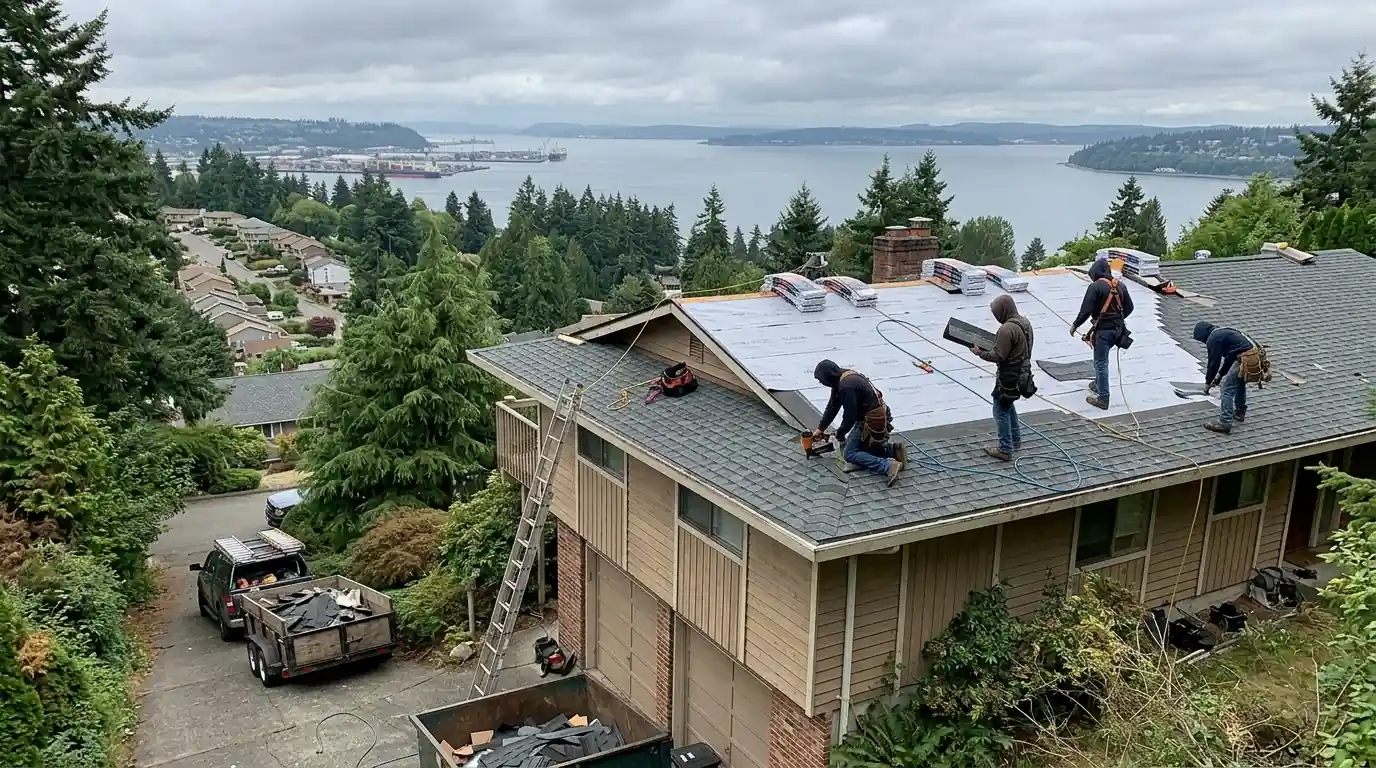
Yes, we work across Northeast Tacoma, and most roofs we see here sit on homes built between 1970 and 1999. That puts many of them on an aging second roof. The hilly ground rising to Indian Hill at 530 feet means steep driveways, exposed ridgelines and gutters that have to handle runoff from uphill lots.
NeighborhoodScout describes Northeast Tacoma housing as mostly built from 1970 to 1999, with some newer homes after 2000. A house from that window has usually had its original roof replaced once already. Some of those first replacements went straight over the old shingles, and two layers on one deck hide soft spots and add weight.
When we tear off here, we strip to the deck, check every sheet of plywood or OSB, and replace what has gone soft at the eaves and around vents. Tacoma exempts many single-family reroofs from a permit when the old coverings come off and the framing stays the same. Adding a layer over what is there needs a permit and a pre-roof inspection, as a Tacoma permit guide reports. Our reroof permit guide walks through both cases.
Northeast Tacoma sits on hilly ground east of Commencement Bay, above the Tideflats, and climbs to Indian Hill at 530 feet. Height and open water mean wind reaches a lot of these roofs with little in the way. Ridge caps, rake edges and the shingles along the windward side take the beating first, so we pay attention to nailing and starter courses on the exposed edges.
Slope matters on the ground too. Many lots step down from the street, which puts the back of the house a story higher than the front. That changes how we stage ladders and debris chutes, and it means downspouts on the low side often dump water toward a hillside that should not be soaked.
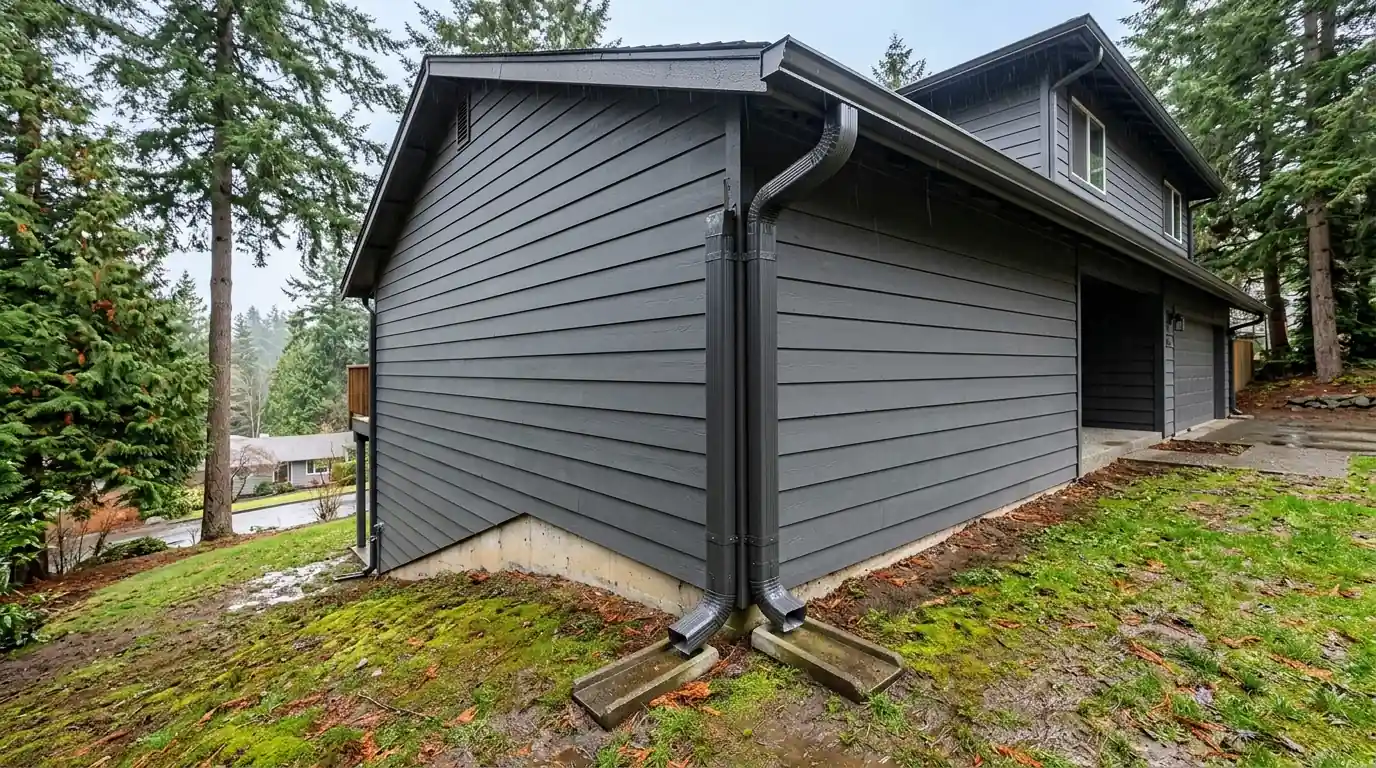
November is the wettest month at Sea-Tac, at 6.31 inches. On a sloped lot that rain arrives twice: once off the roof, and again as runoff from the yard above. Undersized gutters overflow at the corners, and short downspouts let water pool against foundations on the downhill side.
Tree cover across Tacoma ranges from 3% to 64% between census blocks, so some streets here are open and others sit under tall firs. Where needles fall, we look at gutter guards and larger outlets. Where they do not, sizing and downspout placement do most of the work.
Houses from the 1970s to 1990s are often on a second roof that is reaching its end.
DetailsTear-offs here regularly turn up soft sheathing at the eaves under old overlays.
DetailsSloped lots need gutters and outlets sized for heavy November rain.
DetailsDownhill sides need water carried away from the foundation and the slope.
DetailsExposed ridgelines above the bay lose shingles and ridge caps in wind.
DetailsMany homes from this era were built with too little intake at the soffits.
DetailsYes. We cover the whole Northeast council area, from the slopes above the Tideflats up through the Indian Hill area, and our phones are answered 24/7.
We do not recommend it. A layer over existing roofing needs a permit and inspection in Tacoma, and a tear-off lets us check and fix the deck.
Often not for a single-family house when old coverings come off and framing stays the same. Our permit guide lists the conditions, and we confirm before work.
On a sloped lot, one side usually collects more roof area or yard runoff. Larger outlets or an added downspout on that side often fixes it.
Some homes from this era still have them. Many owners convert to composition when the shakes wear out, as our cedar shake page explains.
Or see the full South Sound coverage overview.
Call any hour. Tell us roughly when the house was built and how many layers you think are on it.
Calls are answered around the clock. Tell us what you are seeing and where the house is, and we will set up a visit.
Our office sits in Puyallup, and our crews work across Tacoma and Pierce County. The map loads only when you ask for it.