Roof Leak Repair
Valleys, wall junctions and vent pipes on second roofs are where November leaks start.
DetailsFederal Way sits just north of Tacoma across the county line in King County. We work across the city on leaks, worn flashing and full replacements.
Short answer
We work in Federal Way, north of Tacoma in King County, where the 1980s were the biggest building decade at 24% of homes. Roofs on houses that age are often on their second covering, so we check layers, decking and flashing before quoting. Permits go through the City of Federal Way.
Federal Way is a city of 101,030 people, larger than any city in Pierce County except Tacoma. It sits in King County and issues its own building permits, so the rules for a reroof, a deck or new windows are the city's rather than either county's.
The county line does not change how a roof should be built, but it does change the paperwork. We check the City of Federal Way's current requirements for your job before we schedule, and if a permit applies we tell you before material is ordered. Rules change, so confirm with the city too.
About a quarter of Federal Way's homes, 24%, were built in the 1980s. A house from that decade has had time for at least one roof to wear out. Before a reroof, we look at the number of layers at the eaves, the condition of the decking from the attic, and whether the earlier roofer reused old flashing instead of replacing it.
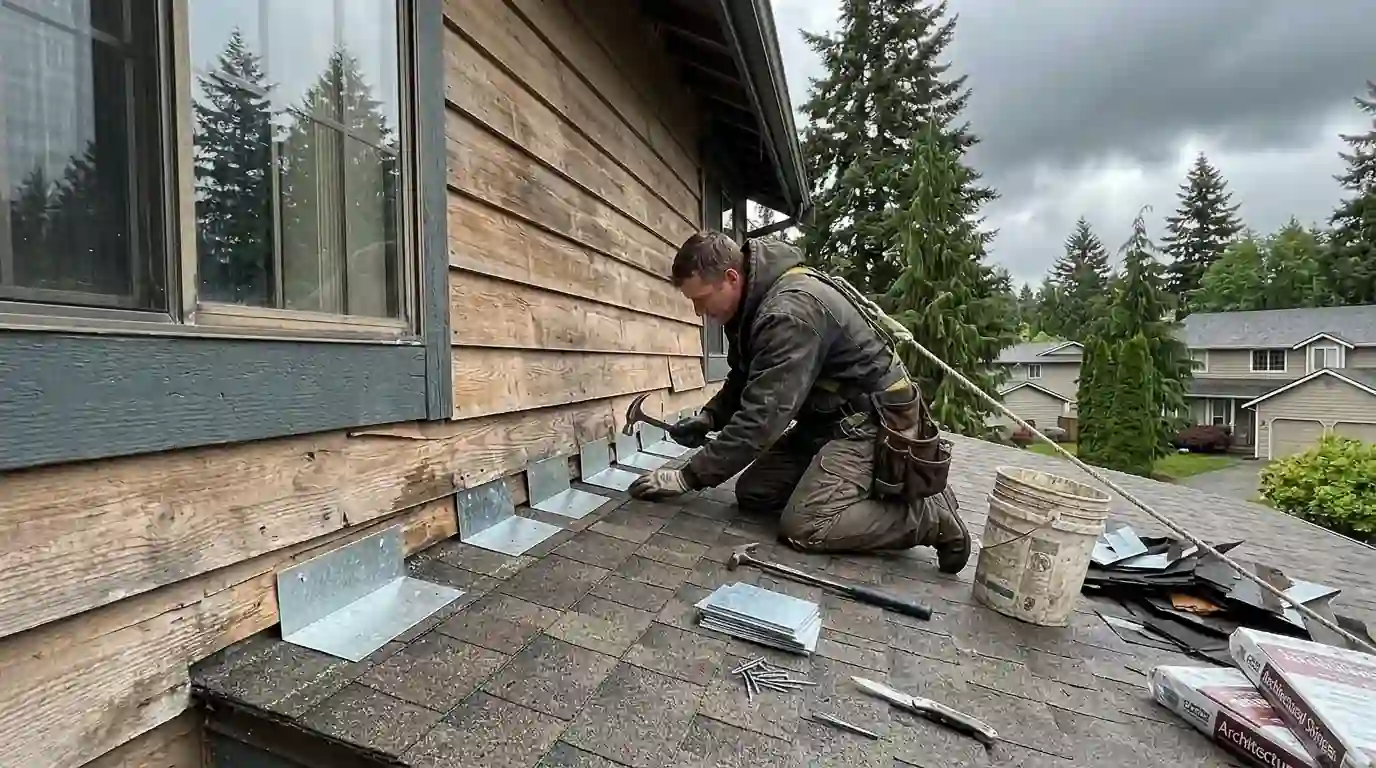
Reused flashing is a common leak source on second roofs. Step flashing along a wall, the metal around a chimney and the apron below a skylight all work only when they are lapped correctly with the shingles. When those pieces come from the first roof, they are often bent, rusted or sealed with roofing cement that cracked years ago.
Siding deserves a look at the same time. If your house has plywood panel siding, check the bottom edges and the trim around windows for swelling. Water that gets past a missing kick-out flashing ends up there. We handle siding repair and rot on the same visit when the roof is the cause.
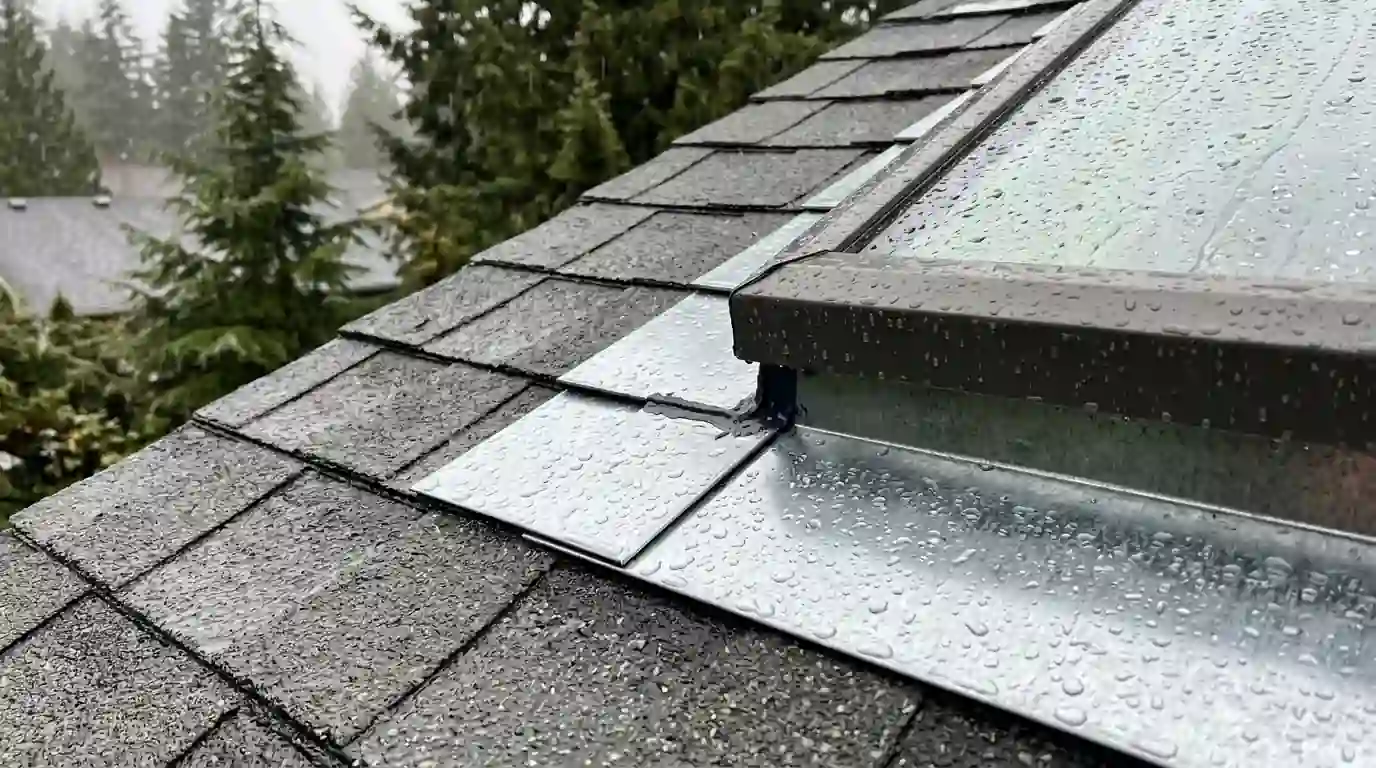
November is the wettest month at Sea-Tac, at 6.31 inches, and that is when most leak calls come in. A stain that appears after the first big storm of the season usually starts at a valley, a wall junction or a roof penetration such as a vent pipe or skylight.
Not every wet spot is a leak. Moisture condensing in a poorly vented attic can drip onto the ceiling on cold mornings, even when it has not rained. We check the attic first so you pay for the right fix. If water is coming in now, call any hour; our leak first-steps guide covers what to do before we arrive.
Valleys, wall junctions and vent pipes on second roofs are where November leaks start.
DetailsStep and counter flashing reused from an earlier roof often fails at the laps.
DetailsHouses from the 1980s are commonly on a second covering that needs a full tear-off.
DetailsOlder skylights with tired flashing are a frequent leak source in heavy rain.
DetailsPanel siding swells at the bottom edges where water gets past missing kick-outs.
DetailsTrim around windows below a leaking wall junction often hides rot.
DetailsYes. Federal Way is part of our regular coverage along with the rest of south King County and Pierce County.
The City of Federal Way handles building permits inside city limits. We check what applies to your job before scheduling and recommend confirming with the city.
Leaks that appear only in long or wind-driven storms usually point to flashing laps, valleys or wall junctions, where water is pushed sideways past the shingles.
We prefer not to on a reroof. Old step and counter flashing is often bent or corroded, and new metal is a small part of the cost.
Not always. Condensation from a poorly vented attic can drip on cold mornings. We check the attic first so the repair matches the real cause.
Or see the full South Sound coverage overview.
Call any hour. Tell us the street and what you are seeing, and we will set up a visit.
Calls are answered around the clock. Tell us what you are seeing and where the house is, and we will set up a visit.
Our office sits in Puyallup, and our crews work across Tacoma and Pierce County. The map loads only when you ask for it.