Roof replacement in Tacoma, from tear-off to the last ridge cap
A replacement is more than new shingles. It means stripping the old roof, fixing the deck, new underlayment and flashing, and settling whether a permit or design review applies.
- Answering 24/7
- Puyallup office
- Tacoma and Pierce County
Short answer
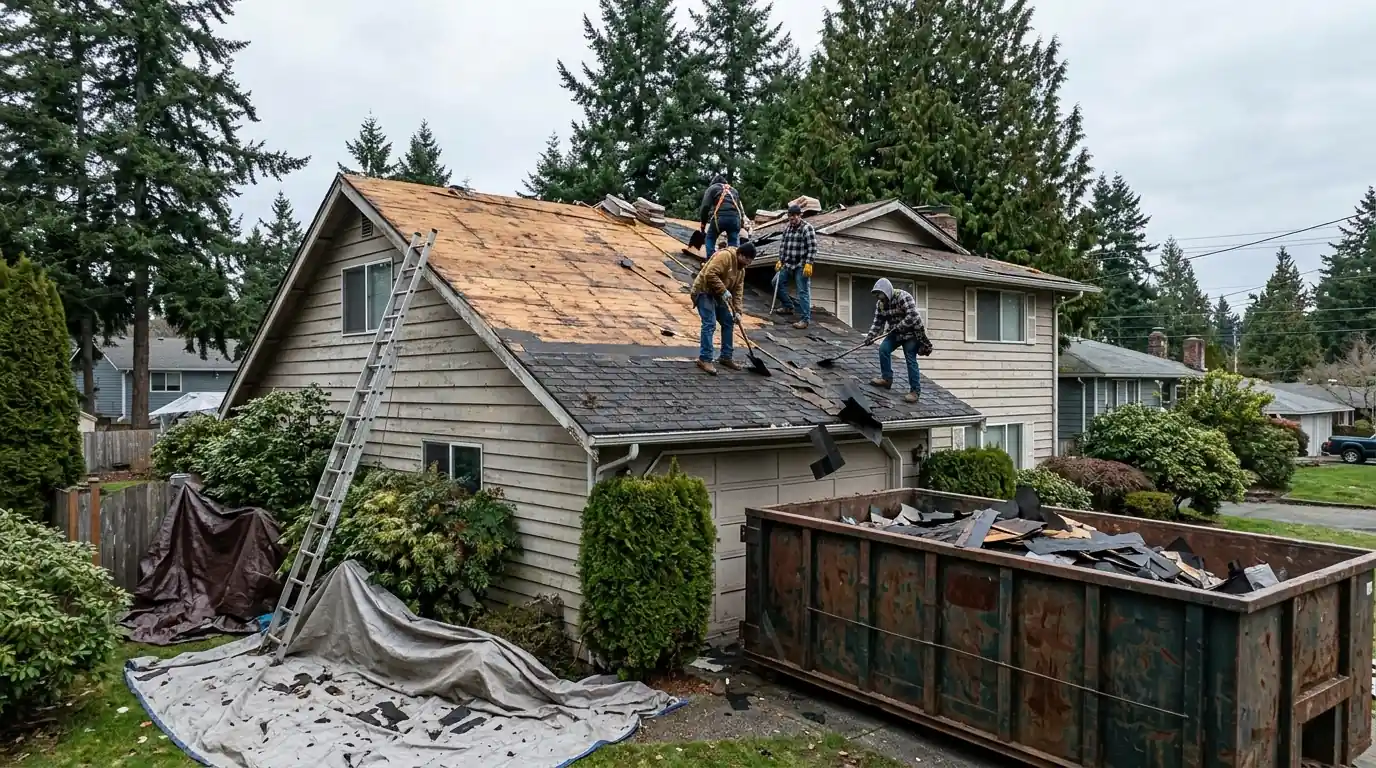
A roof replacement on a Tacoma house means tearing off every old layer down to the deck, repairing soft sheathing, then installing new underlayment, flashing, vents and shingles. Whether it needs a permit or design review depends on the weight of the new roof, any framing changes and whether the house sits in a historic district.
What a full roof replacement covers
On nearly every house we start with a complete tear-off. Laying new shingles over old ones hides deck problems and adds weight the framing was never sized for. Once the deck is bare we can see every soft board, delaminated panel and old leak, and fix them before anything new goes down.
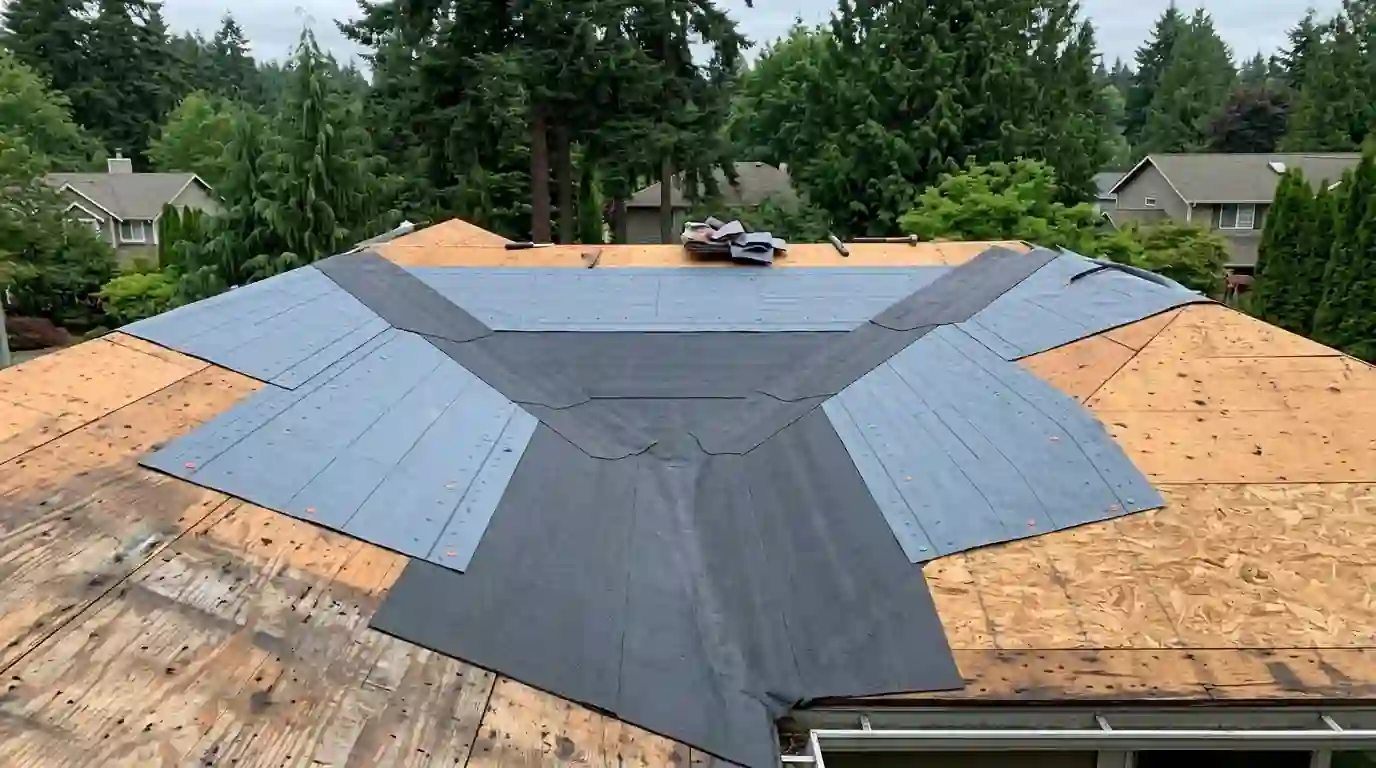
After the deck come drip edge, underlayment with ice and water membrane in valleys and around penetrations, new flashing and vents, then the shingles. We install lines from Owens Corning, CertainTeed and Malarkey and will tell you which suits your slope and exposure. Still choosing a material? Compare asphalt shingles with metal roofing.
What changes the cost of a new roof
Replacement prices swing with the size and shape of the roof more than anything else. The published range below is a Seattle-area planning figure.
Published range, not a quote and not our price. Source: angi.com, 2026-08. Your number depends on the factors below and is set after we see the roof.
Roof area and complexity
Valleys, dormers and hips add cutting and flashing time.
Layers to remove
Two or three old layers mean more labor and disposal.
Deck repairs
Replacement sheathing is counted per sheet after tear-off.
Material line
Architectural, impact-rated and metal roofs price differently.
Access and pitch
Steep, tall or tight lots need more staging and protection.
Full tear-off
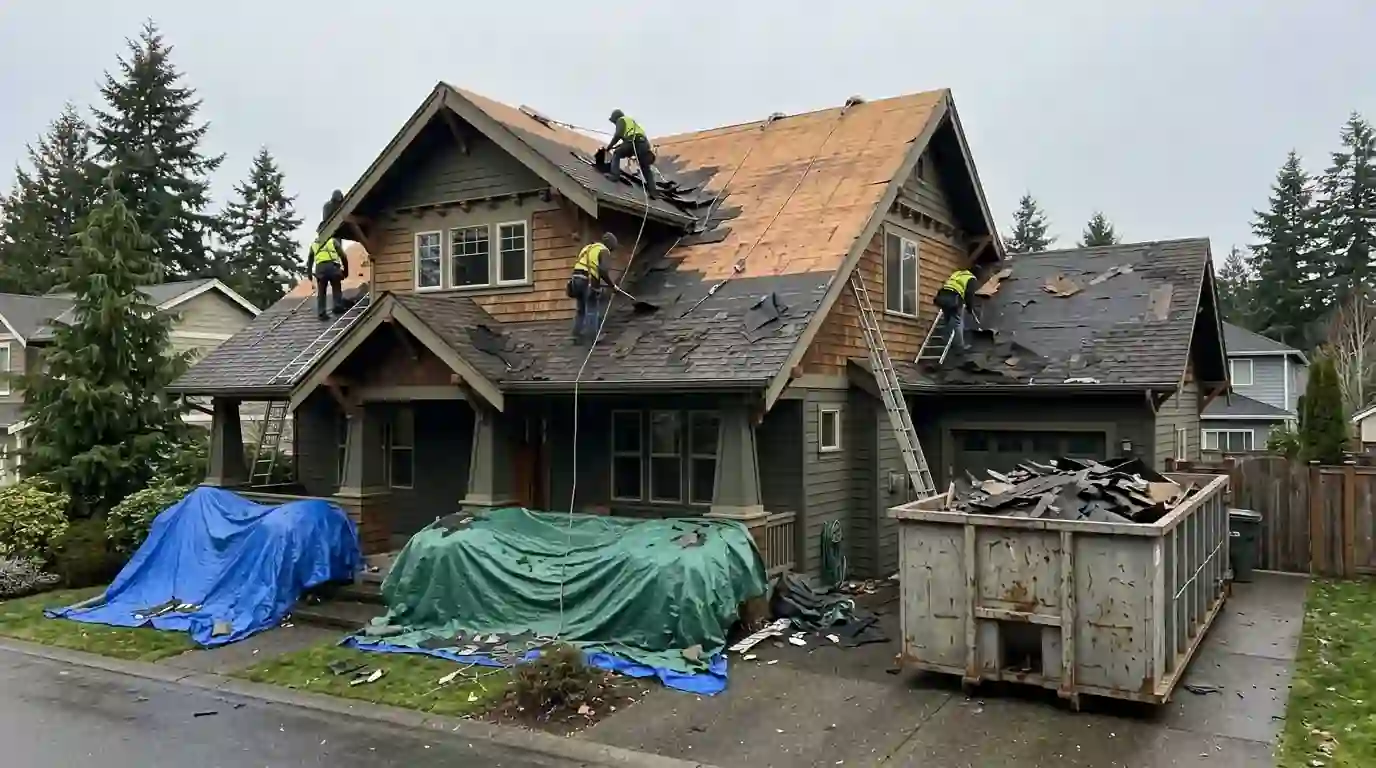
We strip shingles, felt, old flashing and any earlier layers down to the sheathing, working section by section so the house is never left open overnight. Tarps go over landscaping, and a magnetic sweeper runs the lawn and driveway at the end of each day. A tear-off is louder and messier than an overlay, but it is the only way to see the deck, replace rusted flashing at walls and chimneys, and give the new shingles a flat, sound base. On a steep or tall house, expect roof jacks or scaffolding.
Decking checks during tear-off
With the old roof off, we walk and sound every sheet. Soft spots, delaminated plywood, OSB swollen at the edges, and rot around old leaks all get cut out and replaced before underlayment. Older houses may have gapped board sheathing, or skip sheathing from a shake roof that needs solid sheets over it. We photograph what we replace so you can see why. Decking is the one part of a reroof that cannot be fully priced before tear-off, so the per-sheet rate is set up front. More in decking replacement.
Permit and historic-district checks
Before scheduling, we confirm whether your reroof needs a permit and whether the house sits in a local historic district. An overlay, a roofline change or a much heavier roofing material can each take a job outside the usual exemption. In a historic overlay, anything other than a like-for-like composition roof may also need design review. We sort this before ordering material, so the schedule does not stall halfway. Our reroof permit guide and historic district guide go into detail.
Partial versus full replacement
Sometimes only one slope is worn out, usually the face that takes the most sun or the one under trees. Replacing a single slope costs less now, but the new shingles will not match the old ones in color, and the remaining slopes will need their own tear-off and setup later. A partial job makes sense when the rest of the roof is young, or when an addition needs a new section tied in. On a roof where every slope is past middle age, a full replacement usually spends the money better.
What our replacement price includes
Scopes differ between contractors, so here is what a standard reroof from us covers.
- Full tear-off to the deck, with disposal
- Deck inspection and photos of any bad sheets
- New drip edge at eaves and rakes
- Synthetic underlayment plus membrane in valleys
- New step, counter and pipe flashing
- Ridge and intake vents sized to the attic
- Magnetic sweep and haul-away
Replacement decking is priced per sheet and added only for sheets we actually replace.
How a replacement runs, start to finish
We measure and inspect
Slopes, layers, deck condition and attic ventilation.
You choose the material
We walk through lines, colors and tradeoffs with you.
We settle permits and districts
Exemption, permit or design review is sorted first.
We protect the property
Tarps over plants and a plan for the driveway and dumpster.
We tear off and fix the deck
Old layers off, soft sheathing replaced, photos taken.
We dry in and roof
Drip edge, underlayment, flashing, vents and shingles.
We clean up and walk it with you
Magnetic sweep, debris hauled, and a final look together.
In Tacoma
Permits and historic rules for Tacoma reroofs
Tacoma exempts single-family and duplex reroofs from permits when old coverings come off, new roofing weighs 2.5 lb/sq ft or less, framing is unchanged and the building is not unreinforced masonry. The city has four local historic overlay districts, where visible exterior work on landmarks or contributing properties generally needs design review. In the North Slope and Wedge districts, a single-layer composition reroof with sheathing may skip that review, while other roof types may need Landmarks Commission review.
- Owens Corning
- CertainTeed
- GAF
- Malarkey
- IKO
- PABCO
- Atlas
- Tamko
Roof Replacement questions from Tacoma homeowners
Sometimes, but it hides deck problems, adds weight and falls outside Tacoma's reroof permit exemption. We recommend a tear-off on almost every house.
It depends on size, pitch and weather. A simple roof goes faster than a steep, cut-up one, and rain can pause work between stages.
Late spring through early fall has the most dry days. Winter reroofs work too, with more tarping between stages.
It depends on size, layers and material. Our replacement cost guide lays out what moves the number.
If they sag or are undersized, doing both at once avoids disturbing new drip edge later. See gutter installation.