Storm & Wind Damage Repair
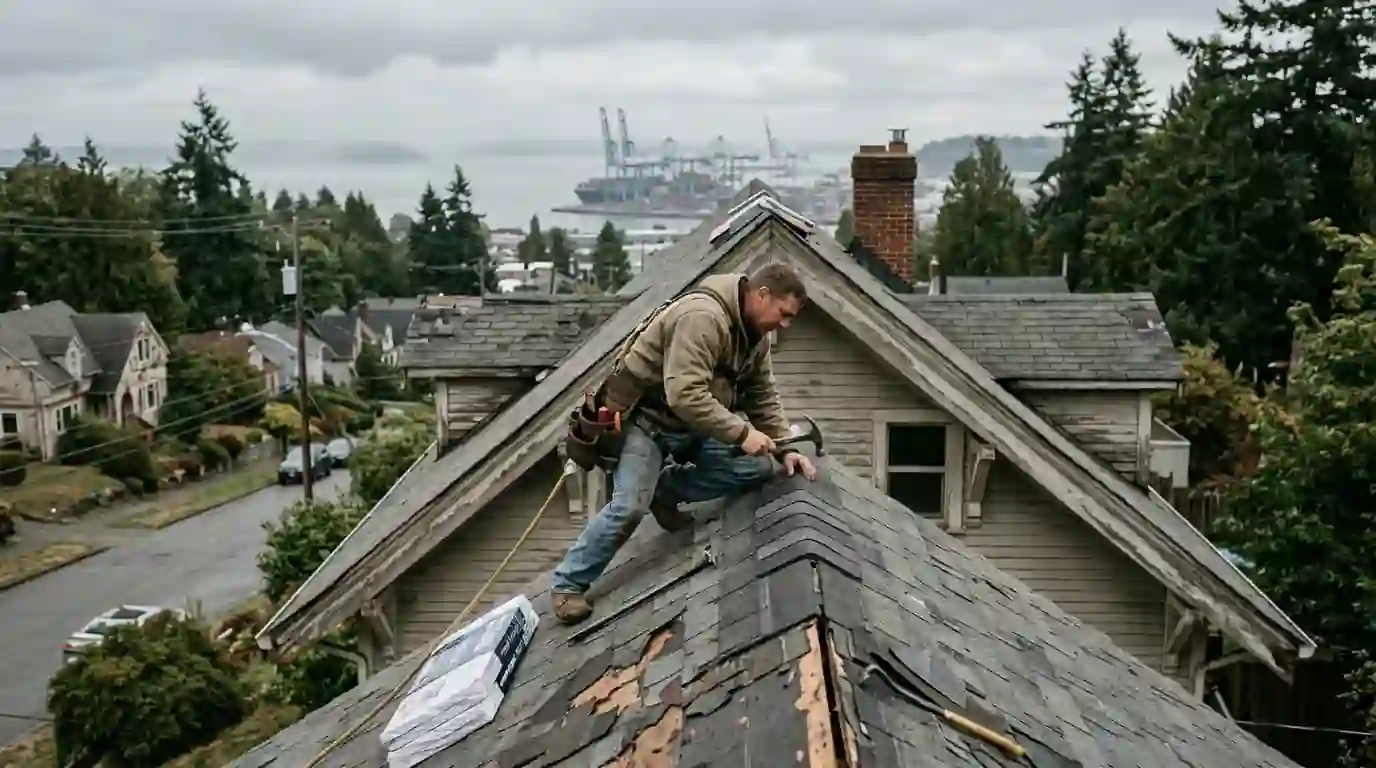
The bluff takes storms head-on, and lifted shingles follow every big blow.
DetailsHeight over the water is what sets Hilltop roofs apart. Wind-driven rain reaches flashing and siding that sheltered roofs never get tested on.
Short answer
Yes, we repair roofs on Hilltop, a neighborhood of about 12,002 residents on a high bluff above Commencement Bay and the Port. That height means wind reaches roofs here with little to slow it. Lifted shingles, torn ridge vents and leaks that show only in driving rain are the calls we get most often.
Hilltop sits on a high bluff over Commencement Bay and the Port of Tacoma. Storms coming up the Sound meet the bluff with nothing in the way, and roofs here take the wind at full strength. The first parts to fail are the ones with the least holding them down: ridge caps, rake-edge shingles, and tabs whose seal strip has let go.
Wind-driven rain also travels sideways and uphill under laps that would shed calm rain. On Hilltop, a leak that appears only during a southerly blow usually points to a wall junction, a vent facing the storm, or siding that lets water behind it. We look at those first.
Hilltop keeps a row of eight houses from 1889 and 1890 on South J Street, a reminder of how early this part of Tacoma was built. Older houses here often have board sheathing, tall chimneys and trim that has been painted over many times. Newer infill on nearby lots tends to have lower-slope roofs and flat sections over stairwells or entries.
That mix means we carry both skill sets onto Hilltop: hand-flashed steps and chimney crickets on the old houses, and membrane work on the newer low-slope sections. Our flat roof repair page covers the low-slope side, including scuppers that back up in November, the wettest month at Sea-Tac at 6.31 inches.
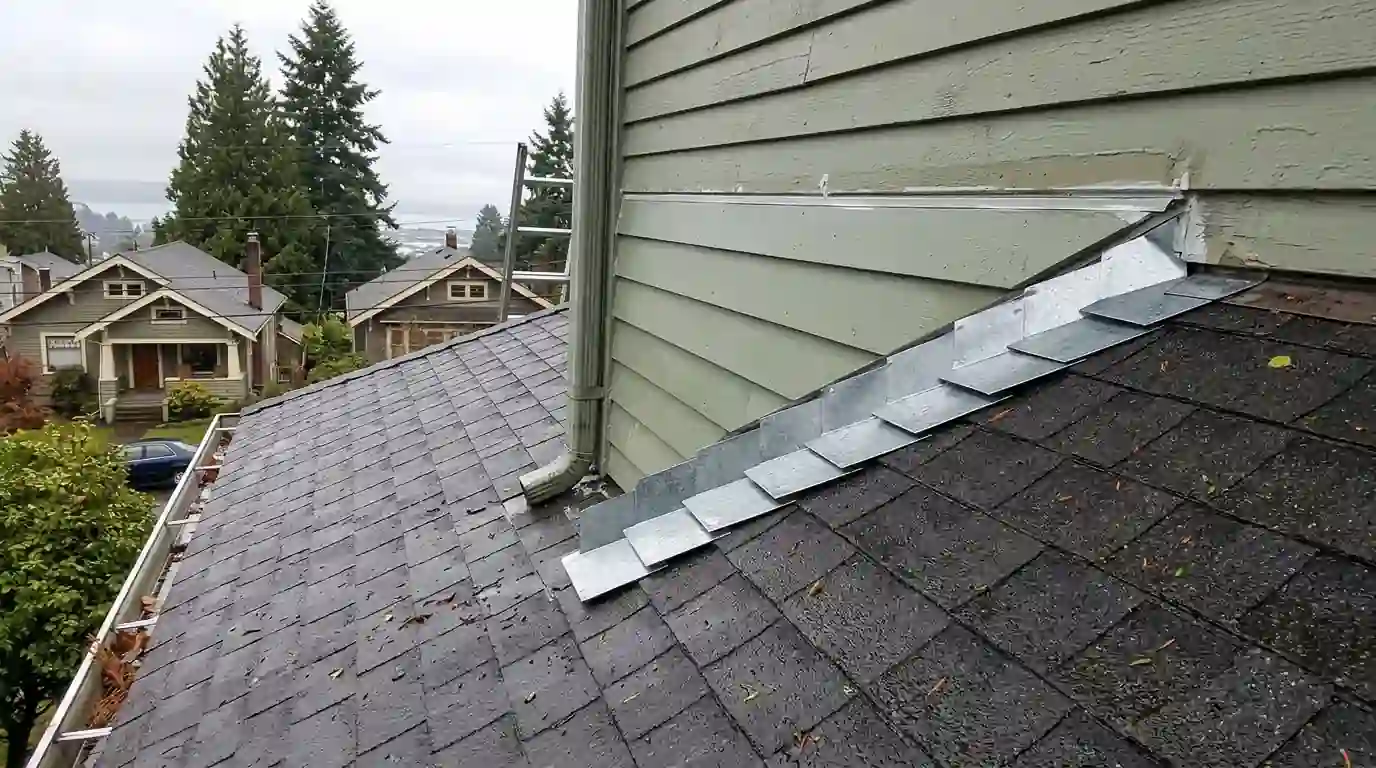
After a storm, start inside: look for new ceiling stains and damp spots near exterior walls. From the street, look for missing tabs, shingles lying in the yard, and bent ridge vents. Stay off the roof. Our windstorm checklist covers what is safe to check.
When we come out, we photograph the damage before touching it. Then we replace lifted and creased shingles, reset or replace ridge vents, and hand-seal tabs along the windward edges. A single-family reroof in Tacoma is often permit-exempt when the old coverings come off and the framing stays the same, so most storm reroofs here do not wait on a permit.
The bluff takes storms head-on, and lifted shingles follow every big blow.
DetailsWind-driven rain finds wall and vent junctions that calm rain never reaches.
DetailsTorn sections need a cover the same night the wind opens them.
DetailsTall chimneys on older houses here take wind and rain on every side.
DetailsNewer infill often has low-slope sections that pond and leak at scuppers.
DetailsDriving rain gets behind loose or cracked siding on exposed walls.
DetailsWind pushes rain sideways into wall junctions, vents and siding gaps that steady rain does not touch. Those spots are where we look first.
Sometimes. If wind and footing make it unsafe, we help you protect the inside and tarp at the first safe window.
Yes. We work on old and new houses across Hilltop, and older ones get the hand-flashing and board-sheathing care they need.
That is your decision. We document the damage with photos either way. Our storm damage page covers what we record.
Often not, for a single-family Tacoma house when old coverings come off and framing stays the same. We confirm before starting.
Or see the full South Sound coverage overview.
Call any hour. We will help you protect the inside and plan the repair for the first safe window.
Calls are answered around the clock. Tell us what you are seeing and where the house is, and we will set up a visit.
Our office sits in Puyallup, and our crews work across Tacoma and Pierce County. The map loads only when you ask for it.