After a windstorm: checking your roof safely from the yard and the attic
Most wind damage can be spotted from the yard, a window and the attic. Here is what to look for, what to photograph, and when to stop looking and call.
By Kathleen Peabody, Roofing Guides Editor · Updated October 2026
- Answering 24/7
- Puyallup office
- Tacoma and Pierce County
Short answer
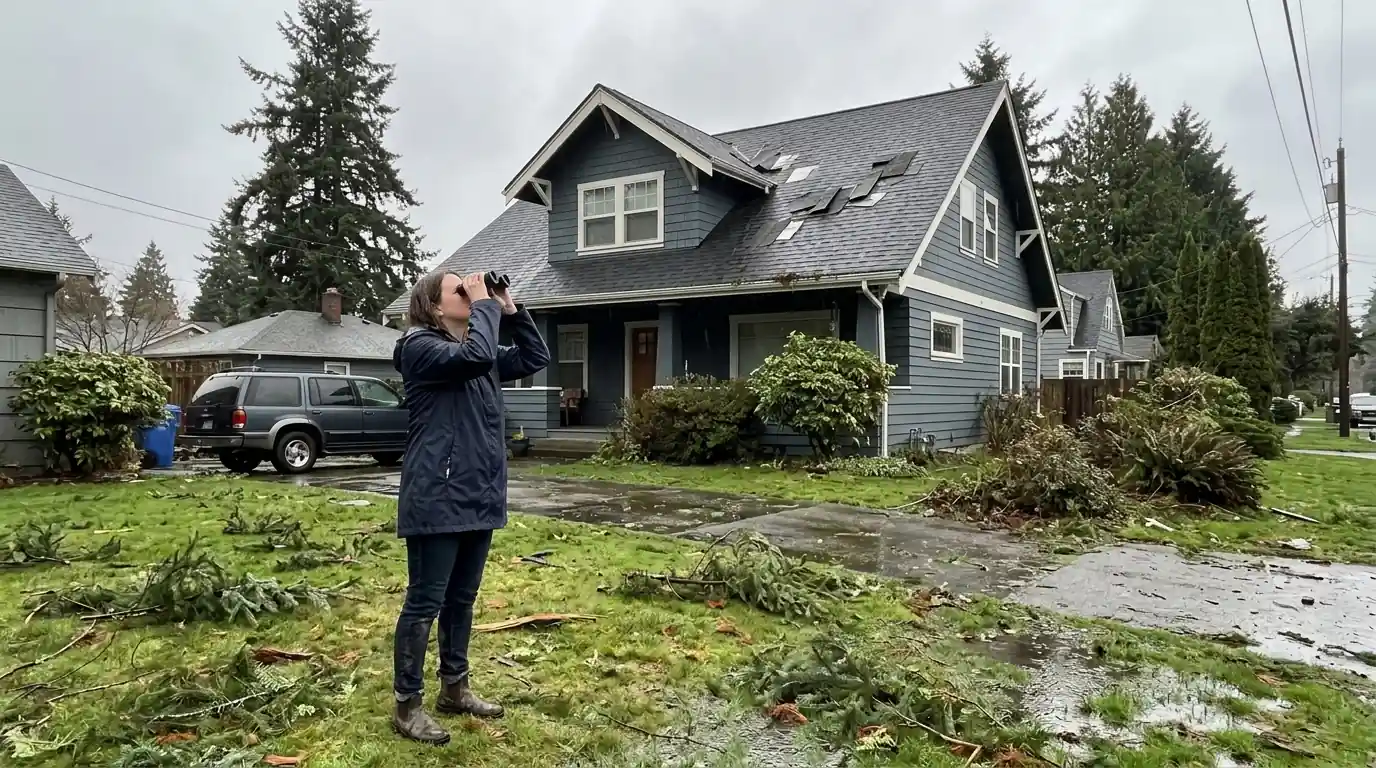
After a windstorm in Tacoma, check your roof from the ground and the attic, never from the roof itself. Look for missing tabs, shingle pieces in the yard, bent flashing and daylight or damp wood in the attic. Gusts reached 52 mph at Tacoma Narrows Airport in December 2018, enough to crease shingles that still look flat from the street.
How hard does the wind hit Tacoma roofs?
Hard enough to matter a few times a decade. In the December 2006 Hanukkah Eve storm, gusts hit 69 mph at McChord and Sea-Tac, and Tacoma Power lost 60,000 customers while PSE lost another 80,000 in Pierce County. The December 20, 2018 storm was smaller but still logged 52 mph at Tacoma Narrows Airport, 51 mph at JBLM and 43 mph in Fircrest.
The November 2024 bomb cyclone pushed gusts to 74 mph in Enumclaw and left nearly 600,000 western Washington customers without power. Storms like that rarely peel a whole roof. They lift the edges of shingles whose seal strips have aged, bend ridge vents and flashing, and drop limbs onto the roof, which is why the check afterward is about small details.
Why you should stay off the roof after a storm
A wet composition roof is slick, and a roof with moss or fir needles on it is worse. Shingles the wind has loosened can slide under a boot, and a limb that looks settled can shift once you put weight near it. Never climb onto a wet roof to look, and do not go up at all after dark or while gusts are still coming through.
Watch for power and service lines, too. A storm can drop a line onto the roof or across the gutter, and you cannot tell from the ladder whether it is live. If a line is down anywhere near the house, keep everyone clear and call the utility before anything else.
What to check from the ground
Walk the whole house with binoculars or a phone camera zoomed in, and look at every roof plane you can see from the yard, the sidewalk and upstairs windows. Daylight helps, so this is a morning job if the storm hit overnight.
- Shingle pieces, ridge caps or granule piles in the yard and gutters
- Gaps or lighter patches where tabs are missing
- Shingle edges lifted or standing up along a row
- Ridge vent sections bent, shifted or missing
- Flashing pulled away at chimneys, walls or skylights
- Gutters pulled off the fascia or bent at the corners
- Limbs resting on the roof or hanging over it
What lifted and creased shingles look like
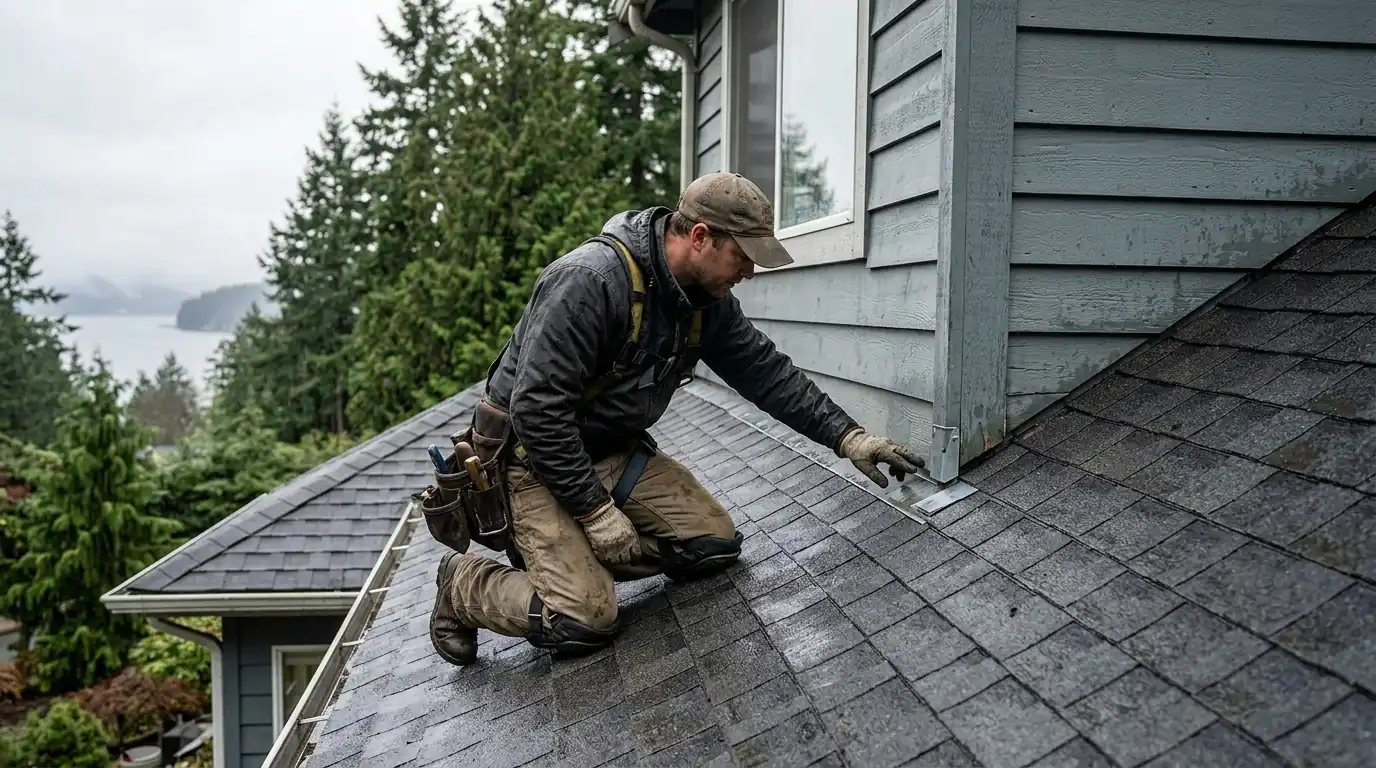
A composition shingle is held down by nails and a strip of sealant that bonds it to the course below. When wind gets under an aged edge, it bends the tab upward. If the tab drops back without tearing, it often leaves a straight crease across the shingle about where the nails sit. From the yard that looks like a faint horizontal line or a shingle that sits slightly proud of its neighbors.
A creased tab still sheds most water, which is why the damage gets missed. The crease cracks the mat, the seal strip no longer holds, and the next storm lifts the same tab further or tears it free. On a zoomed photo, look for broken lines along a row, shadows under edges that should lie flat, and shiny black spots where the granules have scraped away.
Want a second pair of eyes?
We answer 24/7. Call (253) 449-1922 and describe what you are seeing.
Clues inside the attic
The attic tells you what the yard cannot. Go up with a flashlight during daylight, step only on framing, and look at the underside of the roof deck near the ridge, the valleys and around every vent pipe. Pinpoints of daylight where there were none before, wet or darkened wood, and damp insulation below a spot are all worth photographing.
A dry attic after a windy but dry day does not clear the roof. Creased shingles often leak only once real rain comes. Check again after the next steady rain, and if you find water, our guide on what to do first when a roof leaks covers the first hour.
Documenting damage for your insurance claim
If you decide to file a claim, the claim is yours and so is the conversation with your insurer. What helps you most is a clear record made before anything is cleaned up or repaired. Your policy and the adjuster decide what is covered, so read the policy and ask your insurer about deadlines before you file.
When we inspect after a storm, we photograph each damaged area with a wide shot for location and a close shot for the damage itself, and we write up what we found. You can share that with your adjuster. Our storm damage repair page explains how the repair side works.
- Date and time of the storm, and where you were
- Wide and close photos of every damaged spot
- Photos of debris in the yard before you pick it up
- Attic photos of daylight, stains or wet wood
- Receipts for any tarp or emergency cleanup
When to stop checking and call a roofer
Call right away if water is coming into the house, a limb has punched through the deck, or a whole section of shingles is gone and rain is on the way. Those need a tarp or a temporary repair before the next storm, not a weekend wait. Fallen trees are a real risk here; the February 2019 storm dropped nearly 8 inches of snow on Sea-Tac, and crews spent days clearing fallen trees around Tacoma.
For lifted tabs, a bent ridge vent or flashing that has pulled loose, a planned visit is fine as long as nothing is leaking. A roof inspection after a storm covers the parts you cannot see from the yard, including seal strips that let go without leaving a mark.
Questions readers ask
Yes, a drone is a safe way to see the roof without climbing it. Fly in calm, dry weather, keep clear of power lines, and save the photos with their dates.
Look from the ground the next morning in daylight, once the wind has dropped. Check the attic that afternoon, then again after the next steady rain.
Not always. The underlayment may hold for a while, but it is not meant to be exposed. Get missing shingles replaced before the next rain if you can.
Usually, yes. A creased tab has a cracked mat and a broken seal, so it lifts again in the next storm. Replacing it costs far less than waiting for a leak.
If water is coming in, call a roofer first to stop it, and keep the receipts. Then follow your policy for reporting the claim to your insurer.
Leave it there and stay off the roof. Pulling a limb can tear more shingles or let it fall. Call us and we can tarp around it; see emergency tarping.