Deck building in Tacoma with flashed ledgers and framing that stays dry
A deck in this climate lives or dies at the ledger and the joists. We build the frame to shed water, then top it with the decking you choose.
- Answering 24/7
- Puyallup office
- Tacoma and Pierce County
Short answer
Deck building on a Tacoma house starts with the frame: posts on concrete footings, a ledger bolted and flashed to the house, and joists at 12 or 16 inches apart depending on the decking. We build with composite, cedar or pressure-treated lumber, add stairs and railings, and can roof part of the deck so it stays usable in the wet months.
What makes a deck last in a wet climate
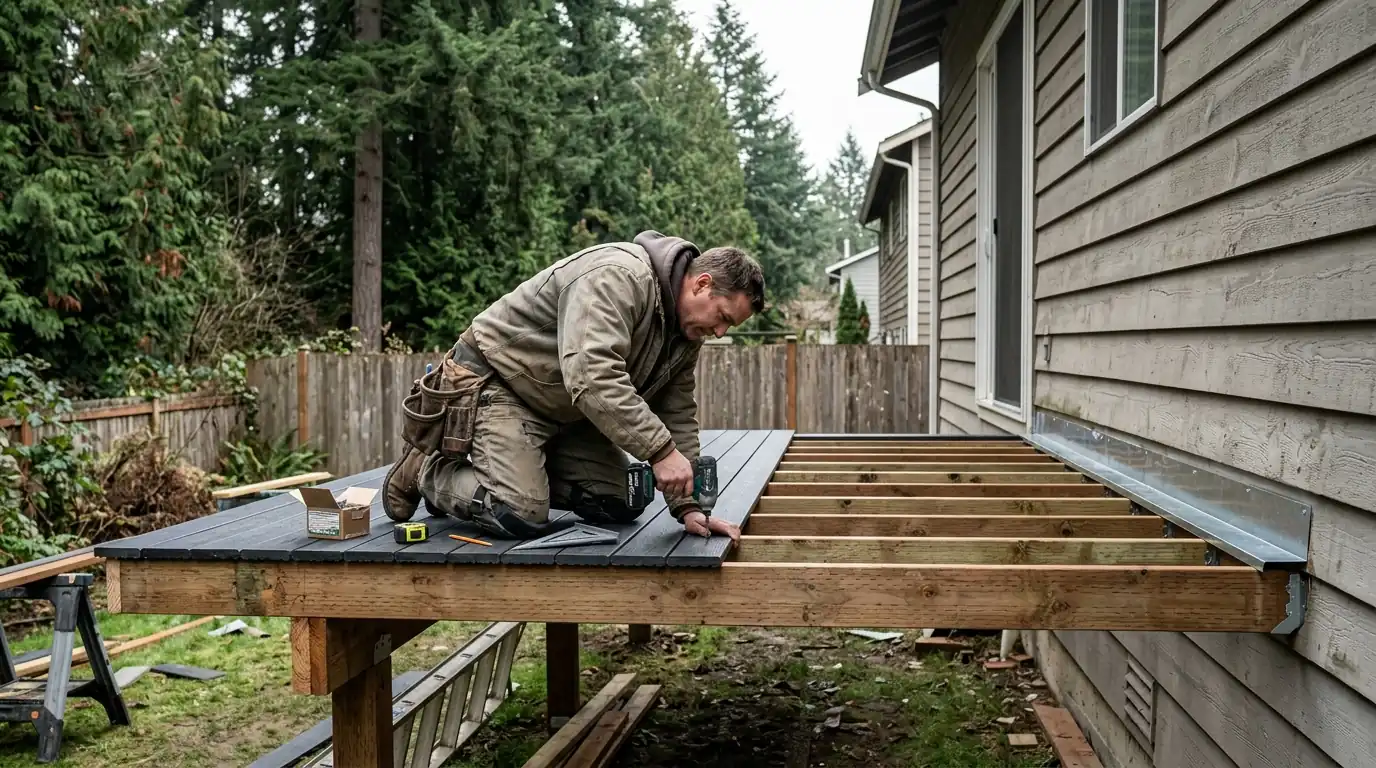
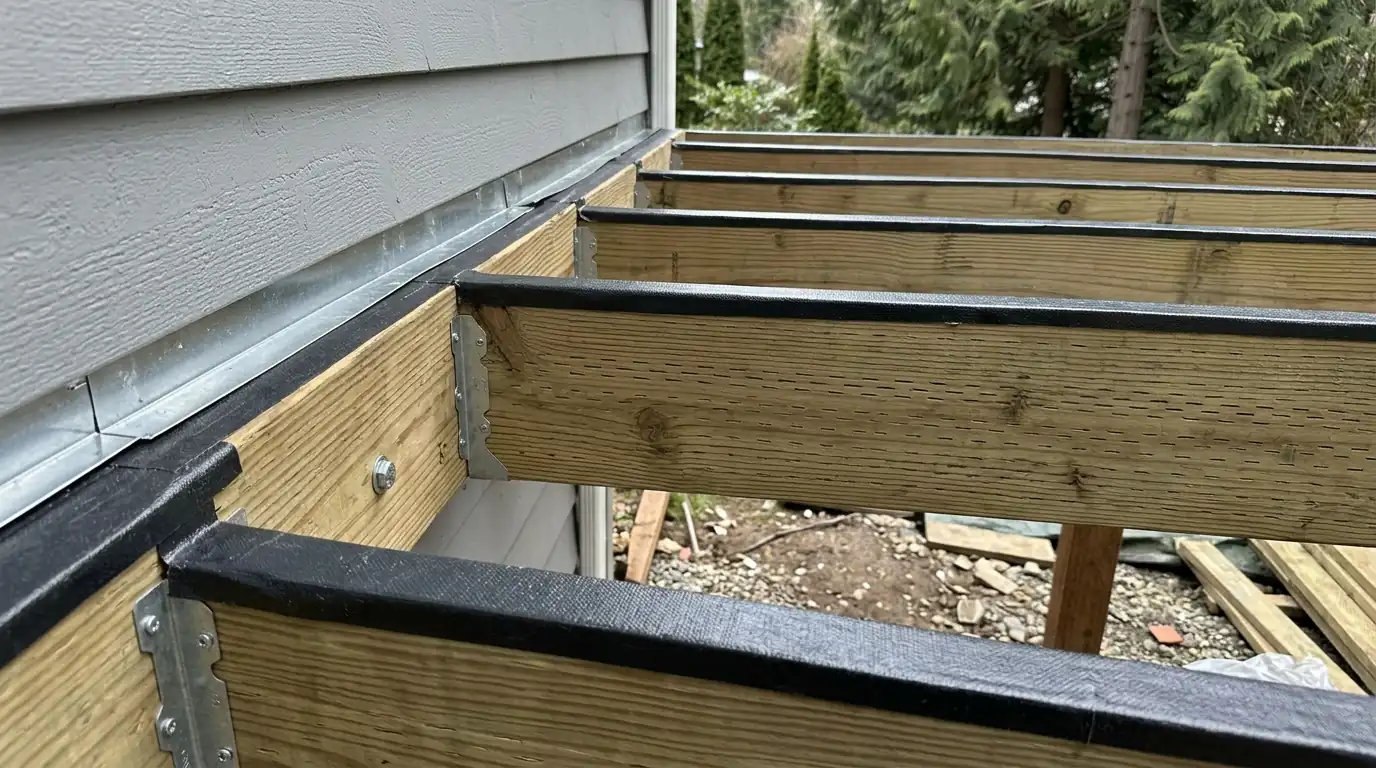
Most of a deck's life is decided before a single board goes down. The ledger needs flashing so water cannot collect behind it, the joists need tape on top so wet decking does not rot them from above, and the posts need to sit on footings rather than buried in soil.
Then comes the surface. Composite from Trex or TimberTech asks almost nothing of you but costs more. Cedar looks warm and needs stain every couple of years. Pressure-treated lumber is the budget choice and lasts if kept sealed. Permits may apply depending on size and height, and we check before building.
What affects the cost of a new deck
Treat the Seattle-area range below as a rough planning number. Your design and site decide where it lands.
Published range, not a quote and not our price. Source: angi.com, 2025-10. Your number depends on the factors below and is set after we see the roof.
Size and height
Bigger and taller decks need more framing and footings.
Decking material
Composite costs most; pressure-treated costs least.
Railings and stairs
Long rail runs and stairs add material and labor.
A roof overhead
Covering the deck adds framing, roofing and a gutter.
Site and access
Slopes, poor soil and tight yards make the build harder.
Composite, cedar or pressure-treated decking
The three decking choices we build with most, side by side.
| Item | Composite | Cedar | Pressure-treated |
|---|---|---|---|
| Upkeep | Wash it | Stain every couple of years | Seal regularly |
| Rot and moss | Resists both | Resists rot naturally | Resists rot, grows moss |
| Look over time | Holds its color | Weathers silver unless stained | Checks and cracks |
| Up-front cost | Highest | Middle | Lowest |
Composite decks
Composite and capped polymer boards do not rot, splinter or need stain. Moss also struggles to take hold on the capped surface. They are heavier and more flexible than wood, so they need closer joist spacing, and they run hot in direct summer sun. Color and texture choices are wide, and hidden fasteners leave a clean surface. The frame under composite is still wood, so we tape the joist tops and use proper hardware. Composite fits if you want the deck without a yearly maintenance chore.
Cedar and pressure-treated decks
Western red cedar resists rot naturally, has a warm color and weathers to a soft silver if left alone, though it dents easily and needs a penetrating stain to hold its color. Pressure-treated lumber costs least and holds up structurally, but it checks and cracks as it dries and needs sealing. A common middle path is a treated frame with cedar decking and rails. Either way, we use coated or stainless fasteners rated for treated wood, since plain screws corrode in it and fail early.
Covered decks
A roof over the deck turns it into space you can use in a drizzle, and it protects the decking from the worst of the weather. The roof can tie into the house roofline or stand on its own. Either way it is framed for the wind and snow it will carry. We roof it with shingles to match the house, metal, or translucent panels. A covered deck also needs its own gutter and downspout, because water off the new roof otherwise pours straight onto the steps or against the foundation.
Deck permits
Whether a deck needs a permit can depend on things like its size, its height above the ground, whether it attaches to the house and whether it carries a roof. Cities and the county each set their own thresholds, and they change. Rather than guess, we check the rules for your address before building and pull the permit when one is required. Permitted work is usually inspected along the way, and that record helps when you sell the house. Building to a plan the inspector has seen also saves rework.
From sketch to finished deck
You call with the idea
Size, use, and where you picture it on the house.
We measure the site
Grade, house wall, doors and where water drains.
You choose materials
Decking, railings and whether part of it is covered.
We check permits
Rules for your address before anything is built.
We set footings and posts
Concrete footings with post bases above grade.
We frame and flash
Ledger flashed and bolted, joists taped on top.
We deck and rail it
Boards, stairs and railings installed and checked.
Around Tacoma
New decks on newer Gig Harbor houses
Tacoma-area deck calls come from older houses replacing worn decks and from newer houses that never had one. Gig Harbor is the clearest case of the second. The city grew 68.8% between 2010 and 2020, 31.7% of its housing was built in that decade, and 62.2% of occupied homes are owner-occupied. We often see houses from those years with a small builder deck or just a patio slab, and owners call us to add a larger deck, often with a covered section for winter.
- James Hardie
- LP SmartSide
- CertainTeed
- Royal
- Trex
- TimberTech
- Milgard
- Pella
Deck Building questions from Tacoma homeowners
Composite skips staining and resists moss but costs more. Cedar looks warmer and costs less, with a fresh coat of stain every couple of years.
Permits may apply, and the rules differ between the city and the county. Confirming what your lot needs is part of our planning.
Yes. A covered deck gets roofing, flashing at the house and its own gutter. See also patio covers.
Flashing over the ledger, joist tape on the frame, posts on footings, and proper spacing between boards so water drains and air moves.
Often, if the footings are sound. If only parts have failed, deck repair may cost you far less.