Flat roof repair in Tacoma for leaking garages, porches and low-slope additions
Low-slope roofs leak at seams, drains and edges long before the field wears out. We find the failed spot and repair it in the same material.
- Answering 24/7
- Puyallup office
- Tacoma and Pierce County
Short answer
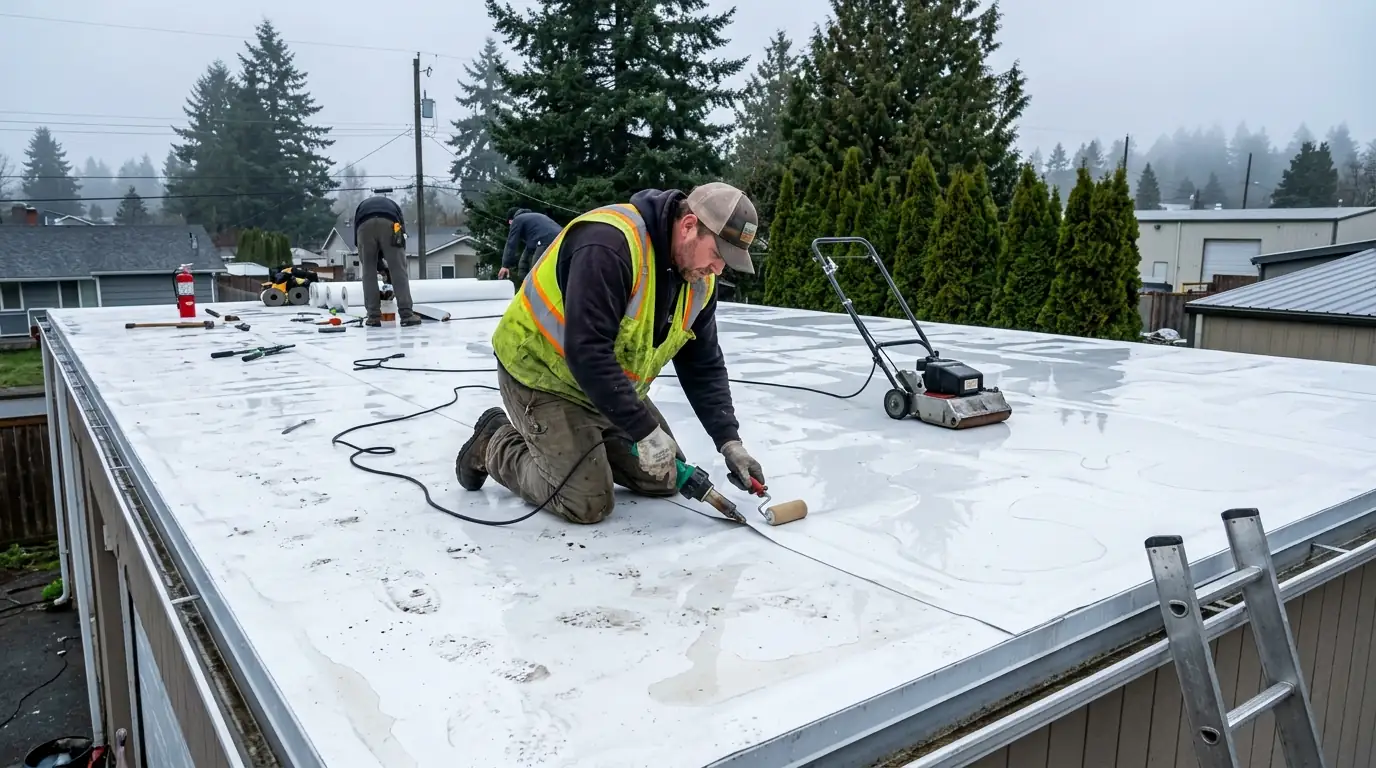
Most flat roof leaks in Tacoma come from one of three places: a seam that has opened, water ponding for more than 48 hours, or a scupper or parapet edge that has lost its seal. We repair the existing membrane in matching material, whether it is TPO, EPDM, torch-down or built-up, and dry out the deck before closing it.
Repairing the low-slope roof you already have
A repair makes sense when the membrane is mostly sound and the leak traces to one spot. Flat roofs fail at their details: lap seams, drain bowls, scuppers, parapet caps and pipe penetrations. Under the leak we cut out wet insulation or rotten deck, then patch with the same membrane so the repair bonds to the roof instead of sitting on top of it.
Some roofs are past patching. If seams are opening across the whole field or the surface is cracked like dry mud, we will say so and price a new TPO roof or torch-down roof next to the repair.
Signs a flat roof needs repair now
Most of these show from an upstairs window or the room below.
Water still standing two days later
Ponds that outlast the rain stress seams and add weight.
Bubbles you can press
Soft blisters mean moisture is trapped between layers.
Lifted lap edges
A seam edge you can slide a fingernail under will leak.
Stains below the roof edge
Marks under a parapet point to the cap or the scupper.
A ceiling that sags mid-room
Wet insulation above is heavy and hides how far water traveled.
Ponding water
You notice puddles still sitting two days after the rain, a dirty ring where they dry, and eventually a ceiling stain. The causes are a sagging deck, crushed insulation, a drain set too high, or a roof that never had enough slope. Small low spots can be built up with tapered fill under a membrane patch, and a drain can sometimes be lowered. Patching the leak without fixing the slope only resets the clock, and real slope correction across a whole roof starts to look like a new roof.
Blisters and seam splits
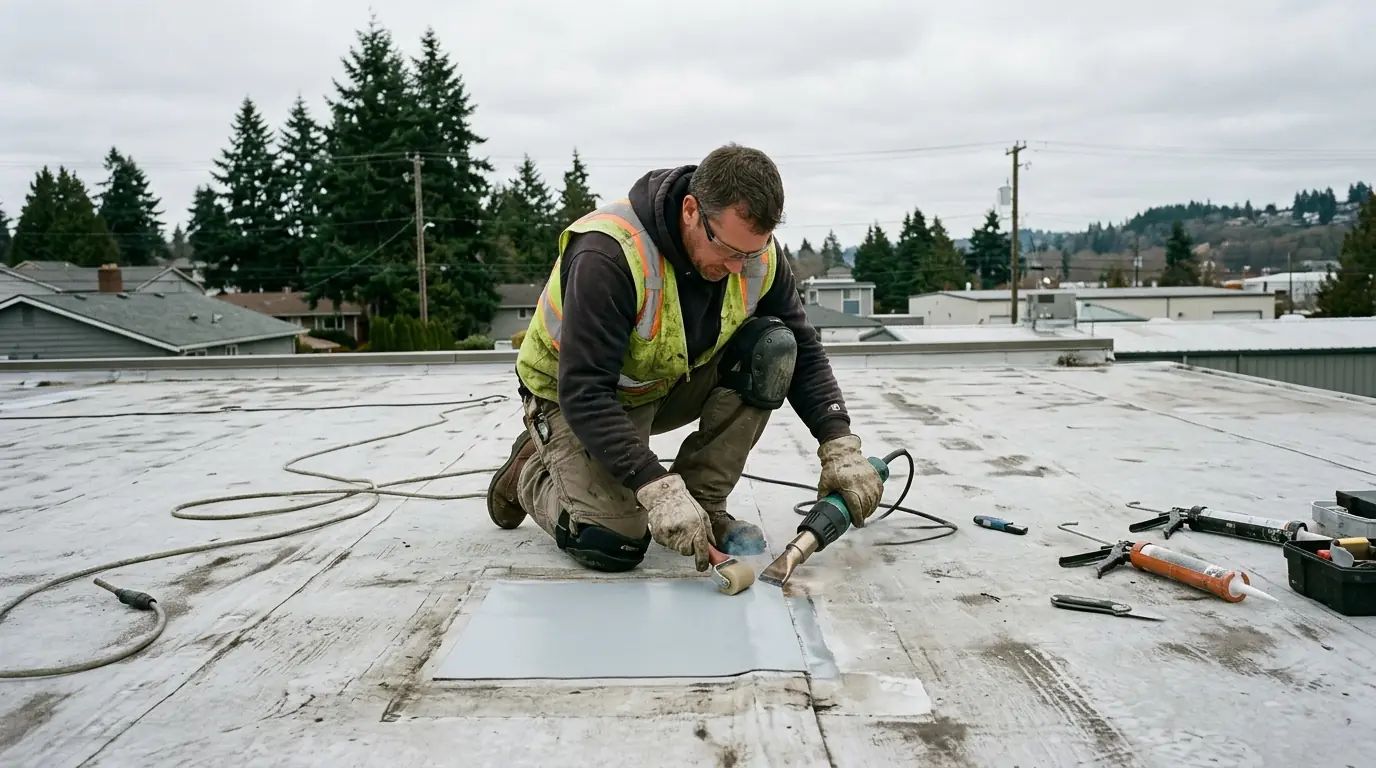
Blisters are soft bubbles where air or moisture got trapped between plies and swells on warm days. Seam splits show as lap edges you can lift with a fingernail. A dry, intact blister is often safer left alone, since cutting it creates a weak spot. One that has cracked gets cut open, dried, adhered back down and covered with a larger patch. Open TPO seams are cleaned and rewelded with hot air, and EPDM laps get primer and new seam tape. When seams are failing everywhere, the membrane is near its end.
Parapet and scupper leaks
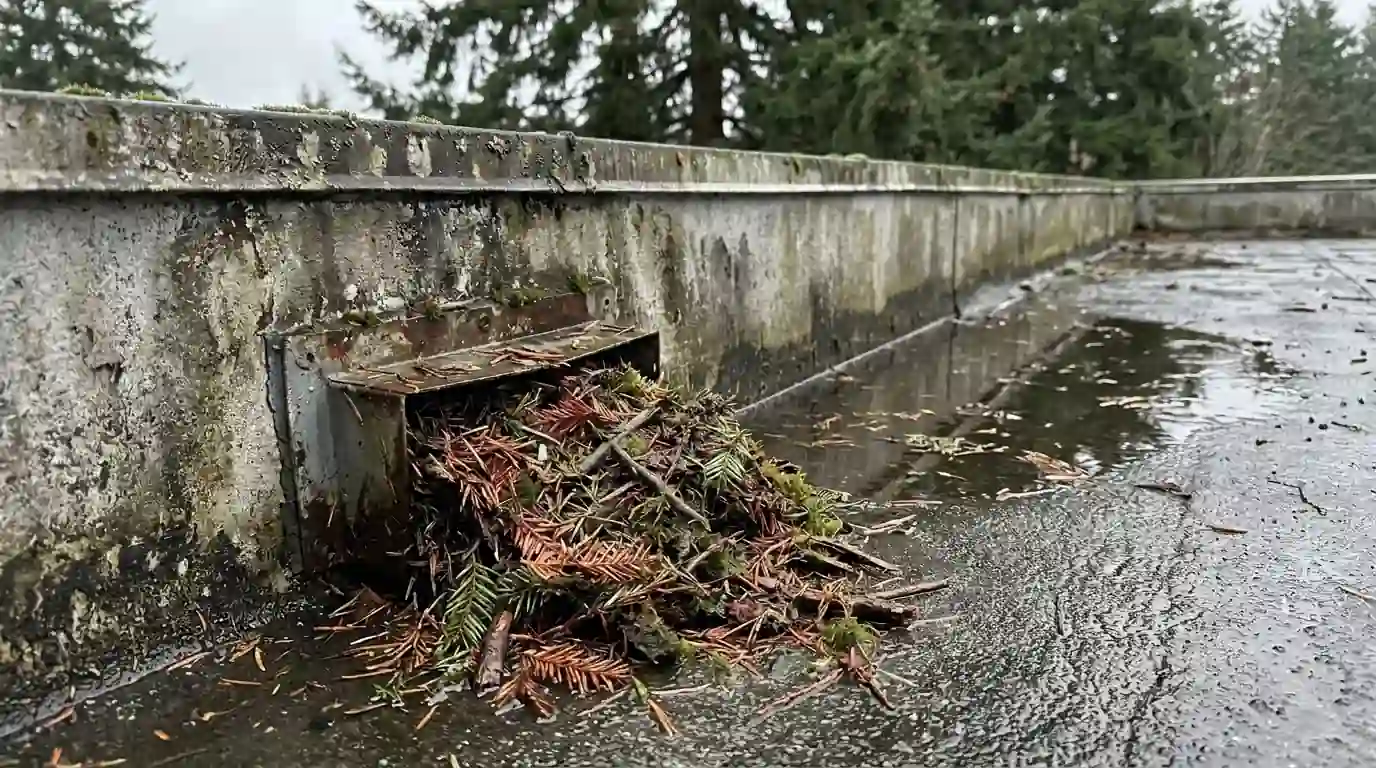
Water staining the wall just below the roof edge, or paint bubbling on an outside wall, usually points to the parapet cap or the scupper. Cap joints open up, membrane flashing pulls away from the wall, and scupper corners split. Leaves and needles jam the opening, so water backs up over the flashing. We re-terminate the membrane up the wall under a termination bar and counterflashing, and replace split scupper boxes. Caulking old cap joints is cheaper, but it rarely makes it through a second winter.
How a flat roof repair visit goes
You tell us where it drips
Which room, and whether it follows every rain or only downpours.
We look from inside
Ceiling stains narrow down where to probe above.
We walk the membrane
Seams, drains, edges and penetrations, checked by hand.
We open the wet area
Saturated insulation or soft deck is cut out and dried.
We patch in kind
Welded, taped or torched to bond with the existing roof.
We clear the outlets
Scuppers and drains are emptied so water leaves the roof.
We run water over it
A hose test confirms the repair holds.
In Tacoma
Why Tacoma flat roofs often fail at the drains first
Tacoma's own climate table shows about 40.81 inches of precipitation over roughly 155 days a year, and a low-slope roof has to move all of it through a few scuppers or a single drain bowl. Tree canopy covers about 20% of the city's land, and in some census blocks it reaches 64%. Under that cover, needles collect at the outlets, water backs up against the seams, and the roof leaks at its edge while the field is still sound.
Flat roof fixes you can do, and the ones to leave
Some upkeep is safe from a ladder. Patching is where well-meant fixes usually backfire.
| Item | Doing it yourself | When to call a roofer |
|---|---|---|
| Clogged scupper or drain | Clear needles and leaves by hand from the edge. | If water still backs up once it is clear. |
| Puncture from a branch | Cover it with a weighted tarp until it dries. | Before reaching for canned sealant, which won't bond to a wet membrane. |
| A blister you can see | Leave it alone and keep an eye on it. | If it cracks or the room below shows a stain. |
What changes the price of a flat roof repair
Flat repairs are priced once we find the source. The range shown is a general roof repair figure, useful for small, single-spot fixes.
Published range, not a quote and not our price. Source: homeadvisor.com, 2026-06. Your number depends on the factors below and is set after we see the roof.
Membrane type
TPO welds, EPDM tapes and torch-down patches each need their own tools.
Wet insulation
Soaked board under the leak comes out before patching.
Deck damage
Rotted plywood or planks under a pond add carpentry.
Edge metal
New parapet caps or scupper boxes add sheet metal work.
Access
Roofs above a second story or over glass need extra staging.
Flat Roof Repair questions from Tacoma homeowners
We can stop active water with a temporary patch or a tarp. Welding, taping and torching need a dry surface, so the permanent repair waits for a dry window.
Water that dries within two days is normal on many low-slope roofs. Ponds that sit longer age the membrane faster and point to a slope or drain issue.
Usually, but new membrane will not bond to most coatings. We scrape back to clean membrane around the repair, then patch and recoat the area.
One leaking spot on a flexible membrane is a repair. Seams failing across the roof point to TPO roofing, or a roof coating if the membrane is still sound.
TPO is usually white and smooth, EPDM is black and rubbery, and torch-down has a granular surface laid in overlapping rolls.