Roof repair for Tacoma houses, from one lifted shingle to a worn ridge
Wind-lifted shingles, split vent boots, nail pops and worn ridge caps start most leaks on Tacoma houses. We find the failed part and fix it with matching material.
- Answering 24/7
- Puyallup office
- Tacoma and Pierce County
Short answer
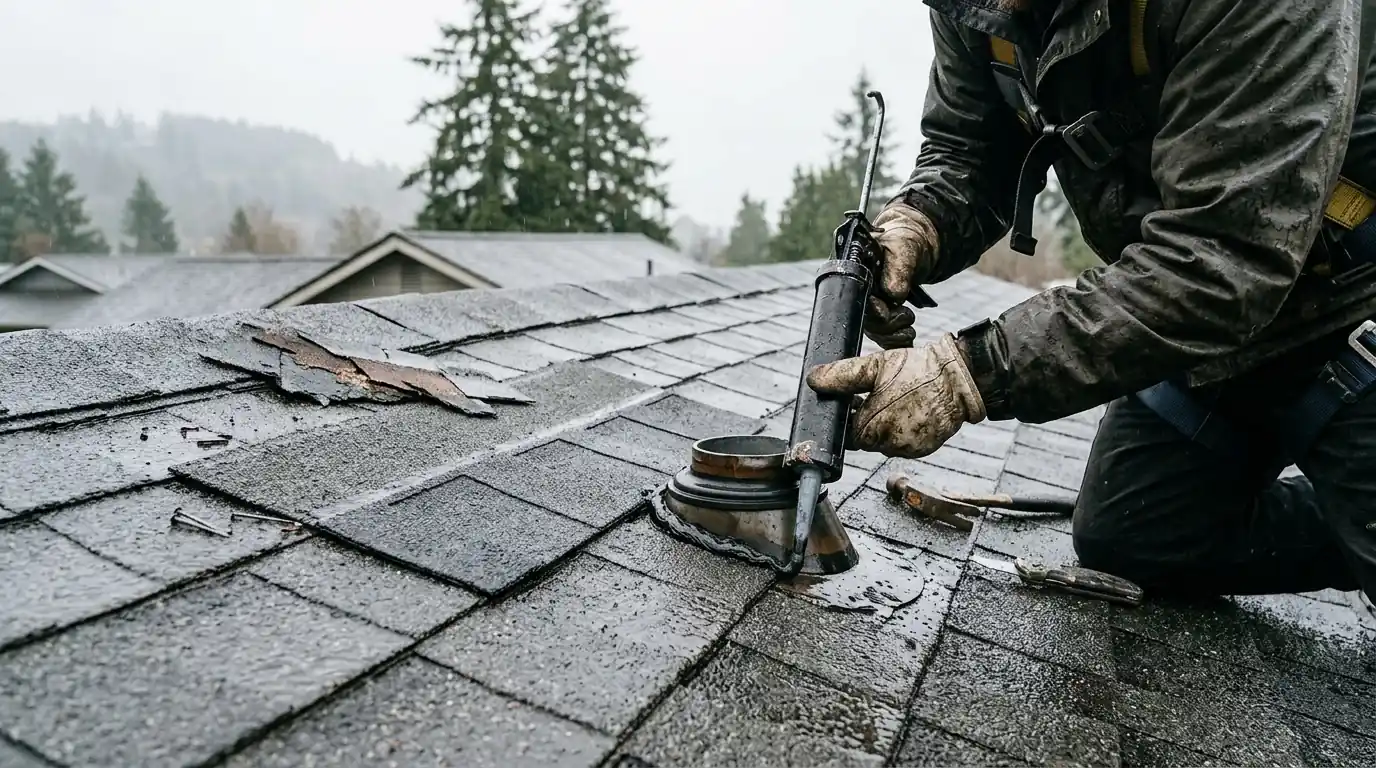
Most roof repairs on Tacoma houses fix one of four parts: lifted or missing shingles, a cracked pipe boot, a worn ridge cap or nails backing out of the deck. We replace the failed piece, reseal the course around it, and tell you plainly if the rest of the roof is close to the end of its life.
What a roof repair actually involves
A repair is the right call when the roof is mostly sound and one part has failed. On a composition roof that usually means a handful of shingles, the rubber boot around a plumbing vent, a run of ridge cap, or nails that have worked loose. We fix the failure and the course around it, because one new shingle dropped into a stiff old roof rarely seals on its own.
We match profiles from makers like Owens Corning, Malarkey and CertainTeed where we can, but older roofs fade, so we say up front how visible the patch will be. If the whole roof is tired, we price replacement alongside the repair.
What moves the price of a roof repair
Repair pricing is set after we see the roof. The published range below is a rough planning figure for small repairs.
Published range, not a quote and not our price. Source: homeadvisor.com, 2026-06. Your number depends on the factors below and is set after we see the roof.
Access and pitch
Steep or three-story roofs need more staging and fall protection.
Matching material
Discontinued colors and three-tab profiles take longer to source.
What is underneath
Soft decking or rotted fascia found during the repair adds scope.
How many spots
One cracked boot is quick. Six failures price closer to a larger job.
The weather window
Winter repairs may need hand-sealing and a return check.
Missing and lifted shingles
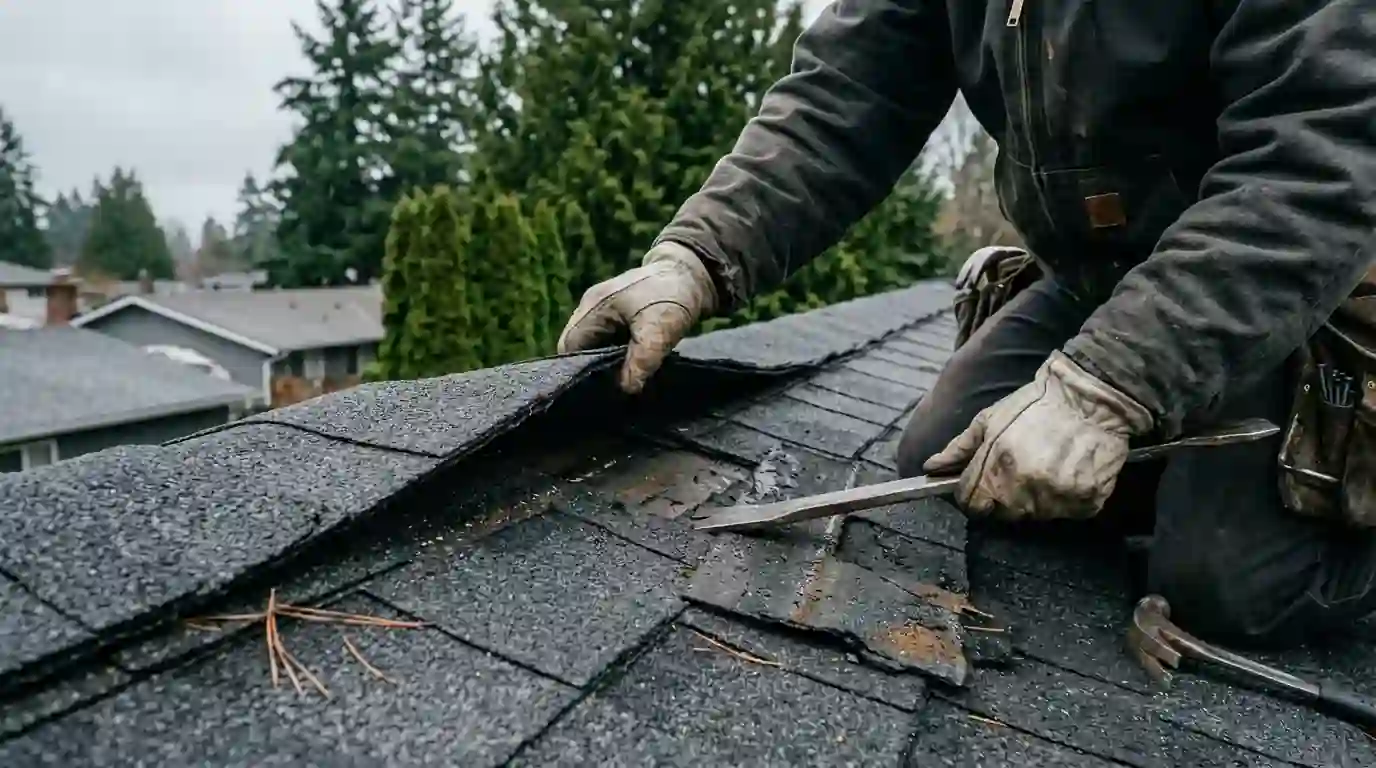
Wind gets under a tab whose seal strip has let go and either creases it or tears it off. A creased shingle looks fine from the street but leaks along the fold. We lift the course above without cracking it, pull the old nails, slide a new shingle in and nail it under the course above. On cold or wet days the new tab will not self-seal, so we hand-seal it with roofing cement and look at it again once the weather dries out.
Pipe boot and vent repair
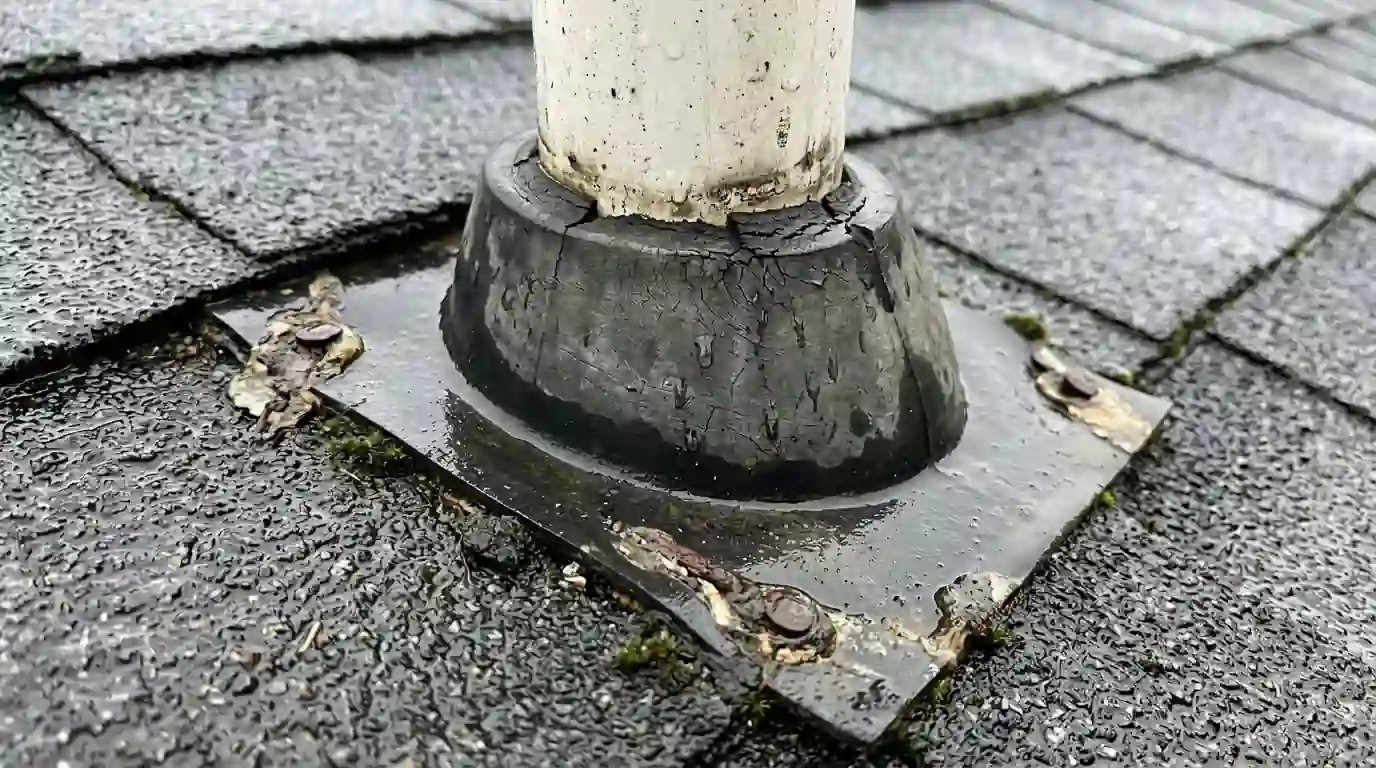
The rubber collar on a plumbing vent boot dries out and splits after years of sun, and water runs down the pipe into the bathroom ceiling below. Caulk over the crack buys weeks, not years. We replace the boot with a new flashing that slides under the course above and over the course below, so water sheds the way it should. Box vents with cracked plastic flanges get the same treatment, and we check that the bath fan duct is still attached underneath.
Ridge cap repair
Ridge caps take the most wind and sun on the roof, and on older roofs they crack across the fold or lose their nails before the field shingles do. A split ridge lets wind-driven rain blow straight into the attic. We strip the damaged caps back to a sound overlap, replace them with matching cap shingles on the correct exposure, and check the ridge vent underneath for torn baffles, missing nails or a gap that an earlier repair left behind.
Nail pops and exposed fasteners
As the wood deck swells and dries through wet winters and dry summers, roofing nails back out and push up the shingle above. Eventually the head punches through the shingle and gives water a straight path into the wood deck. We drive a new nail beside the old hole, seal the old one and replace the shingle above if it has been cut. Exposed fasteners on flashings, vents and older patches get sealed or replaced while we are up there.
How a repair visit runs
You call and describe it
Where the water shows up, or what came off the roof.
We check the attic
Stains and wet insulation point us to the right part of the roof.
We inspect the roof
The suspect area plus vents, valleys, ridge and walls around it.
You get the findings
What failed, what we will repair and what is close behind.
We make the repair
Failed pieces out, matching material in, the course resealed.
We clean up
Old material goes in the truck and we sweep the drip line for nails.
We check it again
A winter repair gets a seal check once the weather turns dry.
In Tacoma
Repairs on older Tacoma roofs
About 26.9% of Tacoma homes were built in 1939 or earlier, and NeighborhoodScout puts that share at 65.2% in the North End. On houses that old, a repair often sits on board sheathing rather than plywood, and the roof may carry several earlier patches in mismatched colors. We probe the boards around each repair before nailing into them, because a fastener in a split or softened plank will not hold through a winter of wind and rain.
Signs your roof needs a repair
These are things you can spot from the yard or the attic without climbing on the roof.
A stain on the ceiling
Rings near a bath, light or outside wall usually trace to a vent or flashing above.
Shingle pieces on the lawn
Tabs in the yard after wind mean the seal strip let go.
A streak below a vent pipe
Dark staining under a pipe often means the boot has split.
Daylight in the attic
Pinpoints of light show nail holes or gaps that let rain in.
Small bumps under shingles
Raised spots are often nails backing out of the deck.
- Owens Corning
- CertainTeed
- GAF
- Malarkey
- IKO
- PABCO
- Atlas
- Tamko
Roof Repair questions from Tacoma homeowners
Usually close, rarely exact. Shingles fade, so even the same product looks newer for a season or two.
Yes, when the roof is mostly sound and one part has failed. If the shingles are brittle and leaking in several places, replacement is the better spend.
We can stop water with a tarp in the rain. The permanent repair waits for a dry window so the material bonds.
Wind lifts tabs whose seal strip has let go, and creased shingles leak along the fold. Our storm damage page covers what to check.
Yes. See cedar shake roofing and flat roof repair for how those jobs differ.