Roof Replacement
Composition reroofs are the most direct path under the district guidelines.
DetailsOver 900 homes sit inside the North Slope Historic District, and the City's design guidelines decide which materials fit. We plan the work around those rules before anything comes off.
Short answer
Yes, we reroof in the North Slope Historic District, where the City of Tacoma's design guidelines cover more than 900 homes built from 1881 to 1955. A single-layer composition reroof may not need a building permit, and so skips design review. Metal roofing is not acceptable on historic homes there, and other roof types may need Landmarks Commission review.
The City of Tacoma's North Slope and Wedge design guidelines cover both districts. The North Slope holds over 900 homes built between 1881 and 1955, and the smaller Wedge district has about 70 homes from early Tacoma to just after World War I. Tacoma has four local historic overlay districts in all, and visible exterior work on landmarks or contributing properties generally needs design review.
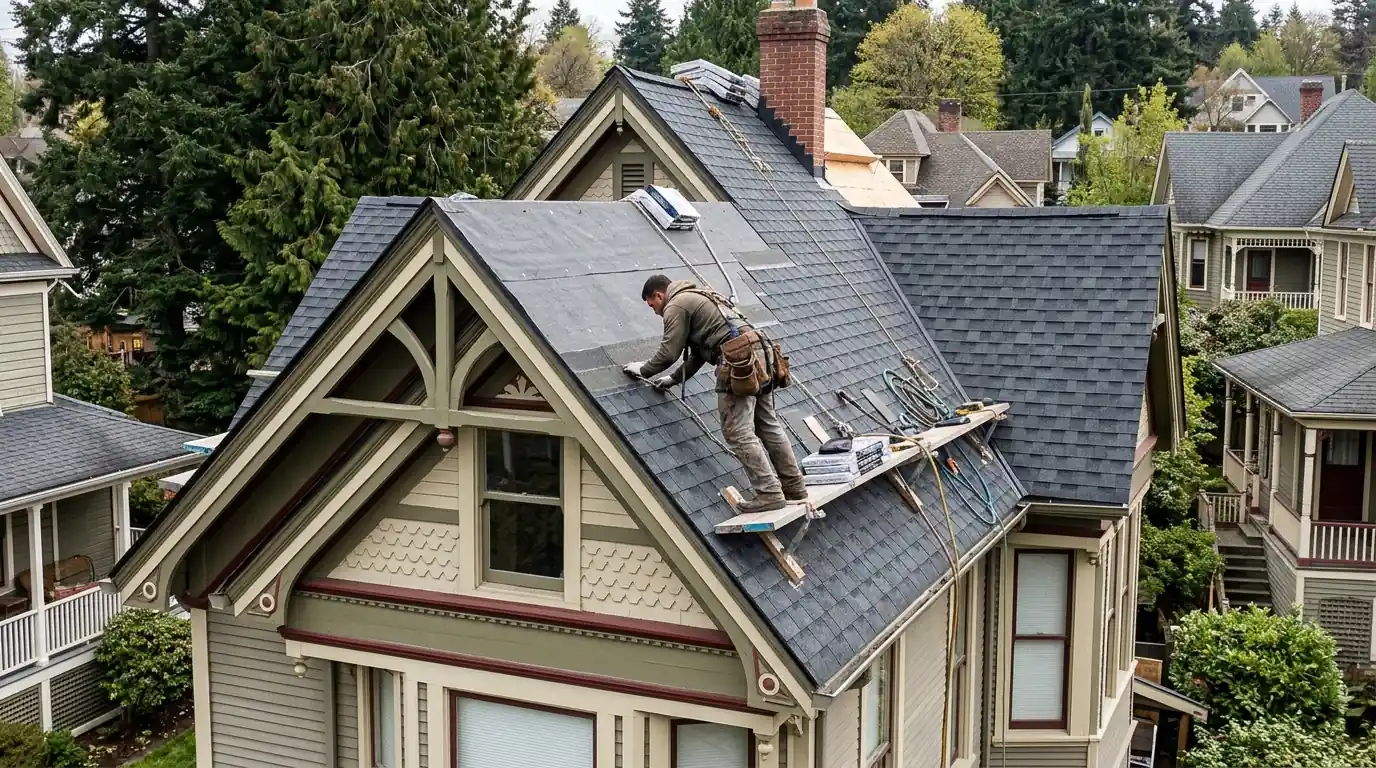
For roofs, the guidelines accept composition roofing as a substitute for original wood shingles. They also state that metal roofs are not acceptable for historic homes. That rules out a common modern upgrade, so owners who want standing seam need to know before they start shopping.
The permit path matters too. According to the guidelines, a single-layer composition reroof that includes sheathing may not need a building permit and so would not trigger design review. Other roof types may need Landmarks Commission review. We confirm the path with the City before ordering material.
The same guidelines ask owners to repair small siding failures rather than strip large areas of original siding. In practice that means cutting out rotted boards, milling or sourcing a matching profile, and keeping the rest of the wall. It is slower than residing a whole elevation, but it keeps the house within the rules and keeps original material that has already lasted a century.
Windows follow a similar rule: the guidelines reject vinyl windows as replacements for historic windows. When a sash is failing, we look at repair first and talk through what a replacement would need to look like. Our window page covers the options, and we tell you plainly when a project needs review before it starts.
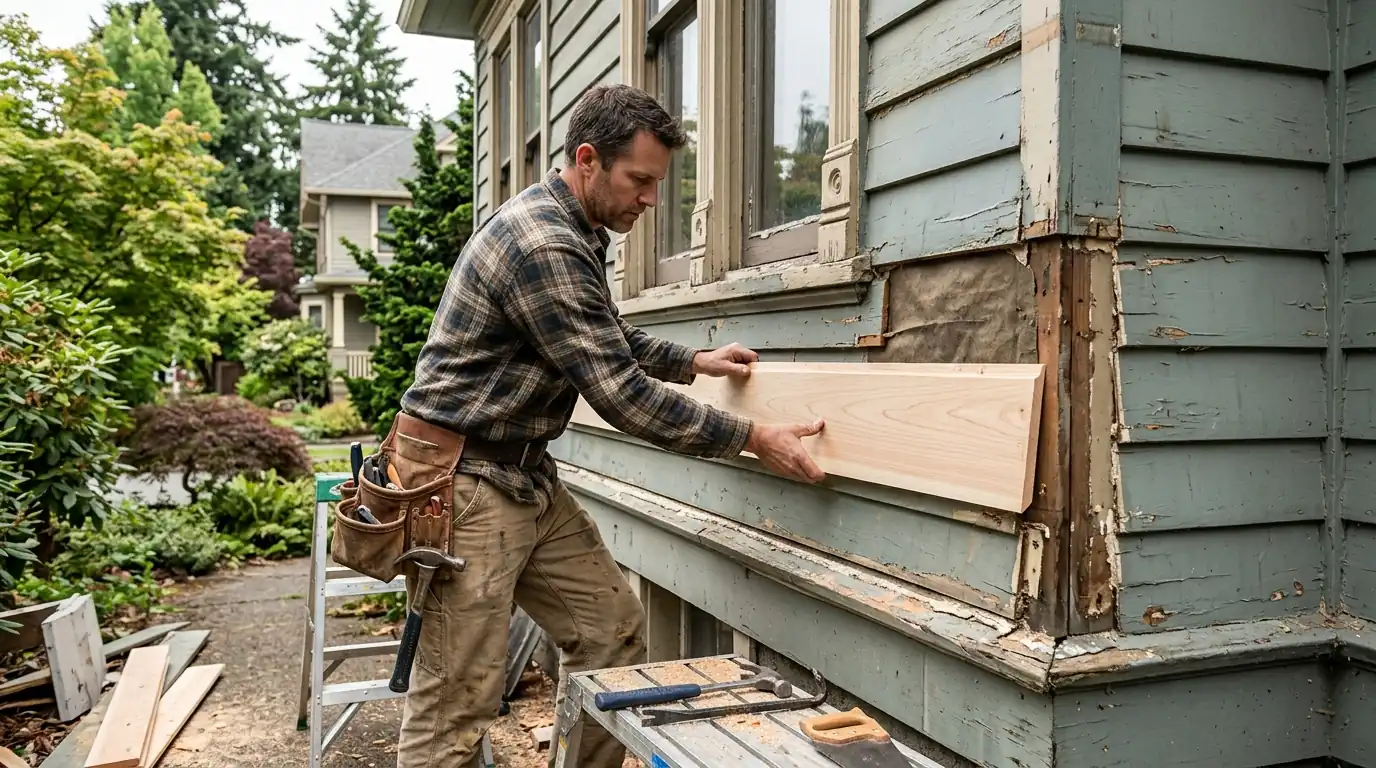
We start by confirming whether the house is a contributing property and which roof type you want. A composition roof with matching profile, color and trim details is the simplest route. Anything else, we expect review and plan the schedule around it. Our historic district reroofing guide goes into the steps.
On the roof itself, the work looks like any careful tear-off on an older house: strip to the boards, add sheathing where needed, rebuild flashing at chimneys and dormers, and keep visible trim details like rake boards and frieze intact.
Composition reroofs are the most direct path under the district guidelines.
DetailsComposition shingles are the accepted substitute for original wood shingles here.
DetailsThe guidelines favor repairing small siding failures over residing large areas.
DetailsVinyl is rejected for historic windows, so the material choice matters from the start.
DetailsMany district homes keep original brick chimneys that need new counter flashing.
DetailsOld board sheathing often needs new plywood added during a composition reroof.
DetailsThe North Slope and Wedge guidelines state metal roofs are not acceptable for historic homes. Composition roofing is accepted as a substitute for original shingles.
A single-layer composition reroof with sheathing may not need a building permit and so skips review. Other roof types may need Landmarks Commission review. Confirm with the City first.
The guidelines reject vinyl windows as replacements for historic windows. Repair or a matching replacement is the route that fits the rules.
No. The guidelines ask owners to repair small siding failures rather than strip large areas, and that is how we approach it.
Yes. The North Slope and Wedge share one set of design guidelines, and the Wedge has about 70 homes from early Tacoma to just after World War I.
Or see the full South Sound coverage overview.
Call any hour. Tell us what you want to change and we will talk through which parts the district rules touch.
Calls are answered around the clock. Tell us what you are seeing and where the house is, and we will set up a visit.
Our office sits in Puyallup, and our crews work across Tacoma and Pierce County. The map loads only when you ask for it.