Roof leak repair in Tacoma that starts in the attic, not at the stain
A ceiling stain marks where water landed, not where it entered. We follow the trail back to the valley, wall or vent that let it in.
- Answering 24/7
- Puyallup office
- Tacoma and Pierce County
Short answer
Most roof leaks in Tacoma get in somewhere uphill of the ceiling stain, because water rides rafters and sheathing before it drips. We trace the path from the attic first, then water-test one section at a time on a dry day, and repair the valley, wall junction or penetration that actually failed.
Where roof leaks really start
Water that slips past the shingles rarely falls straight down. It runs along the underside of the deck, follows a rafter or a row of nails, and drops onto the drywall somewhere downhill of where it entered. That is why patching the shingles directly above a stain so often fails.
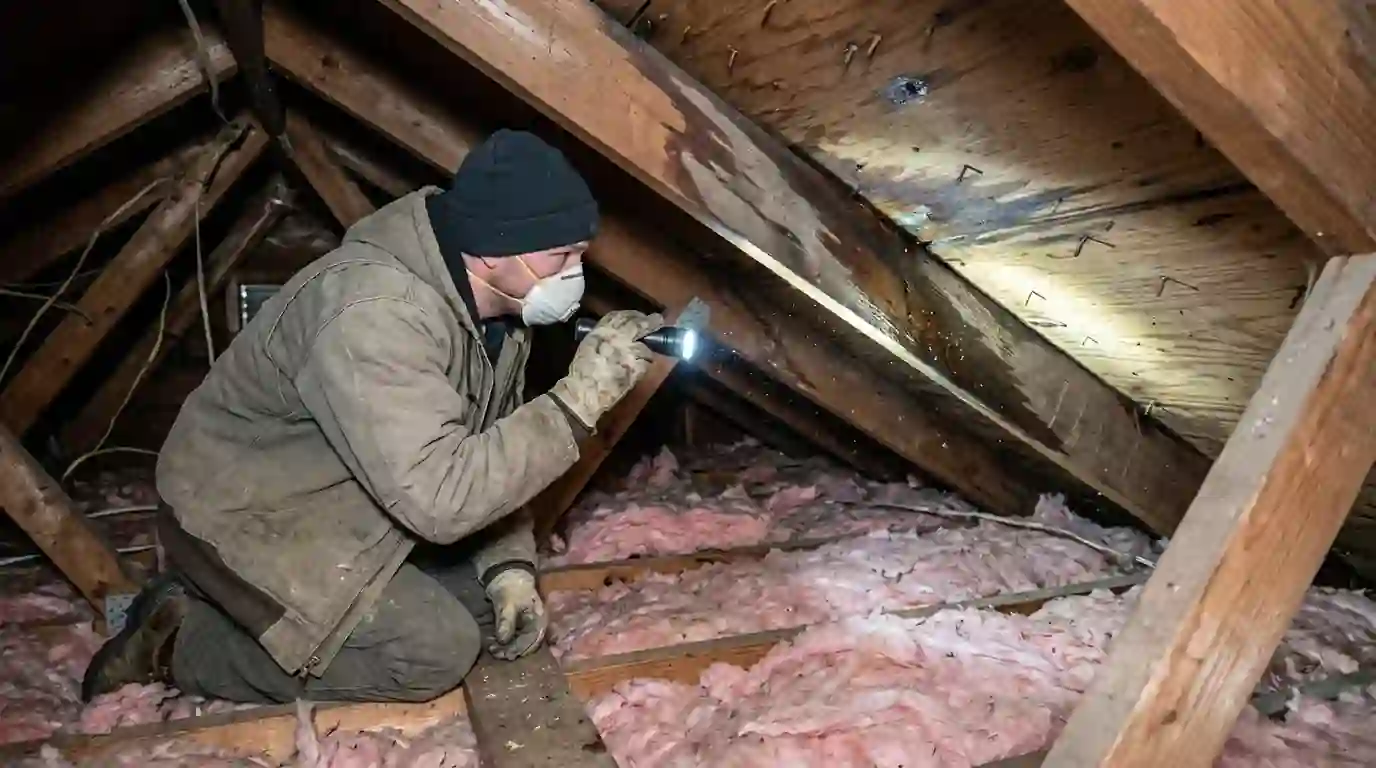
So we start inside. In the attic we look for darkened sheathing, rusty nail tips, tracks on the rafters and flattened insulation, then follow them uphill. Once the entry point is narrowed down, we check that part of the roof closely and test it with a hose if the weather allows.
Clues that point to a roof leak
Note where and when these appear.
A ring that grows after each storm
Spreading brown edges mean water is still getting in.
Peeling paint high on an outside wall
Water inside the wall often starts at a junction above.
A musty upstairs closet
Closets under dormers hide slow leaks the longest.
Dark streaks on attic boards
Tracks on the deck show the path water took.
Damp insulation in one patch
Flattened, darkened insulation marks where drips land.
Valley leaks
A valley carries the runoff from two roof planes, so it handles more water than any other part of the roof. Fir needles and moss dam it, water backs up sideways under the shingle edges, and the leak shows near an inside corner of a room below. Open metal valleys rust through or lose their cleats; closed-cut valleys fail where the cut line was trimmed too short. We clear the valley and lift the shingles along both sides. A small tear gets new membrane. A rusted liner or rotted underlayment means rebuilding the valley.
Wall-junction leaks
Where a roof meets a wall, a dormer cheek or a second story, the seal depends on step flashing woven in with each course. Siding installed tight to the shingles traps water and hides rusted steps. The usual symptom is a stain along an exterior wall or a damp corner in an upstairs closet. We pull back the siding at the junction, inspect each step piece and replace those that are rusted or too short. The catch is that some siding has to come off to do it right, and older boards can split on removal.
Leaks at roof penetrations
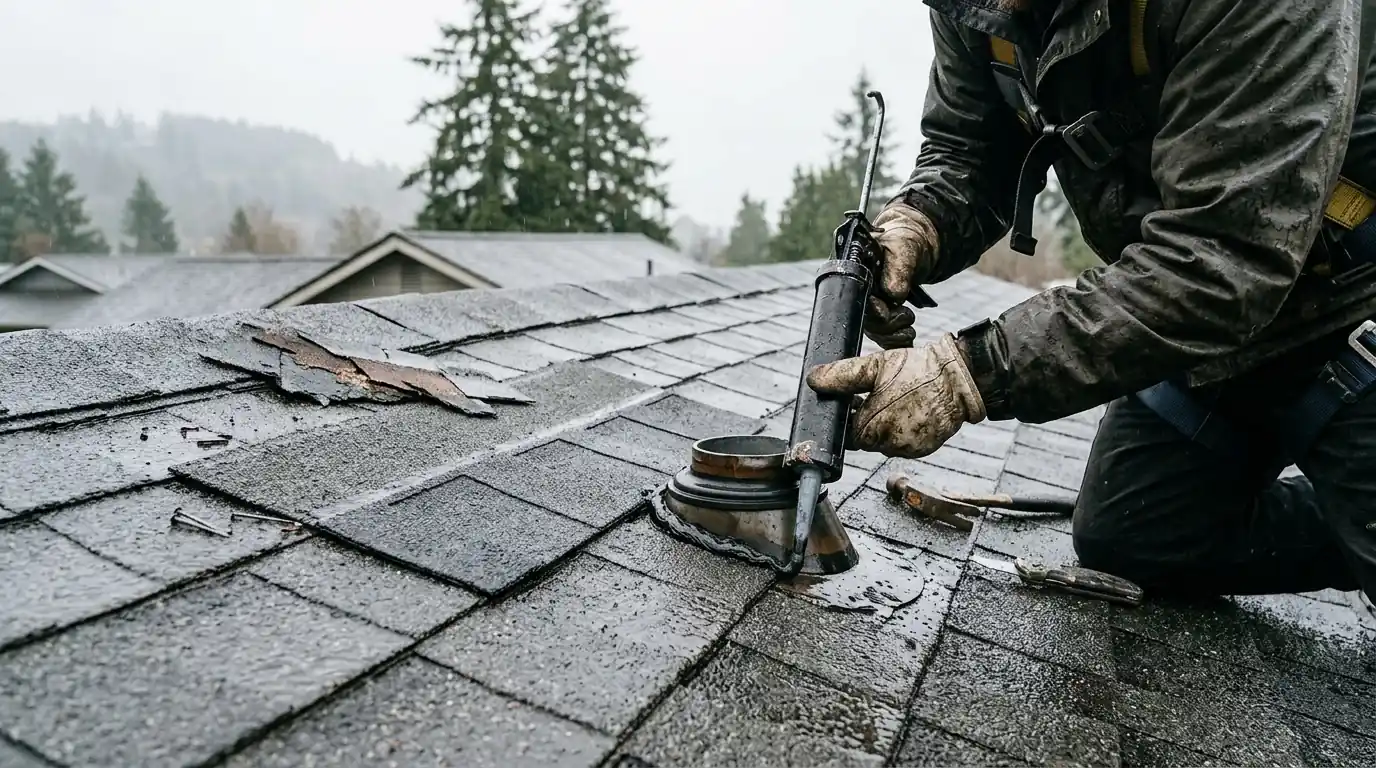
Every pipe, vent, fan and skylight is a hole sealed by a flange plus a gasket or sealant. Rubber boots crack, plastic vent caps split, and old roof cement shrinks away from the metal. Older houses add abandoned vents capped with tar and a shingle laid over the top. We replace failed boots and vents rather than caulking them, with the upper flange tucked under the course above. Dish mounts screwed into shingles get pulled and the holes sealed under new shingles, since sealant over a screw hole rarely survives a wet season.
Condensation that looks like a leak
Some winter drips are not leaks at all. Warm, damp air from the house rises into a cold attic, condenses on the underside of the deck and on nail tips, then drips on the first mild day. The telltales are frost on nails across the whole attic, staining unrelated to any roof feature, and drips after cold, dry spells rather than during rain. New roofing will not fix it. Ventilation, a sealed attic floor and bath fans ducted outside will, as our attic ventilation page explains.
How we trace a leak to its source
Tell us when it leaks
Every rain, only in wind, or after a cold snap.
We mark the stain
Its spot on the ceiling gives the attic search a start.
We follow the trail uphill
Marks on rafters and decking lead toward the entry.
We inspect that section outside
Flashing, valleys and vents above the trail get a close look.
We water-test if needed
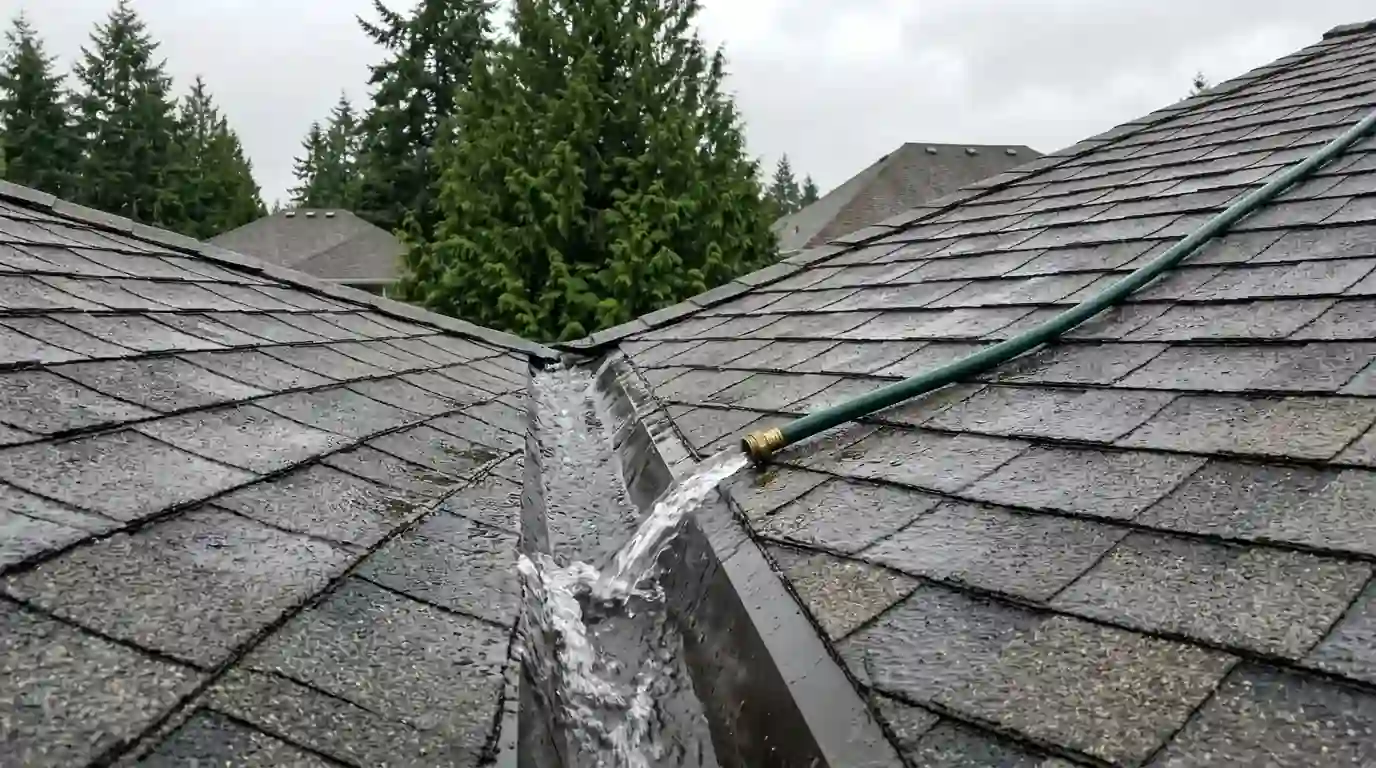
A hose runs on one section at a time while we watch inside.
We repair the cause
Failed flashing, boots or valley underlayment get replaced.
You watch the next storm
Heavy rain is the real test, so tell us what it shows.
Water coming through right now?
Call any hour and we will help you protect the room.
Call (253) 449-1922In Tacoma
Leaks on older and exposed Tacoma houses
NeighborhoodScout estimates 65.2% of homes in the North End were built in 1939 or earlier, and houses that old have often been added onto. Each addition leaves another seam where old roof meets new, and those seams are where we look first when a stain appears. Hilltop sits on a high bluff above the water, so rain there often arrives sideways. On a lot that exposed, a leak that shows only in wind-driven storms usually points to wall flashing or a vent.
What decides the cost of tracing and fixing a leak
Finding a leak can take longer than fixing it. The published range below covers small repairs.
Published range, not a quote and not our price. Source: homeadvisor.com, 2026-06. Your number depends on the factors below and is set after we see the roof.
How hidden the entry point is
One attic visit costs less than a trace that needs a water test.
Vaulted or finished ceilings
With no attic to look into, tracing may mean opening a small area.
What the water reached
Wet sheathing or rotted fascia adds carpentry.
Type of junction
Wall and dormer flashing takes longer than one vent boot.
Weather on the day
Water testing waits for a dry roof, which can add a visit.
Roof Leak Repair questions from Tacoma homeowners
Wind-driven rain reaches wall flashing, siding gaps and vents facing the storm. Calm, steady rain may never touch them.
Often, yes. Attic staining shows the path, and a controlled hose test recreates the leak on a dry day.
Caulk over a leak usually moves the water somewhere else. Set a bucket under the drip and follow our first-steps guide.
Drips after cold, dry nights and frost on many nails point to condensation. Our condensation guide explains the difference.
Chimney leaks involve masonry, crowns and counter flashing, so they get their own approach. See chimney flashing repair.