Roof Flashing Repair
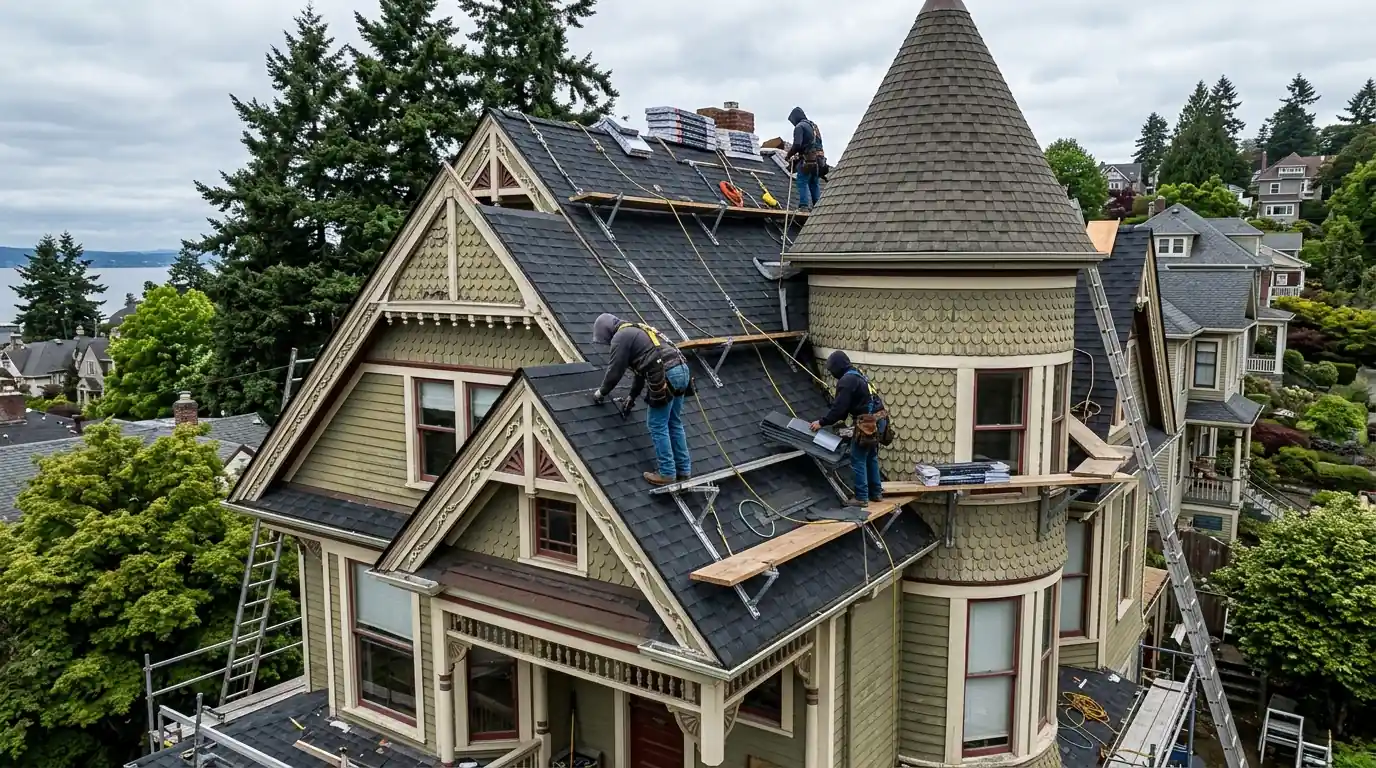
Stacked gables and dormers leave many hand-flashed junctions to maintain.
DetailsTurrets, stacked gables, deep valleys and dormers are the norm on these houses. Each one adds flashing, labor and risk, and each is where leaks start.
Short answer
Yes, we work in Tacoma's Stadium District, where the Stadium-Seminary Historic District developed between 1888 and 1930. Queen Anne and Colonial Revival homes lead the mix, which means steep pitches, multiple gables, dormers and long valleys. Contributing properties in the district generally need design review for visible exterior work, so we confirm status before planning a reroof.
The Stadium-Seminary Historic District grew between 1888 and 1930. Queen Anne and Colonial Revival homes lead, with Tudor, Chalet, Bungalow and Mediterranean styles mixed in. Each style puts a different roof on the house, and several of them are among the hardest residential roofs to work on in the city.
Queen Anne houses stack steep gables, towers and dormers into one roofline, so a single roof may have a dozen valleys and as many wall junctions. Colonial Revival homes tend to be simpler in plan but tall, with steep main roofs and dormers set into them. Tudor roofs run very steep and close to the ground at the eaves. Chalet and Bungalow roofs are lower with wide overhangs that rot at the rafter tails.
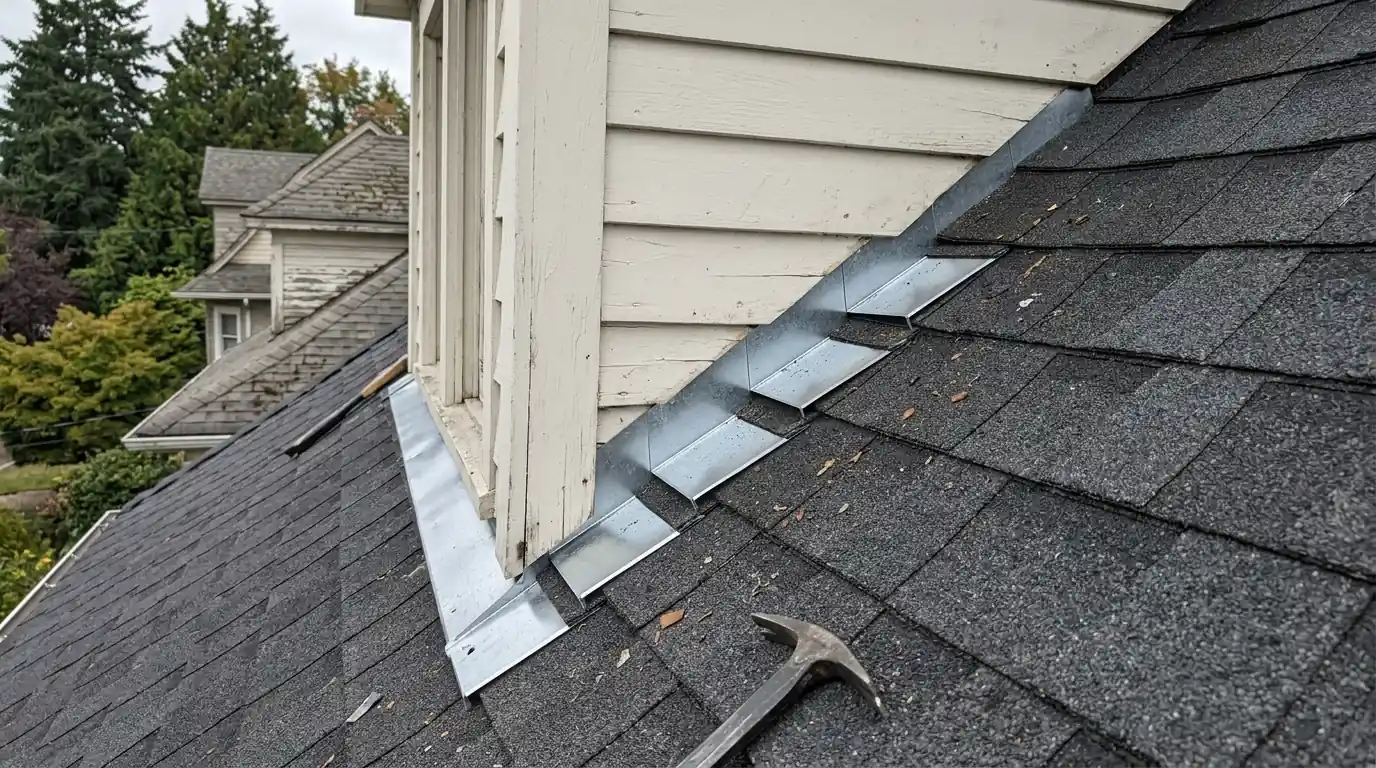
Every valley, dormer cheek and tower base is a seam that has to be flashed by hand. On a steep Queen Anne roof we stage the work with roof jacks and anchors at each level, and we often rebuild step flashing course by course where a dormer meets the main roof. That is slow work, but cutting corners on it is how these roofs end up leaking into upstairs closets.
Small conical or polygonal tower roofs need shingles cut and fitted in tapering courses, and the finial at the top is its own detail. Mediterranean homes in the district may carry tile, which is heavier than the 2.5 pounds per square foot that Tacoma's single-family reroof exemption allows, so a tile job expects a permit. Our flashing repair page covers the junction work in more detail.
Tacoma has four local historic overlay districts, and visible exterior work on landmarks or contributing properties generally needs design review. Not every house in the Stadium District is a contributing property, so the first step is to confirm the status of yours with the City's historic preservation office. Our historic reroofing guide explains the process.
Once that is settled, we plan the material, color and trim details to match what review expects. We keep visible elements like decorative shingle bands, cornice trim and tower finials, and we photograph them before tear-off so they go back the way they came off.
Stacked gables and dormers leave many hand-flashed junctions to maintain.
DetailsLeaks on complex roofs usually trace back to a valley or dormer cheek.
DetailsReroofs here need staging for steep pitches and planning for design review.
DetailsTall brick chimneys on these homes rely on counter flashing that wears out.
DetailsWide overhangs on Bungalow and Chalet homes hide rot at the rafter tails.
DetailsOlder skylights on attic conversions often need replacement and new flashing kits.
DetailsSteep pitches need extra staging and anchors, and every valley, tower and dormer is flashed by hand. Labor rises with the number of seams.
Not every house is. Check with the City of Tacoma's historic preservation office before planning visible exterior work, since contributing properties generally need design review.
Yes. Tower roofs take tapering courses cut by hand and careful flashing at the base where the tower meets the main roof.
Tacoma's reroof exemption covers new roofing up to 2.5 pounds per square foot. Tile is heavier, so expect a permit.
Yes. We photograph shingle bands, cornices and finials before tear-off and reinstall or match them when the new roof goes on.
Or see the full South Sound coverage overview.
Call any hour. Describe the roof and where the trouble shows, and we will plan the visit around the pitch.
Calls are answered around the clock. Tell us what you are seeing and where the house is, and we will set up a visit.
Our office sits in Puyallup, and our crews work across Tacoma and Pierce County. The map loads only when you ask for it.