Roof coatings for sound Tacoma flat and metal roofs, and when to skip one
A coating adds a continuous waterproof skin over a roof that is still sound. It cannot fix a wet deck or a failed membrane, so we check for both first.
- Answering 24/7
- Puyallup office
- Tacoma and Pierce County
Short answer
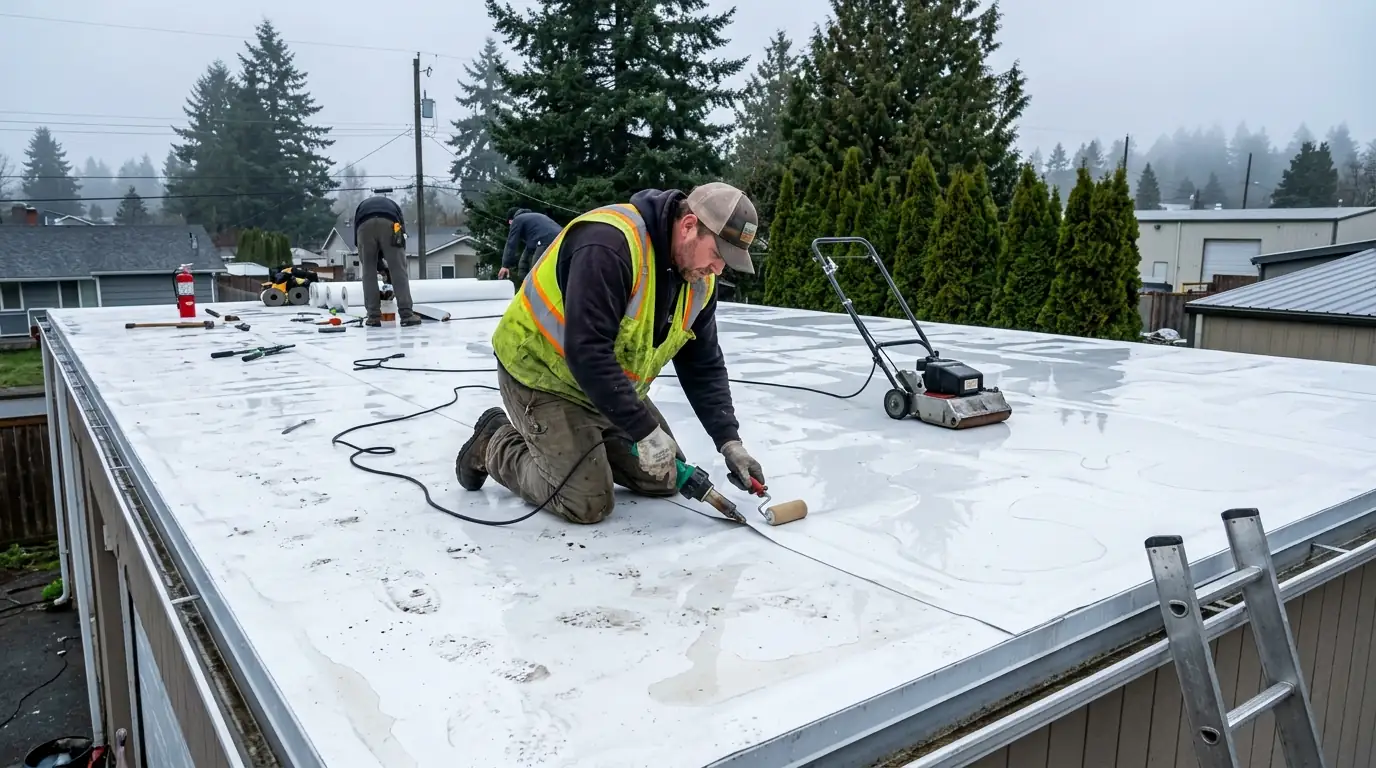
A roof coating in Tacoma makes sense only over a sound, dry roof: a flat membrane with tight seams, or a metal roof with surface rust but no holes. We clean it, repair seams and fasteners, then roll on silicone or acrylic to a measured thickness. Coating over wet insulation traps the water and makes the leak harder to find.
What a coating can and cannot do for an aging roof
A coating is a thick liquid membrane rolled or sprayed over an existing roof. It renews the surface, seals small cracks and fastener holes, and reflects sun when it is white. What it cannot do is fix structure. A sagging deck, saturated insulation or seams that have opened across the field all need repair or replacement first.
We apply systems from makers like Henry and GAF, matched to the roof underneath. Silicone and acrylic behave very differently through a long wet season, so the choice between them mostly comes down to whether your roof holds standing water.
Silicone coatings
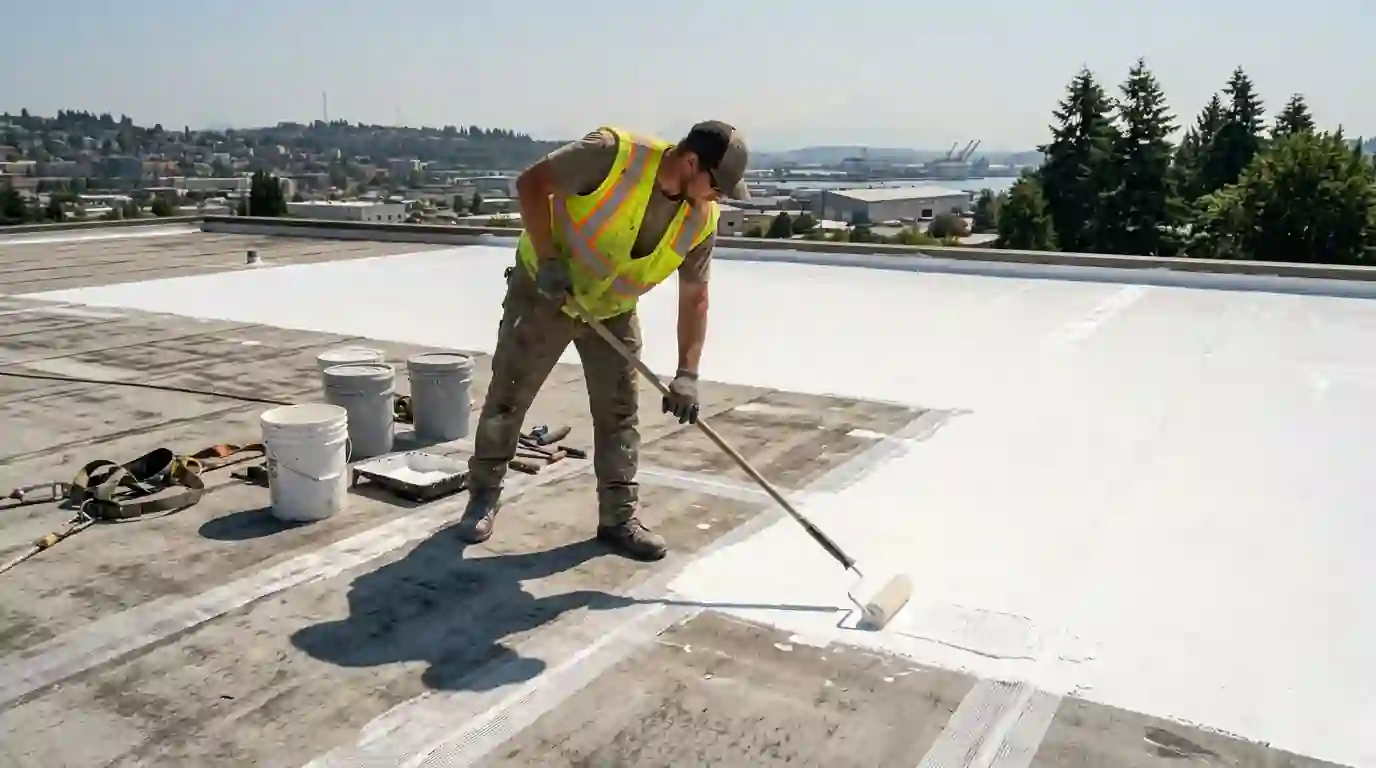
Silicone shrugs off standing water, which makes it the usual pick for a flat roof with a few shallow ponds that cannot be eliminated. It cures from moisture in the air, so it tolerates a damp climate during application. The downsides: it picks up dirt and grays over time, it is slick when wet, and almost nothing but more silicone will stick to it later. Choosing silicone today commits every future recoat and patch on that roof to silicone as well.
Acrylic coatings
Acrylic is water-based, costs less per gallon and stays bright white longer, which suits sloped metal and flat roofs that drain completely. Its weakness is ponding water, which softens it and causes it to lift over time. It also needs several dry, mild days to cure before rain, and that limits the season for acrylic work here to the stretch from late spring into early fall. Acrylic can later be recoated with acrylic or with silicone, which gives you more options down the road.
Metal roof restoration
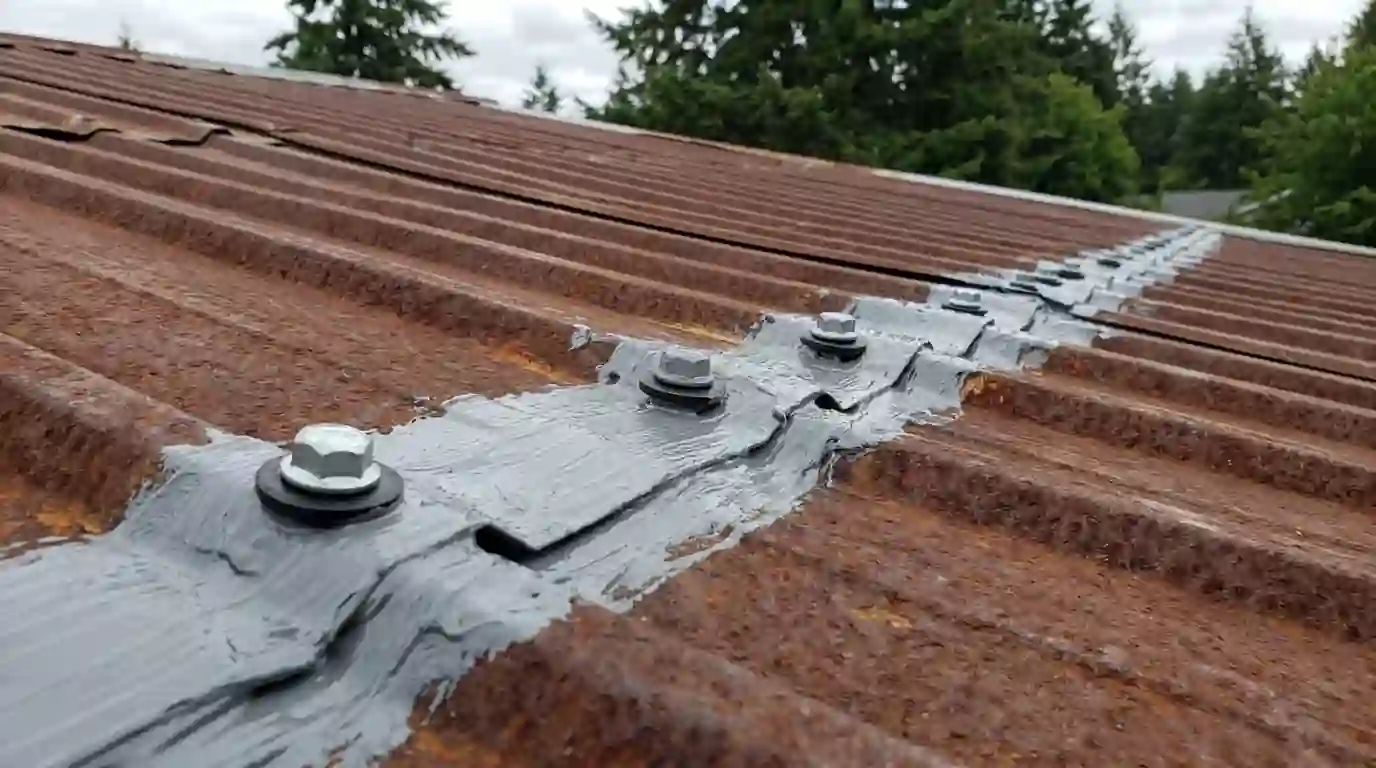
Exposed-fastener metal on shops, barns and garages tends to leak at the screws and laps long before the panels themselves fail. Restoration starts with wire-brushing rust and priming it, then replacing loose or stripped screws with oversized ones that carry fresh washers. Laps and ridge joints get reinforced seam tape and a heavy brush coat before the full coating goes on. Panels rusted through need replacing first. Coating will add years to a sound panel roof, but it commits you to recoating.
When a coating will not work
Some roofs should not be coated at all. A roof with wet insulation, found by coring or probing, needs that insulation replaced, not sealed in. Seams opening across the field, a deck that flexes underfoot, or widespread blistering all mean the roof is past restoration. On houses, asphalt shingles are a poor candidate, since they are designed to shed water and a coating can trap moisture beneath them. A roof that needs replacing soon is better served by replacing it now.
In Tacoma
Coating windows in a 155-day wet year
Tacoma's climate table shows about 40.81 inches of precipitation spread over roughly 155 days a year, so the real constraint on any coating is the dry window. Acrylics need dry, mild days to cure, which pushes most acrylic work into summer. Summer brings its own test. In the June 2021 heat dome, official readings reached 104 F and then 108 F, and a dark roof surface gets much hotter than the air. A white coating on a flat roof over living space takes a real bite out of that heat load.
Coating a roof step by step
Moisture check
We probe or core suspect areas to confirm the roof is dry.
Wash
Dirt, chalking and algae come off so the coat bonds.
Repair details
Seams, blisters, fasteners and flashings are fixed first.
Prime where needed
Rusty metal and some old membranes get a primer.
Reinforce seams
Fabric or tape is embedded at laps, drains and penetrations.
Apply the coats
Rolled or sprayed, with thickness checked by gauge.
Walk it after cure
Thin spots and pinholes get touched up.
What sets the cost of a coating job
No published range fits coatings well, because prep varies so much from roof to roof. These set the number.
Roof prep
Washing, seam repair and fastener work often outlast the coating itself.
Coating type
Silicone costs more per gallon than acrylic.
Thickness
Thicker coats last longer and use more material.
Wet areas
Saturated spots are cut out and replaced before coating.
Size and access
Small roofs carry setup costs that large ones spread out.
Silicone, acrylic or a new membrane
How the options line up on a typical low-slope roof.
| Item | Silicone | Acrylic | New TPO |
|---|---|---|---|
| Handles ponding water | Yes | No | Yes, with tapered board |
| Cure needs | Short dry window | Several dry, mild days | Welded, no cure |
| Later recoats | Silicone only | Acrylic or silicone | Not needed |
| Fixes a wet deck | No | No | Yes, with tear-off |
| Suits | Flat roofs that pond | Metal and well-drained roofs | Roofs past coating |
- Carlisle
- Johns Manville
- Polyglass
- Versico
- Mule-Hide
- GAF
- Duro-Last
- Henry
Roof Coating questions from Tacoma homeowners
We don't recommend it on homes. Shingles are made to shed water and dry out, and a coating can trap moisture under them.
That depends on its thickness and the roof underneath. As long as the roof below stays dry, a worn coating can be cleaned and renewed with another coat.
On a flat roof over living space it usually helps in summer, since white reflects sun that a dark roof absorbs. It does little for winter heating.
Only if the leak is a small surface crack. Most leaks sit at seams or flashings and need repair first; see flat roof repair.
Yes, if the panels have surface rust but no holes. Badly rusted panels are a metal roofing job rather than a coating job.